Mexico Diving: Caribbean Reefs, Cenotes, the Sea of Cortez and Revillagigedo, and the Federal Rules Behind Them
 by Yannick Schroth
Nov 10, 2026
12 min read
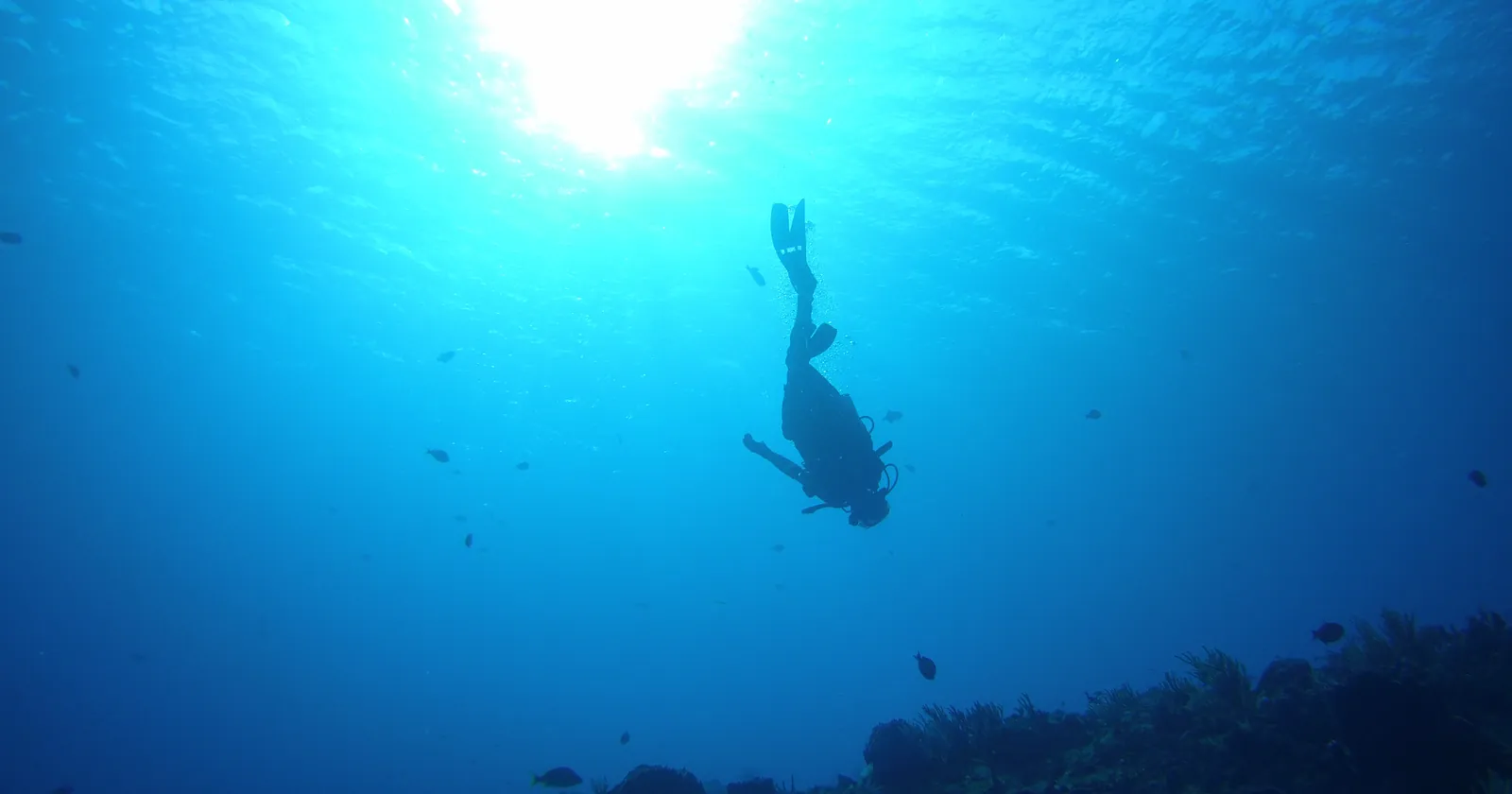
Blue water at Palancar Gardens, Cozumel. Matthewselig2019, Wikimedia Commons, CC0, cropped.

Key takeaways
- CONANP charges per person per day: 125 pesos for the Cancun park, the Caribe Mexicano reserve and Cabo Pulmo, 225 for Cozumel and Espíritu Santo, 750 for Banco Chinchorro and 3,760 for Revillagigedo; foreign residents pay half
- Mexico's specialised-guide standard caps a cavern dive at 21 meters depth and 60 meters from the entrance, with daylight in view, four divers per guide and a cavern introduction course first
- Recreational spearfishing is legal only on a breath-hold, with an individual permit, and recreational fishers may take only fish and squid, so lobster, conch and octopus are off limits
- The Atlantic hurricane season runs from 1 June to 30 November and the eastern Pacific one from 15 May; the sea off Cozumel averages 26.5 °C in February, the Bay of La Paz 20.5 °C
- Two Mexican consulates set different 2026 income bars for temporary residence, US$4,049 a month in San Diego and US$4,630 in Las Vegas; a tourist stamp allows at most 180 days
Mexico diving: four regions under one set of federal rules
Mexico has two coasts and two very different diving seasons. On the Caribbean side, the sea off Cozumel stays above 26 °C all year by NOAA's averages, and the cenotes lie inland. On the Pacific side, the Sea of Cortez between the Baja peninsula and the mainland cools to about 20.5 °C in winter, and the Revillagigedo islands lie about 36 hours by boat from Cabo San Lucas. What ties them together is federal law: many named dive sites are in protected areas run by CONANP, the national protected areas commission, and every dive business works under the same tourism standard. Below are the national rules, with links to our detailed guides for each place. Our operator lists cover Cozumel, Cancun, Playa del Carmen, Tulum, La Paz and Los Cabos.
The Caribbean coast: Cozumel, Cancun, Playa del Carmen and Akumal
Cozumel's reefs are the Arrecifes de Cozumel national park, where CONANP tells visitors to stay 1.5 meters from the reef, hire boats and guides it has authorized, and leave gloves, knives and rods behind. Our Cozumel vs Playa del Carmen comparison covers the drift diving on the island's west side and the park's group sizes, and Cozumel for digital nomads covers living on the island. Cozumel vs Roatan and Cozumel vs Bonaire weigh it against two other Caribbean dive islands.
The reefs off Cancun and Isla Mujeres form a separate national park with a 125-peso fee. Cancun diving reads that park's rulebook, explains which reef units are closed to divers and why the MUSA sculptures were placed, and covers the whale shark season north towards Holbox. Playa del Carmen's reef lies in the Caribe Mexicano biosphere reserve, at the same fee; Playa del Carmen diving covers it, the caves and the winter bull shark dive. Akumal, between Playa and Tulum, is a turtle snorkel rather than a dive, covered on our Akumal page.
Cenote and cave diving: what Mexico's own standard says
The cenotes inland from Playa del Carmen and Tulum are entrances to flooded cave systems, and the question every visitor should ask is whether a dive is a cavern dive or a cave dive. Mexico answers it in a federal standard. NOM-09-TUR-2002, the official standard for specialised tourist guides, published in 2003 and listed as in force by the Economy ministry's standards catalogue, has a chapter on espeleobuceo, which it defines as scuba in natural cavities such as cenotes, caves, grottoes and caverns.
It sets three zones. A cavern, zone 1, is flooded space where the daylight and so the exit are always in sight, wide enough for two divers side by side, with at least 12 meters of visibility or the dive is called off. Depth may not exceed 21 meters and penetration 60 meters from the entrance, divers turn after using a third of their air, and no dive may use more than two thirds. Zone 2 is cave without direct daylight, to 30 meters deep and 180 meters in; zone 3, full cave, to 40 meters.
The rules on people are just as specific. A cave guide must be an open-water guide, a full-cave diver and trained in cave rescue. For a cavern dive, the guide must check that you have taken at least a preparatory cavern introduction course, and may take four divers at most, all certified in open water. In zones 2 and 3 each diver needs a cave licence and a guide takes two. The guide must keep oxygen and a support person at the surface, avoid decompression stops in zones 1 and 2, and know where the nearest chamber is. We found no separate state rule for cenotes in Quintana Roo.
For how the training agencies draw the same line, see Tulum vs Playa del Carmen; for living near the cenotes, Tulum and the Yucatán cenotes. The general dive standard, NOM-012-TUR-2016, says nothing about caves beyond applying its no-damage rule inside natural cavities too.
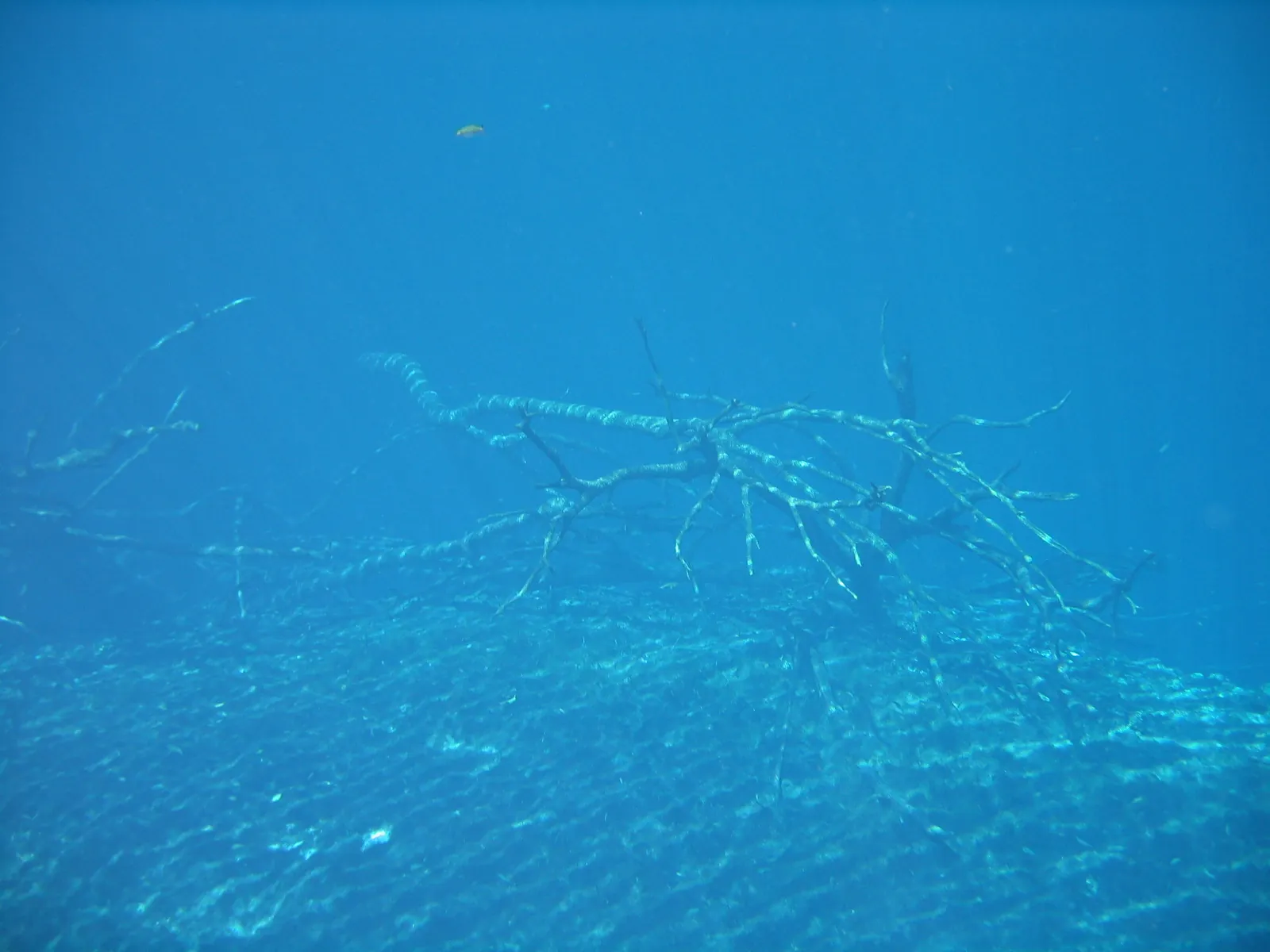
Inside Cenote Car Wash on the Yucatán peninsula. Eduardo Manchon, Wikimedia Commons, CC BY-SA 3.0.

Banco Chinchorro, Veracruz and the Islas Marietas: not yet covered
Three dive areas have no NOMADREEF guide yet. Banco Chinchorro, a Caribbean biosphere reserve, is reached by authorized boats from Mahahual, which is also where CONANP says visitors must spend the night. It charges 750 pesos a day, requires snorkel and scuba gear to be disinfected before use because of coral disease, bans spearfishing, says no operator is authorized for crocodile swims, and recommends February to May. In the Gulf, the Sistema Arrecifal Veracruzano national park off Veracruz and Boca del Río charges 95 pesos and has at least 50 dive buoys in its public-use zones at Cancuncito and Isla de Enmedio. On the Pacific coast, the Islas Marietas national park, 34 kilometers from Puerto Vallarta, charges 125 pesos, opens Tuesday to Sunday and makes a life jacket compulsory in the water.
The Sea of Cortez: La Paz and Los Cabos
La Paz dives the marine national park around the Espíritu Santo archipelago, 36 kilometers away by CONANP's count, at 225 pesos a day. Our La Paz diving guide covers its sea lion colony, seamount and wrecks, the summer closure at Los Islotes and the shark count that sets how many whale shark boats go out; the whale sharks themselves are a surface swim under a federal standard.
At the tip of the peninsula, divers use two protected areas, the water around the Arch at Cabo San Lucas and the Cabo Pulmo national park, which charges 125 pesos. Los Cabos diving compares their very different rules. Wind sports on the same coast are covered in our La Ventana guide.
Revillagigedo and Isla Guadalupe: the Pacific islands
The Revillagigedo national park, which includes Socorro and Clarión, is a liveaboard destination. CONANP gives the route by sea as 471 kilometers from Cabo San Lucas, about 36 hours, and says dive tourists go on the boats of tour operators. Its scuba season runs from November to June, from 7:00 to 18:00, and the daily fee is 3,760 pesos, the one area the annual pass excludes. The park's own diving rules are summarised in our Los Cabos guide, and the trip itself on our liveaboard page.
Isla Guadalupe, a Pacific biosphere reserve, is closed to tourism. CONANP states that visits are not allowed under the reserve's management program published on 9 January 2023, and calls it the only place in Mexico where white sharks gather.
Mexico's marine park fees in 2026
CONANP publishes a daily fee for each protected area, per person, as a federal duty. These are the amounts on its park pages, read on 10 November 2026:
| Protected area | Pesos per day |
|---|---|
| Sistema Arrecifal Veracruzano national park | 95 |
| Costa Occidental de Isla Mujeres, Punta Cancún y Punta Nizuc national park | 125 |
| Caribe Mexicano biosphere reserve | 125 |
| Cabo Pulmo national park | 125 |
| Islas Marietas national park | 125 |
| Arrecifes de Cozumel national park | 225 |
| Espíritu Santo marine zone national park | 225 |
| Banco Chinchorro biosphere reserve | 750 |
| Revillagigedo national park | 3,760 |
Children under 12, older adults, pensioners and people with disabilities pay nothing, students and teachers get 75 percent off, and Mexican nationals and foreigners resident in Mexico get 50 percent off with official ID. The Pasaporte de la Conservación costs 3,760 pesos and covers every protected area for a year except Revillagigedo; at Cozumel's rate it pays for itself on the 17th day in the water. The daily bracelet can be bought online or at the park. In Tulum, a decree in force since 20 July 2026 cuts the federal fee for the Tulum national park to 65 pesos for foreigners for 2026 and 2027. Who legally owes the fee, the diver or the operator, is set out in our Cancun guide.
Rules that apply on every Mexican dive
NOM-012-TUR-2016, the federal standard for tourist dive services, binds every dive business in the country. The operator must be on the national tourism register, use dive guides accredited by the tourism ministry, carry civil-liability insurance, run boats with a nautical tourism permit, and carry a first-aid kit and oxygen. It must also hold a written contingency plan that names the nearest medical care. Depth goes by level: 12 meters on an introductory dive, 18 meters for a basic diver with four logged dives, 30 for an intermediate diver with nine and 39 for an advanced diver with sixty. A guide may take at most eight certified divers in good conditions. The standard tells operators to brief divers to dive without damaging or taking any marine life, dead or alive, or disturbing wrecks and archaeological remains, and to keep a meter from them.
Taking anything home is harder than many visitors expect. The sport-fishing standard, NOM-017-PESC-1994 as amended in 2013, allows recreational fishers to catch only fish and squid, so lobster, conch, octopus and other crustaceans and molluscs are off limits. Underwater fishing needs an individual permit and is allowed only on a breath-hold, with one rubber, spring or pneumatic speargun and no lights. Recreational spearfishing on scuba is not allowed.
Big animals have their own standards. NOM-171-SEMARNAT-2018 defines the whale shark encounter as a surface swim with mask, fins and snorkel, without breath-hold dives. NOM-131-SEMARNAT-2010 bans fishing, diving and swimming during whale watching, so a whale-watching boat cannot put you in the water. Some parks add sunscreen rules: Islas Marietas asks for environment-friendly sunscreen at least 30 minutes before entering the water, and Banco Chinchorro asks visitors to avoid it. Our reef-safe sunscreen page explains what labels mean.
Mexico's sea temperature by region
NOAA's satellite averages for 1991 to 2020, for four ocean cells, show how far apart the coasts are in winter:
| Cell | Feb | May | Aug | Nov |
|---|---|---|---|---|
| Cozumel channel, 20.375°N 87.125°W | 26.5 °C | 28.0 °C | 29.3 °C | 28.1 °C |
| North of Holbox, 21.625°N 87.375°W | 24.2 °C | 25.6 °C | 27.9 °C | 26.1 °C |
| Bay of La Paz, 24.375°N 110.625°W | 20.5 °C | 23.1 °C | 28.6 °C | 26.4 °C |
| Off Socorro, 18.875°N 110.875°W | 24.5 °C | 24.8 °C | 28.0 °C | 27.3 °C |
The Cozumel cell peaks at 29.4 °C in September; La Paz has the widest swing, from 20.5 °C in February to 29.0 °C in September. Off Socorro the sea stays between about 24.4 and 25.1 °C from February to June, the second half of the park's scuba season. These are surface figures; the water at depth is colder, and we found no primary figure for cenote temperatures.
Hurricane seasons on two oceans
The US National Hurricane Center puts the Caribbean coast in the Atlantic basin, whose season runs from 1 June to 30 November and peaks on 10 September, with most activity from mid-August to mid-October. An average Atlantic season brings 14 named storms, 7 hurricanes and 3 major hurricanes. The eastern Pacific basin, which runs west from Mexico's Pacific coast, has a season that starts earlier, on 15 May, ends on 30 November and averages 15 named storms, 8 hurricanes and 4 major ones, most of them between late June and early October. December to April falls outside both.
Chambers and emergencies in Mexico
Mexico's single emergency number is 911. For diving accidents, the Subaquatic Safety Services network runs three recompression chambers. In Cozumel, on 5th Street South between Rafael E. Melgar Avenue and 5th Avenue South, its page describes an alarm centre with a doctor on site, open 24/7, plus a satellite chamber at the reef; the emergency line is +52 987 878 6161. In Playa del Carmen, on 10th Avenue North between 26th and 28th Streets, it runs a multiplace chamber with hospital beds and X-ray, on +52 984 188 6486. In Cabo San Lucas, on Adolfo López Mateos Street, the line is +52 624 160 9393. The Playa del Carmen and Cabo pages do not say whether they are staffed around the clock.
Also on Cozumel, the Costamed hospital group runs a chamber that reaches 6 atmospheres, takes up to 14 patients and is a DAN preferred provider. We found no facility page confirming a chamber for La Paz, Cancun or the Revillagigedo route, which is 36 hours from port. Ask your operator which facility its written plan names, and check that your dive insurance covers evacuation.
Entering Mexico and staying as a remote worker
Visitors who need no visa get the status of visitor without permission to do paid work, for up to 180 days. Arriving by air or sea, an immigration officer stamps the passport with the stay authorised, at most 180 days, according to the immigration institute INM's traveller guide; by land you fill in the FMM form, online up to 30 days ahead. The officer may ask for bookings or a return ticket. The UK's travel advice notes that the stamp shows how many days you were given and that tourists may not do paid or voluntary work. Quintana Roo, the Caribbean state, also charges foreign tourists a state contribution through its Visitax system, which the UK says you must show when leaving.
For longer stays, Mexican consulates issue temporary residence visas on proof of economic solvency, and they set different figures. In 2026 the San Diego consulate asks for an income of at least US$4,049 a month over the last six months or a balance of at least US$68,241 over twelve, and for employees a letter from the employer agreeing to the plan to live in Mexico and work remotely. The Las Vegas consulate asks for more than US$4,630 a month or an average balance of US$78,025, and the fee at both is US$56. Check the figure at the consulate where you will apply. A residence card also halves the marine park fee. For Pacific surf towns as a base, see Puerto Escondido and Sayulita.
How to choose between Mexico's regions
Choose the Caribbean if you want warm water all winter and a choice of reef, drift and cenote dives from one base, and accept the Atlantic storm season from June. Choose the cenotes for overhead diving in fresh water, and book a cavern course before your first dive if you have not done one. Choose La Paz or Los Cabos for the Sea of Cortez, where the bay at La Paz averages 20.5 to 21.0 °C from January to March, so pack a thicker suit. Choose Revillagigedo if you can spend 36 hours each way on a boat between November and June and pay 3,760 pesos a day in park fees.
Mexico suits a diver who wants several kinds of diving under one visa and one fee system, and a remote worker who can show the income for temporary residence. It suits less well anyone who wants to spearfish on scuba, dive caves without cave training, or see white sharks at Guadalupe.
FAQ: Mexico diving
Do you have to pay a fee to dive in Mexico's marine parks?
Yes, in federal protected areas. CONANP charges per person per day: 125 pesos at the Cancun park, the Caribe Mexicano reserve and Cabo Pulmo, 225 at Cozumel and Espíritu Santo, 750 at Banco Chinchorro and 3,760 at Revillagigedo. Foreign residents pay half, and a one-year pass for 3,760 pesos covers every area except Revillagigedo.
Can you dive cenotes with an Open Water certification?
Only the cavern zone, with a guide. Mexico's standard NOM-09-TUR-2002 requires a preparatory cavern introduction course, limits the cavern zone to 21 meters deep and 60 meters from the entrance with daylight in view, and allows four divers per guide. Anything beyond the daylight needs a cave licence.
Is spearfishing allowed in Mexico?
Only on a breath-hold, with an individual permit and one speargun. The sport-fishing standard NOM-017-PESC-1994, as amended in 2013, bans underwater sport fishing on scuba and limits recreational catches to fish and squid, so lobster, conch and octopus are off limits. Some parks, such as Banco Chinchorro, ban spearfishing altogether.
Where are the hyperbaric chambers in Mexico?
The Subaquatic Safety Services network runs chambers in Cozumel, Playa del Carmen and Cabo San Lucas; its Cozumel site states it is open 24/7. Costamed also runs a chamber on Cozumel for up to 14 patients. The national emergency number is 911.
When is hurricane season in Mexico?
On the Caribbean coast, the Atlantic season runs from 1 June to 30 November and peaks on 10 September. On the Pacific side, including Baja and Revillagigedo, the eastern Pacific season runs from 15 May to 30 November, with most storms between late June and early October, according to the US National Hurricane Center.
Note: Conditions, safety guidance and regulations change. Verify current information with official sources, including the dive operator, the park authority and the relevant government department, before you travel or dive.
Founder of NOMADREEF and a former digital nomad. This guide is sourced from the references below; conditions, prices and rules change, so verify current details, and follow qualified local guidance and safety briefings. About the author · LinkedIn ↗
Sources
- Park fees and park rules (primary). CONANP park pages for Arrecifes de Cozumel, Isla Mujeres, Punta Cancún y Punta Nizuc, Caribe Mexicano, Banco Chinchorro, Sistema Arrecifal Veracruzano, Islas Marietas, Espíritu Santo, Cabo Pulmo, Revillagigedo and Isla Guadalupe; Pasaporte and Brazalete de la Conservación. Read 10 November 2026.
- Tulum fee decree (primary). Decree on the Parque del Jaguar fees and fiscal stimuli, signed 17 July 2026, in force 20 July 2026. Read 10 November 2026.
- Dive and guide standards (primary). NOM-012-TUR-2016, sections 3, 6, 8 and tables 1 and 3; NOM-09-TUR-2002 (PDF), sections 3.10 and 5.1.2; status of both in the Economy ministry's catalogue for NOM-012 and NOM-09. Read 10 November 2026.
- Fishing and wildlife standards (primary). 2013 amendment to NOM-017-PESC-1994, sections 4.2 to 4.5, and its catalogue status; NOM-171-SEMARNAT-2018, section 3.5; NOM-131-SEMARNAT-2010, section 4.19. Read 10 November 2026.
- Sea temperature (primary, computed). NOAA PSL, OISST v2.1 monthly long-term means 1991–2020, four grid cells as stated in the table, computed for this page. Read 10 November 2026.
- Hurricanes (primary). US National Hurricane Center, tropical cyclone climatology. Read 10 November 2026.
- Chambers and emergencies (each facility primary for itself). Subaquatic Safety Services, Mexico network, Cozumel, Playa del Carmen and Cabo San Lucas; Costamed hyperbaric chamber; Government of Mexico, 911 (primary). Read 10 November 2026.
- Entry and residence (primary). INM, traveller's guide for visa-exempt visitors (PDF, 2023); UK Foreign Office, Mexico entry requirements; Quintana Roo, Visitax; Mexican consulates in San Diego (PDF) and Las Vegas (PDF), 2026 temporary residence requirements. Read 10 November 2026.
- Left out. The Ley Federal de Derechos, the migration law and the federal criminal code, whose official host did not respond, so the fee tiers and the penalty for damaging reefs are not quoted from the law itself; why Banco Chinchorro's fee is 750 pesos; the Visitax amount and the non-resident entry fee; the Mexican weather service's own hurricane statement; a confirmed chamber for La Paz or Cancun and round-the-clock status for Playa del Carmen, Cabo San Lucas and Costamed; any Quintana Roo rule on cenotes; cenote water temperature; dive prices, which are on our city guides; and internet speeds.