Greece Diving: Crete, the Ionian, the Cyclades and the Dodecanese, and the Rules That Apply Underwater Everywhere
 by Yannick Schroth
Nov 11, 2026
13 min read
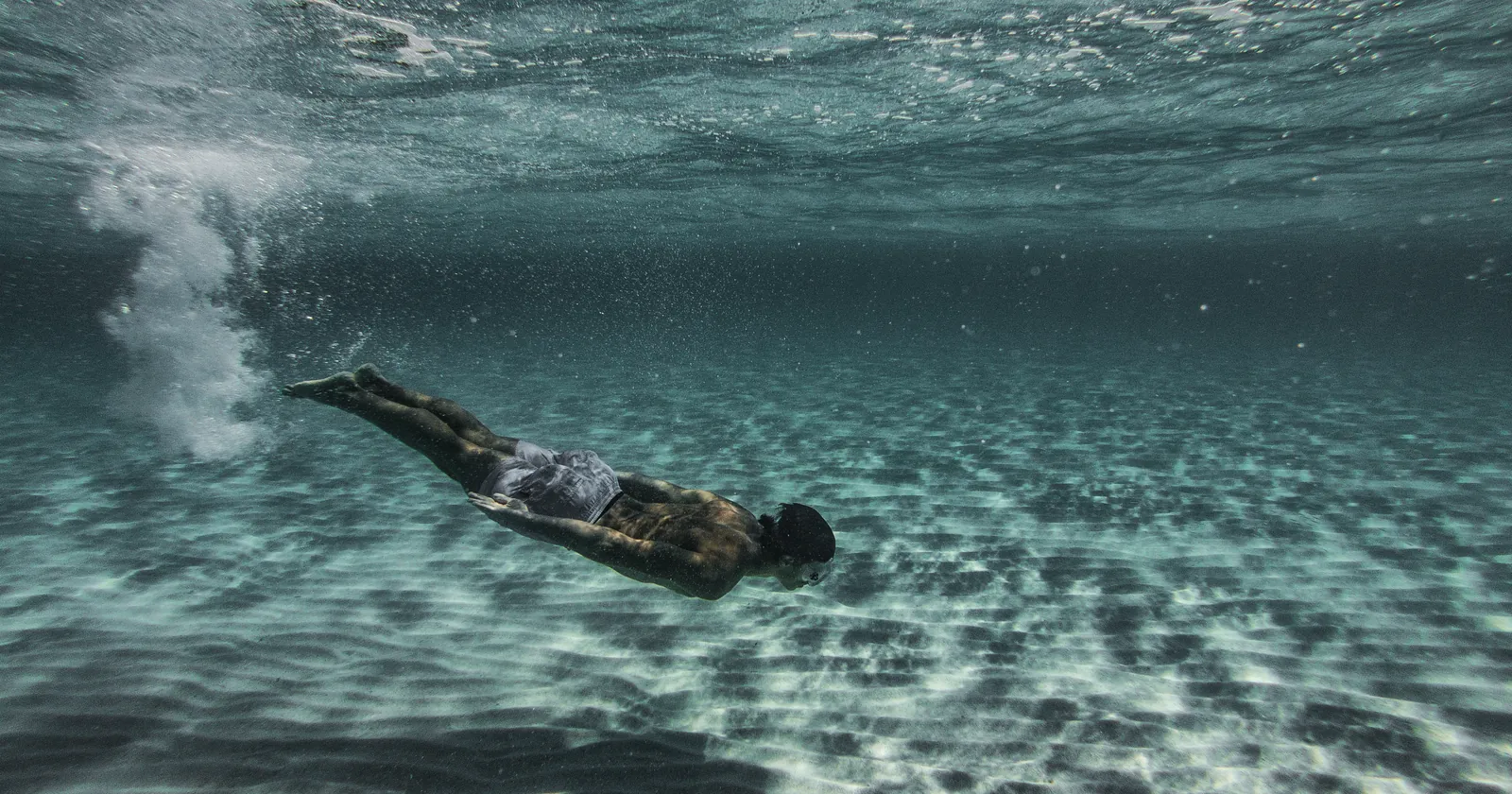
Freediving over sand off Crete. Ultimouomo, Wikimedia Commons, CC BY-SA 4.0, cropped.

Key takeaways
- Greek law allows recreational diving across the country at any depth, except in listed zones: designated underwater archaeological sites, military areas, shipping lanes and anchorages, cable routes and closed marine protected areas
- Wrecks sunk more than 50 years ago may only be dived on a dive guided or organised by a dive provider, and nothing on or around them may be touched or moved
- Scuba divers may not spearfish or carry spearfishing gear on their boat, and spearfishing itself is closed in May and from sunset to sunrise
- In the national weather service's records the summer wind blows from the north at Athens and Naxos, from the north-west at Heraklion, and from the west at Corfu and Rhodes
- The Naval Hospital of Athens treats diving accidents from central, southern and island Greece on a 24-hour basis; the Naval Hospital of Crete covers Crete and the south-east Aegean. Call 112 in an emergency
Greece diving: two seas, one rulebook
Greece has thousands of kilometres of coast, but for a visiting diver it sorts into a few regions that you reach through different airports and that face different winds. In the west, the Ionian islands run from Corfu down to Zakynthos. In the east, the Aegean holds the Cyclades, the Dodecanese along the Turkish coast, the Sporades in the north, and Athens with the Saronic Gulf. Crete closes the Aegean to the south. Each region below links to our detailed guide. After that come the things that are the same everywhere: where the law lets you dive, wrecks and antiquities, marine parks, spearfishing, wind, water temperature, chambers and visas.
Crete: two coasts and a list of wrecks
Crete closes the Aegean to the south, and its long west-to-east shape sits across the path of the summer north wind, so the north and south coasts behave very differently on the same day. Our Crete diving guide sets out which coast to dive when the wind blows, the Crete wrecks on the state's list of wreck monuments, the island's Natura 2000 sites and the naval chamber near Chania. The Crete operator list shows which dive centers the training registers file under which towns.
Corfu and the Ionian: walls, caves and a western summer wind
Corfu is the northernmost Ionian island, and it sits outside the Aegean wind system. Our Corfu diving guide explains why the west coast dives are limestone walls, arches and caves rather than reef, covers the protected seagrass strip on the east coast and the two Corfu wrecks on the state list, and shows where shipping lanes keep dive boats away. The Corfu operator list has the schools.
Further south, Zakynthos has a national marine park around Laganas Bay. The Greek National Tourism Organisation says it was established in 1999 to protect the nesting beaches of the loggerhead turtle, and that it is divided into three zones, each with its own rules, explained at information centres around the bay. We couldn't confirm the park's current rules, so we don't cover Zakynthos or Kefalonia yet. If you dive there, ask the center which zone its sites are in.
The Cyclades: Naxos and Paros
In the Cyclades the weather service's Naxos station records a north wind in every month, which draws kitesurfers and is something divers plan around. Our Naxos guide covers the island's reef, wreck and cave dives as well as the wind, and Naxos vs Paros compares the two islands, including a Beaufighter wreck off each. Paros as a nomad base covers living there. Schools are on the Naxos operator list.
The Dodecanese: Rhodes and Kos
The Dodecanese sit along the Turkish coast in the south-east Aegean. Our Rhodes guide covers Prasonisi's two seas and the island's dive schools, and our Kos guide covers the boat diving around the islet of Pserimos and the day trip across to Bodrum, which is a Schengen border crossing. Operators are on the Rhodes and Kos lists.
Athens and the Saronic Gulf
Athens is the one region here that is also a capital city, with dive centers spread along the coast of Attica. Our Athens (Alimos) guide covers the city as a base on the Athens Riviera, and the Athens operator list has the diving, windsurfing and wing foiling schools of Athens and Attica. Athens also has the navy's three-chamber hyperbaric unit, covered below.
Regions we do not cover yet: the Sporades and Kea
Two places matter to divers even though we have no guide for them yet. Off Alonissos in the Northern Sporades lies the Peristera wreck, a merchant ship from the 5th century BC that, according to the Greek National Tourism Organisation, was found by a fisherman in 1985 and carried more than 3,000 wine amphorae. The organisation calls it the first underwater museum in Greece, inaugurated in 2020. It says divers visit with certified guides to 25 meters, need an Advanced Open Water certification, and book through a certified dive center between May and October. Non-divers can take a virtual dive at the visitor centre in Patitiri.
Kea, between Cape Sounio and the rest of the Cyclades, has the wreck of the Britannic, the Titanic's sister ship. The tourism organisation says the area has been declared a marine historical site with three protected zones of over 100 hectares in total, where fishing is banned, and that certified divers follow routes designed with the culture ministry and the Ephorate of Underwater Antiquities, with specialist guides. We couldn't check the details on the ministry's own pages. Halkidiki, Milos, Santorini and the north-east Aegean islands are not covered either.
Where Greek law lets you dive
Since Law 3409/2005, the starting point in Greece has been that recreational diving is allowed throughout the country, with listed exceptions. The current version is article 2 of Law 4688/2020, which says dive tourism is "freely permitted" everywhere, "regardless of dive depth". It is banned in sea areas of underwater archaeological sites that the culture ministry designates, in military exercise areas and defence installations, in lighthouse safety zones, and where a marine spatial plan expressly forbids it.
Scuba diving has a second list. It is banned in areas where ships pass or anchor, where warships or the armed forces exercise, on the routes of rented motorised craft and 100 meters either side of their starting points, where the act or management plan of a marine protected area forbids it, over submarine cables and utility systems, and wherever the port authority closes water by a reasoned decision for the safety of ships or people. In ecologically sensitive areas, diving is allowed under conditions.
Several older rules from Law 3409/2005 still apply, because the 2020 law repealed only part of that article. You may not scuba dive without a recognised certification unless you dive with a provider, and you may not dive without a buddy. A diver more than 50 meters from the boat, or diving without one, must tow an orange buoy or flag, and boats must keep more than 100 meters from the dive flag. Dives not run by a provider are banned from one hour after sunset to one hour before sunrise unless the port authority gives written permission, and a provider running a night dive must tell the port authority first. Providers must carry liability insurance for their clients. Our register page explains why the state's list of registered providers cannot be read.
Wrecks and underwater antiquities
The Greek seabed holds a great deal of history, and two sets of rules protect it. The first covers wrecks. Under article 7 of Law 4688/2020, ships and aircraft that sank more than 50 years ago may only be dived on dives guided or organised by a dive provider; snorkelling over them on your own is allowed. You may not alter the wreck or collect, remove or even move any object on it or on the seabed around it, and boats may not anchor within 100 meters of the dive marker. A culture ministry decision of 2003 already classed wrecks as cultural goods.
In 2022 a joint ministerial decision set the terms for 91 wrecks declared monuments. The operator, or a private snorkeller, must notify the Ephorate of Underwater Antiquities and the local port authority at least a day ahead with the date, time, number of divers and boat. Diving on each listed wreck is only allowed once the Ephorate has documented it and posted a decision on the ministry's website. Our Crete guide covers which wrecks were opened first. We couldn't check later decisions on the ministry's site, so ask your center to show you the decision for the wreck you plan to dive.
The second set covers ancient sites. Since 2020 the law has a category of accessible underwater archaeological sites, which the culture and shipping ministries designate jointly. Inside them, the law allows only guided dives or snorkelling accompanied by staff of licensed dive providers. Boats leave from and return to a fixed point, archaeological staff may search visitors' bags and boats, and metal detectors are banned. Photography for non-commercial purposes is free. Everywhere else, scuba divers may not raise, move or photograph objects of archaeological value on the seabed, and any diver who finds antiquities or a wreck must report it to the port authority at once.
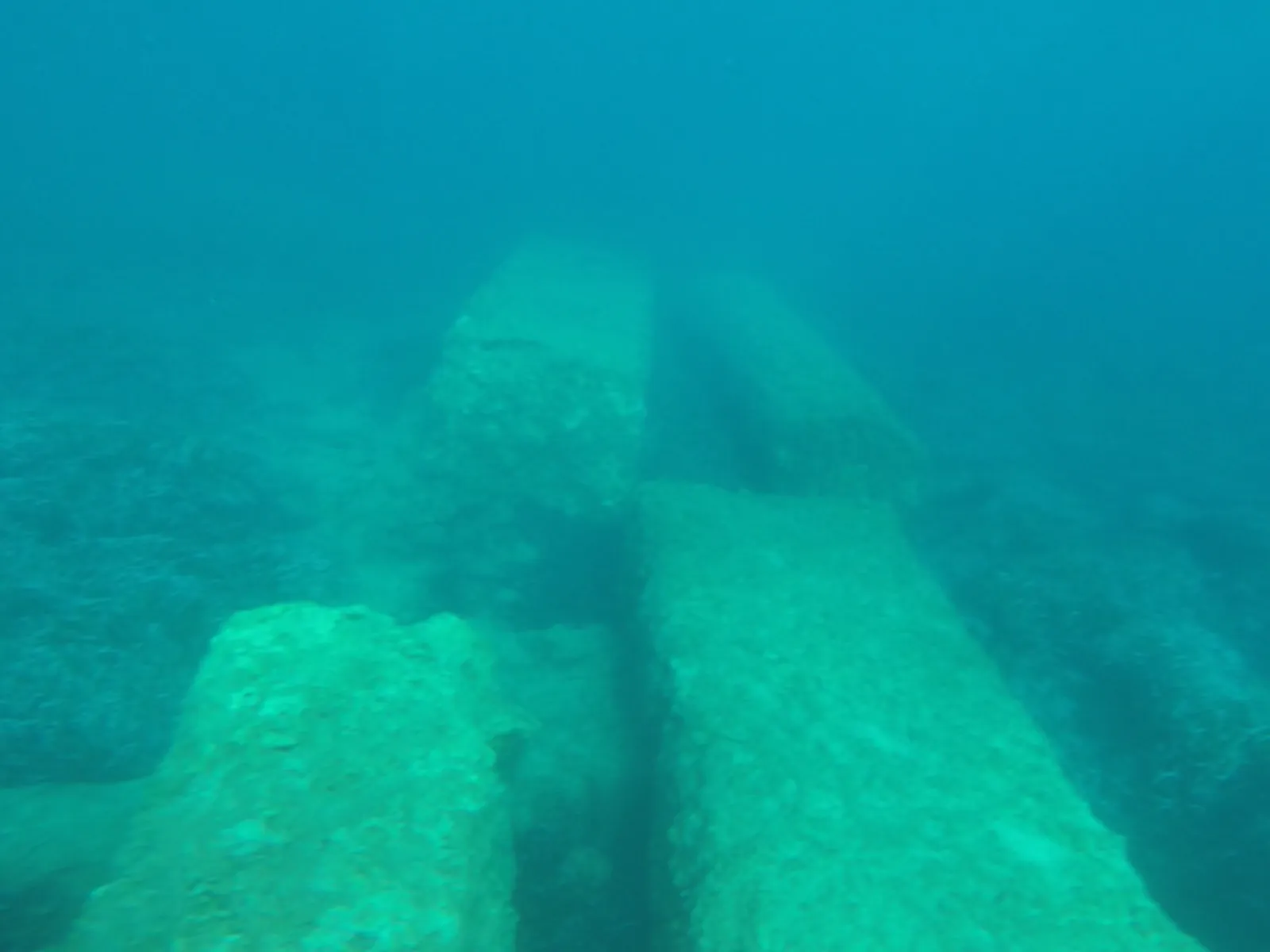
Marble blocks and columns at a shipwreck site in Methoni Bay. P. Gkionis, G. Papatheodorou and M. Geraga, Wikimedia Commons, CC BY 4.0, cropped.

Marine parks: Alonissos and Zakynthos
The National Marine Park of Alonissos Northern Sporades was established in 1992 and covers more than 2,200 km², according to the tourism organisation; the park's own site calls it the first marine park in Greece. Its website lists the rules by zone. In zone A, which takes in the smaller islands such as Piperi, Gioura and Kyra Panagia, scuba diving and spearfishing are banned and boats may not exceed 10 knots within half a nautical mile of the islands. No vessel may come within 3 nautical miles of Piperi, the strict core, except for permitted activities. In zone B, recreation follows national law, and the park says spearfishing is allowed only in four named areas, on Alonissos, Peristera and Megalo Adelfi.
The Zakynthos park, described above, protects turtle nesting beaches. Both parks are now run by management units of NECCA, the national agency for protected areas; we couldn't reach its pages. Our Crete guide covers the national protection of loggerhead turtles and monk seals.
Spearfishing and taking marine life
Spearfishing and scuba do not mix in Greece. Law 3409/2005 bans scuba divers from fishing with a speargun or any other means, from collecting or disturbing marine life, and from keeping spearfishing gear or a catch on the boat. Presidential Decree 373/1985, in the coast guard's consolidated text, says the same from the other side: spearfishers may not use any breathing apparatus or carry one on their boat. It also closes spearfishing in May, from sunset to sunrise, to anyone under 16, and within 200 meters of swimming beaches, harbour works and anchored ships. Fish under 150 grams are off limits, underwater lights are banned, and a spearfisher must tow a yellow buoy with a yellow flag and red diagonal.
Wind and season by region
The Peristera museum dives run from May to October, and many dive days elsewhere are decided by the wind. The Greek National Tourism Organisation describes the meltemi as the seasonal wind that cools the summer; the Alonissos park calls it the strong north wind of August.
The Hellenic National Meteorological Service's station records show how differently it lands. At Athens Hellinikon and on Naxos the prevailing wind is north in almost every month. At Heraklion on Crete it is south from October to May and north-west from June to September, which makes it onshore on the north coast in summer. Rhodes is west in every month but December. Corfu is the exception: south for most of the year and west from June to August, with no northern summer wind in the record. That is why the Cyclades and Crete guides plan around the wind and the Corfu guide does not.
Greece water temperature by region
The sea is at its coldest in late winter and early spring. These are NOAA's satellite averages for 1991 to 2020, for one ocean cell per region:
| Region (NOAA grid cell) | February | May | August | October |
|---|---|---|---|---|
| Ionian, off Corfu's west coast (39.6°N 19.6°E) | 14.8 °C | 18.7 °C | 25.3 °C | 22.1 °C |
| Saronic Gulf, Athens (37.6°N 23.6°E) | 14.7 °C | 18.6 °C | 25.7 °C | 22.7 °C |
| Cyclades, Naxos and Paros (37.1°N 25.4°E) | 15.8 °C | 18.4 °C | 23.8 °C | 21.3 °C |
| Crete, north of Heraklion (35.6°N 25.1°E) | 15.6 °C | 19.1 °C | 25.3 °C | 22.6 °C |
| Dodecanese, off Rhodes (36.4°N 27.9°E) | 17.0 °C | 19.5 °C | 26.3 °C | 23.7 °C |
February and March are the coldest months everywhere, and August the warmest. The cell off Rhodes is the warmest of the five in winter and in August, and the Cyclades cell is the coolest from June to September, at 23.8 °C in August. October is warmer than May in every region, so autumn is the better half of the shoulder season for water. These are surface values over a 30-year baseline; our island guides use more recent years, which ran warmer. Our travel wetsuit guide covers the packing side.
Chambers and emergency numbers
The Diving and Hyperbaric Medicine Unit of the Naval Hospital of Athens, in Kolonaki, says it treats all diving accidents in central, southern and island Greece, for any Greek or foreign citizen, and works on a 24-hour basis. It has three linked chambers that can treat up to 24 people at once, in operation since early 2005, and handles about 30 diving accidents a year. Its published number is 210 7261204, and the hospital switchboard is 210 7261000.
The Naval Hospital of Crete, on the Chania side of the island, says its hyperbaric unit treats diving accidents from all of Crete and the south-east Aegean 365 days a year, for any Greek or foreign citizen, but cannot yet take cases that need intensive care or a ventilator. Its hyperbaric department number is 28210 82759. The Athens unit's page says the other chambers in Greece have one chamber each, but we could not confirm any of them from a facility or authority page, so ask your center which chamber it would use, especially in northern Greece.
In an emergency, call 112, the European emergency number. The tourism organisation also lists 166 for an ambulance, 100 for the police and 1571 for the tourist police. The coast guard has its own short number, but we couldn't confirm it on an official page, so 112 is the one to use. Check that your policy covers chamber treatment; our dive insurance guide covers what a policy pays for.
Staying longer: Schengen and the digital nomad visa
Greece is in the Schengen area, so most visitors who need no visa can stay 90 days in any 180-day period, counted across all Schengen countries. The UK government notes that the EU's new Entry/Exit System, which records fingerprints and a photo at the border, is being rolled out.
For longer stays, Greece has a digital nomad visa in article 68 of its Migration Code, Law 5038/2023. It is for non-EU nationals who work remotely for employers or clients outside Greece. A Greek consulate issues it for up to 12 months and must answer within ten days. You need €3,500 a month, net of tax if you are salaried, plus 20 percent for a spouse and 15 percent per child, and the fee is €75. You may not work for a Greek employer, and you can apply for a two-year residence permit in Greece before the visa expires. Our Paros guide covers the visa in more detail.
How to choose between Greece's regions
Choose Crete if you want a large island with two coasts and a naval chamber on it, and are willing to pick your coast by the wind. Choose Corfu if you want walls and caves and a summer without the Aegean north wind. Choose Naxos or Paros if the wind is part of the plan and you also kitesurf or windsurf. Choose Rhodes or Kos if you want the Dodecanese, where the cell off Rhodes is the warmest in our table in August. Choose Athens if you want a city base with the navy's 24-hour chamber in town. Greece suits less well a diver who wants warm water in spring, wants to dive old wrecks without a guide, or plans to combine scuba with spearfishing.
FAQ: Greece diving
Is there a depth limit for recreational diving in Greece?
Not in the law. Article 2 of Law 4688/2020 allows dive tourism throughout the country regardless of dive depth, except in listed zones such as designated underwater archaeological sites, military areas and shipping lanes. Your certification, your dive center's rules and your insurer's limit still apply.
Can you dive shipwrecks in Greece?
Yes, with conditions. Wrecks sunk more than 50 years ago may only be dived on a dive guided or organised by a dive provider, and you may not touch, alter or move anything on them. For the 91 wrecks declared monuments in 2022, the dive must be notified a day ahead and the wreck must first have been documented and opened by the Ephorate of Underwater Antiquities.
Can you spearfish while scuba diving in Greece?
No. Scuba divers may not spearfish or carry spearfishing gear on their boat, and spearfishers may not use or carry any breathing apparatus. Spearfishing is also closed in May, from sunset to sunrise, to anyone under 16, and within 200 meters of swimming beaches.
How warm is the sea in Greece for diving?
In NOAA's 1991 to 2020 averages the sea is about 14.7 to 17.0 °C in February and 23.8 to 26.3 °C in August, depending on the region. The Saronic Gulf off Athens is the coolest of five regional cells in February, the sea off Rhodes the warmest in winter and August, and the Cyclades the coolest in summer.
Where are the recompression chambers in Greece?
The Naval Hospital of Athens runs a three-chamber unit, treating diving accidents from central, southern and island Greece on a 24-hour basis. The Naval Hospital of Crete treats diving accidents from Crete and the south-east Aegean 365 days a year. In an emergency, call 112.
Note: Conditions, safety guidance and regulations change. Verify current information with official sources, including the dive operator, the port authority, the Ephorate of Underwater Antiquities, the park authority and the relevant government department, before you travel or dive.
Founder of NOMADREEF and a former digital nomad. This guide is sourced from the references below; conditions, prices and rules change, so verify current details, and follow qualified local guidance and safety briefings. About the author · LinkedIn ↗
Sources
- Dive law (primary). Government Gazette: Law 4688/2020, FEK A 101 (PDF), articles 2, 6, 7, 9 and 62; Law 3409/2005, FEK A 273 (PDF), articles 11 and 12 (Greek). Read 11 November 2026.
- Wreck monuments (primary). Joint ministerial decision 92225/2022, FEK B 1273/2022 (PDF), article 1 and preamble (Greek). Read 11 November 2026.
- Accessible sites and Kea. Greek National Tourism Organisation, Alonnisos Underwater Museum and the underwater world of Kea. Read 11 November 2026.
- Marine parks. National Marine Park of Alonissos Northern Sporades, home, zone rules and legislation (Greek); FEK D 621/2003 (PDF). Greek National Tourism Organisation, Alonissos park and Zakynthos park. Read 11 November 2026.
- Spearfishing (primary). Hellenic Coast Guard, Presidential Decree 373/1985, consolidated text (PDF), article 3 (Greek). Read 11 November 2026.
- Wind (primary). Hellenic National Meteorological Service, climatic data by city for Kerkyra, Athens Hellinikon, Naxos, Iraklio and Rodos, prevailing wind direction by month, 1955–2010 (Naxos period not stated). Greek National Tourism Organisation, climate. Read 11 November 2026.
- Sea temperature. NOAA PSL, OISST v2.1 monthly long-term means 1991–2020, five 0.25° grid cells, read for this page (primary dataset, our calculation). Read 11 November 2026.
- Chambers (primary). Naval Hospital of Athens, Diving and Hyperbaric Medicine Unit; Naval Hospital of Crete, mission and phone numbers (Greek). Read 11 November 2026.
- Emergency numbers. Greek National Tourism Organisation, health and safety; UK Foreign, Commonwealth & Development Office, getting help. Read 11 November 2026.
- Entry and remote work (primary). Law 5038/2023, Migration Code, FEK A 81 (PDF), article 68; Ministry of Migration and Asylum, Migration Code page; Law 5275/2026, FEK A 17 (PDF), checked for changes to article 68; European Commission, visa policy; UK Foreign, Commonwealth & Development Office, entry requirements. Read 11 November 2026.
- Left out. The culture ministry's own pages on Peristera, other accessible underwater sites and the wrecks opened since 2022, which refused our requests; the coast guard's short number, whose official pages refused our requests; current zone rules of the Zakynthos park, whose management pages returned errors; the status of the newly announced Ionian and southern Aegean marine parks; chambers outside Athens and Crete; whether parts of Law 3409/2005 were amended after 2020; dive prices, which are on the island guides and operator lists.