Best Wreck Diving Destinations
 by Yannick SchrothAug 3, 20266 min read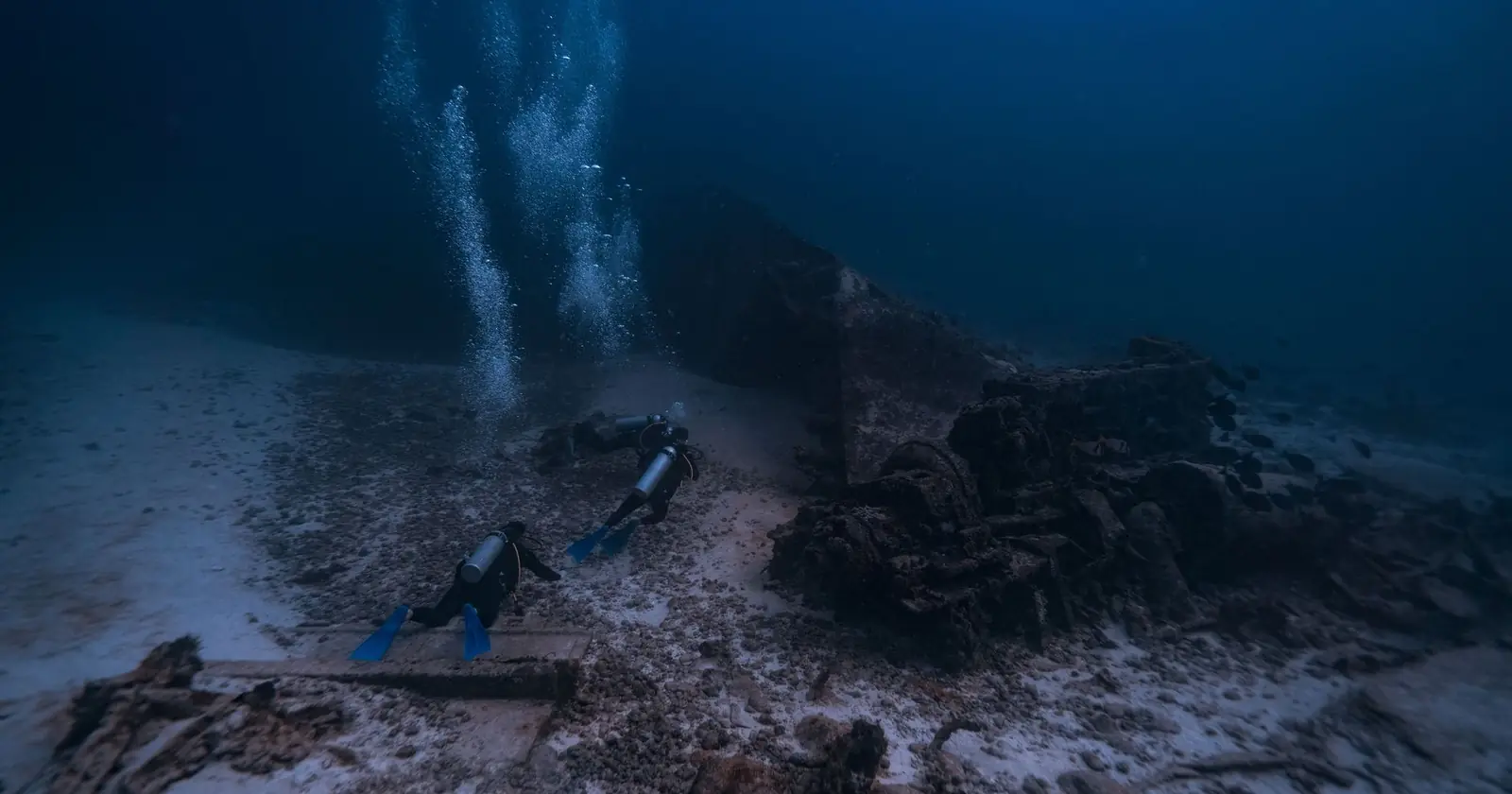
Photo: Harvey Clements / Pexels.
What makes a wreck worth diving
Wrecks are sorted here by depth and penetration, because those two decide who can dive them. A wreck in 12 metres you can swim around is a different proposition from one at 40 that needs training you may not have, and nothing on this list needs you to go inside to be worth the trip.
Outside the wreck and inside it are two different dives
The line is not a matter of nerve. As DAN puts it, “like a cave or ice dive, however, you can no longer ascend directly to the surface once you enter a wreck”. That single sentence is the whole distinction: outside, a problem ends with an ascent; inside, it ends with finding the way out first.
What that asks for is specific, and DAN lists it. Training: “never venture inside a shipwreck until you have advanced wreck-dive training from a certified, qualified dive training professional”. A line: a properly laid line from a wreck reel is “your direct path to getting out safely”. Redundant gas: an alternate air source, a pony bottle or twin tanks with a long hose, and a plan holding “more than enough air for the dive team to exit the wreck, ascend, make a safety stop or complete any obligatory decompression and then return to the surface with air to spare”. Light: a strong primary and backups, because daylight stops at the hull.
Read against that list, a fresh advanced certificate is not a wreck-penetration qualification. The wrecks below are all worth diving from the outside, which is where most people should stay.
Coron, Palawan
A fleet of well-preserved WWII wrecks in warm, sheltered Palawan water.
WWII wreck fleetRead the guide → 8°20′S 115°41′E · IndonesiaAmed, Bali
The USAT Liberty at nearby Tulamben is one of the world's most accessible wrecks.
USAT Liberty, easyRead the guide → 36°02′N 14°14′E · MaltaGozo
Purpose-sunk and historic wrecks in clear Mediterranean water off Malta's Gozo.
Mediterranean wrecksRead the guide → 27°24′N 33°41′E · EgyptEl Gouna
A Red Sea base with access to famous wrecks, including the Thistlegorm by day boat or liveaboard.
Red Sea, ThistlegormRead the guide → 11°20′N 124°07′E · PhilippinesMalapascua
Wrecks alongside the famous dawn thresher-shark dives off this small Cebu island.
Wrecks + threshersRead the guide → 5°54′N 102°43′E · MalaysiaPerhentian Islands
Accessible wrecks in cheap, warm water off Malaysia's car-free islands.
Cheap, warmRead the guide →Picking a wreck-diving spot
- World-class WWII wrecks: Coron in Palawan.
- An easy, famous wreck for all levels: the USAT Liberty at Tulamben, from Amed.
- Mediterranean and Red Sea wrecks: Gozo and the Red Sea from El Gouna.
Most of these are legally protected, and the rule has a number
A wreck that has been down long enough to be worth diving is usually old enough to be something else as well: protected heritage. The threshold is not a judgement call.
UNESCO's 2001 Convention on the Protection of the Underwater Cultural Heritage defines its subject as “all traces of human existence of a cultural, historical or archaeological nature which, for at least 100 years, have been partially or totally immersed, periodically or permanently, under the oceans and in lakes and rivers”. A hundred years is the line. Everything from the First World War is across it; the Second World War wrecks are crossing it now.
The convention names what it exists to stop: heritage that “faces multiple threats such as treasure hunts, looting and commercial exploitation”. It is also explicit that recreational access is part of the point rather than the enemy of it: “educational and recreational” use and “responsible access” are in its own description of what the heritage is for.
For a visiting diver that turns a vague etiquette into a specific one. Taking a souvenir off a hundred-year-old wreck is not a grey area with a grumpy guide attached; it is the activity an international convention was written about. Photograph it, note the depth, leave the porthole.
FAQ: Wreck Diving Destinations for Nomads
Where is the best wreck diving?
Coron in Palawan is world-class, with a fleet of well-preserved WWII wrecks in warm, sheltered water. For a famous, accessible wreck suitable for most levels, the USAT Liberty at Tulamben (from Amed, Bali) is hard to beat. Gozo (Malta) and the Red Sea from El Gouna add historic and purpose-sunk wrecks.
Do I need special training for wreck diving?
To swim over and around wrecks, your Open Water certification is usually enough at recreational depths. To penetrate the inside of a wreck, you need proper wreck training and often the right equipment, because overhead environments carry real risk. Always stay within your certification and dive with a qualified guide.
Sources
- When a wreck becomes protected heritage. UNESCO, 2001 Convention on the Protection of the Underwater Cultural Heritage: underwater cultural heritage is “all traces of human existence of a cultural, historical or archaeological nature which, for at least 100 years, have been partially or totally immersed, periodically or permanently, under the oceans and in lakes and rivers”; the heritage “faces multiple threats such as treasure hunts, looting and commercial exploitation”, and its “responsible access” is part of what the convention protects. unesco.org. Read 12 September 2026.
- Why entering a wreck is a different dive, and what it requires. Divers Alert Network, “Hazards in Wreck Diving”: the loss of a direct ascent once inside, the advanced wreck training required before penetration, the wreck reel and laid line, redundant gas and the exit-plus-decompression gas plan, and primary and backup lights. dan.org. Read 8 September 2026.
- Navigation inside an overhead. Divers Alert Network, “Advanced Underwater Navigation”, on never entering an overhead environment without a direct line back to the point of entry, and on line laying as a skill of its own. dan.org. Read 8 September 2026.
- Each entry links to our full guide for that place, and those guides carry the external sources and read dates behind the claims summarised here. They are the place the readings are recorded, not the evidence for them: Coron, Palawan, Amed, Bali, Gozo, El Gouna, Malapascua, Perhentian Islands.