Best Flat-Water Kitesurfing Destinations
 by Yannick SchrothAug 5, 20266 min read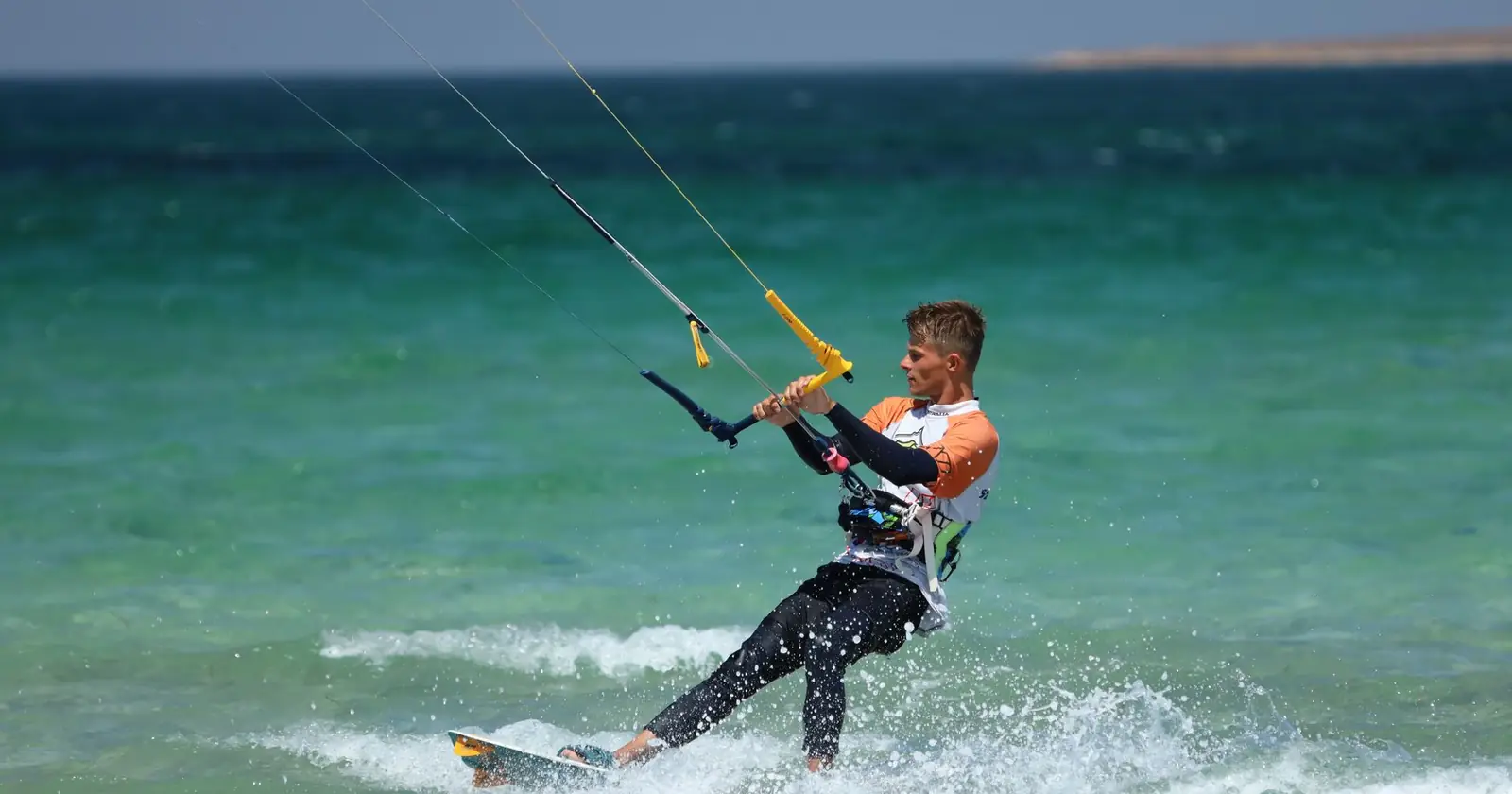
Photo: Serg Alesenko via Pexels (free license).
What makes water flat enough to ride
Flat water is the whole point here, so the rule is narrow: a lagoon, sandbar or shallow bay that stays flat in the wind that actually blows there. Tide dependency is noted for each, because several of the flattest spots in the world are only flat for part of the day, and that decides whether you get one session or three.
Why the wind direction matters more than the flatness
A lagoon can be glassy and still be the wrong place to ride. IKO puts the rule plainly: it is safest where the wind blows diagonally onto the land or across it, cross-onshore or cross-shore: “because the wind will always blow you back to the land should you take a bad crash or have a kit malfunction”.
Offshore is the direction to refuse. IKO's advice is not to ride it “unless you are certain that there is a rescue boat ready”, because a kite down in offshore wind means swimming against the thing that is pushing you out. Cross-offshore is the sly one: it looks rideable and IKO notes the wind “tends to be very gusty on the beach, making the kite unpredictable and dangerous to handle”.
The VDWS adds the launch-side rules that go with it: assess the wind on the shore and further out, allow at least three line lengths of landing space, and keep the start area well downwind of everyone else. Between those, a spot is judged on wind direction and rescue cover before it is judged on how flat the water looks in the photograph.
Dakhla
A huge, shallow flat-water lagoon with remarkably consistent trade winds, and ocean waves next door.
Big lagoon, near-constant windRead the guide → 8°14′N 79°46′E · Sri LankaKalpitiya
A large, shallow, forgiving lagoon with reliable monsoon wind, very cheap living and many IKO schools.
Cheapest lagoon baseRead the guide → 3°37′S 38°44′W · BrazilCumbuco
Relentless Ceara trade winds in season, warm water, lagoons ideal for learning and a coast of downwinders.
Trade winds, downwindersRead the guide → 27°24′N 33°41′E · EgyptEl Gouna
Shallow, flat lagoons at Mangroovy Beach where you can often stand up, with steady thermal side-shore wind.
Standable, beginner-proofRead the guide → 20°28′S 57°19′E · MauritiusLe Morne
A large, shallow flat lagoon for learning and freestyle, with the expert-only One Eye reef wave outside it.
Lagoon plus One EyeRead the guide → 2°50′S 40°24′W · BrazilPrea
July-to-January trades with flatter water at low tide and epic downwinders toward Jericoacoara.
Flat at low tideRead the guide →Picking a flat-water spot
- Learning from zero: El Gouna, where the lagoons are shallow enough to stand in, or Kalpitiya's forgiving lagoon.
- The most wind days: Dakhla, on a lagoon with near-constant trade winds, and the Ceara coast in season.
- Cheapest month: Kalpitiya, with very cheap living and a nomad visa route.
- Freestyle and a wave when you are ready: Le Morne, where the lagoon sits beside expert-only One Eye.
The two written standards behind flat-water kiting
Flat-water lagoons are where people learn and where people progress fastest, which makes two published standards worth knowing, one about the bar in your hands, one about what the sport looks like at the top.
The bar. Since 14 February 2020, ISO 21853 has covered “quick-release systems on kite bars and safety leashes”, with measurable limits: a maximum release force of 170 N or less and an opening time of two seconds or less, tested not only clean and dry but in dry sand, in water with and without sand, and cold and wet. Lagoon spots are sandy and shallow, which is exactly the condition the standard was written for; if you are renting, the question is whether the bar postdates 2020.
And the shape of the sport. Kiteboarding's racing class is a foiling class, and it is written down. The IKA Formula Kite class rules, effective 8 May 2026, open by recording that “The IKA Formula Kite Class was adopted as a World Sailing international class in 2013”. They define a “Foil System” as a “Hull appendage primarily used to produce vertical lift and/or affect leeway”, and rule C.8.1 is one sentence long: “Only one foil system is permitted to be attached to the hull.”
The quiver limit is the part worth borrowing. A racer may register a maximum of four kites for an event, and “Not more than one production kite shall be registered per size range”, Large at 15 m and above, Medium from 11 to 15 m, and so on down. People who race at the top of the sport are held to four kites, one per band. It is a useful number to hold against the belief that a flat-water trip needs a van full of gear.
FAQ: Flat-Water Kitesurfing Spots
Where is the best flat water for learning to kitesurf?
El Gouna is the gentlest we cover: the shallow, flat lagoons at Mangroovy Beach let you often stand up, and the wind is steady thermal side-shore. Kalpitiya's large, shallow lagoon is similarly forgiving and much cheaper to stay in, with many IKO-affiliated schools and kite camps.
Is flat water only for beginners?
No. Flat lagoons are where freestyle and foiling progression happens, which is why riders keep returning to Dakhla, Le Morne and the Ceara coast long after they can ride upwind. Several of these bases also sit next to real waves, so Dakhla has ocean swell nearby and Le Morne has the expert-only One Eye outside the lagoon.
Sources
- The quick-release standard. Global Kitesports Association on ISO 21853:2020, in force “14th February 2020”, covering “quick-release systems on kite bars and safety leashes” with a “maximum release force (equal to or less than 170N) and opening time (equal to or less than 2 seconds)”, tested across dry and clean conditions, dry sand, water with and without sand, and cold and wet, and certified at the Fraunhofer Institute in Rostock. global-kitesports.org. Read 12 September 2026.
- Kiteboarding's foiling class, and its quiver limit. International Kiteboarding Association, Formula Kite class rules, effective date 08-May-2026, status Approved, 18 pages: “The IKA Formula Kite Class was adopted as a World Sailing international class in 2013”; terminology (a), “Foil System: Hull appendage primarily used to produce vertical lift and/or affect leeway”; C.8.1(a), “Only one foil system is permitted to be attached to the hull”; C.4, “a maximum of four registered series production kites shall be registered for an event” and “Not more than one production kite shall be registered per size range: Large: Nominal Size of 15m or bigger; Medium: Nominal Size of 11m to 15m”. sailing.org. Read 12 September 2026.
- Wind direction and why offshore is refused. International Kiteboarding Organization, security and riding guidance: cross-onshore and cross-shore safest because the wind blows a rider back to land after a crash or kit failure; offshore not advised without a rescue boat standing by; cross-offshore gusty on the beach and unpredictable to handle. ikointl.com. Read 9 September 2026.
- Launch and space rules. VDWS kitesurfing safety rules: assessing wind on the shore and further offshore, at least three line lengths of landing space, and a start area well downwind of other water users. vdws.de. Read 9 September 2026.
- Each entry links to our full guide for that place, and those guides carry the external sources and read dates behind the claims summarised here. They are the place the readings are recorded, not the evidence for them: Dakhla, Kalpitiya, Cumbuco, El Gouna, Le Morne, Prea.