Kitesurfing Le Morne, Mauritius: The Trip Guide
 by Yannick Schroth
Aug 1, 2026
7 min read
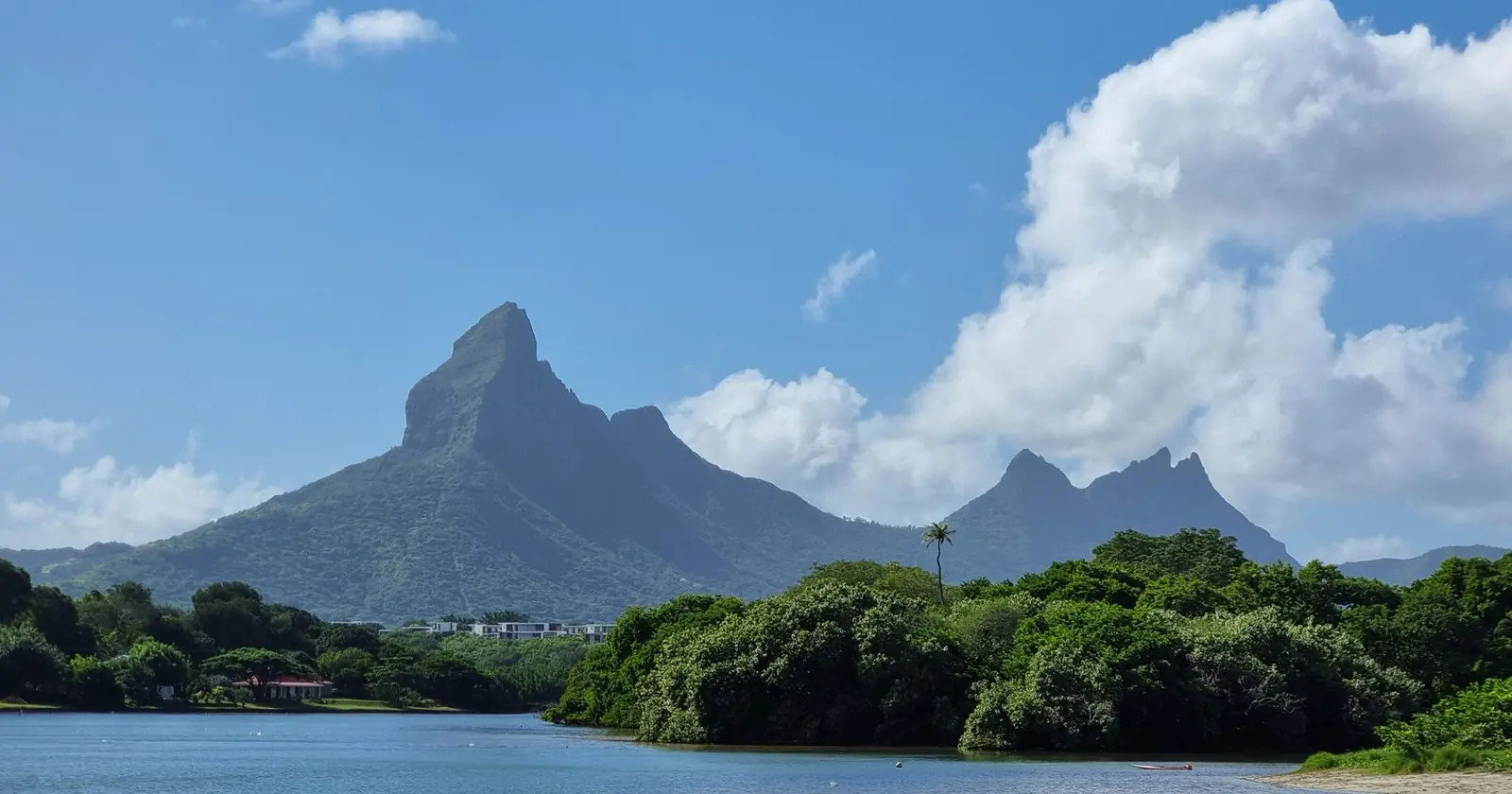
Photo: Zak H / Pexels.
Key takeaways
- Go in the austral winter (May to October) for the most consistent southeast trade winds; June to September is the sweet spot.
- Two spots in one bay: a shallow, flat lagoon for beginners and freeriders, and One Eye, a heavy expert-only reef wave.
- One Eye is not a beginner spot: it breaks over sharp reef with strong current and open ocean downwind, so use boat support and never ride it beyond your level.
- You almost certainly do not need a special visa; most nationalities get up to 180 cumulative days per calendar year on standard tourist entry.
- The Mauritius Premium Visa is open and free for stays over six months, but the tourist allowance covers nearly every kite trip.
Kitesurfing Le Morne: the season and water conditions
Le Morne works on the southeast trade winds (the local alizés), which are a winter phenomenon in the southern hemisphere. The dependable window is roughly May to October, with June, July, August and September the most consistent for both strength and number of windy days. ION Club, which runs a center at Le Morne, gives an average of about 15 to 26 knots from April to October and 12 to 20 knots from November to March.
That makes Le Morne the mirror image of Sal in Cape Verde, which is windiest roughly from November to June; our Cape Verde vs Mauritius comparison sets the two seasons side by side.
Mauritian summer (November to April) is the off-season for wind: it is warmer and greener but much lighter and less reliable, and it overlaps the regional cyclone season, so it is not a trip you plan a kite holiday around. Water is warm year-round; in winter it sits around the low-to-mid 20s Celsius, so most people ride in a shorty or a 2mm, occasionally boardshorts on the warmest days. As always, treat these as typical patterns and check a live forecast (Windguru and Windy both cover Le Morne) before you commit dates.
The spot: lagoon flat-water and One Eye
The bay gives you two very different playgrounds. The lagoon behind the reef is large, shallow and mostly flat, with waist-to-chest depth in big areas, which makes it one of the better places anywhere to learn kitesurfing or to session freestyle and foil in safe water. Schools run their teaching here, and there is space to spread out.
One Eye is the reason advanced riders fly in. ION Club describes it as a wave of “shallow waters and considerable power”, “reserved for experienced wave riders with their own kite, wing, or windsurfing equipment”, with a safety boat “always ready to depart”. It is genuinely expert terrain: shallow sharp reef, real current, deep water and open Indian Ocean on the outside, and a downwind drift that punishes gear failure. Ride it only when your kite control, self-rescue and wave skills are solid, ideally with boat support. Between those two extremes there is plenty of choppy open-lagoon riding for intermediates building toward the wave.
One rule few visiting kiters hear about: regulation 10 of the Tourism Authority (Dolphin and Whale Watching) Regulations 2012 says no person shall knowingly do kite surfing, jet skiing, paragliding, diving or windsurfing within 500 meters of the closest dolphin or whale. If a pod or a whale surfaces near your session at Le Morne, the legal answer is to ride away from it, not toward it. More on the marine rules in Mauritius diving.
Getting to Kitesurfing Le Morne
You fly into Sir Seewoosagur Ramgoolam International Airport (MRU), on the southeast coast near Mahebourg. Mauritius is well connected: direct long-haul routes run from several European hubs, from the Gulf (Dubai), from South Africa (Johannesburg) and from nearby Reunion, so most itineraries are a single connection or a direct flight depending on where you start.
From the airport, Le Morne is on the opposite, southwest corner of the island, about 38 km away in a straight line (our own measurement) and further by road: ION Club's directions follow the south coast road through Souillac, Bel Ombre and Baie du Cap. The simplest option is a pre-booked hotel transfer or an airport taxi; ask your accommodation for the current rate and journey time. There is public bus service on the island but it is slow and impractical with board bags, so most kiters transfer by car and either rent a car locally or rely on taxis and school shuttles once at Le Morne.
Cost, accommodation and the kite scene
Le Morne is a resort peninsula, so lodging spans from a handful of high-end beach resorts to guesthouses and self-catering apartments in and around the nearby village and the La Gaulette / Le Morne area. Mauritius sits at mid-range prices for the Indian Ocean: cheaper than the Maldives, more expensive than mainland Southeast Asia. Eating local (dholl puri, roti, street stalls, small restaurants) is inexpensive; resort dining is not.
Several kite schools operate on the beach, offering lessons, supervised sessions, storage and gear rental. Each publishes its own rates for private lessons, packages, rental and boat or downwinder trips, and they move year to year, so compare current price lists directly. Because this is a marine-protected, tightly used lagoon shared with swimmers and fishing zones, book through an established local school rather than freelancing on day one.
Wifi and staying connected
Mauritius has genuinely good connectivity by regional standards: widespread 4G, growing 5G, and fibre in towns, run mainly by Mauritius Telecom (the my.t brand) and Emtel. For a working nomad that is a real advantage over more remote island spots.
The caveat is location. Le Morne is at the far southwest tip, more resort-and-village than city, so mobile coverage and hotel wifi can be more variable than in Port Louis or the central towns, and resort wifi quality differs a lot property to property. If your income depends on being online, get a local SIM or eSIM on arrival as a backup to hotel wifi, and if a call or upload is critical, ask specifically about the property's wifi before booking rather than trusting the listing. See our eSIM guide for options that work in Mauritius.
Entering Mauritius: visa-free and visa-on-arrival stays
For a normal kite trip, most travelers do not need any special visa. Mauritius admits many nationalities visa-free or with visa-on-arrival, and the standard tourist allowance is generous: up to a cumulative 180 days of stay in a calendar year, according to the official Mauritian residency and passport information. That comfortably covers a full winter season for most people. Always confirm your own nationality's terms on the official Mauritian immigration/passport portal before you fly.
If you want a longer, formal remote-work stay, Mauritius runs the Premium Visa, and this one is genuinely open and operational, not merely announced. Per the Economic Development Board and the official residency portal, it is valid for a period exceeding six months up to one year, is renewable, is issued free of charge, and explicitly allows holders to work remotely for a foreign employer or business while in Mauritius. You are expected to show you can support yourself, with the main source of income coming from outside Mauritius and travel and health insurance for the stay. The EDB's Premium Visa FAQ sets the income floor at a “minimum amount of USD 1500 per month for each adult applicant and minimum amount of USD 500 per month for each dependent child”, with bank statements for the last three months as evidence. Verify the current documentation at the time you apply, as the exact requirements can change. Bottom line: use the tourist entry for a standard season-long trip, and reach for the Premium Visa only if you specifically want a longer, formal remote-work stay.
FAQ: Le Morne
When is the best time to kitesurf Le Morne?
The reliable wind season is the austral winter, roughly May to October, driven by the southeast trade winds. June to September is the most consistent stretch. The November to April summer is much lighter, warmer and overlaps cyclone season, so it is not recommended for a dedicated kite trip. Always check a live forecast such as Windguru before locking in dates.
Do I need a visa to kitesurf in Mauritius?
For a normal trip, most likely not. Many nationalities enter Mauritius visa-free or with visa-on-arrival and can stay up to a cumulative 180 days in a calendar year, which covers a full season. Confirm your nationality's terms on the official Mauritian passport/immigration portal. For longer formal remote-work stays there is the open and operational Premium Visa (six months to one year, renewable, free).
Is the Mauritius Premium Visa actually available for digital nomads?
Yes. Unlike some announced-but-not-open schemes, the Premium Visa is live: the Economic Development Board and residency.mu list it as valid for over six months up to one year, renewable, issued free of charge, and it explicitly permits working remotely for a foreign employer. You must show income sourced from outside Mauritius: the EDB FAQ sets a minimum of USD 1,500 a month for each adult applicant and USD 500 a month for each dependent child, backed by three months of bank statements, plus travel and health insurance. Verify the current requirements before applying, as details can change.
Can a beginner learn to kitesurf at Le Morne?
Yes. The large, shallow, flat lagoon is well suited to lessons and is one of the reasons Le Morne is popular. Learn in the lagoon with an established school; the IKO and VDWS registers list some of the Le Morne schools, which you can check on our Mauritius list. What is not for beginners is One Eye, the outer reef wave, which has sharp reef, strong current and open ocean downwind and should only be ridden by advanced kiters, ideally with boat support.
How much does a kite trip to Le Morne cost?
Mauritius is mid-range for the Indian Ocean. The main costs are lessons or rental, boat or downwinder fees, the airport transfer across the island and accommodation, which spans budget guesthouses to high-end resorts. Schools publish their own price lists and transfer rates vary by accommodation, so get current quotes from the school and your host before you book.
Yannick Schroth
Founder of NOMADREEF and a former digital nomad. This guide is sourced from the references below; conditions, prices and rules change, so verify current details, and follow qualified local guidance and safety briefings. About the author · LinkedIn ↗
Sources
- Corrected 14 October 2026. An earlier version of this page said One Eye is named for a gap in Le Morne mountain that looks like an eye from the water, and called it a left-hander; neither is stated by a source we could read, so both are removed. It gave lessons at 60 to 80 euros an hour, an airport transfer of 30 to 50 euros and a 45-minute to one-hour drive without a source; those figures are removed, and the distance is now our straight-line calculation. It also told readers to look up the Premium Visa income threshold themselves; the EDB FAQ's figure, USD 1,500 a month per adult and USD 500 per dependent child, is now on the page. An unsourced “15 to 25 knot” winter range is replaced by ION Club's own figures, and the line that most schools are IKO-affiliated is removed: of the three Le Morne kite schools we found in a register, one is listed with IKO and two with VDWS. Read 14 October 2026 (EDB Premium Visa FAQ, ION Club Le Morne)
- Tourism Authority (Dolphin and Whale Watching) Regulations 2012, GN 154 of 2012, regulation 10, read 24 September 2026 (tourismauthority.mu)
- Economic Development Board Mauritius, Premium Visa FAQ: valid “for a period exceeding six months up to one year and is renewable”; “Minimum amount of USD 1500 per month for each adult applicant and minimum amount of USD 500 per month for each dependent child”; “Copy recent bank statements for the last three (3) months”; “The Premium Visa is issued free of charge.” Read 14 October 2026 (edbmauritius.org)
- ION Club Le Morne, operator page: winds of “12 to 20 knots during the Southern Hemisphere summer (November to March) and approximately 15 to 26 knots in winter (April to October)”; One Eye “characterized by shallow waters and considerable power”, “reserved for experienced wave riders with their own kite, wing, or windsurfing equipment”; directions from the airport via Souillac, Bel Ombre and Baie du Cap. An operator describing its own spot. Read 14 October 2026 (ion-club.net)
- Official Mauritius residency portal, Premium Visa (residency.mu)
- Mauritian passport/immigration guidance on 180-day tourist stay
- Windguru / Windy seasonal wind data for Le Morne
- Le Morne kite school listings
- Mauritius Telecom (my.t) and Emtel network coverage information