El Gouna: A Red Sea Base for Kiting, Diving and Working
 by Yannick Schroth
Jul 31, 2026
7 min read
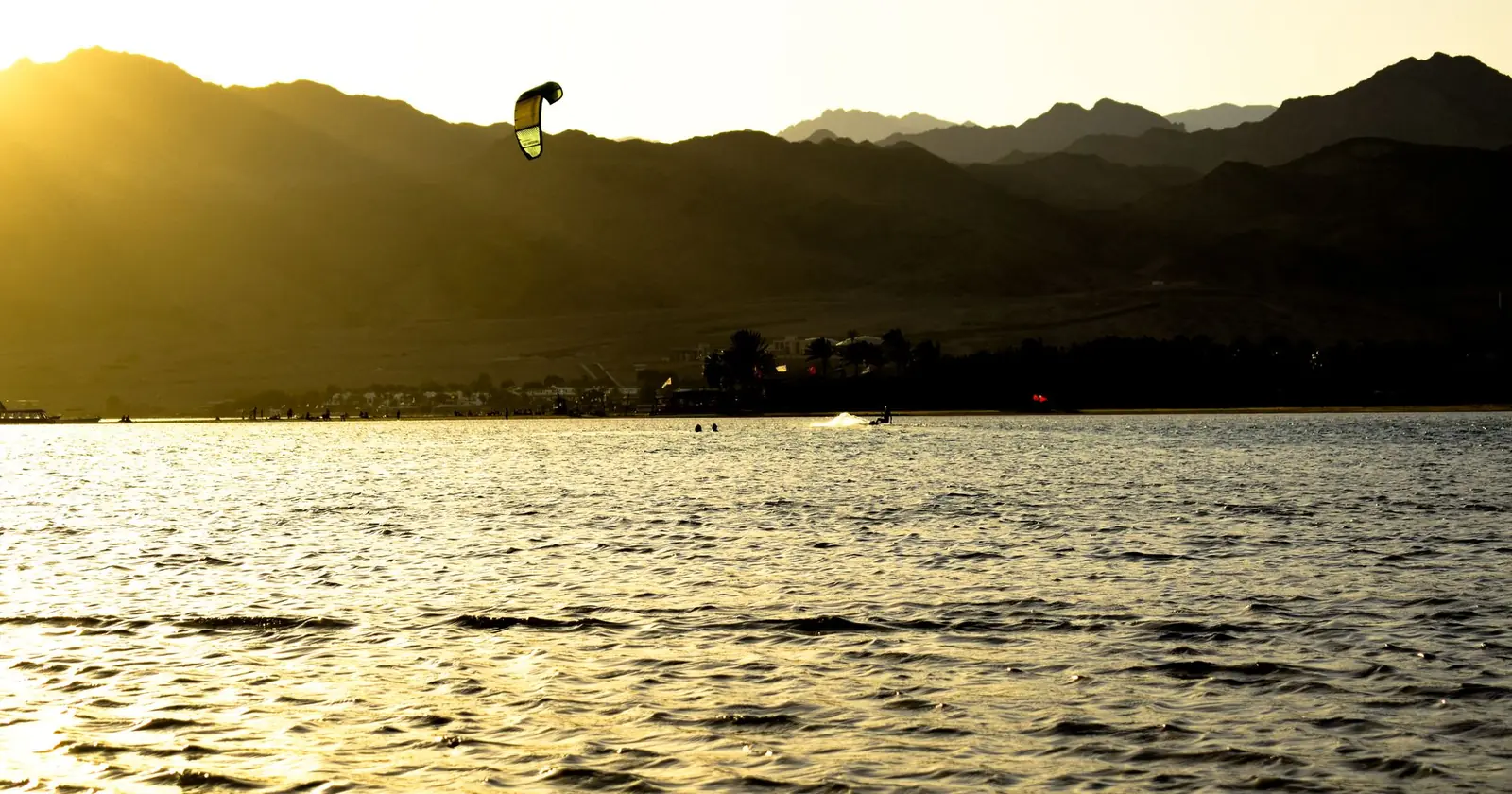
Photo: Sameh Solow / Pexels.
Figures are indicative and "as of 2026"; verify prices, seasons and visa rules before you rely on them.
Key takeaways
- Flat, shallow lagoons at Mangroovy Beach make it a top place to learn or progress kiting; one kite center says its own weather station counts about 77% of days a year as rideable
- Diving is warm and varied, with the Abu Nuhas wrecks a boat ride away and a nine-patient hyperbaric chamber at El Gouna Hospital
- In ERA5 model data the wind is strongest June to September and has its lowest means in November and December; core summer is most reliable but hits 38C on land
- Good fibre wifi, day-pass coworking and an established nomad scene, cheap by Western standards but pricier than the rest of Egypt
- Egypt's tourist e-visa costs USD 30 single entry or USD 65 multiple entry; the e-visa portal lists no nomad category
The watersport: flat-water kiting and warm-water diving
Kiting is the headline act. The main spot is Mangroovy Beach on the north edge of town, where a chain of shallow, flat lagoons sits inside a reef. That flat water plus a steady thermal side-shore wind is close to ideal for beginners doing their first waterstarts, and it still keeps intermediates happy for freestyle and foiling. The town's own kite page gives an average of 15 to 20 knots, and the water is warm, so you rarely need more than a shorty.
Diving is the quieter second string but genuinely good. From El Gouna you can reach gentle reef dives like Fanadir with turtles and morays, the Shaab el Erg reef system with its resident bottlenose dolphins (often called Dolphin House), and, as a longer day boat, the Abu Nuhas wreck graveyard with the Giannis D, Carnatic, Chrisoula K and Kimon M. Visibility is typically excellent and marine life is healthy by Red Sea standards.
Most people base themselves with one kite school for lessons or storage and book diving separately through a day-boat center. Bringing your own kite is easy; for diving, many nomads just rent or hire per trip rather than lug a full kit.
When to go, and the seasonal trade-offs
El Gouna works all year, but the wind is not identical every month. The ERA5 weather model has a cell of about 25 km centered some 12 km from Mangroovy Beach. In its daytime hours from 2015 to 2024 (our calculation), June to September is the windiest stretch: August and September average 15 to 16 knots, and 77 to 83% of daytime hours reach 12 knots or more. From November to May that share sits at 54 to 60%, with November and December the weakest means at about 12 knots. In every month at least 80% of daytime hours blow from the north or north-west. A model cell is not lagoon wind, but the pattern is the useful part: in winter a week can include several flat days. One school, Kite Power, says its own weather station counts about 77% of days a year as rideable.
The catch is heat versus wind. The windiest months are also the hottest: land temperatures push into the high 30s Celsius in mid-summer, which is punishing if you are working through the day and only kiting at the thermal peak. Spring and autumn are the sweet spot for combining comfortable working weather with solid wind.
For diving, water sits around 22C in February up to roughly 29C in summer; a 5mm wetsuit is sensible in the coolest months. As of 2026 these are typical ranges, so check a current forecast before you commit to dates.
The nomad reality: wifi, cost of living and visa
Connectivity is the reason El Gouna beats scruffier alternatives. Fibre is widely available and strong for Egypt, and there is a small but real coworking scene: day passes land around the 10 dollar mark and monthly memberships around 100 dollars, with cheaper community options too. Back it up with a local eSIM for tethering, because no single connection anywhere is bulletproof.
Cost of living is affordable by Western standards but not dirt cheap by Egyptian ones, because you are paying for the bubble. As a rough 2026 ballpark, budget somewhere in the region of a few hundred dollars a month for a single person plus rent, with long-stay flats often quoted around 500 to 800 dollars a month; verify current listings before you rely on any figure, as rents move with season and the pound.
On entry: most visitors need a tourist visa. Egypt's e-visa portal, run by the Ministry of Interior, lists USD 30 for a single-entry and USD 65 for a multiple-entry tourist visa and asks for a passport valid at least 6 months from arrival. UK travel advice says tourist e-visas are valid for up to 3 months, while a visa bought at an airport kiosk on arrival costs USD 30 in cash and is valid for up to 30 days (both as of October 2026; other nationalities should check their own government's advice). The portal lists only tourism visas, with no nomad or remote-work category. For a longer stay, the same UK advice says extensions are applied for at the Egyptian Passport and Immigration Offices, and that leaving on a visa expired by more than 14 days can bring a fine.
The reason the reef here still has coral on it
Diving out of El Gouna, you tie up to a buoy rather than drop an anchor. The buoys are infrastructure, and who put them there says a lot about how seriously the local industry takes its reef.
HEPCA, a non-governmental organisation “that works primarily with marine and land conservation in the Red Sea Governorate in Egypt”, has been at it since 1992. Its mooring system runs to 922 buoys across 8 zones, protecting 168 dive sites, described on its own pages as the largest mooring system in the world. Every one of those is an anchor that does not go through a reef.
The same organisation handles the unglamorous half: roughly 350 tons of solid waste a day across 40 zones with about 500 employees. When a place looks clean, that is a daily operation at work.
If a boat anchors on the reef instead of picking up a buoy, say something: it is undoing HEPCA's work.
Getting there, and the scene once you land
Access is genuinely simple. Fly into Hurghada International (HRG), which has plenty of European charter and scheduled flights; the town's own site puts El Gouna less than 40 minutes from the airport by road. If you are deciding between living here or in Hurghada itself, our El Gouna vs Hurghada comparison sets the two side by side. Many kite schools will collect you with your board bag included, which saves haggling at the airport.
The town itself is a planned, canal-laced resort with marinas, restaurants, gyms and a walkable, safe feel that suits long stays. Alcohol and nightlife are available inside the bubble, crime is low, and the international crowd makes it easy to meet people. That same design is the downside: it is polished and a little artificial, prices are inflated versus mainland Egypt, and if you want raw local culture you will need to head into Hurghada or further afield.
Safety note: wind, reef, sun and water
Kiting: take a proper lesson if you are new, respect the flagged swimming zones, and learn the local right-of-way and self-rescue before you launch alone. The wind here is generally friendly side-shore, but conditions change and shallow reef edges can cut, so wear boots if advised and never kite in gusty offshore situations without cover.
Diving and swimming: dive within your certification and depth limits, stay off and away from the coral, and use a reputable center with well-maintained kit. The reef is protected and fragile, and touching it damages both the reef and you.
If something goes wrong underwater, the recompression chamber is in town. El Gouna Hospital's diving and hyperbaric center has a chamber with capacity for nine patients, staffed by diving medicine specialists, and the hospital's emergency room runs 24/7. The Chamber of Diving and Water Sports lists it as El Gouna Deco International, alongside two more chambers in Hurghada. Ask your dive center which chamber its emergency plan names.
General: the sun and summer heat are the real daily hazard for a working nomad, so hydrate hard, cover up and do not underestimate a 38C afternoon. Drink bottled or filtered water rather than tap, and carry decent travel health insurance that covers watersports and, if you dive, hyperbaric treatment.
FAQ: El Gouna
Is El Gouna good for learning to kitesurf from scratch?
Yes, it is one of the better learning spots anywhere. The shallow, flat lagoons at Mangroovy Beach mean you can often stand up, the wind is steady thermal side-shore, and the water is warm. Book a certified school for your first sessions rather than teaching yourself.
Can I actually get reliable internet to work remotely?
For Egypt, yes. Fibre is widely available, and there are coworking spaces with day passes and monthly memberships. It is solid rather than flawless, so pair it with a local eSIM for backup tethering and you will be comfortable for calls and normal remote work.
What does it cost to live there for a month?
It is affordable by Western standards but pricier than mainland Egypt because you pay for the resort setting. As a rough 2026 guide, think a few hundred dollars plus rent for a single person, with long-stay flats often around 500 to 800 dollars a month. Verify current listings, as prices shift with season.
Do I need a visa, and is there a nomad visa?
Most travelers need a tourist visa. Egypt's e-visa portal lists USD 30 for a single-entry and USD 65 for a multiple-entry tourist visa. UK travel advice says tourist e-visas are valid for up to 3 months, while a visa bought on arrival costs USD 30 in cash and is valid for up to 30 days (as of October 2026). The portal lists only tourism visas, with no nomad or remote-work category; extensions are applied for at the Passport and Immigration Offices.
When should I go for the best mix of wind and comfort?
April, May and September balance wind with tolerable working temperatures. In the ERA5 weather model, June to September is the windiest stretch, with August and September averaging 15 to 16 knots in daytime hours, but land heat pushes into the high 30s Celsius. November and December have the lowest means, about 12 knots (our calculation, 2015 to 2024).
Yannick Schroth
Founder of NOMADREEF and a former digital nomad. This guide is sourced from the references below; conditions, prices and rules change, so verify current details, and follow qualified local guidance and safety briefings. About the author · LinkedIn ↗
Sources
- Corrected 14 October 2026. An earlier version of this page said El Gouna has “300-plus windy days a year”, that strong wind runs “roughly March to November”, that you can reach “over 60 dive sites”, and that the tourist visa is single entry, “valid three months and allowing a 30-day stay”. None of the first three had a source we could name: the windy-days figure is replaced by Kite Power's own attributed claim, the season by ERA5 model data (where November is among the weakest months, not part of the strong season), and the site count is removed. On the visa, the e-visa portal lists a USD 65 multiple-entry visa as well as the USD 30 single entry, and UK advice separates the e-visa (valid up to 3 months) from the visa on arrival (valid up to 30 days). The page also had no word on the chamber in El Gouna Hospital; it does now.
- Tourist visa types and fees: “Single entry visa (Tourism) 30$”, “Multiple entries visa (Tourism) 65$”, “Passport valid for at least 6 months from arrival date”. Ministry of Interior e-visa portal, read 14 October 2026. visa2egypt.gov.eg
- Visa validity and extensions, UK reading: “tourist e-visas are valid for up to 3 months”; on arrival “a physical visa for 30 US dollars (cash only). Visas on arrival are valid for up to 30 days.”; “You can apply for a visa extension at the Egyptian Passport and Immigration Offices.” UK Foreign, Commonwealth & Development Office, read 14 October 2026. gov.uk
- Wind by month: our calculation from the ECMWF ERA5 reanalysis (0.25°, hourly), wind at 10 m, read from the Copernicus Climate Data Store on 3 November 2026, cell at 27.50° N 33.75° E, daytime hours 10:00 to 17:59 at UTC+2, 2015 to 2024. Mean daytime wind January to December 12.7, 12.8, 13.6, 13.1, 13.1, 15.2, 13.9, 15.3, 15.8, 13.8, 12.2, 12.2 knots; share of hours at 12 knots or more 58, 55, 60, 56, 58, 80, 67, 77, 83, 69, 55, 54%; 80 to 98% of hours from north or north-west. Contains modified Copernicus Climate Change Service information. Neither the European Commission nor ECMWF is responsible for any use that may be made of it. Copernicus Climate Data Store
- Kite spot: “Average wind speed 15 - 20 knots”; Kite Power: “Own weather station: about 77% of days a year are rideable.” El Gouna's town site, kite centers page, read 14 October 2026. Operator claims, quoted as such. elgouna.com
- Chamber in El Gouna: “With capacity for nine patients”, “Staffed by diving medicine specialists”, “El Gouna Hospital's ER is equipped to treat medical and surgical emergencies 24/7.” El Gouna Hospital, read 14 October 2026. elgouna.com. Listed by the Chamber of Diving and Water Sports as El Gouna Deco International “in El-Gouna hospital, 22 km north of Hurghada”, with Hypermed and the Naval Hyperbaric Medical Center in Hurghada. cdws.travel
- Distance from the airport: “25 km from Hurghada and less than 40 minutes from Hurghada International Airport”. El Gouna's town site, read 14 October 2026. elgouna.com
- The mooring system and who runs it. HEPCA, “a Non Governmental Organization that works primarily with marine and land conservation in the Red Sea Governorate in Egypt”, established 1992: 922 mooring buoys across 8 zones protecting 168 dive sites, described on its own site as the largest such system in the world; and roughly 350 tons of solid waste collected daily across 40 zones with about 500 employees. hepca.org. Read 11 September 2026. A first-party account of its own work, quoted as such.
- Red Sea dive center and PADI dive-site listings for sites, wreck names and water temperatures
- Digital-nomad cost-of-living and coworking data aggregators for 2026 price ballparks