Best Places to Swim with Turtles, Ranked by Where They Feed
 by Yannick SchrothUpdated Sep 25, 20269 min read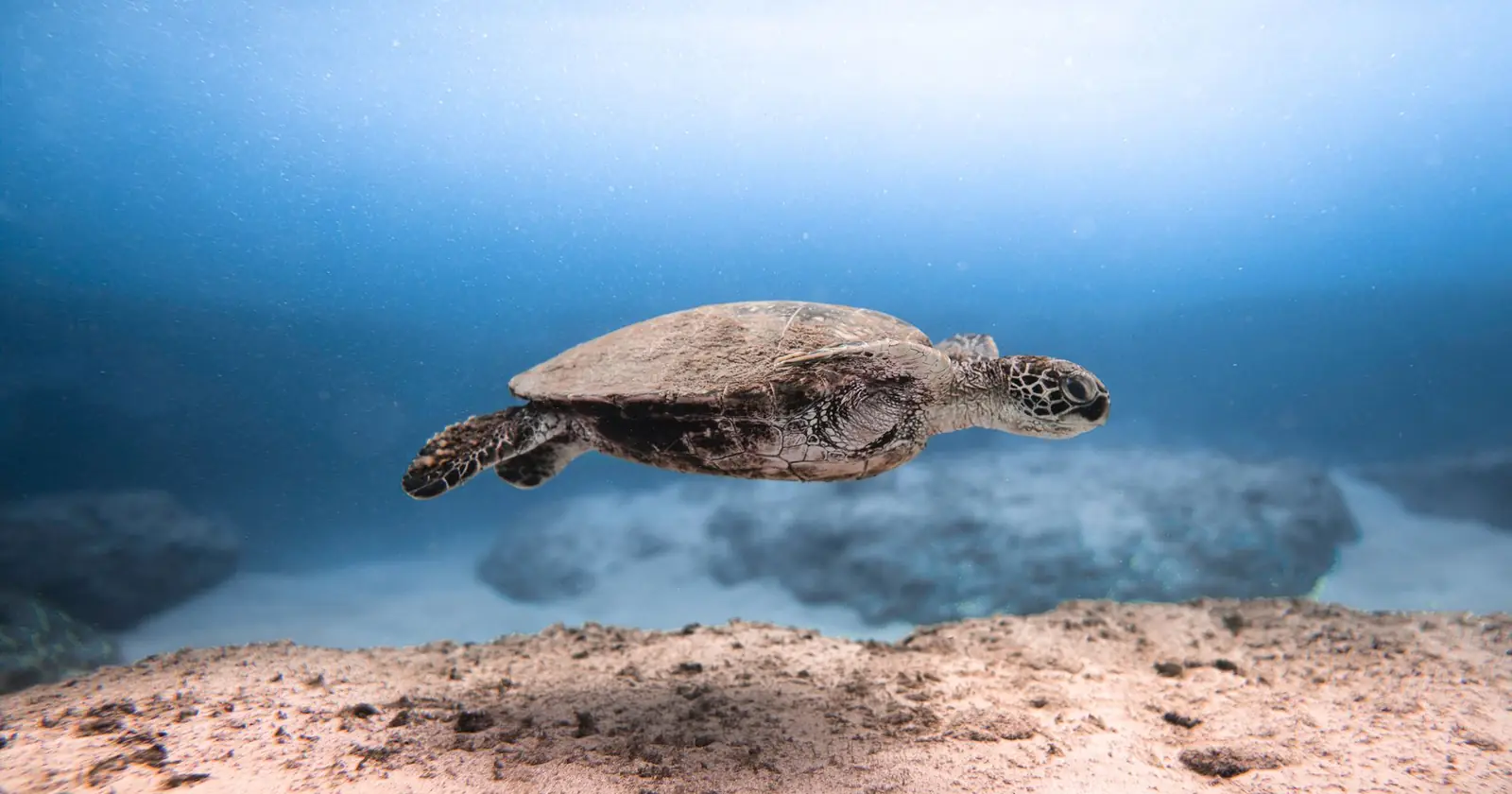
Photo: Belle Co / Pexels.
What makes turtles reliable in one place and not another
Seagrass and reef, not luck. Green turtles eat seagrass and algae; hawksbills eat sponges off reefs. Both come back to the same feeding grounds, which is why a shallow seagrass bay is the most dependable turtle encounter there is, and why an open reef is not. If a place is being sold to you on turtles, ask what they are eating there.
Two species, two very different outlooks. The IUCN lists the green turtle (Chelonia mydas) as Endangered and the hawksbill (Eretmochelys imbricata) as Critically Endangered, the hawksbill on global declines of 80% or more across three generations. Most of what you will swim with below is green.
Nesting is not swimming. The biggest turtle gatherings on earth are nesting beaches, and almost none of them is a place you get in the water. That is worth saying plainly, because roundups routinely mix the two.
1. Sipadan, Malaysia: the densest, and the hardest to get onto
Sipadan is the turtle dive other turtle dives are compared to, and Sabah Parks rations it. Entry is by daily permit only, allocated to licensed operators rather than sold to individuals, so in practice you book a resort or dive shop and inherit its allocation, most hold somewhere between a handful and a dozen permits a day. Since October 2022 you also need an Advanced Open Water certification or equivalent to dive there at all. In 2026 the permit was raised to allow three dives a day rather than two.
The practical effect is that Sipadan is the one place on this list you cannot decide on at breakfast. Book the operator months out, and treat any promise of a same-week permit with suspicion.
2. Akumal, Mexico: the strictest rules anywhere, and they work
Not on most lists, and it should be on all of them: a shallow seagrass bay on the Riviera Maya where green turtles graze daily, close enough to snorkel from the beach.
It is also the most tightly regulated turtle encounter anywhere. Swimming with the turtles requires a certified guide: going in alone is not allowed. Groups are capped at six people plus the guide, life jackets are mandatory specifically to stop people duck-diving down onto the animals, sessions run about forty-five minutes, access is limited to 9am to 5pm, and the minimum distance is three meters. The bay is a federally protected zone administered by CONANP with enforcement from PROFEPA and the Navy.
If that sounds like a lot of rules for a snorkel, that is the point: this is what a site looks like after it was nearly loved to death, and it is now among the most reliable turtle swims in the Americas.
3. Marsa Alam, Egypt: seagrass, green turtles and dugongs together
The bays around Marsa Alam sit on the edge of Wadi el Gemal National Park, which protects roughly 2,000 km² of sea and, under it, about 7,660 hectares of seagrass. That meadow is the food source, and it is why Marsa Mubarak and Abu Dabbab produce green turtles and dugongs in the same shallow water, from shore or a short boat.
It is less regulated than Akumal, which cuts both ways: easier to arrange, and more dependent on the boat you pick. Some of the seagrass is closed to swimmers and boats are kept out of Abu Dabbab bay. See our Hurghada and Marsa Alam comparison for how the coast works.
4. Gili Islands, Indonesia: the easiest turtle swim on this list
Ranked here for access rather than density. Green turtles feed on the reef within swimming distance of the beach on the car-free Gilis, which means no boat, no permit, no guide and no certification, a mask and a five-minute walk. Nothing else here is that low-friction, and for anyone traveling with non-divers it is the obvious pick.
Indonesia also protects the water it happens in: turtles are protected nationally, and the same archipelago carries the world's largest manta sanctuary, described in our manta roundup.
5. The dependable rest: Perhentians, Nusa Penida, Moalboal, Cozumel, Roatán, Zanzibar
These are grouped rather than ranked against each other, because they are all good turtle water and none of them has the distinguishing evidence the four above do. The Perhentians are the cheapest. Nusa Penida is where you go for mantas and get turtles at Crystal Bay as well. Moalboal pairs them with the sardine run. Cozumel and Roatán are warm year-round Caribbean reef diving. Paje pairs turtles with kitesurfing.
Pick on the other reason you are going. On turtles alone, none of them beats a seagrass bay.
The biggest turtle site on earth, which you cannot visit
Worth knowing so you can spot when a list is padding. Raine Island, on the northern Great Barrier Reef, is the largest green turtle rookery in the world: up to 20,000 females recorded coming ashore in a single night on about 1.8 km of beach, and the great majority of nesting for the entire northern Great Barrier Reef stock.
It is a nesting island, not a swim, and it is managed as a restricted conservation site, a Recovery Project run by the Queensland government, the Reef Authority, the Great Barrier Reef Foundation and the Wuthathi and Meriam Nation Traditional Owners, partly because reproductive success there has been falling for decades. If somewhere claims the world's biggest turtle experience, this is the yardstick, and you are not going.
How close you may legally get, and where that changes
This catches people out, because the numbers differ by more than an order of magnitude between jurisdictions and both are real.
| Where | Minimum distance | What else applies |
|---|---|---|
| United States, general NOAA guideline | 50 yards (about 46 m), in water and on nesting beaches | All US sea turtles are listed under the Endangered Species Act |
| Hawai‘i | 10 feet (3 m), on land and in water | Same ESA protection; harassing, harming or pursuing is a federal offence |
| Akumal, Mexico | 3 m | Certified guide required, six per group, life jacket mandatory, 9am–5pm |
The point is not the arithmetic, it is that “keep your distance” is a legal instruction in some of these places rather than an etiquette note. Nobody is fined for being courteous; people are fined for chasing. Never touch, never ride, never feed, and let the animal decide the distance.
Which operators have been assessed
Turtle sites are shallow, which means snorkellers, which means fins over seagrass and people duck-diving onto animals. Green Fins, run by The Reef-World Foundation with the UN Environment Programme, is the only external check on that behaviour, and it grades two ways: Certified Members have had an in-person assessment by a trained assessor within the last twelve months; Digital Members make the same written commitment and score themselves online.
Across the places above our records are thin on assessment and reasonable on training accreditation, and the gap is the usual one: a training register says a center teaches to a standard, not how its guide behaves over a seagrass bed. Where a site has statutory rules instead (Akumal's guide requirement, Sipadan's permits) those do more work than any badge. Ask about group size and distance before you book, and treat the answer as the actual test.
The short version
- Densest: Sipadan, but permit-only, allocated through operators, and Advanced Open Water required.
- Best managed: Akumal, guide mandatory, six per group, life jackets, 3 m, 9am to 5pm.
- Best all-rounder: Marsa Alam, green turtles and dugongs on 7,660 hectares of protected seagrass.
- Easiest: the Gilis, off the beach, no boat, no permit, no certification.
- Biggest on earth: Raine Island, up to 20,000 nesting females a night, and closed to you.
The full guides behind these turtle swims
Semporna (Sipadan)
The densest turtle diving on this list, behind a daily permit cap and an Advanced Open Water requirement.
Permit, world-classRead the guide → 25°04′N 34°53′E · EgyptMarsa Alam
Green turtles and dugongs on the seagrass at Marsa Mubarak, inside a national park.
Red Sea seagrassRead the guide → 8°21′S 116°03′E · IndonesiaGili Islands
Green turtles on the reef straight off the beach. No boat, no permit, no guide required.
Turtles off the beachRead the guide → 5°54′N 102°43′E · MalaysiaPerhentian Islands
Shore and shallow-boat snorkelling in clear water, at the cheapest prices here.
Cheap turtle snorkelRead the guide → 8°44′S 115°33′E · IndonesiaNusa Penida
Turtles at Crystal Bay and Gamat Bay, on an island you would come to for the mantas anyway.
Turtles + mantasRead the guide → 9°57′N 123°23′E · PhilippinesMoalboal
Turtles alongside the year-round sardine run off Panagsama Beach, at rock-bottom prices.
Turtles + sardine runRead the guide → 20°25′N 86°55′W · MexicoCozumel
Reef and drift diving with turtles, and the mainland seagrass bays are a ferry away.
Warm, year-roundRead the guide → 16°23′N 86°26′W · HondurasRoatán
Turtles on the Mesoamerican Reef off a laid-back, cheap Caribbean island.
Caribbean reefRead the guide → 6°16′S 39°32′E · TanzaniaZanzibar (Paje)
Turtles in the warm Indian Ocean off Paje, plus kite and white sand.
Warm Indian OceanRead the guide →Akumal now has a guide of its own: snorkelling with turtles in Akumal, including the rules and the beach-access dispute.
FAQ: Places to Swim with Sea Turtles
Where is the most reliable place to swim with sea turtles?
A shallow seagrass bay, because green turtles return to feed in the same water every day. Akumal in Mexico and Marsa Mubarak near Marsa Alam in Egypt are the clearest examples on this list. For sheer numbers underwater, Sipadan in Malaysia is denser, but it is permit-only and requires an Advanced Open Water certification.
Do you need a permit to dive Sipadan?
Yes. Sabah Parks issues a limited number of daily permits and allocates them to licensed operators rather than selling them to individuals, so you book through a resort or dive shop and take its allocation. An Advanced Open Water certification or equivalent has been required since October 2022, and in 2026 the permit was raised to three dives a day. Book months ahead.
How close can you get to a sea turtle?
It depends where you are, and by a lot. NOAA's general guideline in the United States is 50 yards, about 46 meters, in the water and on nesting beaches. In Hawai‘i the recommended distance is 10 feet, about 3 meters. At Akumal in Mexico it is 3 meters with a mandatory guide and life jacket. All US sea turtles are protected under the Endangered Species Act, so harassing or pursuing one is a federal offence, not a faux pas.
Can you swim with turtles at a nesting beach?
Generally no. Nesting happens at night on land and the biggest sites are protected or closed, Raine Island on the northern Great Barrier Reef, the world's largest green turtle rookery with up to 20,000 females ashore in a night, is a restricted conservation site. Swimming with turtles means feeding grounds, not nesting grounds, and the two run on different seasons.
Sources
- Sea turtle viewing distances: 50 yards as the general United States guideline, 10 feet (3 m) in Hawai‘i, and Endangered Species Act protection for all US sea turtles. NOAA Fisheries, read 6 September 2026. fisheries.noaa.gov
- Hawai‘i honu enforcement and the practical effect of the 10-foot distance. NOAA Fisheries, read 6 September 2026. NOAA feature
- Raine Island: the world's largest green turtle rookery, up to 20,000 females ashore in a night, and the Recovery Project's partners including the Wuthathi and Meriam Nation Traditional Owners. State of the World's Sea Turtles, read 6 September 2026. seaturtlestatus.org and the Reef Authority
- Sipadan permits: daily cap allocated through licensed operators, Advanced Open Water required since October 2022, three dives per permit from 2026. As published by Sipadan operators and dive media. Read 6 September 2026. sipadan.com
- Akumal Bay rules: certified guide required, six per group, mandatory life jackets, 9am to 5pm, 3-meter distance, administered by CONANP with PROFEPA and Navy enforcement. As published by licensed local operators. Read 6 September 2026. Akumal regulations
- IUCN status: green turtle Endangered, hawksbill Critically Endangered on global declines of 80% or more across three generations. IUCN Marine Turtle Specialist Group. iucn-mtsg.org
- Wadi el Gemal National Park: about 2,000 km² of sea and 7,660 hectares of seagrass feeding green turtles and dugongs. Read 6 September 2026. abughosoun.org
- Green Fins membership levels, Certified against Digital. greenfins.net
- Our own destination guides for the places above, each with its own sources and compile dates.