Best Shore Diving Destinations for Nomads
 by Yannick SchrothAug 5, 20266 min read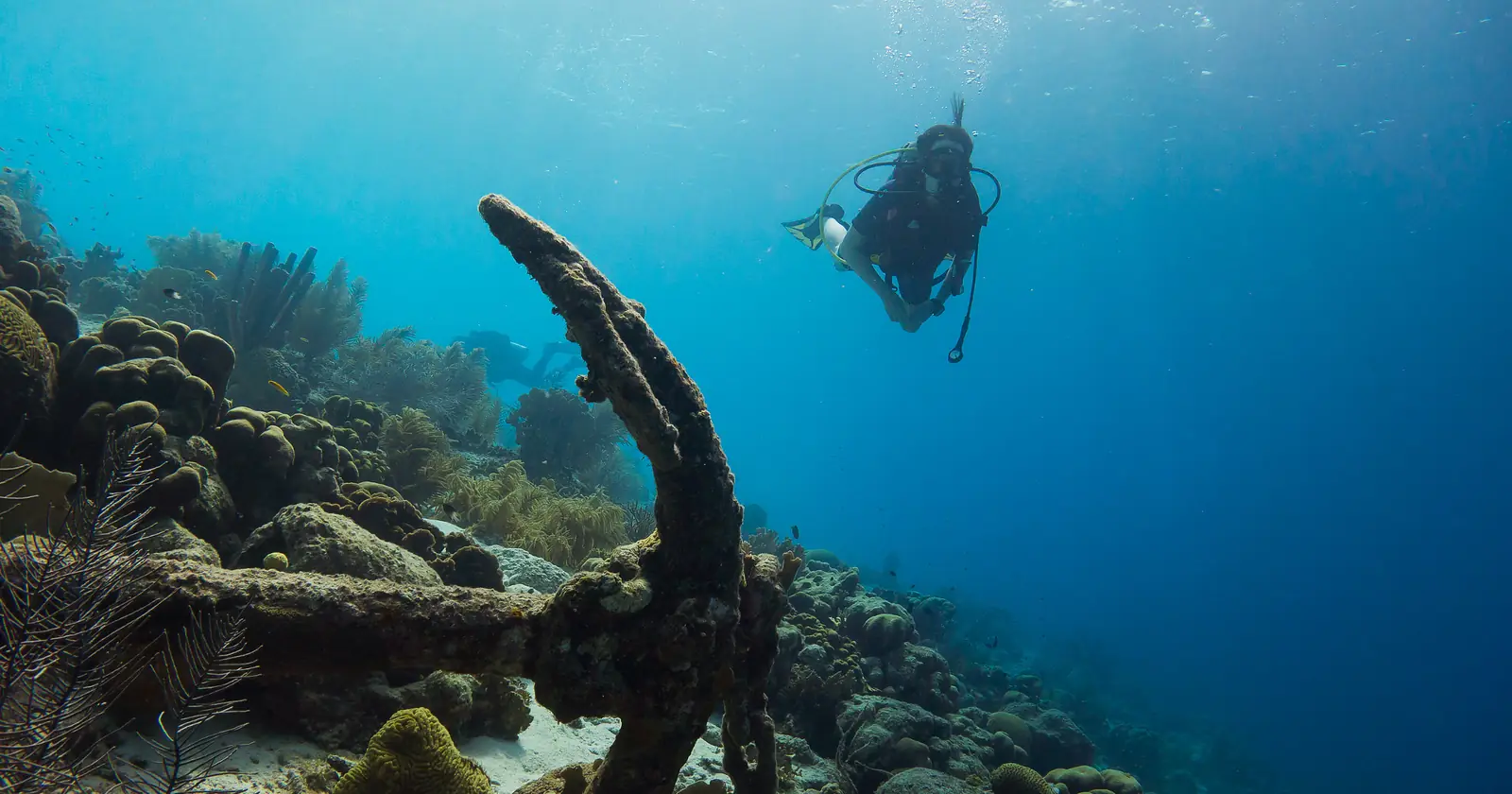
Photo: Kris Mikael Krister via Wikimedia Commons, CC BY 3.0, cropped.
What makes shore diving work
Shore diving changes the economics of a diving month entirely: no boat, no schedule, dive when you want. The places below have manageable entries and enough depth close in to be worth the walk, and they are weighted by how easy it is to get tanks. Somewhere with fine reef and no accessible fills is left off, because carrying cylinders is what stops people diving daily.
The entry is the dive's hard part
On a boat dive somebody else handles the water's edge. From shore it is yours, and DAN's shore diving guidance is worth reading before a first surf entry because it is mostly about sequence. Gear up before you go near the water, do the buddy check on dry land, and keep your hands free to carry fins and steady your buddy. Mask on and regulator in your mouth as you enter, not once you are past the break.
Then the surf itself. Watch it constantly, because “big waves can occur without warning”. Small ones you hop over; for a larger set, put one foot in front of the other to stabilise yourself and duck under rather than take it standing. Fins go on either at the edge, walking in sideways, or in hip- to chest-deep water when it is calm enough to stop.
Two things follow for a month of daily diving. Boots with thick soles earn their place over sand and rock, where slips and falls are the injuries DAN names first. And the assessment is not one-off: conditions at some sites “might change while you are underwater”, which is the argument for looking at the exit before you swim out, not after.
Bonaire
Drive-and-dive shore diving is the island's whole identity, and unusually cheap once you have gear, a truck and tank fills.
Shore-diving capitalRead the guide → 36°02′N 14°14′E · MaltaGozo
The Dwejra sites, the Blue Hole and Inland Sea, are world-class shore dives and a freediving landmark.
Dwejra, MediterraneanRead the guide → 25°04′N 34°53′E · EgyptMarsa Alam
Shore dives are the cheapest way to rack up bottom time here, with Elphinstone and Daedalus boat days when you want them.
Red Sea, cheap bottom timeRead the guide → 28°30′N 34°30′E · EgyptDahab
A coral wall a short walk or truck ride away, 30+ sites and the legendary Blue Hole, which demands real respect.
30+ sites, walk-inRead the guide → 8°20′S 115°41′E · IndonesiaAmed, Bali
Shallow, easy shore entries with quirky critters, plus coral at Jemeluk Bay and a Japanese wreck.
Easy entries, crittersRead the guide →Picking a shore-diving base
- Diving daily on your own schedule: Bonaire, where the whole island is built around drive-and-dive.
- Europe and a short flight: Gozo, for the Dwejra shore dives and clear Mediterranean water.
- Cheapest bottom time: Marsa Alam and Dahab on the Red Sea coast.
- Warm, shallow and easy: Amed in Bali, good for skill refreshers and macro photography.
What a shore-diving list is a list of
Shore diving is the cheapest serious diving there is, and its appeal is repetition: the same reef, every day, for the price of a tank. Which makes it worth knowing what the reef itself is up against, because a house reef is the thing you notice changing.
The IUCN Red List, version 2026-1, counts “more than 49,500 species threatened with extinction”, or “28% of all assessed species”. Broken out by group, the figure for reef corals is 44 per cent, against 26 for mammals and 11 for birds. Sharks and rays sit at 38.
That is not an argument against going. It is an argument for what a shore diver is uniquely placed to do: dive the same site often enough to see it, and report what you see. Reef monitoring programmes take volunteer survey data, and the person who swims a house reef four times a week has better coverage of it than any visiting scientist.
FAQ: Shore Diving Destinations
What makes a good shore diving base?
Sites you can reach on foot or with a short drive, tank fills and gear rental nearby, and water calm enough to enter from land most days. Bonaire is the clearest example, since drive-and-dive is the island's entire identity, but Gozo, Marsa Alam, Dahab and Amed all let you dive from shore without booking a boat day.
Is shore diving cheaper than boat diving?
Usually yes, and that is the point on a long stay. In Marsa Alam, shore dives are the cheapest way to rack up bottom time while boat days and offshore trips cost significantly more, and in Bonaire the flagship activity is unusually cheap once you have gear, a truck and tank fills sorted.
Sources
- What the Red List says about the reefs. IUCN Red List of Threatened Species, version 2026-1: “More than 49,500 species are threatened with extinction”, “28% of all assessed species”, with reef corals at 44% and sharks & rays at 38% against 26% for mammals and 11% for birds. iucnredlist.org. Read 12 September 2026.
- Shore entry technique. Divers Alert Network, “Shore Thing”: gearing up and buddy-checking before the water, hands free for fins, mask and regulator in place on entry, hopping small waves and ducking larger ones one foot in front of the other, and putting fins on at the edge or in hip- to chest-deep water. dan.org. Read 9 September 2026.
- What goes wrong, and the site assessment. Divers Alert Network, shore diving safety for dive operators: slips, falls and poor technique among the named concerns, thick-soled boots for traction over sand and rock, and conditions that can change while you are underwater. dan.org. Read 9 September 2026.
- Each entry links to our full guide for that place, and those guides carry the external sources and read dates behind the claims summarised here. They are the place the readings are recorded, not the evidence for them: Bonaire, Gozo, Marsa Alam, Dahab, Egypt, Amed, Bali.