Pula Diving: Wrecks Past 40 Meters, Ministry Permit Zones and the Brijuni Exception
 by Yannick Schroth
Nov 4, 2026
15 min read
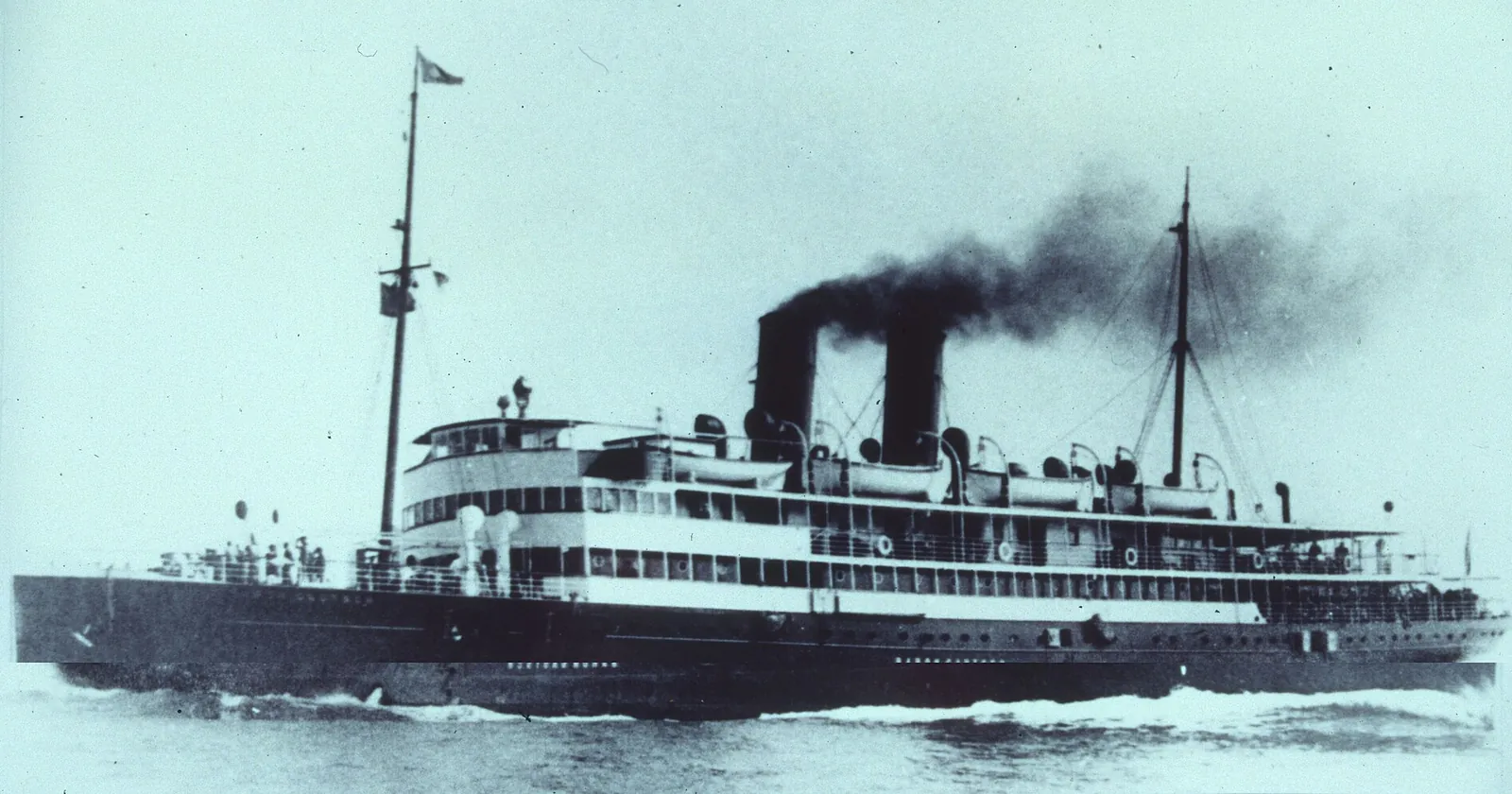
The Baron Gautsch under way, dated 1909 on Commons. The wreck now lies in a Ministry permit zone off Rovinj. Author unknown, Wikimedia Commons, public domain, cropped.

Key takeaways
- Article 9 of the Croatian diving rulebook caps recreational diving on air at 40 meters, and operators publish the Flamingo, Hans Schmidt, Varese, Josephine, Luana and Rossarol as reaching past it
- The Ministry's 2024 to 2029 program allows at most 20 permits for the Baron Gautsch, at a minimum of €2,000 a year each, with entry only into the upper decks and individual diving banned
- Brijuni National Park allows recreational diving only with Ministry consent, under a park program and for a fee the park sets; centers sell Jerolim and Peneda dives at €55 to €61
- Oxy Polyclinic runs a multiplace chamber in Pula on weekday office hours; in an emergency call 112 or 194, or 195 for an accident at sea
- Year-round flights are domestic, to Zagreb and Zadar, and every international route on the current published list is seasonal
Pula's wrecks exist because Austria-Hungary mined the approach to its own naval port
Pula was the main war port of the Austro-Hungarian Navy. When war came in the summer of 1914, the navy laid minefields across the northern Adriatic to protect the entrance. The mines did not check flags. On 13 August 1914 the passenger steamer Baron Gautsch, sailing from Kotor to Trieste, ran into one of those fields and sank with 127 dead by one detailed account; others differ.
The torpedo boat Flamingo, built in 1889, went down on a mine the same year. The Italian freighter Varese hit one in 1915 while running for Pula in a storm. The war ended here too: Italian frogmen sank the former flagship Viribus Unitis at Pula on 1 November 1918. A second war added more, including the cargo ship Hans Schmidt, split by a mine in January 1943.
This is a history trip with reefs attached, not the reverse.
Most named Pula wrecks sit at or past Croatia's 40-meter limit on air
Check your certification before anything else. Article 9 of the Pravilnik o obavljanju podvodnih aktivnosti, the Croatian diving rulebook, says the maximum depth for sport and recreational diving on air is 40 meters. Article 14 sets a fine of 1,000 to 4,000 kuna for going deeper. The article says "on air" and is silent on trimix, so a technical plan is a question for the center and the harbor master.
Depths below are the operators' own published figures, not a survey, and they differ by a few meters. Prices are per dive from their current lists, and what each includes varies.
| Wreck | Published depth | Ministry program 2024–2029 | Price per dive |
|---|---|---|---|
| Baron Gautsch (1914) | 28–39 m; Orca says max 40 | Zone 3, 20 permits | €69–85 |
| Hans Schmidt (1943) | 35–43 m; Orca says max 40 | Zone 4, 20 permits | €69–85 |
| Flamingo (1914) | 42–45 m; Orca says 41–46 | Zone 5, 8 permits | €60 |
| Varese (1915) | 33–42 m | Not listed | €59–70 |
| Josephine | 36–43 m; Orca says max 40 | Not listed | €60–70 |
| Draga (1960s) | 34–37 m; Orca says max 39 | Not listed | €59–60 |
| Luana (1943) | 35–49 m (Orca) | Not listed | €60–65 |
| Cesare Rossarol | Max 55 m (Orca) | Not listed | €60 |
| Vis (sunk 2016) | 18–32 m; Orca says 20–34 | Not listed | €69–75 |
Centers set their own bar on top of the law. Diving Pula asks for a deep-diver certification and 40 logged dives on its wrecks, and for at least six divers on the Baron Gautsch and Hans Schmidt trips. Dive Center Shark in Medulin needs eight on its longest runs, so a trip may not leave in a quiet week.
SSI lists three of the businesses around Pula for Extended Range (Dive Center Shark, Ronjenje Pula and The Old Diver), which shows a rating and not a running course.
The Baron Gautsch from Pula is a long boat ride into a Ministry zone
The wreck is zone 3 of the Ministry of Culture's Program for 2024 to 2029, entered as the Austro-Hungarian passenger ship "Barun Gautsch" at 44°56'24" N, 13°35'14" E, register number Z-98. It allows at most 20 permits, each at a minimum of €2,000 a year. The special condition reads: entry allowed only into the upper decks of the ship.
"In protected areas, zones, only organized diving with a permit is allowed, and individual diving is prohibited."
Article 2, Ministry of Culture rulebook, Narodne novine 49/2019 (translated)
Article 11 of that rulebook adds three conditions unless the program says otherwise: no entering or working inside protective nets, no tying on to a wreck, and a dive leader present. At most two registered groups may dive a wreck at once. The program caps a group at 15 divers per leader, and a dive list goes to the heritage inspectors and the conservation department before each group.
A permit cannot be passed to another business, and the winners are not named on the Ministry's program or tender pages. Caretta, Hippocampus, Diving Pula, Orca and Shark all advertise the wreck. Ask to see the zone 3 permit. Orca also lists a €14 special-permit surcharge on top of its dive price.
Geography is the catch. The Program's position lies about 12 nautical miles in a straight line from Pula, and Diving Pula gives 14 from its base at Veruda. Orca quotes a 120-minute transfer, and Shark prices it in its 18 to 21 mile band from Medulin at €85. Rovinj, which Hippocampus puts about 9 miles from the wreck, is the shorter start.
Treat the depth with respect. In July 2019 an Austrian diver on a booked group trip surfaced unconscious after a dive to the wreck at about 38 meters, and she died later in hospital in Pula.
Hans Schmidt, Flamingo and a sailing wreck off Premantura are Pula's other permit zones
Three more zones lie within reach of Pula, each with its own wording. Hans Schmidt (zone 4, Z-23) has 20 permits at a minimum of €650. Entering parts of the wreck with no source of natural light is prohibited, and so is touching finds around it. Caretta warns of old nets on every part of this ship and advises against going inside.
Flamingo (zone 5, Z-24) has 8 permits at €650, and its rule is unusually physical: entering the wreck with your whole body length is prohibited. The Program's position puts it about 8 nautical miles from Pula.
Zone 6, Premantura, is the wreck of a merchant sailing ship (Z-31) at 44°44'09" N, 13°54'21" E, with 8 permits at €650. No operator price list on this page names it, so ask whether anyone runs it.
A wreck missing from the Program is not a free-for-all. Article 10 of the diving rulebook also bars diving at any site protected under cultural heritage rules without a permit. The government portal says archaeological finds in the sea belong to the state: leave them where they lie and report the position to the conservation department. For a one-off memorial or educational dive, a club can ask that department for a single-dive approval.
Brijuni National Park diving near Pula runs on Ministry consent and a park fee
Read quickly, Croatian law seems to close Brijuni completely. Article 10 of the diving rulebook names the national parks of Brijuni, Kornati, Krka and Mljet as places where diving is not allowed, with an exception by permit. A 2024 summary from Parks of Croatia lists "performing underwater activities" as a prohibited act. The Nature Protection Act says something narrower. Article 139 prohibits nedozvoljene, unauthorized, underwater activities, and Article 232 sets a fine of 1,000 to 2,000 kuna for individuals.
The authorization sits in the park's own rulebook, Narodne novine 75/2000. Article 74 permits recreational diving and underwater filming, in order to get to know the underwater landscape, "with the consent of the Ministry". It says the park institution organizes these activities, adopts an annual program, and charges participants a fee it sets.
Dive centers sell the result. Caretta, inside the Bi Village resort at Fažana and facing the park, charges €55 a dive and lists three sites: Jerolim (10 to 25 meters, 5 minutes by boat), Peneda lighthouse (5 to 30 meters) and Grunj (5 to 20 meters), each open to Open Water divers. Hippocampus charges €61 for Jerolim or Peneda. Ask whether that price includes the park's fee, and stay on the program's sites.

Kamenjak and the Verudela reefs are where Open Water divers belong near Pula
The reefs are the easier half of the trip, and much cheaper. Off Verudela, Orca lists Fraškerić, with four tunnels through the islet at 3 to 18 meters, and the Bumbište wall at 12 to 30 meters. Around Premantura, Scuba Libre runs boats to Polje, Fenoliga, Kolumbarice and the Marlera lighthouse at €40, and shore dives at €35. Elsewhere a reef boat dive runs €45 to €51.
Lower Kamenjak and the Medulin archipelago form a protected landscape run by a public institution, and it publishes rules divers should read. Currents are the first. They are "very strong" around the cape, "especially between Cape Kršine and the island of Fenoliga". The seabed falls past 50 meters at the edge of the open northern Adriatic, so a drift here is not a beginner's afternoon.
The visitor code asks boats not to anchor in Posidonia meadows, and to moor on the coast even if that means swimming to the dive site. Boat traffic must stay at least 50 meters from a diver's buoy.
The code names no dive permit. Article 10 of the rulebook does list "other protected parts of the sea", however, so let a center carry that question rather than arriving alone with a tank.
Shore diving alone near Pula takes a €318.53 approval and a buoy
Croatia splits diving into organized and individual, and individual means any dive without a center's or club's leader. It requires an approval costing €318.53, which the government portal says lasts a year and is issued at harbor master offices, Pula's among them. That is a poor deal for a two-week visit.
The approval does not open every door. Article 10 keeps you out of ports, port approaches and anchorages, so Pula's harbor is off limits without the harbor master's permit. The same goes for the water within 100 meters of guarded military sites on the shore, and for every Ministry zone. You also mark your own dive, with an orange or red buoy at least 30 centimeters across or a dive flag. The Split diving guide traces how this approval replaced the old diving card.
Pula's sea read 17.5°C on 4 November, and the dive season thins out with it
The state weather service, DHMZ, publishes surface readings daily. On 4 November 2026 Pula read 17.5°C, and the Rovinj-Sveti Ivan station read 18.5°C. Each is taken about 30 centimeters down. A wreck at 35 meters will be colder.
Monthly norms are harder to pin down. Three commercial weather sites, not an official series, put Rovinj at about 10 to 11°C in February and 25 to 28°C in August; at least one blends satellite data with readings in the water. Check the DHMZ table the week you travel and read our travel wetsuit guide before you pack.
The land side narrows too. Orca lists its office as open from 1 May to 31 October, and Diving Pula works "by appointment, every day in season". None of the price lists gives a winter boat schedule, though the club CPA Pula posts regular dives on Thursdays at 17:00 and Sundays at 09:30. Between November and April, phone first.
Pula's chamber keeps office hours, so ask about nights and Sundays
The nearest chamber is close by, which many dive towns cannot say. Oxy Polyclinic, at Santoriova 24a in Pula, runs a multiplace hyperbaric chamber. It says removing gas bubbles from the body is of the highest importance for divers and in gas embolism. Scuba Libre puts the chamber about 15 minutes by car from Premantura.
Its desk runs Monday to Friday, 07:30 to 15:30. Oxy keeps a separate out-of-hours line, but only for hospital emergency departments and ambulance crews. Patients in an emergency are told to call 194 or 112.
At sea, the government portal gives 195, the free line of the rescue center MRCC Rijeka, plus VHF channel 16 and 112. The rulebook's Article 1c makes the organizer keep oxygen first aid, a radio or phone, a transport plan and the posted numbers of recompression chambers at the dive site. Ask to see them, then check how your dive insurance treats depth and transport.
Flying to Pula year-round means Zagreb or Zadar, and summer brings the rest
Pula is a summer airport. Croatia Airlines lists Zagreb and Zadar as year-round routes on selected days of the week, not daily. The current English Wikipedia list adds Trade Air to Osijek and Split. Every other airline on that list, from Ryanair and easyJet to Jet2 and Lufthansa, is marked seasonal.
The airport reported 301,792 passengers by the end of July, and its growth news is all summer: Jet2 from Edinburgh from May 2027 and Transavia from Amsterdam from June 2027. For an off-season trip, expect to connect through Zagreb. Venezia Lines also lists Pula among its ferry ports from Venice.
Pula as a remote-work base has one big coworking center and a €3,622.50 permit bar
Pula is workable but not built for you. Its anchor is Coworking Centar Pula, a publicly funded project worth about €3.64 million in the city center, with 100 work units, flydesks, a meeting room and a 120-seat conference hall. Its site asks for an inquiry instead of publishing prices.
A 2026 survey piece from Remote Work Europe, by a Pula-born researcher, is blunt about the region: fast internet and good healthcare, but "a handful of coworking spaces, the largest in Pula", no coliving. It credits DNA Istria, the local nomad association, with a deliberate focus on the off-season.
Non-EU workers can apply for Croatia's digital nomad stay, up to 18 months. The interior ministry requires income of at least €3,622.50 a month, or €43,470 in the bank for 12 months and €65,205 for 18. The Split nomad guide covers the Dalmatian alternative. Rent figures for Pula vary too widely between listing sites to quote.
Pula's wrecks reward deep-certified divers, not solo shore divers or warm-water fans
Pula rewards one kind of diver. If you hold a deep certification and care about naval history, this coast delivers, and the chamber in town helps. Others should think again.
A new Open Water diver will see reefs and Brijuni, not the famous ships. A solo shore diver pays €318.53 and still cannot touch the zones. Anyone expecting bright tropical water should note that one guide calls visibility at the Varese not very good, because of the sandy seabed. A winter visitor faces cold water and connecting flights.
For warmer, clearer alternatives, the Malta diving guide and our wreck diving list are better starting points.
Ten SSI listings around Pula, and one of them is a club
The Pula operator list holds 10 entries, all from the SSI register as read on 1 September 2026. SSI files six under Pula, and one each under Fažana, Medulin, Premantura and Bale. CPA Pula is a club with club dives, not a tourist center, and it shares Valsaline 31 with Ceti Sub.
Two need a call before you count on them. The website SSI lists for Diving Center Puntizela returned 404 in September, and The Old Diver's did not answer. A register entry records an affiliation. It says nothing about a Ministry zone permit or a Brijuni dive, which are the two papers that decide where a Pula boat may take you.
FAQ: Pula diving permits, depths and the chamber
Can you dive the Baron Gautsch from Pula on your own?
No. The wreck is zone 3 in the Ministry of Culture program, and the 2019 rulebook allows only organized diving with a permit there, with individual diving prohibited. At most 20 permits exist, and entry is limited to the upper decks. Several Pula centers advertise the trip, at €69 to €85 a dive.
How deep are the wrecks around Pula?
Mostly 33 to 46 meters on operators' published figures. The Baron Gautsch runs 28 to 39 meters, the Flamingo 41 to 46, the Varese 33 to 42 and the Rossarol to 55. The Vis, sunk on purpose in 2016, is the shallow exception at about 18 to 34 meters. Croatia's limit on air is 40 meters.
Is diving allowed in Brijuni National Park near Pula?
Yes, with conditions. The park's internal rules allow recreational diving and underwater filming with Ministry consent, under an annual park program, and participants pay a fee the park sets. Diving outside that consent is an offense. Centers in Fažana and Pula sell dives at Jerolim, Peneda and Grunj, all listed for Open Water divers.
Where is the nearest decompression chamber to Pula dive sites?
In Pula. Oxy Polyclinic, at Santoriova 24a, runs a multiplace chamber and names divers and gas embolism among the reasons for treatment. Its desk is open Monday to Friday, 07:30 to 15:30, with a separate out-of-hours line for hospitals and ambulance crews. A patient in an emergency should call 112 or 194.
Can you dive in Pula in winter?
Possibly, but plan on calling first. Pula's sea read 17.5°C at the surface on 4 November 2026, and three commercial weather sites put Rovinj at roughly 10 to 11°C in February. Orca lists its office as open from 1 May to 31 October, and Diving Pula works every day only in season.
Note: Conditions, safety guidance and regulations change. Verify current information with official sources, including the dive operator, the park authority and the relevant government department, before you travel or dive.
Founder of NOMADREEF and a former digital nomad. This guide is sourced from the references below; conditions, prices and rules change, so verify current details, and follow qualified local guidance and safety briefings. About the author · LinkedIn ↗
Sources
- The diving rulebook (primary). Pravilnik o obavljanju podvodnih aktivnosti, Narodne novine 47/1999: article 4 on marking; article 9 on 40 m on air; article 10 on prohibited places, including the national parks and ports; article 14 on fines. Amended by Narodne novine 23/2003: articles 1a to 1c, 2a, 5a, and article 10 extended to sites protected under cultural heritage rules. Read 4 November 2026. The Ministry's 2024 tender still cites this rulebook. Trimix is not mentioned in it.
- Protected zones (primary). Ministry of Culture, Pravilnik on permits in areas with cultural goods, Narodne novine 49/2019, articles 2, 3, 6, 9 and 11. Program 2024–2029, zones 1 to 6 in Istria County and part II on group size; the Flamingo longitude is misprinted there and was read as 13°48'40" E. Tender for 2024–2029. gov.hr, diving on cultural goods, on single-dive approvals. Read 4 November 2026. Permit holders were not published on these pages.
- Individual diving and finds (primary). gov.hr, Ronjenje: €318.53, one year, harbor master offices including Pula, and the duty to report finds. Read 4 November 2026.
- Brijuni (primary). Pravilnik o unutarnjem redu u Nacionalnom parku "Brijuni", Narodne novine 75/2000, articles 73 and 74. Nature Protection Act, articles 139 and 232. Parks of Croatia, 22 July 2024, which still cites the 2000 rulebook. Read 4 November 2026. The park's own scuba page refused automated requests and is not used; whether a later rulebook has replaced the one of 2000 is unverified, needs human check.
- Kamenjak (primary). Kamenjak Public Institution: code of conduct; undersea world; 2026 price list; leisure activities. Read 4 November 2026.
- The chamber (primary for its own service). Oxy Polyclinic, address, hours, out-of-hours line and centers; its treatment page on gas bubbles in divers; Crikvenica tourist board listing on the multiplace chambers. Read 4 November 2026. Round-the-clock availability for a diver could not be established.
- Rescue at sea (primary). gov.hr, 195 Maritime Search and Rescue Service. Read 4 November 2026.
- Sea temperature. Primary: DHMZ, Temperatura mora 04.11.2026. Triangulated, Rovinj monthly figures from commercial sites that may share satellite inputs: seatemperature.info (10.6 and 26.1°C), weather2travel (10 and 25°C), weather-stats February and August (11.1 and 27.6°C for 2026). Read 4 November 2026.
- The wrecks (triangulated from operators; each primary only for its own prices and rules). Hippocampus wrecks and prices; Orca sites and transfers and office dates; Caretta, Baron Gautsch, Hans Schmidt, dive locations and prices; Diving Pula Baron Gautsch, Varese, Josephine, 2026 price list (PDF) and contact; Shark price list; Scuba Libre (undated page); Diving Rovinj, Baron Gautsch; CPA Pula. Read 4 November 2026. Depths differ and both are shown. Prices cover different things, and Shark's lower price excludes tank and weights.
- Wreck history (triangulated). Wikipedia, SS Baron Gautsch (13 August 1914, navy minefield protecting Pula, 127 dead), Wikipedia, Raid on Pula, CheckYeti, wreck diving in Istria (Flamingo, Varese visibility, Vis 22 May 2016), plus the operator pages above. Read 4 November 2026. Caretta describes an "enemy" minefield and Hippocampus calls the Flamingo Italian; both differ from the other accounts and are not used. The toll and the ship's length vary between accounts. The 2019 fatality: ORF, 8 July 2019.
- Flights and ferries. Croatia Airlines timetable (primary); Pula Airport news (primary), whose own destination list reads "coming soon"; Wikipedia, Pula Airport for the airline list (secondary); Venezia Lines, which gave no sailing dates on the page read. Read 4 November 2026.
- Remote work. Coworking Centar Pula and its project page (€3,639,421.43); Remote Work Europe, Istria; Ministry of the Interior, digital nomads (primary). Read 4 November 2026.
- The ten listings. Ten entries on the Pula operator list, read 1 September 2026, all from the SSI register of affiliated centers. Website checks of 3 September 2026. Which registers can be read sets out each source's limits.
- Left out. The tourist board's istra.hr wreck and legal pages did not accept a connection on 4 November 2026 and are not used. A 2023 report of a winter Zurich flight is not repeated, since the current lists do not show it. Visibility figures, a rent figure, the count of mines off Pula, and the names of zone permit holders could not be established, so none is given.