Perhentian Islands: A Diver's Trip Guide
 by Yannick Schroth
Aug 1, 2026
7 min read
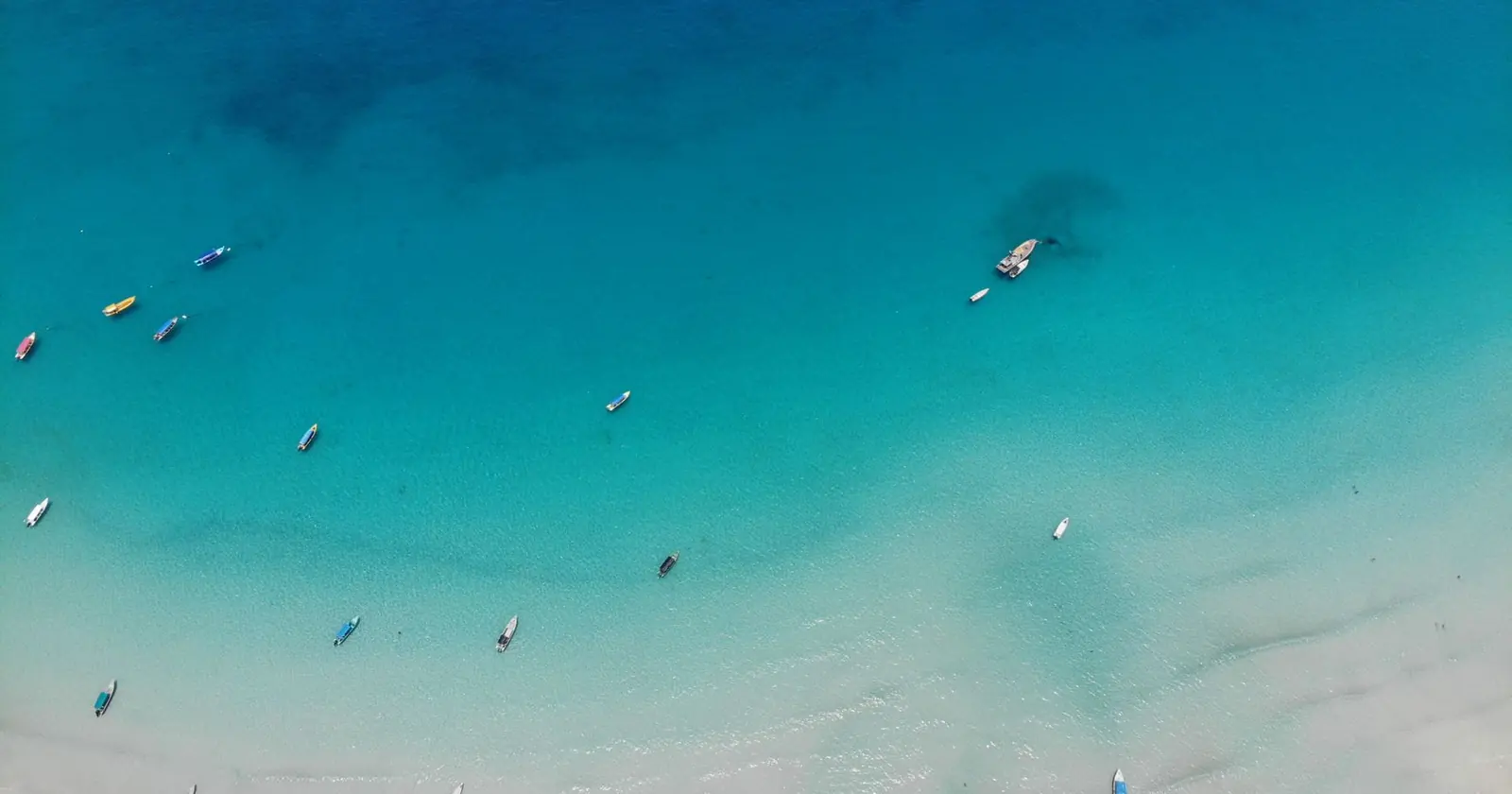
Photo: Zali / Pexels.
Key takeaways
- Season is roughly March to October for diving; in the northeast monsoon, November to February or March, the islands are not closed by order, but boats cross only on calm days.
- It is one of the cheapest places anywhere to certify or fun-dive: as of 2026, budget around RM85 to RM100 per fun dive and near RM1,100 for a PADI Open Water course (verify with operators).
- Conditions suit beginners and intermediates: warm water, mostly gentle sites, with turtles, blacktip reef sharks and the Sugar Wreck; stronger currents show up at pinnacle and wreck sites.
- Connectivity is thin. Resort wifi is often satellite-based and weak; a CelcomDigi or Maxis eSIM gives the most usable 4G, but plan to be semi-offline.
- For a diving trip you almost certainly enter visa-free as a tourist (90 days for many nationalities). The DE Rantau nomad pass is real and open, but it is not a practical fit for basing on these seasonal, low-bandwidth islands.
The Perhentian dive season: March to October
The single most important fact about the Perhentians is that they are seasonal. Dive operators give the season as the beginning of March to the end of October. The northeast monsoon that follows lasts from November to February or March. Terengganu's state government says it has issued no order to close the islands, and several resorts on Perhentian stay open for the demand, but boats can cross only “three or four times a month” and are not permitted to sail when the waves are rough (state executive councillor Razali Idris to Bernama, October 2025). Do not plan a dive trip in that window, and if you do go, expect to wait days on either side of the water. If you are weighing the Perhentians against Pahang's big island, our Perhentian vs Tioman comparison sets the seasons, coral and chambers side by side.
Within that window there is a trade-off. June, July and August bring the best, calmest conditions and the clearest water, but also the biggest crowds and highest prices. April, May, September and October are quieter and better value, with still-good diving and thinner boats. Shoulder-season visibility is typically 10 to 20 m, climbing toward 25 to 30 m in the peak summer months.
Water is warm and forgiving year-round in season, roughly 27 to 32 C. A rash guard or a 3 mm shorty is plenty, though thermoclines can send a sudden cool layer through, so a thin wetsuit adds comfort on repeat dives.
The dive scene: turtles, a wreck and easy reef
This is beginner-and-intermediate territory, and that is the appeal. Reefs are shallow and colourful, and green and hawksbill turtles are a realistic sighting rather than a lucky one. Shark Point is the go-to for blacktip reef sharks, and you will see blue-spotted rays, moray eels, pufferfish and the usual reef cast.
The two signature sites are Tokong Laut (Temple of the Sea, also called The Pinnacle), a coral-covered rock rising from the seabed about 20 minutes out by boat, and the Sugar Wreck, the MV Union Star 17, a 90 m cargo ship that one Perhentian dive center says sank in a storm in 2000 and that now lies on its side in about 18 m of water. The wreck is accessible enough for newer divers doing their first wreck dive while still offering penetration for the experienced.
Be honest with yourself about grade. Most sites are gentle, but current picks up at The Pinnacle, where descending on a rope is smart, and the Vietnamese Wreck can get properly swept. Open Water certification is recommended for the deeper wreck and pinnacle sites; if you are brand new, this is a fine place to learn on the shallow reefs first.
Costs: genuinely cheap, but bring cash
The Perhentians are one of the best-value dive destinations in Asia. As of 2026, plan on roughly RM85 to RM100 per fun dive and around RM1,100 for a full PADI Open Water course; Advanced and specialty courses are similarly affordable. These are indicative ranges, so confirm current rates directly with your operator before booking.
On top of diving, budget the fixed entry costs: the Department of Fisheries' Marine Park conservation charge of RM30 per foreign adult (RM15 for children aged 6 to 12 and seniors 60 and over), and the return speedboat from Kuala Besut, whose current fare you confirm at the jetty counter or with your resort.
Crucially, ATMs on the islands are unreliable or absent and many places are cash-only, so draw enough ringgit on the mainland before you cross. Accommodation spans cheap backpacker dorms and beach chalets up to a few mid-range resorts; this is not a luxury destination and prices reflect that.
Connectivity: plan to be semi-offline
Do not come here expecting to work reliably. Resort wifi is frequently satellite-based and buckles under load, especially in the evenings when everyone is online. It is fine for messaging and light browsing, not for calls or uploads.
Mobile data is the better bet. CelcomDigi generally has the most consistent 4G and 5G across the main beach areas, with Maxis (Hotlink) a close second. A local prepaid SIM or a Malaysia eSIM bought before you arrive is the most dependable connection you will have on the islands.
Even so, signal drops off on remote beaches and in the jungle interior, and bandwidth is a fraction of what you would get in Kuala Lumpur or Penang. Treat the Perhentians as a dive holiday you unplug into, and do any deadline-critical work on the mainland.
The visa: use the tourist route, know the nomad pass separately
For a diving trip, the working route is almost always visa-free tourist entry. Many nationalities, including US, UK, EU, Canadian and Australian passport holders, get 90 days visa-free; Indian and Chinese nationals currently get a 30-day exemption extended through 31 December 2026. Everyone must complete the free Malaysia Digital Arrival Card (MDAC) online before arrival. Verify your own nationality's terms on the official Malaysian Immigration site, as these change.
Malaysia does have an operational digital-nomad visa, the DE Rantau Nomad Pass, and it is genuinely open, not merely announced: you apply online through MDEC and pay a non-refundable processing fee of RM1,080 including 8% service tax, plus an immigration pass fee of RM360 a year, with income thresholds around USD 24,000/year for tech workers and about USD 60,000/year for other remote professionals, granting stays of 3 to 24 months. It is a real option for basing in Malaysia.
But be clear-eyed: DE Rantau is designed for hubs like Kuala Lumpur, Penang or Langkawi, not for seasonal, low-bandwidth islands whose dive season stops for the monsoon. For an actual Perhentians dive trip, you do not need it and should not rely on it; enter as a tourist and, if you want to nomad in Malaysia longer-term, treat DE Rantau as a separate, mainland-based decision.
Getting to the Perhentians, and diving them safely
Access is via the mainland town of Kuala Besut. Most travelers fly into Kota Bharu (KBR) or Kuala Terengganu, then take a taxi or minivan to the Kuala Besut jetty; overnight buses and trains from Kuala Lumpur are the budget alternative. From the jetty it is a 30-to-60-minute speedboat to the islands, depending on which beach and the sea state. The islands are car-free, so you get around on foot, by jungle trail, or by short water-taxi hops.
Choose your island by vibe: Perhentian Kecil, especially Long Beach, is the backpacker and party hub, while Perhentian Besar is quieter and more family- and couple-friendly. Both share the same dive sites.
On safety, pick an established dive center that shows you well-maintained gear and current certification cards, and never let a hard-sell push you past your grade, especially into current at the pinnacle or wrecks. Carry comprehensive travel and dive insurance (confirm it covers scuba to your planned depth), the water-taxi boats can be casual about life jackets, and remember medical facilities on the islands are minimal, with the nearest hospital on the mainland. Reef-safe sunscreen and respecting the turtles round out doing this trip right.
FAQ: Perhentian Islands
When can I actually dive the Perhentians, and when are they closed?
Dive operators give the season as March to October, with the calmest, clearest conditions in June to August. The northeast monsoon runs from November to February or March. Terengganu has not ordered the islands closed, and some resorts stay open, but boats cross only on calm days, three or four times a month according to the state government, and are not allowed out in rough seas. Plan a March-to-October trip for diving.
How much does diving cost here in 2026?
It is very cheap by global standards. As of 2026, budget roughly RM85 to RM100 per fun dive and around RM1,100 for a PADI Open Water course, plus a RM30 Marine Park conservation charge and the return speedboat from Kuala Besut. These are indicative ranges, so confirm current prices with operators, and bring cash because island ATMs are unreliable.
Can I use Malaysia's digital-nomad visa to stay on the Perhentians?
Technically the DE Rantau Nomad Pass is real and open (apply online via MDEC, a non-refundable RM1,080 processing fee including tax, income thresholds around USD 24,000/year for tech and USD 60,000/year for other remote workers). But it is built for mainland hubs, not seasonal, low-connectivity islands. For a dive trip you enter visa-free as a tourist; many nationalities get 90 days, and everyone files the free MDAC arrival card. Treat DE Rantau as a separate, mainland decision.
Is the diving suitable for beginners?
Yes. Warm water, shallow reefs and frequent turtle sightings make this a great place to learn or to log easy fun dives, and certifications are cheap. Most sites are gentle, but current can pick up at The Pinnacle (Tokong Laut) and the wrecks, where Open Water certification is recommended. Match sites to your grade and do not let anyone push you beyond it.
Will I have internet to work from the islands?
Barely. Resort wifi is often satellite-based and weak, especially at night. Your most reliable option is mobile data on a CelcomDigi or Maxis SIM or eSIM, which gives usable 4G in the main beach areas but drops on remote beaches and in the jungle. Do deadline-critical work on the mainland and treat the Perhentians as a place to unplug.
Yannick Schroth
Founder of NOMADREEF and a former digital nomad. This guide is sourced from the references below; conditions, prices and rules change, so verify current details, and follow qualified local guidance and safety briefings. About the author · LinkedIn ↗
Sources
- Corrected 14 October 2026. An earlier version of this page said the islands close from November to February with boat services suspended; Terengganu's government says it has issued no closure order and that boats cross on calm days. It gave the DE Rantau fee as a “flat RM1,000”, where MDEC's FAQ gives RM1,080 including 8% SST plus a separate immigration pass fee. It said the conservation fee is “paid in cash at the Kuala Besut jetty” and quoted a boat fare of “about RM80”; we could tie neither to a primary source, so both are removed. And it stated that the Sugar Wreck sank “in a 2000 monsoon”, which is now attributed to the dive center that says so.
- Malaysian Immigration Department / MDAC official entry rules
- DE Rantau fees: “A non-refundable processing fee of RM1,080.00 per applicant and RM540.00 per dependent”, “All fees are subject to 8% SST”; immigration pass fee “RM90 (every three (3) months)” or “RM360 (one (1) year)”; income thresholds USD 24,000 and USD 60,000. MDEC, DE Rantau Pass FAQ Version 10.0 (28 August 2026), read 14 October 2026. mdec.my (PDF)
- Marine Park conservation charge: non-MyKad adult “RM 30.00”, children 6 to 12 and seniors 60 and over “RM 15.00”. Department of Fisheries Malaysia, read 14 October 2026. dof.gov.my
- Monsoon access: “the state government has not issued any official directive to close the islands during the monsoon season”; “There are three or four times a month when boats can still enter.”; “If the waves are rough, boats are not permitted to set sail.” Bernama, 15 October 2025, read 14 October 2026. bernama.com
- Dive season: “From beginning of March to the end of October.” Flora Bay Divers, read 14 October 2026. florabaydivers.com
- Sugar Wreck: “This 90-meter-long cargo ship sank during a storm in 2000 and now rests on its side at about 18 meters deep.” BTS Divers, read 14 October 2026. btsdivers.com
- Perhentian dive operator rate listings (fun dive and PADI course prices)
- Scuba Diving / Divernet Perhentian dive-site guides
- Ferryhopper / Direct Ferries Kuala Besut boat schedules