Indonesia Diving: Bali, the Gilis, Komodo, Raja Ampat and North Sulawesi, with the Park Fees, Protected Species and Chambers by Region
 by Yannick Schroth
Nov 10, 2026
12 min read
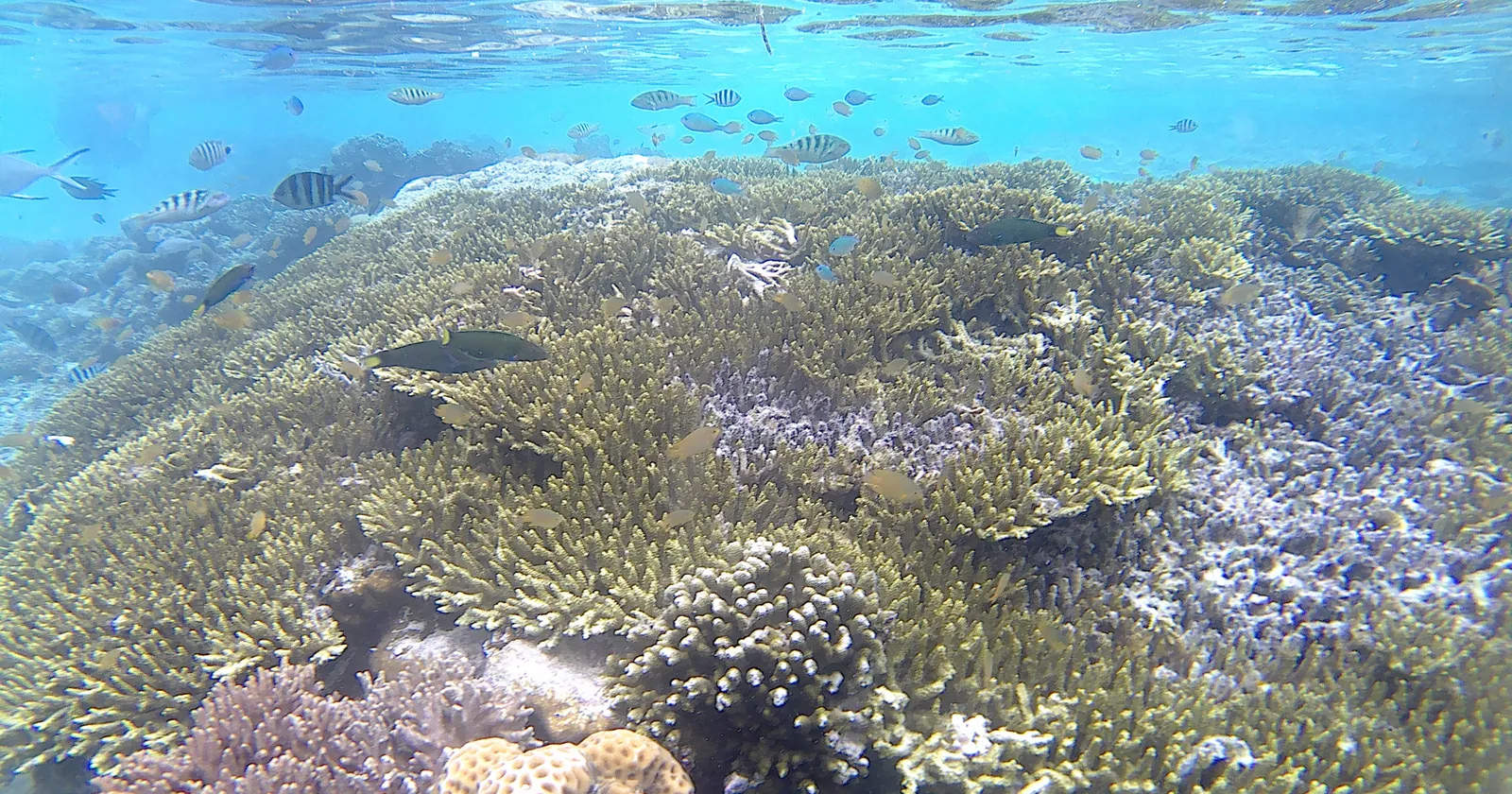
Coral under the Arborek pier, Raja Ampat. Akbar raf, Wikimedia Commons, CC BY-SA 4.0, cropped.

Key takeaways
- National parks under the forestry ministry charge a foreign visitor Rp250,000, Rp200,000 or Rp150,000 a day by class, plus Rp25,000 a day for scuba; Komodo is charged at the top rate
- Fisheries-ministry marine conservation areas charge Rp200,000 or Rp100,000 a day by category; Bali and Raja Ampat add their own regional levies
- Manta rays and whale sharks are fully protected, and national law bans catching, keeping or trading any protected animal, its parts or its eggs
- NOAA's averages put the sea at 26.4 °C off Nusa Penida and 25.9 °C off southern Komodo in August, against 29.3 °C at Bunaken
- Germany's embassy lists hyperbaric chambers in Bali, Lombok, Labuan Bajo, Manado and Waisai, but states round-the-clock emergency care for only one of them
Indonesia diving by region: who runs the water you dive
Indonesia is too large to plan as one destination. The practical question is which region, and each region has its own gateway, its own season pattern and its own rules for who charges you to get in the water. The forestry ministry runs national parks such as Komodo and Bunaken. The fisheries ministry runs marine conservation areas such as the Gilis. Provinces and regencies run their own areas and levies, which is how Bali, Nusa Penida and Raja Ampat work. This page sets out that national layer and points to our guide for each region.
| Region | Who runs the main dive area | Our guides |
|---|---|---|
| Bali and Nusa Penida | Bali province (Nusa Penida marine park), national park at Menjangan | Sanur, Amed, Pemuteran, Candidasa, Nusa Penida |
| Lombok and the Gilis | Fisheries ministry (Gili Matra) | Gili Trawangan, Gili Islands, Kuta, Lombok |
| Komodo | Forestry ministry (national park) | Labuan Bajo |
| Raja Ampat | Southwest Papua province, plus a regency levy | Raja Ampat |
| North Sulawesi | Forestry ministry (Bunaken National Park) | No guide yet; see below |
If you are choosing between two of them, our comparisons cover Raja Ampat vs Komodo, Bali vs Lombok, Amed vs the Gilis and the Gilis vs Nusa Penida.
Bali and Nusa Penida: the levy, the marine park and the mola question
Bali is where most divers start. Sanur is the boat base for Nusa Penida, Amed and Tulamben are the shore-diving coast in the east, Pemuteran is the base for Menjangan Island in West Bali National Park, and Candidasa dives the rocks off Amuk Bay. Each has its own guide with sites, prices and the chamber plan, and our Bali diving and sailing list covers businesses island-wide.
Two rules apply to every foreign diver on the island. First, the Bali provincial government charges a foreign tourist levy of Rp150,000 per person, paid once per trip, cashless, through its Love Bali system. The levy's own FAQ exempts holders of a KITAS or KITAP stay card, diplomats, crews and some other visa holders; holders of a golden visa or "other" visas must apply for the exemption. Second, the water around Nusa Penida is a marine conservation area. A 2018 fisheries ministry decree made about 20,057 hectares of it a marine tourism park and handed its management to the Bali provincial government. In October 2024 the International Maritime Organization designated the Nusa Penida and Gili Matra islands in the Lombok Strait as a Particularly Sensitive Sea Area.
Nusa Penida's manta and mola mola dives come with a code of conduct that operators publish, and press reports say it was agreed with the province's marine affairs agency. We could not find an official text, and the distances quoted differ between operators, so ask your guide which version the boat follows.
Lombok and the Gili Islands: a national conservation area
The three Gilis off north-west Lombok sit inside Gili Matra, a marine conservation area run by the fisheries ministry rather than the province, and part of the same 2024 IMO designation as Nusa Penida. It has its own zoning and its own daily ticket, which our Gili Trawangan guide takes apart line by line, including which charges on a dive bill come from the law and which do not. The nearest chamber is on Lombok: the German embassy's list names the Mataram city hospital. For living on the islands, see the Gili Islands guide; for surf on the south coast, Kuta, Lombok.
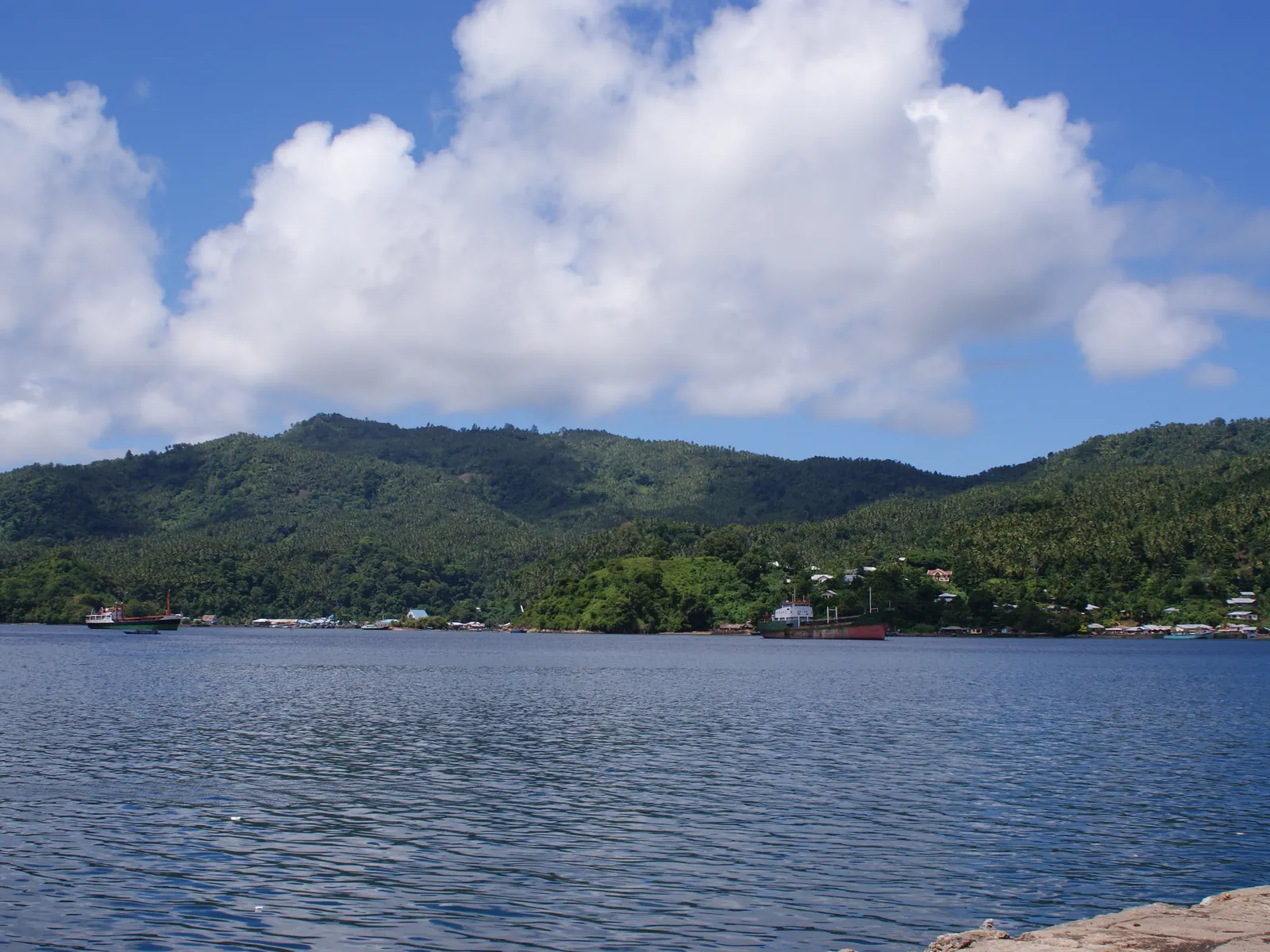
Lembeh Island from Bitung, North Sulawesi. Sakurai Midori, Wikimedia Commons, CC BY 2.5, cropped.

Komodo National Park: the daily ticket and the 1,000-visitor cap
Komodo is dived from Labuan Bajo on the western tip of Flores, by day boat or liveaboard. It is a national park under the forestry ministry, so its tickets come from Government Regulation 36 of 2024, which prices national parks in three classes. Komodo's foreign visitor ticket is Rp250,000 per person per day, the class 1 rate, and diving adds Rp25,000 per person per day; detikBali reported both figures as in force from 30 October 2024. A liveaboard week therefore carries a daily park cost, not a one-off one.
Since 1 April 2026 the park has capped visits at 1,000 people a day. The forestry minister told parliament the limit focuses on Komodo, Rinca and Padar islands and includes 23 dive sites around them. The head of the park office said bookings run through the park's SiOra app, after a trial from January to March 2026. If an operator books it for you, ask whether your dive days are confirmed before you pay. Our Labuan Bajo guide covers the season, currents, internet and the flight home, and our Komodo operator list covers the shops. Germany's embassy lists a chamber at Siloam Hospital in Labuan Bajo.
Raja Ampat: two charges, two portals
Raja Ampat, off Sorong in Southwest Papua, is the most remote of the major regions and the most complicated to pay for. The marine protected area network is managed by a technical unit of the Southwest Papua provincial marine and fisheries agency. Its charge, the TLPJL, is a regional levy in the form of an entrance ticket, sold online at kkprajaampat.id for up to ten visitors per order, or at its office in Waisai on weekdays from 08:00 to 16:00. We couldn't find the price, which only appears inside the booking form, and the reports we found disagree on whether it changed in August 2026.
The second charge belongs to the regency. Its tourism office runs SIPARI, where registration before the visit is compulsory and payment is cashless, under two 2025 regent's regulations, one on registration and one changing the levy rates. Three reports, from the trade publication TTG Asia and two travel sites, put the regency levy for a foreign visitor at Rp1,000,000 from 2026, up from Rp300,000. We could not open the regulation itself. Budget for both charges and check both portals before you fly. Our Raja Ampat guide and operator list cover the diving; the German embassy lists a chamber at the regional hospital in Waisai.
North Sulawesi: Bunaken and Lembeh, not yet covered in detail
We have no guide to North Sulawesi yet. Indonesia's official tourism site says Bunaken became a national park in 1991, covers more than 89,000 hectares across five islands and has more than thirty dive points, among them Lekuan, Mandolin, Fukui Point and Mike's Point. It puts the public boat from Manado's Bersehati market at 45 to 60 minutes with no fixed timetable, a chartered speedboat at 20 to 30, and names May to October as the best time to visit. Bunaken falls under the same national park tariff as Komodo; a 2025 student thesis and travel sites place it in class 3, Rp150,000 a day for a foreign visitor, but we could not read the regulation that assigns the classes. The Lembeh Strait off Bitung, east of Manado, is the other draw. We found no rule or fee for it. Manado has three chambers on the German embassy list, which files them under Lembeh too.
Regions this page does not cover
Wakatobi in South-east Sulawesi, Alor, Banda and Ambon in the east, Derawan off Kalimantan and Cenderawasih Bay in Papua are also dive regions. We have not researched them and give no figures for them here. The national rules below still apply.
Indonesia's national rules: park tickets and protected species
The ticket you pay depends on which ministry runs the water. Government Regulation 36 of 2024 sets the national park rates for a foreign visitor at Rp250,000 a day in class 1, Rp200,000 in class 2 and Rp150,000 in class 3, with Rp25,000 a day for scuba diving on top; which park sits in which class is set by a separate 2025 forestry regulation. For the fisheries ministry's marine conservation areas, Government Regulation 85 of 2021 sets two categories: Rp200,000 a day or Rp1,000,000 a year for a foreign visitor in category A, and Rp100,000 a day or Rp500,000 a year in category B. Provincial and regency areas charge under their own regulations, as in Bali and Raja Ampat.
Marine life rules are national. A 2014 fisheries ministry decree gives both manta species, Manta birostris and Manta alfredi, full protection across their whole life cycle and for every body part, with an exception only for research. A 2013 decree does the same for the whale shark. The conservation law, as amended in August 2024, bans anyone from hunting, catching, injuring, killing, keeping, transporting or trading a protected animal, alive or dead, its parts or products made from them, and from taking its eggs or nests. We found no national rule on reef-safe sunscreen, fish feeding or spearfishing on scuba; local park rules may cover them, so ask.
When to dive Indonesia: seasons and sea temperature by region
Season patterns differ by region, and each regional guide gives its own. At national level, the weather agency BMKG said on 22 September 2026 that most of Indonesia would enter the 2026/27 rainy season in November, later than the 1991 to 2020 normal in most areas, with peaks spread from December 2026 to February 2027. It blamed El Niño and the Indian Ocean Dipole together for a longer dry spell and a later, shorter wet season. It gave no breakdown for the dive regions in that statement.
NOAA's satellite averages for 1991 to 2020 show where the cold water is. Figures are monthly surface means for one ocean cell each:
| Cell | February | May | August | November |
|---|---|---|---|---|
| Nusa Penida south, 8.875°S 115.625°E | 28.6 °C | 28.3 °C | 26.4 °C | 28.4 °C |
| Gili Islands, Lombok Strait, 8.375°S 116.125°E | 28.5 °C | 29.2 °C | 27.5 °C | 29.2 °C |
| Komodo south, 8.875°S 119.625°E | 28.9 °C | 27.7 °C | 25.9 °C | 28.7 °C |
| Raja Ampat, Dampier Strait, 0.625°S 130.625°E | 28.9 °C | 29.3 °C | 28.5 °C | 29.4 °C |
| Bunaken, Manado Bay, 1.625°N 124.625°E | 28.4 °C | 29.5 °C | 29.3 °C | 29.4 °C |
The pattern is that the south-facing coasts cool from June to September. Nusa Penida's two cells drop to 26.3 to 26.4 °C in August, and southern Komodo to 25.9 °C, while the cell north of Komodo stays at 27.5 °C in the same month. Raja Ampat's Dampier Strait never averages below 28.5 °C, and Bunaken stays between 29.3 and 29.6 °C from May to November. These are surface means. Below a thermocline, as at Nusa Penida in the sunfish months, the water can be much colder, so pack for the dive, not the boat ride, and see our wetsuit guide.
Hyperbaric chambers and emergency numbers in Indonesia
The German embassy in Jakarta keeps a list of chambers in Indonesia, dated November 2026. In Bali it names the Hyperbaric and Diving Medicine Centre at Kasih Ibu Hospital in Saba, Gianyar, as a multiplace chamber with 24/7 emergency care, and the Prof. Ngoerah hospital in Denpasar, formerly Sanglah. It lists the Mataram city hospital for Lombok, Siloam Hospital for Labuan Bajo, three hospitals in and near Manado, the regional hospital in Waisai for Raja Ampat, and others in Jakarta, Surabaya, Makassar and Balikpapan. Only the Saba entry states round-the-clock care. Ngoerah's own page says its hyperbaric clinic opens Monday to Friday except holidays, with registration until 13:30, or 13:00 on Fridays. The embassy adds that the list is not an official recommendation and cannot guarantee it is complete.
The same list gives the Divers Alert Network's emergency line inside Indonesia as +62-21-5085-8719. Indonesia's official tourism site lists 112 or 110 for general emergencies from mobile phones, 118 or 119 for an ambulance and 115 for BASARNAS, the search and rescue agency. Check what your dive insurance pays for evacuation and chamber time, and ask each operator where it would take you.
Visas: the Visitor Visa or the E33G remote-worker visa
Most divers arrive on the Visitor Visa, applied for online at evisa.imigrasi.go.id. Immigration describes it as a single-entry visa for a 30-day stay, for tourism, business meetings and a few other purposes, costing IDR 500,000 and valid for 90 days before entry. A longer stay needs an extension at an immigration office, and overstaying can cost IDR 1,000,000 a day. The arrival list includes the airports of Bali, Lombok, Manado, Jakarta and Makassar, but not Labuan Bajo or Sorong airports, so Komodo and Raja Ampat are reached by a domestic flight if you fly in.
For a working stay, the E33G remote-worker visa gives one year in the country for people working for a company outside Indonesia. Immigration lists income of at least USD 60,000 a year, a USD 2,000 balance over three months, an employment contract with a foreign company and Rp7,000,000 in government fees, and says the residence permit can be extended online. Our E33G guide sets out the fees line by line. The E33G issues a limited stay permit on entry, and the Bali levy exempts KITAS card holders, but check with Love Bali that your permit counts before skipping the payment.
Who Indonesia diving suits, region by region
Bali suits a diver who wants choice: shore dives in the east, a boat base in Sanur, a national park at Menjangan, and two chambers on the embassy's list. The Gilis suit a diver who wants a small island and a regulated reef on the doorstep. Komodo suits divers who can plan around a daily park fee and a visitor cap. Raja Ampat suits divers who can budget for remoteness and two levies, and do not need a city nearby. Indonesia as a whole suits a remote worker who clears the E33G income bar and wants to move between regions in a year. It suits less well anyone who wants one simple fee, one season or a confirmed 24-hour chamber within a short drive of every dive.
FAQ: Indonesia diving
How much is the Komodo National Park fee for divers?
A foreign visitor pays Rp250,000 per person per day to enter the park, and diving adds Rp25,000 per person per day under Government Regulation 36 of 2024. Since 1 April 2026 visits are capped at 1,000 people a day, including 23 dive sites, and are booked through the park's SiOra app, usually by your operator.
Do I have to pay the Bali tourist levy if I only go diving?
Yes, if you are a foreign tourist in Bali. The levy is Rp150,000 per person, paid once per trip and cashless through the Love Bali system. Holders of a KITAS or KITAP stay card are among those exempt, and some other visa holders must apply for an exemption.
What fees do I pay to dive Raja Ampat?
Two. The provincial marine park authority sells an entrance ticket for the protected area network online and at its Waisai office, and the regency charges its own levy through its registration system. Three reports put the regency levy for a foreign visitor at Rp1,000,000 from 2026. We could not read the marine park ticket price on the authority's page, so check both before you travel.
Are manta rays protected in Indonesia?
Yes. A 2014 fisheries ministry decree gives both manta species full protection over their whole life cycle and body parts, with an exception only for research. Whale sharks have had the same status since 2013, and the conservation law bans catching, keeping or trading any protected animal.
Where are the hyperbaric chambers in Indonesia?
The German embassy's November 2026 list names chambers in Bali (Kasih Ibu Saba and Prof. Ngoerah in Denpasar), Mataram on Lombok, Labuan Bajo, Manado, Waisai in Raja Ampat, Makassar, Jakarta, Surabaya and Balikpapan. Only Kasih Ibu Saba is listed with 24/7 emergency care. In an emergency call 112 or the DAN Indonesia line.
Note: Conditions, safety guidance and regulations change. Verify current information with official sources, including the dive operator, the park authority and the relevant government department, before you travel or dive.
Founder of NOMADREEF and a former digital nomad. This guide is sourced from the references below; conditions, prices and rules change, so verify current details, and follow qualified local guidance and safety briefings. About the author · LinkedIn ↗
Sources
- National park tickets (primary). Peraturan Pemerintah 36/2024 (PDF), annex on national park ticket classes and the scuba diving levy. Komodo's rates as reported by detikBali, 3 November 2024. Read 10 November 2026.
- Marine conservation area tickets (primary). Peraturan Pemerintah 85/2021 (PDF), article 7 and annex item XI.B. Read 10 November 2026.
- Nusa Penida and the Lombok Strait (primary). Keputusan Menteri KP 90/2018 (PDF); IMO Resolution MEPC.396(82) (PDF). Read 10 November 2026.
- Bali tourist levy (primary). Bali provincial government, Love Bali FAQ, amount, exemptions and legal basis. Read 10 November 2026.
- Komodo visitor cap. Forestry minister to parliament, detikNews, 14 April 2026; park office head, Metro TV, 30 March 2026. Triangulated from press reports of official statements. Read 10 November 2026.
- Raja Ampat (primary, plus reports). Raja Ampat MPAs Management Authority, terms and marine park fee; Raja Ampat tourism office, SIPARI regulations. Regency levy amount triangulated from TTG Asia, 20 January 2026, Raja Ampat Biodiversity and Ocean Earth Travels. Read 10 November 2026.
- Bunaken. Indonesia's Ministry of Tourism, diving Bunaken (primary for park facts); ticket class from a 2025 Politeknik Negeri Jember thesis (PDF), not confirmed in the regulation. Read 10 November 2026.
- Protected species (primary). Keputusan Menteri KP 4/2014 on manta rays (PDF); Keputusan Menteri KP 18/2013 on the whale shark (PDF); Undang-Undang 32/2024 (PDF), article 21, copy published by the Raja Ampat MPA authority. Read 10 November 2026.
- Season and sea temperature. BMKG rainy-season outlook of 22 September 2026, as published by the government portal InfoPublik; NOAA PSL, OISST v2.1 monthly long-term means 1991–2020, five grid cells, read for this page. Read 10 November 2026.
- Chambers and emergency numbers (primary). German Embassy Jakarta, list of hyperbaric chambers, 11/2026 (PDF); RSUP Prof. Ngoerah, hyperbaric clinic; Ministry of Tourism, staying safe in Indonesia. Read 10 November 2026.
- Visas (primary). Directorate General of Immigration, Visitor Visa and E33G. Read 10 November 2026.
- Left out. The 2025 forestry regulation that assigns parks to ticket classes, which we could not open; the Raja Ampat marine park ticket price and the text of the regency's 2025 levy regulation; an official manta and mola code for Nusa Penida; BMKG's regional season outlooks; whether chambers other than Kasih Ibu Saba run around the clock; fees and rules for Lembeh, Wakatobi and the other eastern regions; national rules on sunscreen and fish feeding; and dive prices, which are on each regional guide.