Where to Go in February: Best Watersports Bases
 by Yannick SchrothAug 5, 20267 min read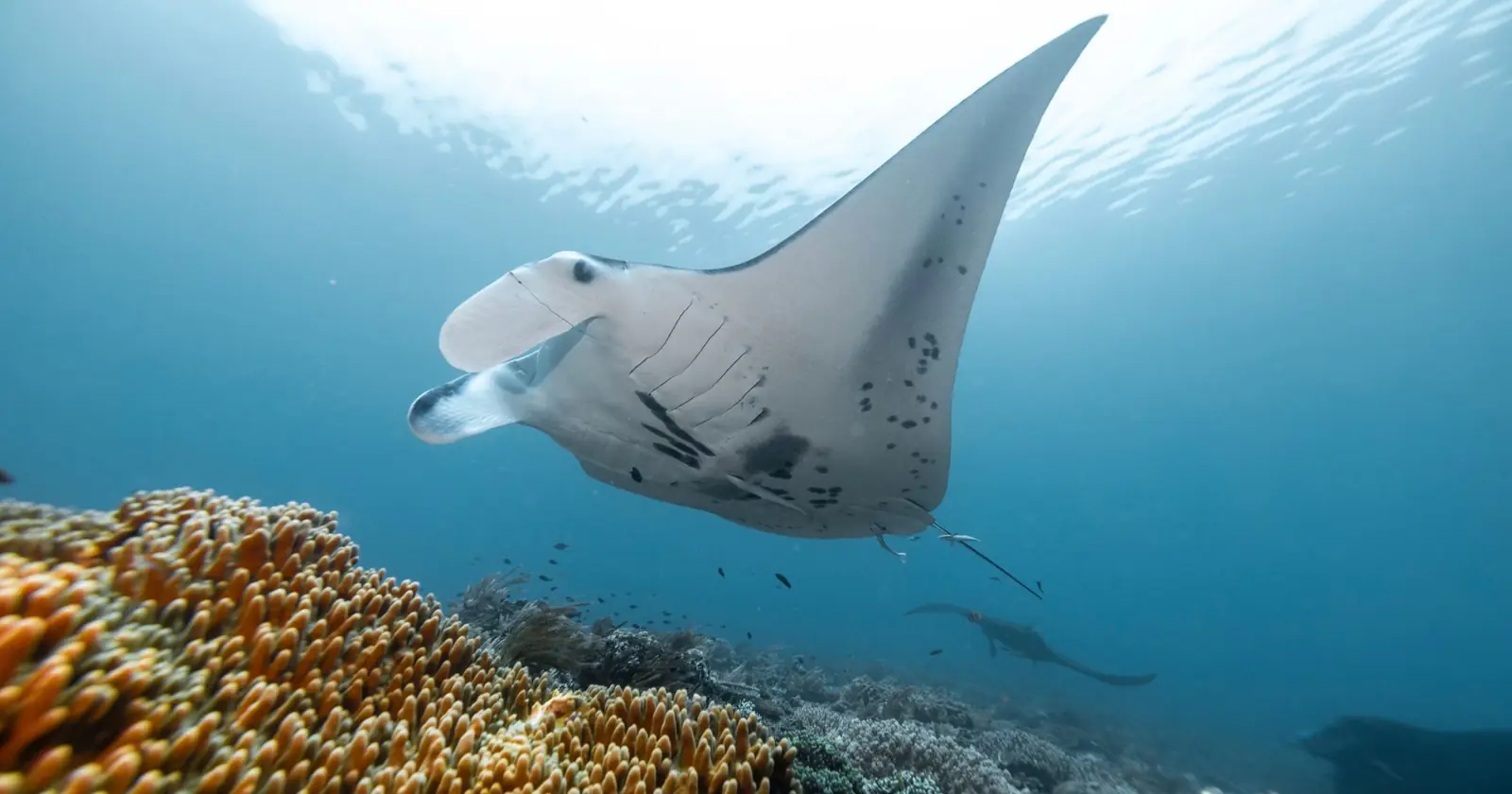
Photo: Andi saiful Sidik via Pexels (free license).
Verified detail lives in the individual guides, not in this summary.
What February gives you on the water
February rewards people who plan around animals rather than weather, and this list is ordered that way. February is peak season for several very specific animals. It is the strongest month on this site for manta aggregations and for Caribbean visibility, and the last dependable month before Red Sea winds build. Every base here is included because its own guide names February as part of its working window, not because the weather is generally nice, and where a place is marginal we say so rather than padding the list to a round number.
Sal, Cape Verde
The northeast trades blow roughly November to June and are strongest in February to March, often 20 to 30 knots.
Strongest tradesRead the guide → 4°17′S 39°35′E · KitesurfingDiani Beach
The Kaskazi monsoon runs mid-December to mid-March, and the guide rates January, February, July and August the best months.
Kaskazi seasonRead the guide → 0°14′S 130°31′E · DivingRaja Ampat
Still inside the December to February calm window, the best odds of the year for manta cleaning stations.
Calmest, mantasRead the guide → 11°58′N 121°55′E · KitesurfingBoracay
Bulabog is at the peak of its December to February window, with the most consistent Amihan wind.
Peak AmihanRead the guide → 11°20′N 124°07′E · DivingMalapascua
The January to April stretch is the peak window: calm seas, clear water, threshers at dawn.
Peak conditionsRead the guide → 8°38′N 98°15′E · DivingKhao Lak (Similan)
The Similan park is open mid-October to mid-May, and December to April brings the best conditions.
Park open, best visRead the guide → 20°12′N 87°27′W · Cenotes & snorkellingTulum cenotes
November to April is the reliable window: driest weather, calmest sea and the least sargassum.
Driest, least sargassumRead the guide → 39°36′N 9°04′W · Big-wave surfNazaré
The giant-wave season runs roughly October to March and peaks November to February.
Big-wave peakRead the guide →Also good in February
- La Ventana and Mui Ne, both mid-season for wind.
- Roatan, where February to April tends to be the calmest stretch.
- The White Nile and Tena, both in their drier, clearer December to February window.
February is the calmest month the tropics have, and the shortest day you will get there
February shares the year's quietest slot with January and March. On the Japan Meteorological Agency's 1991–2020 normals, the western North Pacific produces 0.3 tropical storms or stronger in February, roughly one February in three sees a single named system, and the other two see none. The agency has been keeping that table since 1951, so the number is drawn from seventy-five Februaries rather than a good run of recent ones. That is the whole argument for Khao Lak and the Similans, for Raja Ampat, and for the Visayas in February.
What you trade for it is daylight. At Khao Lak's latitude the US Naval Observatory has the sun up at 06:47 and down at 18:34 on 1 February, which is 11 hours 47 minutes, stretching only to 11 hours 57 by the 28th. Near the equator the day barely moves all year, and that cuts both ways: you will never lose the light the way you do at home, and you will never gain a long evening session either. Two dives and a sunset, and the day is done.
FAQ: Watersports Destinations in February
Where is the wind most reliable in February?
Sal in Cape Verde is at its strongest, often 20 to 30 knots on the northeast trades, and Diani Beach is inside the Kaskazi monsoon that the guide rates among its best months. Boracay's Amihan is also at its December to February peak.
Is February a good month for diving?
It is one of the best. Raja Ampat is in its calmest window with the year's best manta odds, Malapascua has clear water and dawn thresher dives, and the Similan park off Khao Lak is open with December to April conditions.
Sources
- The quietest month in the typhoon basin. RSMC Tokyo – Typhoon Center, Japan Meteorological Agency, annual and monthly numbers of tropical cyclones reaching tropical storm intensity or higher since 1951. Normals 1991–2020: February 0.3, the joint lowest of the year with January and March. jma.go.jp. Read 12 September 2026.
- How long the day actually is. US Naval Observatory, Astronomical Applications Department, table of sunrise and sunset for an entire year. Khao Lak, 1 February 2027: rise 06:47, set 18:34; 28 February: rise 06:41, set 18:38. aa.usno.navy.mil. Table for Khao Lak (N08 00, E098 18), 2027, zone UTC+7. Read 12 September 2026.
- Each entry links to our full guide for that place, and those guides carry the external sources and read dates behind the claims summarised here. They are where the readings are recorded, not the evidence for them: Sal, Cape Verde, Diani Beach, Raja Ampat, Boracay, Malapascua, Khao Lak (Similan), Tulum and the Yucatan cenotes, Nazare.