Nazare, Portugal: A Big-Wave Trip Guide
 by Yannick Schroth
Aug 1, 2026
7 min read
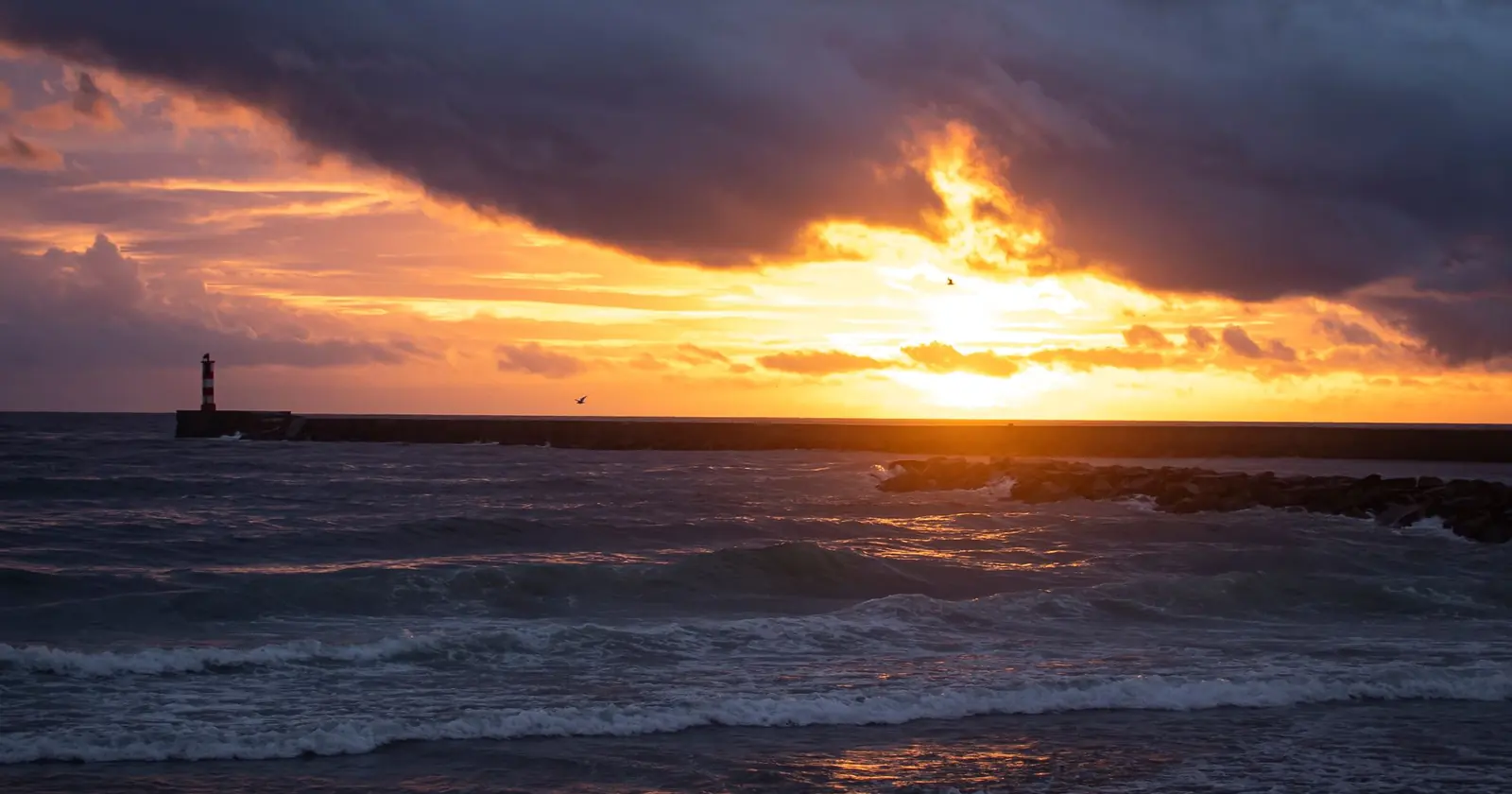
Photo: João Bento / Pexels.
Key takeaways
- Praia do Norte is the world's premier big-wave spot. The standing record is 26.21 m (86 ft), Sebastian Steudtner, 29 October 2020, not the 28.57 m you will read everywhere, which has never been ratified.
- The big wave season runs between November and March: the regional tourism board says November to February, and the WSL's 2026/27 contest window is 1 November to 31 March. August is normally small.
- On big days this is tow-in surfing only, jet-ski assisted, for elite pros; treat your visit as spectating from the Forte de Sao Miguel Arcanjo lighthouse, not surfing.
- Beginners and intermediates should surf the sheltered main town beach or head to Peniche/Ericeira; do not paddle Praia do Norte.
- Portugal's D8 digital-nomad visa is open and operational, but Nazare itself is a tiny town: verify wifi and stay options before basing here long-term.
When is the big wave season in Nazaré?
The big waves at Nazaré come between November and March. The Centro de Portugal regional tourism board puts the season at November to February, and the World Surf League keeps its Nazaré Big Wave Challenge window open from 1 November 2026 to 31 March 2027. A giant day still needs a strong North Atlantic storm swell.
The edges of that season are drawn differently depending on who you ask. NazareWaves, an independent local big-wave news site, gives a wider September or October to March or April. The town hall confirmed the 2026/27 contest window on 5 November 2026, two days after presenting its Praia do Norte safety plan for the season. The contest itself runs on a single day that nobody can fix in advance: for 2024/25 the WSL said it needed consistent surf of at least 25 feet on the face, and that it would issue a Yellow Alert up to 72 hours ahead and a Green Alert once the event was on for the next 24 hours.
Even inside the window, a truly giant day depends on a specific storm lining up with the right swell direction, period and wind. Many winter weeks are big but not historic. Some are flat. The pros track forecasts obsessively and mobilize on a day or two of notice, so as a visitor you cannot schedule a 25-meter day; you can only stack the odds by coming in the window and watching the forecast (Windguru, Surfline) in the days before you travel. On the morning itself, the Instituto Hidrográfico's MONICAN observatory publishes live readings from two buoys off Nazaré, one moored in 2,000 m of water and one in 90 m.
Why the Nazaré Canyon makes the waves so big
The cause starts less than a kilometre from the cliff. According to Portugal's hydrographic institute, the Instituto Hidrográfico, the head of the Nazaré Canyon lies less than 1 km south-west of Sítio, the clifftop quarter, at a depth of about 50 metres. From there it cuts west across the continental margin and reaches the Iberian abyssal plain at 4,970 metres, 211 km from its head. The institute describes it as the longest canyon in Europe.
The popular explanation is that the canyon channels swell straight to the beach. A 2026 study that put arrays of wave buoys over the canyon and stereo cameras on the Nazaré cliff found something different: the swell is refracted and reflected along the canyon's edge, where the depth changes abruptly, and that bends the wave energy into focus towards the beach. The paper is still a preprint in open review on EGUsphere rather than a final journal article. Its most useful finding for anyone reading a forecast is about angle: focusing works best for swell arriving from about 275° to 315°, west to north-west, which the authors note matches what the surfing community already says.
Direction matters, not only size. A big swell from outside that range is focused less well, so when you read a Nazaré forecast, check the swell direction and period alongside the height before you drive up to the lighthouse.
Are there big waves in Nazaré in summer or in August?
Normally not. August falls outside every season given above, and summer is when Nazaré works as a beach town rather than a big-wave arena. Praia da Nazaré, the 1.5 km town beach, is lifeguarded all year and gets seven lifeguard posts in the bathing season, according to the town hall. Praia do Norte stays a different beach: the municipality says its sea often has heavy swell, intense shorebreak and dangerous currents, and does not recommend it for swimming.
Out-of-season swells do reach the canyon now and then, and NazareWaves describes one such August swell as "a rare event". Do not plan a trip around that chance. If your goal is mellow surf or a beach-town base rather than the spectacle, late spring through early autumn is the more comfortable time to come, but it will not show you the monster.
Conditions and grades: this is tow-in, expert-only
Do not underestimate Praia do Norte. On big days it is not a paddle spot; it is jet-ski tow-in surfing performed by a small group of sponsored big-wave specialists with safety teams, inflation vests, and rescue skis. The wave is fast, shifting, and breaks over a beach with brutal shorebreak and current. People have been badly injured here, and it is not a place to test yourself.
Records give a sense of scale. The standing Guinness record for the largest wave surfed is 26.21 m, 86 feet, ridden by Germany's Sebastian Steudtner at Praia do Norte on 29 October 2020 and authenticated, in Guinness's words, “by the World Surf League as part of the Red Bull Big Wave Awards”. Rodrigo Koxa held it before him at 80 feet, from 8 November 2017, and Maya Gabeira holds the women's record at 22.4 m (73.5 ft), set at the same beach on 11 February 2020. Garrett McNamara put the place on the map in 2011. These are outlier days, not the norm, but they show why paddling out on a serious swell is a genuinely life-threatening idea for a visitor.
The number everyone quotes, and the number that stands
Search for the biggest wave ever surfed and you will be told 28.57 m, 93.73 feet. It is in the headlines, it is on the surf sites, and it is not the record.
That figure comes from a wave Steudtner rode at Nazaré in 2024, announced by Porsche in April that year. The height was produced by drone technology “developed by Porsche Engineering and Team Steudtner”: that is, measured by the surfer's own team together with his sponsor's engineering arm, which is not a reason to doubt the number but is a reason to notice who produced it. The announcement itself is careful where the reporting was not: “Official confirmation of the new record is still pending”, and it adds that confirming records “is the responsibility of official sports governing bodies”.
It is still pending. Read on 11 September 2026, more than two years later, the Guinness World Records entry for the largest wave surfed still reads 26.21 m, Steudtner, 29 October 2020.
None of which takes anything away from the ride, and the practical point for a visitor is the same either way: waves of that size exist here and you will not be surfing them. But if you are going to quote a number from the clifftop, quote the one that was independently checked.
If you actually want to surf on your trip, the realistic plan is the sheltered main town beach on smaller days, or a short drive south to Peniche and Baleal, or Ericeira further down the coast, which have surf schools and beginner-to-intermediate beach breaks. Treat Nazare on a firing day as a viewing and photography experience, full stop.
Watching the big waves from the Nazaré lighthouse
The classic vantage point is the Forte de São Miguel Arcanjo, the red lighthouse-fort on the headland, which looks straight down onto the Praia do Norte peak. The town hall dates the fort to 1577, under King Sebastião, and its harbour light to 1 December 1903. Inside, the Surfer Wall displays boards donated by riders who have surfed here, Garrett McNamara, Maya Gabeira and Sebastian Steudtner among them, according to the regional tourism board. As of 9 November 2026 the town hall lists the fort as open daily from 10:00 to 18:00, last entry 17:30, through 31 December.
On big days the headland gets crowded and windy, so bring layers, a windbreaker and a zoom lens; the surfers look tiny against the wave even from close range. To watch from the sand instead, the town hall gives the road in as the Estrada das Pinhas and then Rua da Praia do Norte towards CARSURF, the high-performance surf centre, with a free car park next to the beach.
The town has three parts: Praia (the beach level), Sitio (the clifftop village reached by a funicular, where the lighthouse and viewpoints are), and Pederneira. Sitio is where you want to be on a swell. The HBO series 100 Foot Wave was filmed here, and the town leans into its big-wave identity with cafes, seafood restaurants and surf shops.
Expect a real working fishing town rather than a resort. Winter is low tourist season aside from swell chasers, so some restaurants and rentals run reduced hours. That can mean cheaper stays but fewer open options midweek.
Getting to Nazare
The gateway is Lisbon Airport (LIS), about 120km south. By car it is roughly a 1.5 to 2 hour drive up the A8 motorway, and a car is genuinely useful if you want to chase forecasts between Nazare, Peniche and Ericeira.
Without a car, intercity buses (Rede Expressos and similar operators) run from Lisbon's Sete Rios terminal to Nazare in roughly two hours; check timetables in advance as winter frequency is thinner. There is no convenient direct train to Nazare itself; the nearest station is at Valado dos Frades a few kilometres inland, with limited service, so bus or car is simpler.
Within town, the Sitio funicular connects the beach to the clifftop viewpoints. On a big-swell day parking near the lighthouse fills fast, so arrive early or walk up.
Cost, wifi and basing yourself here
Nazare is inexpensive by Western European standards and cheaper than Lisbon or Porto. As of 2026, budget a rough monthly range of about 1,300 to 2,200 EUR for a nomad living modestly, with off-season apartment rents at the lower end; a casual meal runs on the order of 10 to 15 EUR and coffee around 1 to 2 EUR. Treat all figures as indicative and verify current rates, since winter and summer pricing differ sharply.
Connectivity: Portugal has strong fibre and solid mobile coverage, and the main carriers (MEO, Vodafone, NOS) give good 4G/5G in town. A travel eSIM is the easy route for data. That said, Nazare is a small town: individual apartment wifi is variable, dedicated coworking is limited, and you should confirm a specific listing's speeds before committing to a work-heavy stay rather than assuming café-and-carry.
Realistically, Nazare suits a focused surf-season trip more than a long remote-work base. Many nomads pair a shorter Nazare visit with a longer stint in Lisbon, Ericeira or Porto where coworking, community and reliable connections are easier.
The visa: Portugal's D8 is open, but the tourist route covers short trips
Portugal runs the D8, its digital-nomad/remote-work visa, and it is genuinely open and operational (it launched in late 2022), not merely announced. It comes in two tracks under Portugal's National Visa system: a temporary-stay visa for stays up to one year, and a residence version leading to a renewable residence permit for those who intend to settle. The core requirement is proof of remote income for a foreign employer or clients, historically set around four times the Portuguese minimum monthly wage, plus accommodation and clean documentation. As of 2026, verify the exact current income threshold and document list on the official portal, since the minimum wage (and therefore the multiple) is adjusted annually.
For most people coming for a surf season, you do not need the D8 at all. Portugal is in the Schengen Area, so many non-EU nationals (for example US, UK, Canadian, Australian passport holders) can enter visa-free for up to 90 days in any 180-day period as tourists, which comfortably covers a winter big-wave trip. The 90/180 limit is the real constraint to track, not a special surf permit.
If you want to stay longer than 90 days or actually base yourself in Portugal, that is when the D8 becomes the working route, applied for at a Portuguese consulate before you travel. Do not overstay on a tourist entry assuming you can convert on arrival. Check your own nationality's rules and current D8 criteria on the official Portuguese visa portal (vistos.mne.gov.pt) and AIMA before making plans.
FAQ: Nazare
Can I surf Praia do Norte myself?
Realistically, no, not on the big days. On serious swells it is tow-in only for elite big-wave pros with jet-ski safety teams, and the wave and shorebreak are genuinely life-threatening. Visitors should treat firing days as a spectator experience from the lighthouse, and surf the sheltered main beach or nearby Peniche/Ericeira instead.
When is the big-wave season in Nazare?
Between November and March. The Centro de Portugal regional tourism board gives November to February, and the World Surf League's 2026/27 window for the Nazaré Big Wave Challenge runs from 1 November 2026 to 31 March 2027. Giant days still depend on a strong North Atlantic storm swell, so none is guaranteed on a given trip.
Are there big waves in Nazaré in August?
Normally not. August sits outside every published season window, and summer is beach season: the town beach is lifeguarded all year, with extra posts in the bathing season. Out-of-season swells do happen, but NazareWaves, a local big-wave news site, calls them rare. To see the giant waves, come between November and March.
Where do you watch the big waves in Nazaré?
From the Forte de São Miguel Arcanjo, the lighthouse-fort on the headland at Sítio, which looks straight down on Praia do Norte. As of November 2026 the town hall lists it as open daily from 10:00 to 18:00, last entry 17:30. You can also watch from the sand at Praia do Norte, which has a free car park.
Do I need Portugal's digital-nomad visa to visit?
For a surf trip, usually not. Portugal is in Schengen, so many non-EU nationals can visit visa-free for up to 90 days in any 180-day period, which covers a winter season. The D8 digital-nomad visa is open and operational and is the route only if you want to stay longer than 90 days or base yourself in Portugal; apply at a consulate before traveling.
How much does a Nazare trip cost as of 2026?
Nazare is cheaper than Lisbon. A modest nomad month lands roughly in the 1,300 to 2,200 EUR range, with casual meals around 10 to 15 EUR and coffee 1 to 2 EUR. Winter is low tourist season so stays can be cheaper, but treat these as indicative and verify current rates before booking.
How do I get to Nazare from Lisbon?
Fly into Lisbon (LIS), then drive about 1.5 to 2 hours up the A8, or take an intercity bus (Rede Expressos and similar) from Sete Rios in roughly two hours. There is no convenient direct train to Nazare itself. A rental car is helpful if you want to chase forecasts between Nazare, Peniche and Ericeira.
Yannick Schroth
Founder of NOMADREEF and a former digital nomad. This guide is sourced from the references below; conditions, prices and rules change, so verify current details, and follow qualified local guidance and safety briefings. About the author · LinkedIn ↗
Sources
- Official Portuguese visa portal (vistos.mne.gov.pt), National Visas: Temporary Stay and Residency
- AIMA / Portuguese immigration guidance on the D8 remote-work visa and income threshold
- Wikipedia: Nazaré, Portugal, for the canyon and the geography. No longer cited for the wave records, which now come from the ratifying body directly
- The standing men's record. Guinness World Records, “Largest wave surfed (unlimited) – male”: 26.21 m (86 feet), Sebastian Steudtner (Germany), Praia do Norte, Nazaré, 29 October 2020, “authenticated by the World Surf League as part of the Red Bull Big Wave Awards”. Guinness's announcement of 24 May 2022 gives the method, frames from the footage “corrected geometrically based on the camera position and inclination”, with known objects used for scale, and names Rodrigo Koxa's 80 feet of 8 November 2017 as the record it replaced. guinnessworldrecords.com, the announcement. Read 11 September 2026.
- The women's record. Guinness World Records: “The largest wave surfed (unlimited) by a female is 22.4 m (73.5 ft), and was achieved by Maya Gabeira (Brazil), in Praia do Norte, Nazaré, Portugal, on 11 February 2020.” guinnessworldrecords.com. Read 11 September 2026.
- The 28.57 m claim, and why this page does not call it a record. Porsche Newsroom, April 2024: the height “was measured using state-of-the-art drone technology developed by Porsche Engineering and Team Steudtner”, and “Official confirmation of the new record is still pending”, confirmation being “the responsibility of official sports governing bodies”. The announcement does not state the day the wave was surfed, so this page does not either. As of 11 September 2026 the Guinness entry above is unchanged. newsroom.porsche.com. Read 11 September 2026.
- Not verified here: Garrett McNamara's 2011 wave height, which an earlier version of this page gave as 23.8 m. It is named above without a figure because no ratifying body's entry for it was read for this page.
- The season and the 2026/27 contest window. World Surf League, 2026 Big Wave event schedule: “Nov 1 - Mar 31, TUDOR NAZARÉ Big Wave Challenge, Nazare, Portugal”. The WSL's opening announcement for 2024/25 sets out how the day is chosen: “Consistent surf with a minimum of 25 feet on the face of the wave”, a Yellow Alert “as far as 72 hours out”, and a Green Alert meaning the event runs “in the next 24 hours”. worldsurfleague.com, the 2024 announcement. Read 9 November 2026.
- The town hall on the season, the beaches and the fort. Município da Nazaré, 5 November 2026: the waiting period “começou a 1 de novembro e prolonga-se até 31 de março de 2027”, with the Praia do Norte safety plan for 2026/2027 presented on 3 November. Beaches page: Praia do Norte “não sendo recomendada para banhos”, road access by the Estrada das Pinhas and Rua da Praia do Norte, free parking by the sand; Praia da Nazaré “vigiada durante todo o ano”, about 1.5 km, seven lifeguard posts in the bathing season. Fort: “aberto diariamente entre as 10h e as 18h. A última entrada é às 17h30”, 7 October to 31 December 2026; built from 1577 under King Sebastião, harbour light working from 1 December 1903. the season notice, the beaches, fort hours, fort history. Read 9 November 2026.
- The tourism board's season. Turismo Centro de Portugal: “The big wave season begins in November and ends in February”; Sítio is “accessible by a funicular”; the Surfer Wall at the fort holds boards from Pedro Scooby, Sebastian Steudtner, Garrett McNamara and Maya Gabeira among others. The same board dates Maya Gabeira's record to 10 September 2020; Guinness, cited above, gives 11 February 2020, and this page follows Guinness. centerofportugal.com, Sítio, the Surfer Wall. Read 9 November 2026.
- A wider local reading of the season. NazareWaves.com, an independent local site: “Normally, the big wave season in Nazaré runs from September/October to March/April”, and of an August swell, “a rare event”. nazarewaves.com. Read 9 November 2026.
- The canyon. Instituto Hidrográfico, MONICAN observatory: the canyon head “encontra-se a menos de 1 km a SW do Sítio da Nazaré e atinge profundidades de 50 metros”; “Considerado como o mais longo da Europa”; “Aos 4970 metros, a 211 km da cabeceira, o canhão atinge a planície abissal Ibérica”. The live network includes buoys “deployed in waters of 2000m depth (deep buoy, MONICAN1) and 90m depth (coastal buoy, MONICAN2)”. monican.hidrografico.pt, the buoys. Read 9 November 2026.
- How the canyon focuses swell. Hope, G., Rainville, E. J., Seldal, T. I. et al., “Focusing of Swell at the Nazaré Submarine Canyon”, EGUsphere preprint, received 19 May 2026 and in open discussion, not yet a final journal paper: “Contrary to the popular explanation that the large waves are channeled through the canyon, we find they are refracted and reflected along the canyon edge”, and “optimal focusing occurs for waves arriving from about 275°–315°”, in agreement with surfers who consider 290°–315° the biggest. doi.org/10.5194/egusphere-2026-2778. Read 9 November 2026.
- Surf forecast models (Windguru / Surfline), named as tools for watching a swell, not as the source of the season months, which come from the entries above
- HBO '100 Foot Wave' background on Nazare big-wave culture