Best Beginner Kitesurfing Destinations
 by Yannick SchrothSep 6, 20269 min read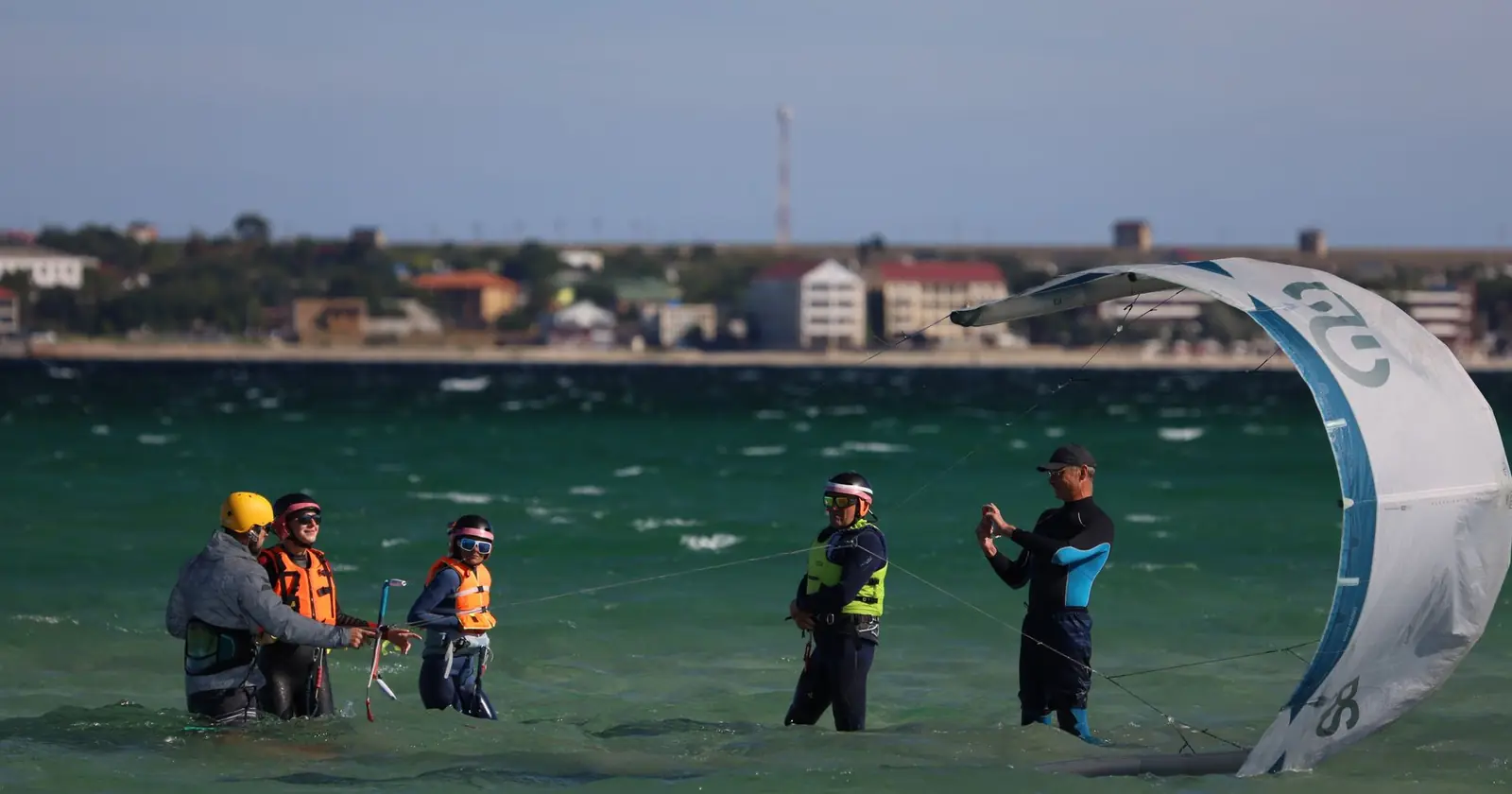
Photo: Nick Wehrli / Pexels.
What a beginner actually needs from a kite spot
Standing depth, first and above everything. Learning to kitesurf means an hour of being dragged sideways, then an hour of getting up and falling immediately. In water over your head every one of those is a swim. In waist-deep water it is a reset. This single variable does more for your progress than any amount of wind.
Wind measured in days, not adjectives. Every kite destination on earth calls itself reliable. The number that matters is what share of days in your month actually produce rideable wind, and in what strength band, because a beginner wants roughly 12 to 18 knots, and a spot running 25 to 30 is a spot where your lessons get canceled or, worse, do not.
A tide that does not take the spot away. On reef-lagoon coasts the water leaves. That is not a footnote; it decides what time your lesson happens and whether the lagoon exists that afternoon.
And a school with a ratio you have asked about. More on that below, because it is the one thing on this page you control.
1. Dakhla, Morocco: and why you should go in the light-wind season
The lagoon is the reason: at low tide the water stays in standing depth for roughly three hundred meters from the beach, flat, with a sandy bottom. There is no better arrangement for the first week of your life on a kite.
Dakhla is sold on wind reliability, trade winds giving something in the order of 300 windy days a year. But look at the seasons separately and the advice inverts:
| Months | Typical wind | Share of days with wind | Who it suits |
|---|---|---|---|
| January–March | 12–18 knots | around 60%+ | Beginners. The right strength band, fewer people, colder water |
| April–August | 20–30 knots, up to 35 in midsummer | 90%+ in high summer | Freestyle and experienced riders |
So the season Dakhla is famous for is the season a beginner should avoid. Book January to March, bring a wetsuit for water around 17–19°C, and you get the strength band you can actually learn in.
2. El Gouna, Egypt: flat, warm, and the instruction is licensed
Shallow, flat, warm Red Sea water with dependable summer thermals, which is the standard beginner recipe. What is not standard, and what nobody writes about, is the regulation.
Egypt puts kitesurfing instruction inside the same licensing regime as diving. The Chamber of Diving and Water Sports inspection manual states that kite and windsurfing activities may only be carried out once they are added to a center's membership letter and its Ministry of Tourism license, that a kite or windsurf instructor must be present, and that participants must hold a valid certificate from an approved organization for the activity. A center that fails its inspection has its ministry license suspended.
That is a stronger external check on your school than exists at most spots on this list. The same manual is set out in detail in our Sharm and Hurghada comparison.
3. Kalpitiya, Sri Lanka: standing-depth lagoon with room to make mistakes
The draw is scale: a very large, very shallow flat-water lagoon on two monsoon seasons, at prices well below the Atlantic spots. It ranks third rather than first because the wind arrives in defined monsoon windows rather than year-round, so your dates have to fit the season instead of the other way round. Our Kalpitiya guide covers the months.
4. Mui Ne, Cumbuco and Prea: strong, steady, and not gentle
All three are excellent kite destinations and none of them is the softest place to learn. Vietnam's Mui Ne and Brazil's Cumbuco and Prea run strong, consistent season winds: which is why good riders love them and why a first-timer can find the same conditions intimidating. Cumbuco and Prea also give you long downwind runs, which is a reward for week two rather than week one.
Go for the second trip, or go with a school and accept that some days you will be watching.
5. Diani Beach and the tide problem
Diani is warm, cheap and runs on monsoon wind, and it sits behind a reef like the other East African lagoon spots. That geometry is worth understanding before you book a week of lessons.
At Paje in Zanzibar, the measured version of the same coastline, the tidal range reaches about four meters and the timing shifts roughly fifty minutes every day. The inner lagoon empties at low tide and riders move out to the sandbanks. Nothing about that is bad: low tide over a sandy lagoon is superb teaching water: but it means your lesson slot moves daily and is set by the moon rather than by you.
Ask the school for the tide table for your week before you book flights around a schedule.
6. La Ventana and Aruba: the most reliable wind on this list
La Ventana in Baja is a winter-wind destination with warm water and a famously friendly learner scene, which makes it a good choice if your window is December to March and you are coming from North America. Aruba has some of the most consistent trade winds anywhere and the most developed infrastructure on this list, at the highest prices on it.
Ask your school its ratio before you ask anything else
This is the single most useful thing on this page, and it costs nothing.
Under the IKO system most beginners get through Levels 1 and 2 in roughly nine to twelve hours of instruction. Schools run anywhere from two students per instructor to four, and the ratio divides your actual time on the kite almost directly. Two people sharing an instructor and one kite is a fundamentally different week from four people sharing them, same price bracket, half the airtime.
So: how many students per instructor, how many kites per group, and how many hours does the package actually contain. A school that answers those three crisply is telling you something; one that talks about the beach instead is telling you something else.
The short version
- Standing depth beats wind. Dakhla's lagoon holds it for about 300 m from shore.
- Go to Dakhla in January to March, at 12–18 knots, not in the famous 25-knot summer.
- El Gouna's instruction is licensed: kite teaching sits inside Egypt's CDWS regime, with the activity named on the center's ministry license.
- Reef lagoons run on the tide. At Paje the range hits about four meters and moves 50 minutes a day; Diani is the same kind of coast.
- Ask the ratio. Two students per instructor against four is half your time on the kite.
The full guides behind these beginner kite spots
Kalpitiya
A vast, shallow flat-water lagoon and reliable monsoon wind at very low Sri Lankan prices.
Flat lagoon, budgetRead the guide → 23°43′N 15°57′W · MoroccoDakhla
A huge flat-water lagoon on the Moroccan Sahara coast, steady wind and beginner-friendly.
Flat lagoonRead the guide → 27°24′N 33°41′E · EgyptEl Gouna
Warm, flat, shallow Red Sea water with dependable wind and a big kite scene.
Flat, warm, reliableRead the guide → 10°56′N 108°17′E · VietnamMui Ne
Vietnam's kite capital: strong season wind, warm water and cheap seafood and rooms.
Reliable wind, cheapRead the guide → 3°37′S 38°44′W · BrazilCumbuco
Steady, strong Ceara wind and warm water a short hop from Fortaleza.
Strong season windRead the guide → 2°50′S 40°24′W · BrazilPrea
Flat-water and downwinders near Jericoacoara on a long, dependable wind season.
Flat water, season windRead the guide → 24°03′N 109°59′W · MexicoLa Ventana, Baja
A Baja winter-wind hotspot with warm water and a friendly learner scene.
Winter wind, warmRead the guide → 4°17′S 39°35′E · KenyaDiani Beach
Warm Indian-Ocean water and monsoon wind on a white-sand Kenyan beach.
Warm, monsoon windRead the guide → 12°31′N 70°02′W · ArubaAruba
Near-constant Caribbean trade winds and stable infrastructure for longer stays.
Constant trade windsRead the guide →FAQ: Beginner Kitesurfing Destinations for Nomads
Where is the best place to learn to kitesurf?
Dakhla in Morocco, on the strength of its lagoon: at low tide the water stays in standing depth for roughly three hundred meters from the beach, which is what a beginner needs more than wind. Go between January and March, when the wind sits around 12 to 18 knots, rather than in the famous summer season when it runs 20 to 30 and more.
How long does it take to learn to kitesurf?
Most beginners get through IKO Levels 1 and 2 in roughly nine to twelve hours of instruction, though it depends on wind, fitness and how much of that time you actually spend holding a kite. That last part is set by the student-to-instructor ratio, which runs from two to four depending on the school, ask before you book, because it can halve your airtime for the same price.
Do I need deep water or shallow water to learn kitesurfing?
Shallow: ideally water you can stand up in. The first days are body-dragging and failed waterstarts, and in water over your head each attempt ends in a swim, while in waist-deep water it ends in a reset. Flat, shallow lagoons with sandy bottoms are why Dakhla, El Gouna and Kalpitiya are the standard learner destinations.
Does the tide matter for kitesurfing?
On reef-lagoon coasts, a great deal. At Paje in Zanzibar the tidal range reaches about four meters and the timing moves roughly fifty minutes each day, so the inner lagoon empties and riders shift to the sandbanks. That makes low tide excellent teaching water, but it means your lesson time is set by the moon. Ask any East African school for the tide table covering your week.
Sources
- Dakhla wind statistics and lagoon depth: roughly 300 windy days a year, 12–18 knots and about 60%+ of days from January to March, 20–30 knots and 90%+ in high summer, standing depth about 300 m from shore at low tide. As published by Dakhla kite schools, read 6 September 2026. Dakhla season statistics and Windy.app spot statistics
- Egypt's licensing of kite and windsurf instruction: activity must be added to the membership letter and the Ministry of Tourism license, an instructor must be present, and participants must hold a valid certificate from an approved organization. Chamber of Diving and Water Sports, Manual and Protocol of Audits, version 3, January 2024. Read 6 September 2026. cdws.travel (PDF)
- Paje tidal range: about four meters, with the timing shifting roughly fifty minutes a day, emptying the inner lagoon. As published by Paje kite centers and travel guides, read 6 September 2026. IKSURFMAG travel guide
- IKO level structure and instructor requirements. International Kiteboarding Organization, read 6 September 2026. ikointl.com; hours to Level 2 and the two-to-four ratio range are as published by IKO-affiliated schools rather than by IKO itself.
- Our own destination guides for the places above, each with its own sources and compile dates.