Sharm el-Sheikh vs Hurghada: Which for Diving in 2026?
 by Yannick SchrothSep 5, 20269 min read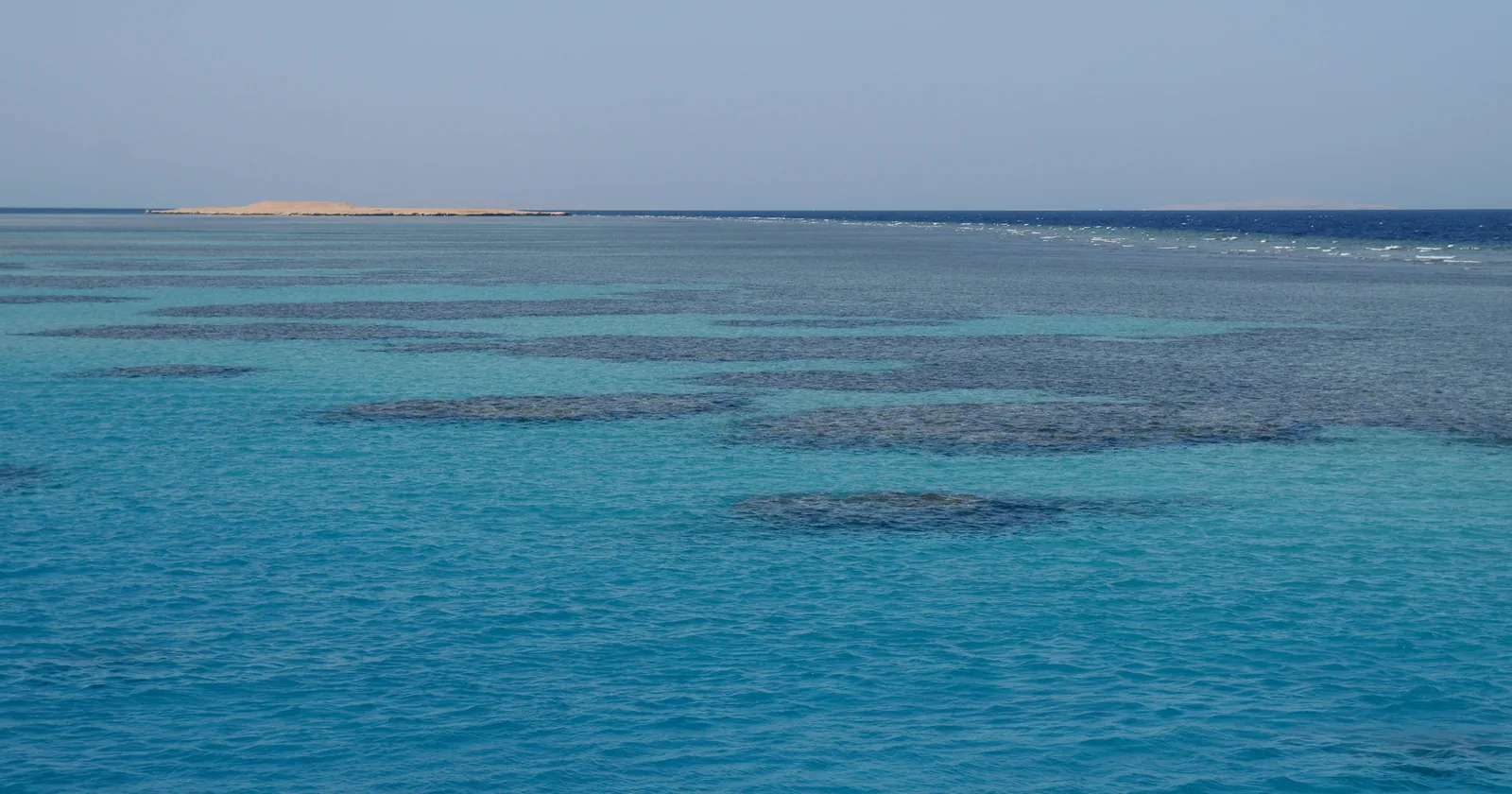
Reef off Hurghada, one of the two coasts, not both. Photo: kallerna, Wikimedia Commons, CC BY-SA 3.0.
What the Egyptian audit actually requires
This is the part worth knowing before you walk into any Egyptian dive shop, and it is public. The Chamber of Diving and Water Sports was founded by the Ministry of Tourism in 2007, works under Law No. 85 of 1968, and describes itself as “the only entity representing this tourist activity before the public authorities”. It publishes its inspection manual in full.
The manual is blunt about what failing means. A centre that does not comply after its second inspection is handled like this: the ministry “will be notified to take necessary action to suspend the license of the facility, without issuing a membership letter”. Membership and the licence to trade are tied together, which is why an Egyptian list is the whole set of legal operators rather than the ones with the best websites.
More useful than that: the manual sets out minimums you can look for without asking anyone's permission.
Five things the protocol requires, and you can check
- Oxygen on site. Two O2 kits “suitable for delivering 15 litre/minute flow for minimum 20 minutes”, with at least one tank at every site where activities are run, not just back at the shop.
- Cylinder testing. Visual inspection annually, hydrostatic every five years, and only through CDWS-approved maintenance centres. The dates are on the tank.
- First aid. Valid certificates for at least two non-professional staff, from a body the CDWS accredits.
- A written emergency plan at each dive site, which has to name the nearest recompression chamber and carry the contact data for emergency medical consultation.
- Your forms in your language. The risk and medical declarations must be “in the client's language or a language understood by the client”.
One caveat, and it matters. A centre that has held a ministry licence and an ISO certificate for two years running can be issued its membership letter for two years “without obligation with the requirement of annual inspection”. So a valid membership does not always mean somebody inspected the place this year. Ask when the last audit was; the technical manager will know.
Two towns, two chambers
Egypt is unusual in having a recompression chamber in both places, which is not the case in most of the destinations on this site.
Sharm el-Sheikh's Hyperbaric Medical Center opened on 10 March 1993 and became part of the DAN Europe network. Its newer chamber is a Haux-Starmed 2000/200 that can take up to twelve patients, with an equipped ante-chamber, a ventilator, and gas-mix capability for nitrox and heliox. Hurghada's HyperMed Red Sea has been treating diving accidents since 2007, on the airport road, and states round-the-clock emergency support.
Between them they cover the two coasts. It is still worth asking a centre which one it uses and how a casualty gets there, because the answer from Sharm's outer sites and the answer from a Hurghada day boat are not the same journey.
Is it safe? What the travel advice actually says
People conflate “Sinai” with Sharm el-Sheikh, and that costs them insurance rather than safety. The UK FCDO advises against all travel to North Sinai Governorate, and against all but essential travel to the northern part of South Sinai beyond the St Catherine–Nuweibaa road, but explicitly excepts the coastal areas. It describes travel to the Red Sea tourist areas as generally low risk, and names Sharm el-Sheikh, Hurghada and Marsa Alam as resorts that security forces protect with routine checks.
So neither town is under a travel restriction. The reason to know the exact wording is that most travel and dive insurance is void for travel against your own government's advice, and some inland excursions from Sharm run towards the area that is covered by it. Check the current page before you book an overland trip, not just before you fly.
Staying, rather than visiting
If the plan is a fortnight, skip this. If the plan is three months, it is the section that decides it.
Egypt has no digital nomad visa. Remote work for a foreign employer is done on a tourist visa, which is common and not the same thing as being provided for. Plan the stay around visa length, not around the lease.
On infrastructure, Hurghada is the one with a published remote-work scene. Coworking Hurghada advertises up to 70 Mbps wired and wireless, a nine-hour day pass at EGP 600 and a four-hour pass at EGP 400, on Mohamed El Said Street in Kawther; redNERD runs a coliving space with a dedicated work room. No equivalent is published for Sharm el-Sheikh, which is not proof that none exists: but a town whose workspaces are not findable from outside is a harder place to arrive in cold.
What the CDWS register adds for Sharm and Hurghada
Now the counts, which settle less than any of the above. They tell you how much choice you have on a bad day, and how much of it anybody has assessed.
| Town | On our list | Holding a CDWS licence | Green Fins members |
|---|---|---|---|
| Sharm el-Sheikh | 109 | 101 | 3 |
| Hurghada | 90 | 68 | 0 |
| Marsa Alam | 58 | 39 | 8 |
Green Fins is separate from the CDWS audit and voluntary: somebody visited and scored the business against a published standard, on environmental practice rather than safety. A centre outside it may run a tighter boat than one inside it. The row that changes minds is the third one: Marsa Alam is smaller than both and has more assessed centres than both together.
What a bigger list buys you is a boat when one is cancelled and a course when one is full. It buys you nothing about the water. Ras Mohammed and the Straits of Tiran are reached from Sharm; Abu Nuhas and the Giftun islands from Hurghada. That is a choice of reefs, not a choice of quality.
Sharm el-Sheikh or Hurghada: which to pick
Sharm if Ras Mohammed and Tiran are why you are coming, if you want the largest choice of centres, and if being near the older and larger of the two chambers matters to you. Hurghada if you are staying longer than a dive week: it is the bigger town, it has the published coworking and the fibre, and it reaches the Abu Nuhas wrecks. Marsa Alam if you would rather have eight assessed centres than a hundred unassessed ones and do not mind a quieter coast.
The count is not the thing to choose on. The gap between 101 and 68 is a gap in how many shops line the same water.
FAQ
Is Sharm el-Sheikh or Hurghada better for diving?
Neither is better for the diving itself; both sit on the same sea and run under the same national audit. Sharm reaches Ras Mohammed and Tiran and has the larger, older recompression chamber. Hurghada reaches the Abu Nuhas wrecks and works better as a long stay. Sharm has more licensed centres, 101 against 68, and the only three in either town that Green Fins has assessed.
What can I check on an Egyptian dive boat myself?
The CDWS inspection manual is public and sets minimums. There must be an oxygen kit delivering 15 litres a minute for at least 20 minutes, with a tank at every site used; cylinders must carry a visual test within the year and a hydrostatic test within five; at least two non-professional staff must hold current first aid certificates; a written emergency plan naming the nearest chamber must be at the site; and your medical and risk forms must be in a language you understand.
Is Sharm el-Sheikh affected by the Sinai travel warnings?
No. The UK FCDO advises against all travel to North Sinai and against all but essential travel to the northern part of South Sinai beyond the St Catherine-Nuweibaa road, but excepts the coastal areas and names Sharm el-Sheikh, Hurghada and Marsa Alam as protected resort areas it treats as generally low risk. Check the current page before an overland excursion, because insurance is usually void for travel against official advice.
Sources
- Manual and Protocol of Audits for Diving Centers and Safari boats, version 3, January 2024, the audit itself: oxygen, cylinder testing, first aid, emergency plans, the language rule, licence suspension on failure, and the two-year exemption from annual inspection. Chamber of Diving and Water Sports, read 5 September 2026. cdws.travel (PDF)
- CDWS founding and standing: founded by the Ministry of Tourism in 2007, EUF certification partner for EN 14467 / ISO 24803. cdws.travel/about
- UK travel advice for Egypt, regional risks, for the exact wording on North Sinai, South Sinai and the Red Sea resorts. Foreign, Commonwealth & Development Office, read 5 September 2026. gov.uk
- Sharm el-Sheikh Hyperbaric Medical Center: opened 10 March 1993, DAN Europe network, Haux-Starmed 2000/200 chamber for up to twelve patients. Alert Diver, DAN Europe's own magazine, read 5 September 2026. alertdiver.eu
- HyperMed Red Sea, Hurghada: treating diving accidents since 2007, round-the-clock. The facility's own site, read 5 September 2026. hypermed-redsea.net
- Coworking Hurghada: up to 70 Mbps, day and half-day rates, Kawther. The space's own site, read 5 September 2026. coworkinghurghada.com
- Green Fins member register, for the three assessed centres in Sharm and the eight in Marsa Alam. greenfins.net
- Counted 26 August 2026 from the CDWS register: Sharm el-Sheikh, Hurghada and Marsa Alam, each entry linking to the register record it was read from.