Freediving vs Scuba Diving for Travellers: Which Should You Learn?
 by Yannick Schroth
Jul 25, 2026
11 min read
by Yannick Schroth
Jul 25, 2026
11 min read
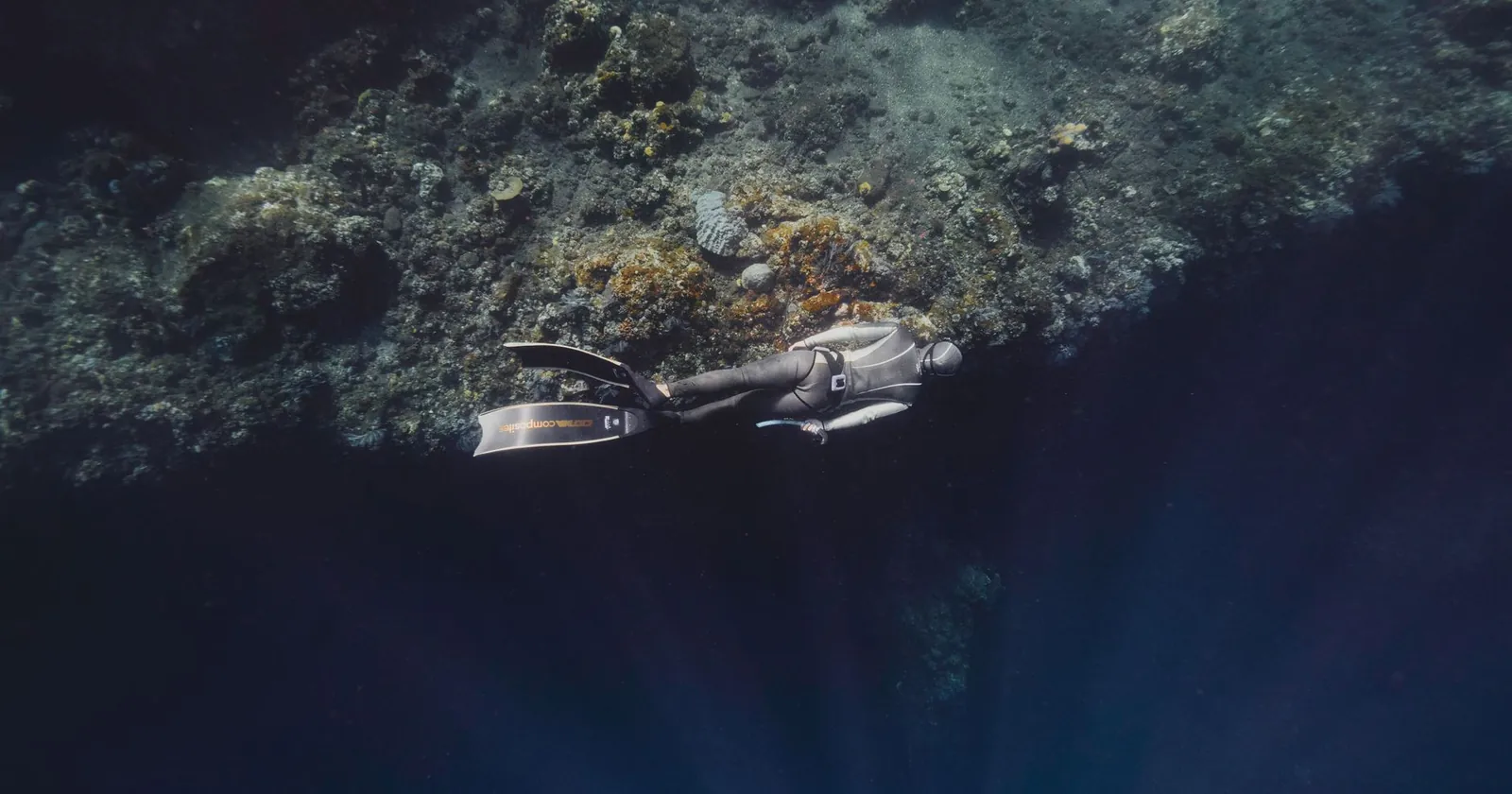
Photo: Emma Li via Pexels (free license).
Course and cost figures are indicative and "as of 2026"; confirm with your dive school.
Key takeaways
- Freediving: light, cheap to travel, meditative; short time underwater, big mental focus.
- Scuba: long bottom times and depth; heavier gear, tanks and more logistics.
- Cost: similar to learn; freediving is cheaper to keep doing.
- Safety: different risks (blackout vs decompression), both safe when trained.
- Do both if you can, just never freedive after scuba on the same day.
The core difference: one breath vs a tank
The whole distinction comes down to your air supply. Scuba diving carries a tank so you can breathe underwater and stay down for the better part of an hour, exploring at depth. Freediving is a single breath: you descend, experience the blue, and return, all on the air in your lungs. Everything else, the gear, the cost, the feel, the risks, flows from that one difference. For a digital nomad who dives, the practical question is which fits your travel style and what you want from the water.
How freediving and scuba feel different underwater
Scuba is exploratory and social: you have time to hover over a reef, poke around a wreck, watch behaviour unfold, and share it with a group. Freediving is quieter and more inward, closer to meditation or yoga in water, a calm descent into silence with no bubbles. Many people love scuba for the adventure and freediving for the peace. Neither feeling is superior; they are simply different reasons to get in the water.
Learning curve and courses
Both start with a short entry course, typically two to four days. Scuba's Open Water certification teaches gear, buoyancy and procedures and certifies you to 18 meters. A beginner freediving course (PADI Freediver, AIDA 2 or Molchanovs Wave 1) teaches breathing, relaxation, equalization and, crucially, buddy safety, to modest depths of roughly 10 to 20 meters. Scuba's skills are more mechanical; freediving is more mental, built on relaxation and equalization. Neither is hard for a comfortable swimmer, and a good instructor makes either accessible.
Cost, gear and packability
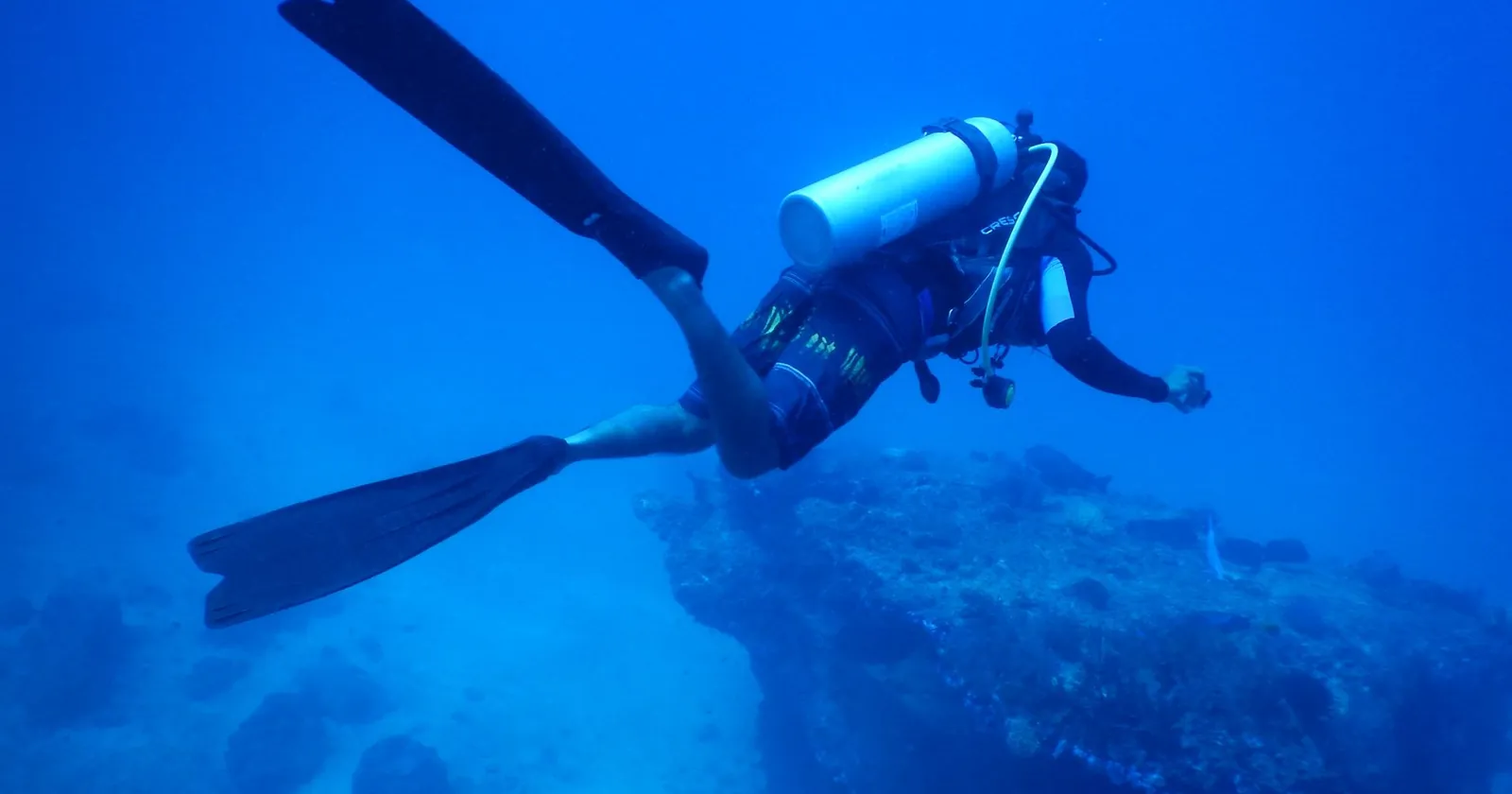
To learn, they cost similar money: an entry course for either runs a few hundred dollars, and is cheapest in places like Koh Tao, Utila or Dahab. Ongoing, freediving is cheaper and lighter: no tanks, no air fills, no BCD or regulator, just a mask, long fins and a wetsuit that pack into a carry-on. Scuba means renting or owning bulkier gear and paying for tanks and guided dives, which is why the packing and gear questions loom larger for scuba nomads. For pure minimalist travel, freediving is the lighter footprint.
Time and depth underwater
This is where scuba clearly wins on quantity. A recreational scuba dive gives you around 45 to 60 minutes down, to recreational limits of 18 to 40 meters depending on your certification, tracked by a dive computer. A freedive is measured in seconds to a couple of minutes per descent, with beginner depths of 10 to 20 meters. If your goal is to linger and observe, scuba is unmatched. If the appeal is the pure, repeated thrill of the descent, freediving delivers it with none of the kit.
Safety: different risks, both manageable
Both are safe when trained and done properly, and both have serious risks that training exists to manage. Freediving's signature danger is shallow water blackout, a silent loss of consciousness from breath-holding, which is why you never freedive alone. Scuba's main risks are decompression sickness and barotrauma, managed with a computer, safe ascents and safety stops. In both cases the formula is identical: get certified, dive with a buddy, respect conservative limits, and make sure your insurance covers the activity, as many policies exclude one or both.
Marine life: closeness, two ways
Freediving is silent, with no noisy bubble stream, so some animals tolerate a calm freediver remarkably closely, and freediving is often the only permitted way to swim with certain species like dolphins or whales. Scuba trades that stealth for time: you can stay with a reef long enough to watch its rhythms and spot the shy residents. One offers a fleeting, intimate pass; the other, patient observation.
Freediving vs scuba, at a glance
| Freediving | Scuba diving | |
|---|---|---|
| Air supply | One breath | Tank |
| Time underwater | Seconds to ~2 min per dive | ~45 to 60 min per dive |
| Beginner depth | ~10 to 20 m | 18 m (Open Water) |
| Gear | Light, packable | Bulkier, tanks needed |
| Ongoing cost | Lower | Higher |
| Key risk | Shallow water blackout | Decompression sickness |
| Feel | Meditative, minimal | Exploratory, social |
Which should a nomad learn first?
- Learn freediving if you travel light, love breath-hold and calm, want the cheapest ongoing water time, or want to swim closely with big marine life.
- Learn scuba if you want long bottom times, to explore reefs and wrecks, to go deeper, or to build toward technical diving one day.
- Do both if you can; they complement each other beautifully, and a base like Dahab lets you try each cheaply.
FAQ: freediving vs scuba diving
Is freediving or scuba diving better for travelers?
Neither is better; they suit different people. Freediving is gear-light, cheap to travel with and meditative, ideal for minimalists who love breath-hold and quiet water. Scuba gives you long bottom times to explore reefs and wrecks, at the cost of heavier gear and more logistics. Many nomads learn both. Choose freediving for simplicity and calm, scuba for time and depth underwater.
Is freediving cheaper than scuba diving?
They are broadly similar to learn: an entry-level freediving or scuba course each runs a few hundred dollars, cheaper in Southeast Asia and Central America. Ongoing, freediving is usually cheaper because you need no tanks, air fills or bulky gear, just fins, mask and a wetsuit, while scuba means renting or owning a BCD and regulator and paying for tanks and guided dives.
Is freediving more dangerous than scuba diving?
Both have serious, different risks and both are safe when trained and done properly. Freediving's key danger is shallow water blackout from breath-holding, which is why you never freedive alone. Scuba's main risks are decompression sickness and barotrauma, managed by training, a computer and safe ascents. In both cases, certification, a buddy and conservative limits are what keep you safe.
Which is easier to learn, freediving or scuba diving?
Both entry courses take roughly two to four days. Scuba's skills are more mechanical (buoyancy, gear, procedures), while freediving is more about relaxation and equalization, which some find harder mentally. Neither is difficult for a comfortable swimmer, and a good instructor makes either accessible. Try a discover session of each if you are unsure.
Can you do both freediving and scuba diving?
Yes, and many divers do; the skills complement each other. The one hard rule is not to freedive after scuba diving on the same day, because it can raise the risk of decompression sickness. Plan freediving first or on a separate day. Learning both gives you the most ways to enjoy the water on your travels.
Which lets you get closer to marine life?
Freediving is quieter, with no noisy bubbles, so some animals tolerate a calm freediver closely, and it is favoured for interactions like swimming with dolphins or whales where scuba is often not permitted. Scuba, though, lets you stay down far longer to observe reef life patiently. Each offers a different kind of closeness.
Yannick Schroth
Founder of NOMADREEF and a former digital nomad who has based across Asia and Latin America. This guide draws on freediving and scuba agency standards and the destination research, and cites figures to their sources. About the author · LinkedIn ↗
Sources
- PADI, Open Water Diver and Freediver course standards (depths, durations). padi.com.
- AIDA International, beginner freediver standards. aidainternational.org.
- DAN (Divers Alert Network), diving and freediving safety (decompression, shallow water blackout). dan.org.