Best Travel Scuba Gear for Digital Nomads (2026)
 by Yannick Schroth
Jul 24, 2026
Updated Nov 9, 2026
14 min read
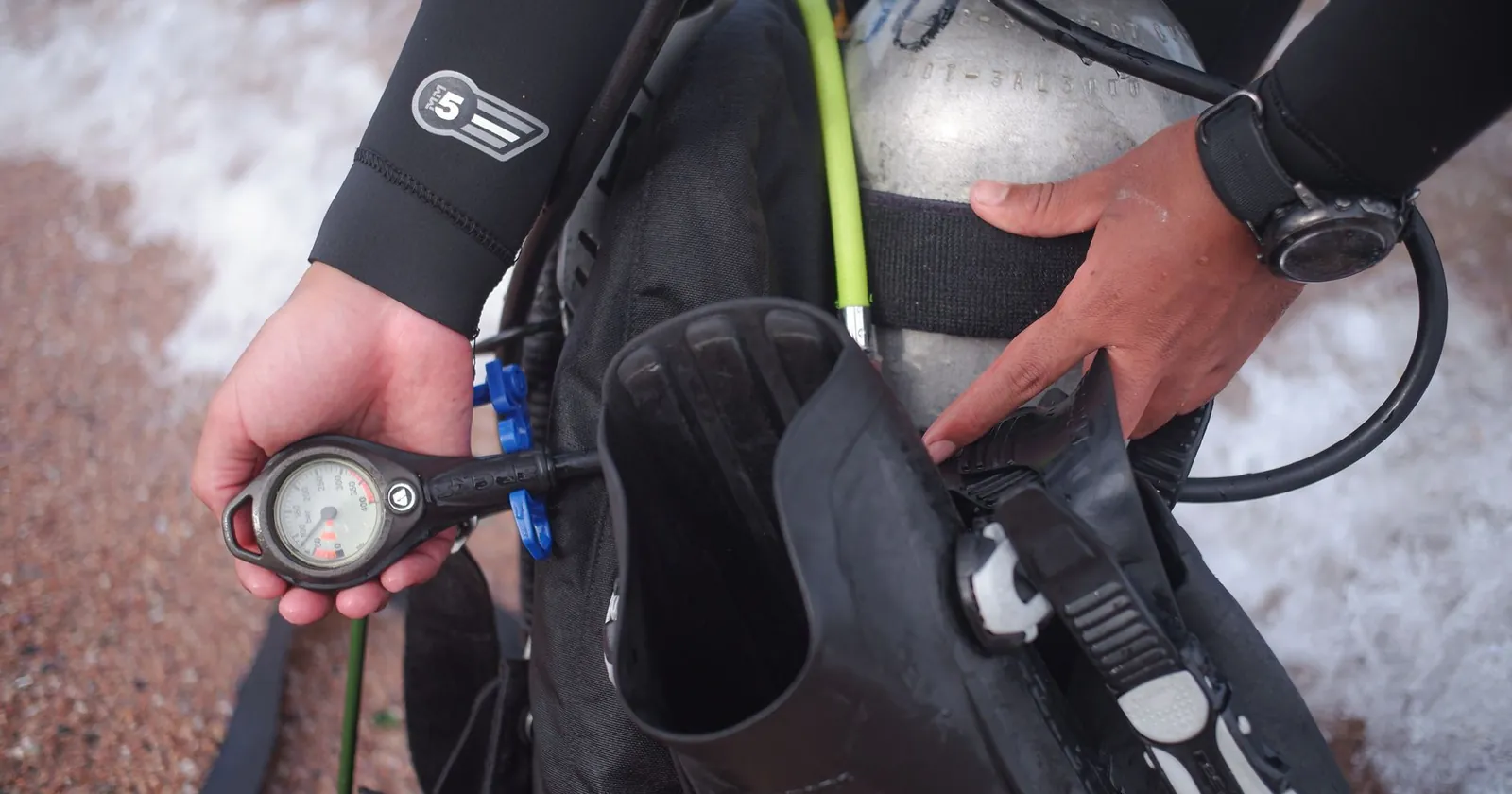
Photo: Hossam Ashoor via Pexels (free license).
Prices and specs are "as of 2026" and change; verify at the manufacturer or retailer before buying.
Own the personal-fit and safety items; rent tanks and BCD.
Browse on Amazon →Travel-specific kit shaves kilos off your baggage.
Browse on Amazon →The two items that most improve every dive; build the rest over time.
Browse on Amazon →Recommendations by type and spec, not a tested product ranking; confirm fit/size with a shop. Any price is live at the retailer. See our disclosure.
Key takeaways
- Own the personal kit, rent the bulk. Mask and computer always; tank and weights never fly.
- Travel gear = light + packable + durable. A travel BCD can save over a kilo.
- Spend on what touches you: mask, regulator, computer. Save on the rentable rest.
- Cabin-carry the regulator, computer and all lithium batteries; check the bulk.
- Occasional diver? Rent almost everything. Buy travel gear once rentals annoy you.
First principle: own the personal kit, rent the bulk
The smartest travel scuba gear decision is not which BCD to buy, it is what to buy at all. Own the items that touch your body and have to fit or stay hygienic, and rent the heavy, standardised items that every dive shop stocks. That keeps your bag light, your kit carry-on friendly, and your money in your pocket. We break the airport side of this down in the packing guide; here we cover what to actually buy.
| Own it (travel with) | Rent it (at destination) |
|---|---|
| Mask (and a spare) | Tank / cylinder (never flies) |
| Dive computer | Weights (heavy, cheap to hire) |
| Regulator (once you dive often) | BCD (bulky; rent, or buy travel model) |
| Exposure protection | Fins (if bulky; or buy travel fins) |
| Save-a-dive kit + spares | Torch, boat kit, sometimes fins |
Affordable dive gear for beginners: the first things to buy
The best affordable dive gear for a beginner is a mask, snorkel and fins that fit you, plus booties if the fins are open-heel. PADI's March 2026 price guide puts mask, snorkel and fins at $150–250 together. Rent the regulator, BCD, tank and weights while you learn: PADI says you usually need none of your own scuba gear to start.
That surprises people who expect a shopping list from the agency. NAUI's standards list the equipment a student has to wear in scuba training (mask, fins, cylinder, regulator with gauge, an alternate air source and a BCD with inflator) and call the snorkel optional unless a course specifies it (NAUI Standards and Policies, 2024). Wearing is not owning. The rule to buy the small items comes from the shops: PADI notes that many require students to own mask, fins and snorkel because masks are not one-size-fits-all (PADI).
SSI's beginner checklist goes a little further: mask, snorkel, fins, booties, a gear bag, defog and a dive log. Its reason for the booties is practical. Dive stores typically do not rent them (SSI). If you go for full-foot fins and dive warm water, PADI says you may not need booties at all, which is the cheaper and lighter route for a tropical base. Budget $45–50 for basic booties if you do.
One case where owning the basics stops being optional: PADI says some remote areas and liveaboards, short on storage, may require at least your own mask, snorkel, fins and wetsuit (PADI). For a nomad who drifts toward boat trips, that tips the wetsuit onto the buy list early.
Cheap dive gear for occasional diving: what owning really costs
For occasional diving, the cheap option that holds up is owning only what needs no servicing and renting the life-support gear. PADI's guide prices a basic complete set at about $1,700 and a full rental with wetsuit at about $60 a day. On those figures the basic set equals roughly 28 rental days, before you pay a single service bill.
The service bill is the part beginners forget. DAN says regulators should be overhauled annually or as the manufacturer requires, and a BCD serviced annually or as often as the maker recommends; mask, snorkel and fins need no regular service, only a rinse (DAN). So a regulator owned for one trip a year is serviced for that one trip. PADI makes the same point from the price side: at $650–800, "if you don't plan to dive more than once a year, an argument can be made that it's better to rent," although a regulator serviced regularly can last 20 years or more.
| Piece | PADI price guide (USD, Mar 2026) | For an occasional diver |
|---|---|---|
| Mask, snorkel, fins | $150–250 together | Buy: no regular service |
| Booties (open-heel fins) | $45–50 | Buy: shops typically don't rent them |
| Basic dive computer | $250–400 | Buy when you can; rentals exist |
| 3mm wetsuit | about $300 | Rent or buy; rentals are common |
| Basic BCD | $310–550 | Rent |
| Regulator | $650–800 | Rent from a well-run shop |
| Full rental set with wetsuit | about $60 a day, $100 a weekend | The benchmark |
The $1,700 basic set includes mask, fins, snorkel, wetsuit and booties, leaves out tank, weights and a bag, and assumes a shop package deal. The 28-day figure is our division of PADI's two numbers, not PADI's own. A cheap computer sits inside PADI's basic band: the Mares Puck Lite lists at $337.95 on Mares' US store with a user-replaceable battery (Mares, as of 9 November 2026). Renting has its own risk, though. PADI calls a rental regulator essential life support and says to rent from a reputable operation that keeps its gear serviced.
Dive computer: own this first
If you buy one thing, buy a dive computer. It is your logbook, your no-deco safety brain, and it is small, light and always cabin-carried. Travel computers are featherweight: the Shearwater Peregrine is about 122g and costs roughly $580 at Shearwater, while the watch-style Scubapro Galileo 3 Titanium is about 99g, per the manufacturers (Shearwater, Scubapro). We compare the field in the best travel dive computers guide and review our top pick in the Shearwater Peregrine review.
Mask: the second piece worth owning
Never rent a mask if you can help it: fit is everything, and a leaking rental ruins a dive. For travel, a low-volume, frameless mask folds flat, slips into a BCD pocket and packs into a carry-on with ease. The Cressi F1 is a long-standing travel favorite for exactly this, and Scubapro's travel line includes the D-Mask and Zoom Lite. For the F1 against Mares' X-Vision, and the two brands' regulators and fins as well, see Cressi vs Mares. Whatever you pick, try it on for seal before you buy, and pack a spare mask, it weighs almost nothing and saves a trip. Check mask prices on Amazon.
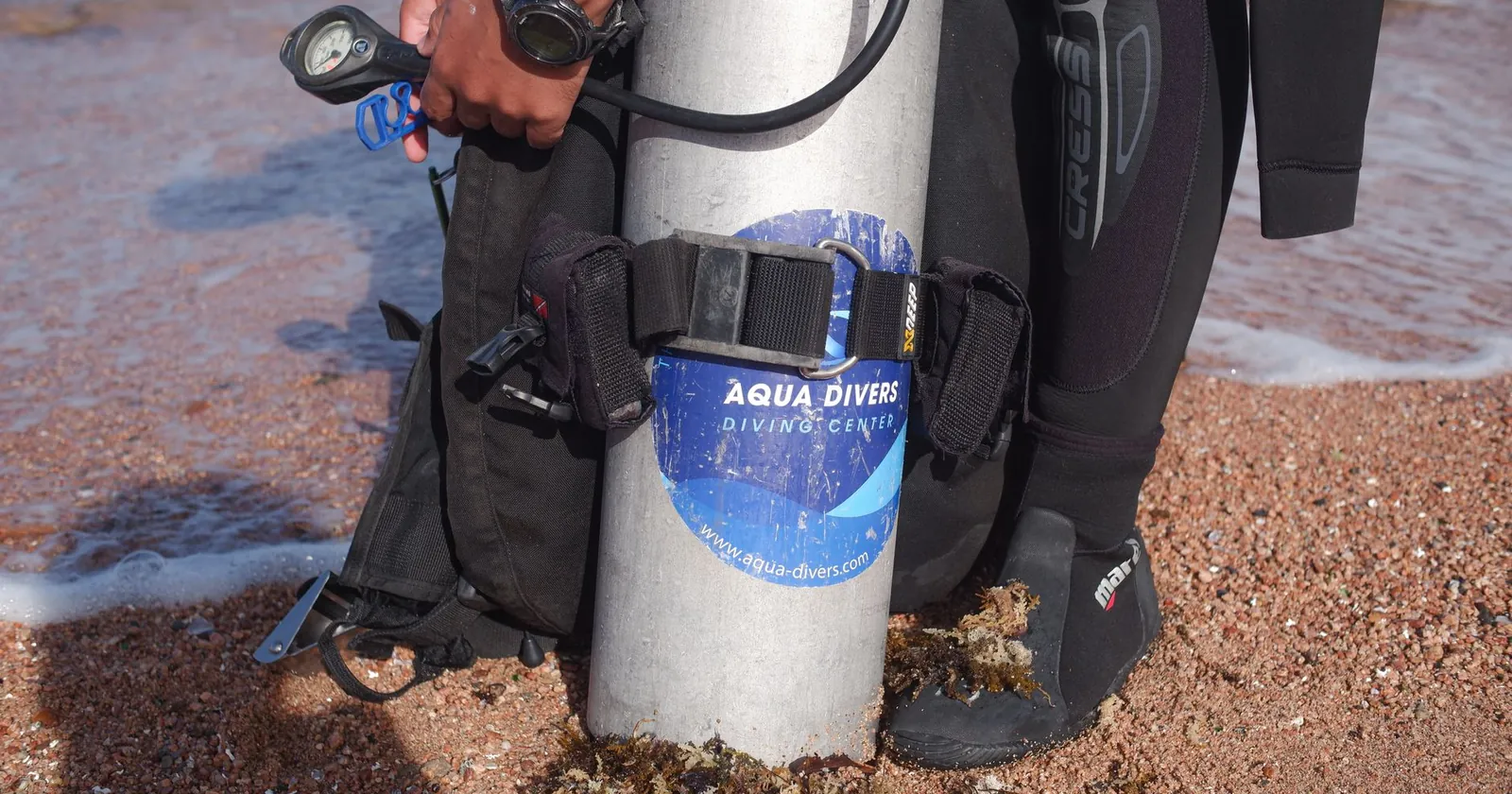
Regulator: own it once you dive often
A regulator is the classic "buy when you are ready" item. If you dive a few times a year, rent a well-serviced one locally. Once you dive often enough that rental quality bothers you, buy a compact travel regulator and cabin-carry it. Look for a light first stage and a design marketed for travel; Scubapro's travel system pairs the MK17 EVO / C370, and Apeks makes some of the best-known lightweight travel regulators (check the current weight and price on the manufacturer's page before buying, they vary by configuration). Whatever you own, have it serviced on schedule, well before a big trip, not the week of.
Fins: full-foot and packable for warm water
For tropical nomad diving, full-foot fins skip the boots and save weight and space. Purpose-built travel fins are light and stackable: Scubapro GO fins use a lightweight Monprene construction aimed squarely at packing small. If your own fins are bulky and the local rentals are decent, this is an easy thing to rent. If you buy, match blade stiffness to your leg strength, not to marketing. Check travel fin prices on Amazon.
BCD: the biggest weight saving
The BCD is where travel-specific gear pays off most, because a travel BCD can save well over a kilo versus a standard jacket, and folds far smaller. Popular travel BCDs include the Scubapro Litehawk and Navigator Lite, and lightweight back-inflate and modular options from Aqualung and Mares. That said, the BCD is also the easiest big item to rent, so many nomads never buy one. If you do, weigh it (literally) and check the fold-flat backplate and pocket layout for how you actually pack.
Exposure protection: match it to the water
Exposure protection is personal, so it travels, but bring the right thickness. A rashguard or 3mm shorty covers warm tropical sites like Amed or Moalboal, while cooler Atlantic water such as Tenerife wants a 5mm suit and maybe a hood. A thin suit packs small and dries fast, which is exactly what you want on the road. When in doubt, check the destination's sea temperature for your month and pack one step warmer.
Save-a-dive kit and a proper bag
The cheapest, most valuable travel gear is the stuff that rescues a dive day: a save-a-dive kit of o-rings, mask and fin straps, defog and a multi-tool. Add a dedicated dive bag that protects the delicate items and survives baggage handlers. None of it is glamorous, and all of it earns its place the first time a $2 o-ring saves a dive in a place with no shop for miles.
How to choose a scuba equipment set for travel
Choose a travel scuba set piece by piece, not as one package. Start from how many days a year you dive, then the coldest water on your route, then the weight you can carry. Rent different BCDs and regulators before buying either, and check each item's service interval in its manual, because servicing is what you pay for between trips.
- Count your dive days. A basic set costs about what 28 rental days do, and the regulator and BCD then add a service bill every year, whether you dive five days or fifty.
- Size exposure protection to the coldest stop. PADI's suggestion for a travelling diver is a 5mm wetsuit plus a 3mm shorty: the shorty alone in the tropics, the 5mm in temperate water, both together when it is cooler.
- Test on rentals first. PADI suggests trying different models during your stay and noting the maker and model of whatever works.
- Buy in steps. PADI's advice is that you do not need to buy a full set at once. Package deals save money, but not if the package holds something unsuited to you.
- Read the service schedule before you pay. DAN Europe says most manufacturers require annual servicing, some allow longer, and some count dives as well as months; the interval is in the user manual (DAN Europe).
- Match the BCD to your suit. PADI warns that travel BCDs may not have enough lift for the extra weight a dry suit diver carries.
Servicing is also a travel question. DAN Europe describes the service technician as someone trained by one or more manufacturers, and a shop may not service every brand. A regulator from a brand with no service dealer on your route is best serviced at home, before you leave.
What to own vs rent, at a glance
| Item | Own or rent? | Travel priority | Carry-on / checked |
|---|---|---|---|
| Dive computer | Own | Highest | Cabin |
| Mask (+ spare) | Own | Highest | Cabin or checked |
| Regulator | Own when frequent | High | Cabin |
| Exposure protection | Own | Medium | Checked |
| Fins | Own or rent | Medium | Checked |
| BCD | Rent, or buy travel model | Low to own | Checked |
| Tank & weights | Always rent | Never fly | n/a |
Who should rent dive gear instead of buying
- New or occasional divers: own a mask and computer, rent everything else.
- Ultralight travelers: rent the bulk and keep your dive kit to a packing cube.
- Anyone unsure of fit: try gear on rental trips before committing to buy.
FAQ: best travel scuba gear
What scuba gear should you own vs rent when traveling?
Own the personal, fit-and-hygiene items: mask, dive computer, regulator and exposure protection, plus a save-a-dive kit. Rent the heavy, bulky, standardised items at your destination: tank and weights always, and often the BCD and fins. This keeps your kit carry-on friendly and your costs down.
What makes scuba gear "travel" gear?
Three things: weight (a travel BCD can save over a kilo versus a standard one), packability (frameless masks fold flat, fins that stack, a foldable BCD backplate), and durability so it survives repeated flights. For warm tropical water you can also go lighter on exposure protection and full-foot fins.
How light can a travel scuba kit be?
If you own only the personal kit (mask, regulator, computer, thin exposure suit, spares) and rent the tank, weights and BCD, the whole lot is usually manageable as carry-on. Dedicated travel dive computers are very light: the Shearwater Peregrine is about 122g and the Scubapro Galileo 3 Titanium about 99g, per the manufacturers.
Do I need to buy a BCD and regulator to travel and dive?
No. If you dive only occasionally, renting a BCD and regulator at each destination is cheaper and lighter than flying with your own. Buy your own once you dive often enough that rental quality, fit and cost start to bother you, and then choose lightweight travel models. Always own your mask and computer regardless.
Can you take scuba gear as carry-on?
Yes for the delicate, expensive personal items: cabin-carry your regulator and dive computer, and keep all lithium batteries (torch, camera) in the cabin. Put sharp items like dive knives and bulky gear such as a BCD, fins and wetsuit in checked luggage. Never fly with tanks or weights. See our packing guide for the full split.
What is the best travel dive computer?
For most traveling recreational divers the Shearwater Peregrine is the standout for its large color screen and simple menus, while watch-style options like the Scubapro Galileo 3 (99g titanium) suit those who want everyday wear. See our dedicated travel dive computer comparison for the full breakdown.
What travel scuba gear is worth spending more on?
Spend on the items that touch you and keep you safe: a well-fitting mask, a reliable regulator and a good dive computer. Save on the standardised, rentable items. A cheap mask that leaks or an unreliable regulator costs you dives; a rented tank does not.
How much does a basic set of scuba gear cost?
PADI's March 2026 price guide puts a complete basic set at about $1,700 USD. That includes mask, fins, snorkel, wetsuit and booties, leaves out tank, weights and a bag, and assumes a shop package deal. Renting a full set with wetsuit costs about $60 a day, so the basic set equals roughly 28 rental days.
Yannick Schroth
Founder of NOMADREEF and a former digital nomad who has based across Asia and Latin America. This guide is researched against manufacturer specs and dive-travel best practice, not a bench test; where we cite a weight or price it is attributed to the maker and dated. About the author · LinkedIn ↗
Sources
- Shearwater, official Peregrine product page (weight, price). shearwater.com.
- Scubapro, official travel gear range (Galileo 3 Ti weight, GO fins, Navigator Lite, D-Mask). scubapro.com.
- Scuba Diving Magazine / ScubaLab, travel gear testing and roundups (context). scubadiving.com.
- PADI, "How Much Does Dive Gear Cost?" by Megan Denny, 7 March 2026 (price guide per piece, basic set about $1,700, full rental with wetsuit about $60 a day or $100 a weekend, regulator $650–800 and the once-a-year rental remark, booties not needed with full-foot fins in warm water, travel BCDs and dry suits). blog.padi.com. Read 9 November 2026.
- PADI, "Buying Your Own Scuba Gear: Pros Cons and Practical Advice" by Sarah Wormald, 21 August 2016 (no own gear usually needed to start, remote areas and liveaboards that require your own basics, 5mm plus 3mm shorty for travelling divers, buying in steps). blog.padi.com. Read 9 November 2026.
- SSI, "Scuba Gear Essentials for New Divers" (beginner checklist; dive stores typically do not rent booties). divessi.com. Read 9 November 2026.
- NAUI, Standards and Policies Manual, January 2024 edition, general standards for scuba equipment (minimum equipment worn by students; snorkel optional unless a course specifies it). resources.naui.org (PDF). Read 9 November 2026.
- DAN, "Gear Maintenance: Protect Your Investment and Prevent Dive Accidents", 15 July 2020 (regulator overhaul annually or per manufacturer, BCD service, no regular service for mask, snorkel and fins). dan.org. Read 9 November 2026.
- DAN Europe, Alert Diver, "Scuba Equipment Care: The Service Technician" (intervals set in the user manual, some by dives as well as time; technicians trained by manufacturers). alertdiver.eu. Read 9 November 2026.
- Mares, official Puck Lite product page, US store (price $337.95, user-replaceable battery). mares.com. Read 9 November 2026.