How to Start Freediving as a Beginner (Safely)
 by Yannick Schroth
Jul 25, 2026
Updated Nov 9, 2026
12 min read
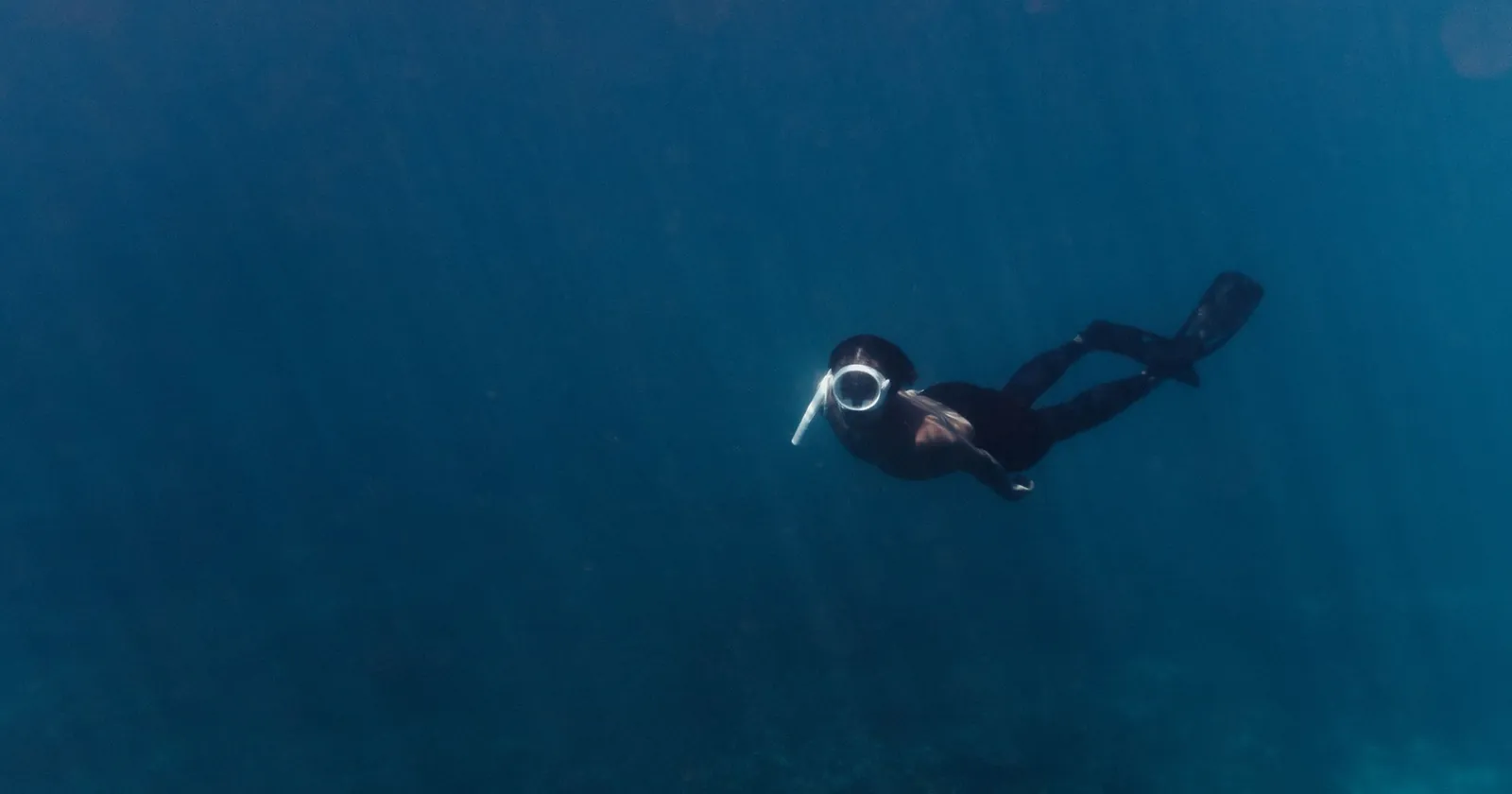
Photo: Kurt Panerio via Pexels (free license).
This is general information, not training. Freediving must be learned in person from a certified instructor.
Key takeaways
- Take a course, never self-teach. PADI Freediver, AIDA 2 or Molchanovs Wave 1.
- Never freedive alone. Use the one-up, one-down buddy system, always.
- Never hyperventilate; it removes your warning to breathe and causes blackouts.
- Relaxation beats power. Equalization, not lung size, limits most beginners.
- Progress slowly. Beginner depths are modest (roughly 10 to 20m) for good reason.
Step 1: Take a certified beginner course (do not self-teach)
The single most important thing about starting freediving is how you start: with a certified instructor, never alone off a YouTube video. A course teaches you technique, but more importantly it teaches safety, buddying and rescue, the things that keep the sport safe. Here is what each agency's own course page asks of a beginner:
| Course | Depth requirement | Length | Pool targets and entry |
|---|---|---|---|
| PADI Freediver | 10 m constant weight | Not stated by PADI | 90 seconds static and 25 m dynamic; from age 12 |
| AIDA 2 (Freediver) | 12 m dive with bifins; course limited to 20 m | At least 3 days | 2:00 static, 40 m with bifins; 18, or 16 with parental consent; swim 100 m non-stop |
| Molchanovs Wave 1 | 12 to 20 m with bifins and free immersion | Not stated; 3 depth sessions | 1:30 static, 30 m with bifins; swim 200 m non-stop |
| SSI Freediver | 20 m maximum training depth | 16 to 20 hours suggested | From age 12; SSI's public page gives no static or dynamic targets |
Figures per each agency's own course pages (PADI, AIDA, Molchanovs, SSI), read 9 November 2026; confirm current targets and prerequisites with your school. Any of them is a fine first step, so choose the school and instructor on safety and reviews rather than the logo, just as with scuba certification.
Step 2: Learn relaxation and breathing (and never hyperventilate)
Freediving is a sport of calm, not power. You will learn slow diaphragmatic breathing and deep relaxation, which lower your heart rate and oxygen use and let you hold your breath far longer than you would expect. The critical rule you will be taught: never hyperventilate (fast, forced breathing) before a dive. It lowers your carbon dioxide and removes the urge to breathe that normally warns you to surface, which is a direct path to blackout. Controlled breathing up, one final breath, and a relaxed descent is the pattern.
Step 3: Master equalization
For most beginners, the limit on depth is not the breath-hold, it is the ears. You will learn to equalize early and often, usually the Frenzel technique rather than the Valsalva many scuba divers use, so you can descend comfortably. Equalization is a skill that takes practice, so be patient: a session where you nail your equalization at 12 meters is a bigger win than forcing depth you cannot equalize.
Step 4: Always dive with a trained buddy
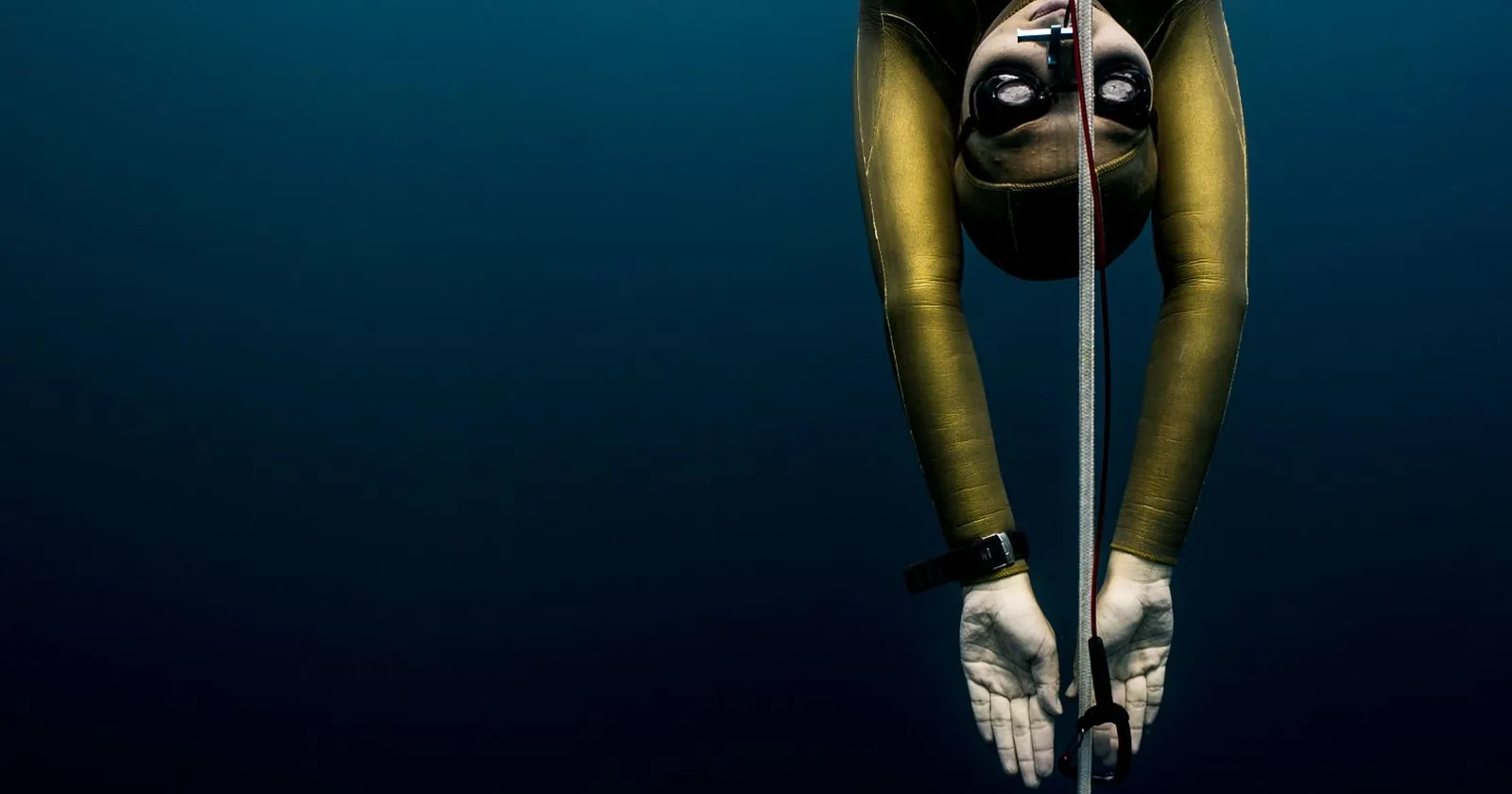
This rule is not negotiable: never freedive alone. Freedivers use the one-up, one-down system, one person dives while the other watches from the surface, ready to meet them on the way up and perform a rescue if needed. A blackout is silent and gives no dramatic warning (a large release of bubbles from the mouth is a recognized sign), so a trained, attentive buddy is what turns a blackout from a tragedy into a non-event. This is exactly the skill a course drills, and the reason self-teaching is so dangerous (DAN).
Step 5: Progress conservatively (and understand shallow water blackout)
Depth and breath-hold build over many sessions, not one. The reason for the caution is shallow water blackout (also called hypoxic blackout): as you ascend, falling pressure can drop your blood oxygen sharply, causing a sudden, silent loss of consciousness, often near the surface where you feel almost home. Prevention is the whole point of training: never hyperventilate, never push to your absolute limit, always have a buddy, and build slowly. Two more rules: never freedive after scuba diving the same day (it raises decompression-sickness risk), and stop the moment you feel unwell.
What gear you need to start freediving
You need less than you think, and beginners should rent or use the school's gear first. A typical freediving kit is a low-volume mask (or nose clip for advanced), long freediving fins, a wetsuit suited to the water, a weight belt and a dive watch or freediving computer. It packs small for travel, like the rest of a travel watersports kit, but there is no rush to buy: learn first, then invest once you know you love it.
Freediving vs scuba: which should you learn?
They are different joys. Scuba lets you stay down for an hour exploring reefs and wrecks; freediving is quieter, gear-light and meditative, a single breath and the blue. Many nomad divers do both. If you are drawn to the calm and simplicity, freediving is wonderful; if you want long bottom times and to build toward tech, start with scuba certification. Neither is "better", they scratch different itches.
FAQ: starting freediving
Is freediving dangerous for beginners?
Freediving carries real risks, above all shallow water blackout, a silent loss of consciousness from low oxygen. But with proper training, a trained buddy and conservative depth progression it is managed safely every day. The danger comes from doing it untrained, alone, or pushing too hard. Always learn through a certified course and never freedive alone.
How deep do beginner freedivers go?
Entry-level courses target modest depths. PADI Freediver asks for a 10 m constant weight dive, AIDA 2 for a 12 m dive with bifins in a course limited to 20 m, and Molchanovs Wave 1 for dives of 12 to 20 m. Most beginners are limited by equalization, not breath-hold, so depth comes gradually. Confirm exact targets with your chosen agency.
How long does it take to learn to freedive?
It depends on the agency. AIDA 2 runs at least 3 days, SSI suggests 16 to 20 hours for its Freediver course, Molchanovs Wave 1 includes three depth sessions, and PADI states no minimum length. That gets you certified to freedive with a buddy; comfort and depth then build over many practice sessions.
Do you need to be a strong swimmer or very fit to freedive?
You need to be comfortable in water and a competent swimmer, but not an athlete. Relaxation matters far more than fitness or lung size, and much of the skill is mental. If you can swim and stay calm in the water, you can start; a good instructor meets you at your level.
What is the minimum age to learn freediving?
It varies by agency. PADI Freediver and SSI Freediver start at 12, and PADI asks for adequate swimming skills and good health but no experience. AIDA 2 needs you to be 18, or 16 with parental consent, and Molchanovs runs Junior courses for ages 4 to 15. Check the exact age and medical requirements with your course provider.
Can you teach yourself to freedive?
No, and this is the most important safety point. Self-teaching, especially breath-hold practice alone, is how people drown from shallow water blackout, which gives no warning. Learn through a certified instructor who teaches technique, buddying and rescue, and always dive with a trained partner afterwards.
Can you freedive after scuba diving?
No. Freediving after scuba diving can increase the risk of decompression sickness, so you should not freedive after a scuba dive on the same day (leave a generous gap, and follow your agency's guidance). Plan the order of your day so freediving comes first or on a separate day, and when in doubt, wait.
Yannick Schroth
Founder of NOMADREEF and a former digital nomad. This guide is researched against freediving agency standards and DAN safety guidance and cites them; it is not a substitute for certified, in-person instruction, which every freediver needs. About the author · LinkedIn ↗
Sources
- PADI, Freediver course (minimum age 12, swimming and health prerequisites, pool and open water goals). padi.com. Read 9 November 2026.
- AIDA International, AIDA 2 course page on its education site (age, swim test, pool and depth requirements, 20 m course limit, minimum length). Read 9 November 2026.
- Molchanovs, Lap/Wave 1 requirements and freediving education overview. Read 9 November 2026.
- SSI, Freediver (minimum age, sessions, maximum training depth). Read 9 November 2026.
- Corrections, 9 November 2026. An earlier version of this page gave PADI Freediver as "roughly 10 to 16 metres" with "breath-holds up to ~3 min"; PADI's goals are a 10 m constant weight dive, 90 seconds static and 25 m dynamic. An earlier version gave AIDA 2 a "16 m depth" requirement and said it "certifies you to about 20" metres; AIDA asks for a 12 m dive with bifins, and 20 m is the course limit. An earlier version gave Molchanovs Wave 1 a "minimum of about 5 days"; Molchanovs states no minimum length.
- DAN (Divers Alert Network), "Shallow-Water Blackout" (safety). dan.org.