Split Diving: The Permit Rules, the Vis Wreck Zone and the Islands a Ferry Away
 by Yannick Schroth
Sep 24, 2026
12 min read
by Yannick Schroth
Sep 24, 2026
12 min read
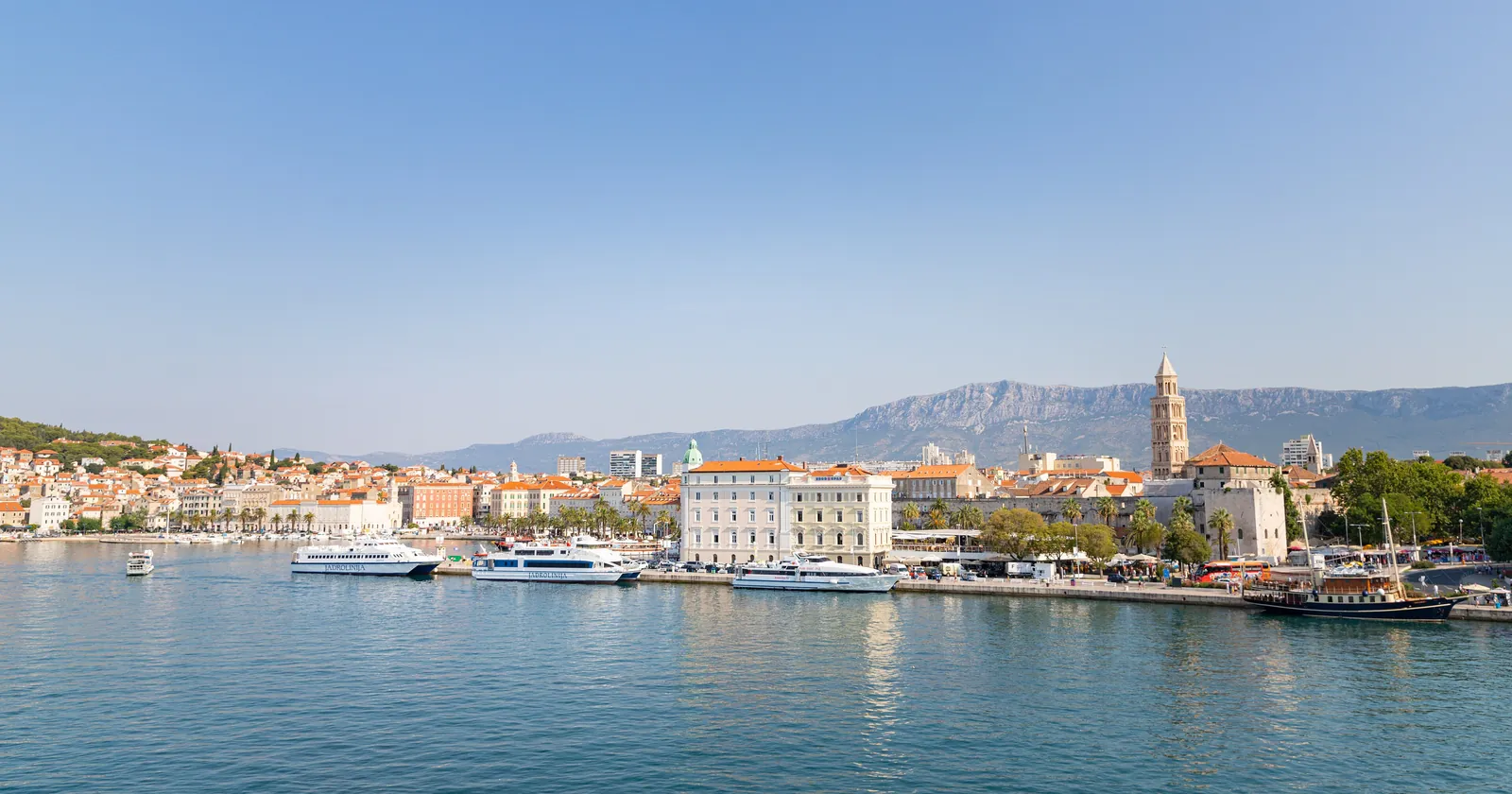
Photo: dronepicr, Wikimedia Commons, CC BY 2.0.
.jpg)
Key takeaways
- The Croatian Diving Association card, and its 100 kuna fee, were struck out of the diving rulebook by a Government decision published on 6 August 2010
- Diving from Split without a dive center still needs an individual diving approval from a harbor master; the rulebook says 2,400 kuna and the government portal says €318.53
- Ports, port approaches, port anchorages and areas of dense traffic are closed to divers, and the recreational limit on air is 40 meters
- The Vis zone, with the B-17, the Brioni, the Teti and the Vassilios among its sites, allows only organized diving under a Ministry of Culture permit, with a minimum fee of €2,000 a year per permit
- Posidonia meadows, which grow to about fifty meters in the central Adriatic, are a strictly protected species under the Nature Protection Act
Split diving has needed no diving card since August 2010
Look up diving in Croatia and you will still meet the card. One travel guide puts it plainly: you need “a Croatian diving permit in order to dive legally”, it costs €15 and dive centers sell it on sight of your passport and certification. That was true once. It has not been true for sixteen years.
The card came from article 5 of the Pravilnik o obavljanju podvodnih aktivnosti, the rulebook on underwater activities published in Narodne novine 47/1999. Croatian and foreign nationals alike could dive “only with a valid diving card”, issued by the Croatian Diving Association, valid for one year and only to someone holding an appropriate qualification. Article 8 set the fee at 100 kuna and earmarked a net 60 percent of it for diving safety, care of injured divers, underwater heritage and promotion.
On 23 July 2010 the Government of Croatia repealed article 5, paragraph 2 of article 5a and article 8 in a single decision, published in Narodne novine 96/2010 on 6 August 2010 and in force eight days later. The same decision ordered the association to pay the unspent card money into the state budget within 30 days. A card sold today is not one the law asks for.
Diving from Split without a dive center takes a €318.53 harbor master permit
What the 2010 decision left standing is the second permit, and that one matters to anyone planning to shore dive alone from a rented apartment in Split. A 2003 amendment in Narodne novine 23/2003 divided all diving into two kinds. Organized diving runs under a dive leader from a dive center or club and is entered in a dive log. Individual diving is “every dive that is not organized”.
Article 2a says individual diving happens on the basis of an Odobrenje za individualno ronjenje, an individual diving approval. Article 5a says a harbor master's office issues it and that the fee is 2,400 kuna. Both provisions survived 2010. So did article 15, which fines a natural person 2,000 to 5,000 kuna for individual diving contrary to article 2a, and article 16, which allows a 500 kuna fine on the spot.
The government portal gov.hr states the price as €318.53, valid for a year from issue, and lists the harbor master offices that grant it: Pula, Rijeka, Senj, Zadar, Šibenik, Split, Ploče and Dubrovnik, or any of their branch offices. The maritime ministry's own diving page still gives the figure as 2,400 kuna.
Here the rulebook and the portal part company on one detail. The one-year validity used to sit in paragraph 2 of article 5a, together with the requirement to hold a diving card, and the 2010 decision repealed that paragraph. The text in force no longer says how long the approval lasts. The portal still says a year. Ask the Split office which date it writes on yours.
What an organized dive out of Split must carry: concession, logbook and oxygen
For most visitors the answer to the permit question is simpler: dive with a center, and the center's paperwork covers you. The rulebook is specific about what that paperwork is. Since the 2003 amendments, an organizer must first obtain a concession approval for underwater activities, such as training divers and running dive trips, before organizing a single dive.
The dive leader has to hold at least a three-star diver qualification (R***) or an equivalent. The organizer issues a Dnevnik ronjenja, a dive logbook, for each leader, and the local harbor master's office certifies it. Each entry records the date and time, the site, the planned duration, the maximum depth, every participant's name, nationality and qualification, a dive plan with a sketch of the area, and any accident.
Article 1c then lists what must be on site. A basic first aid kit and an oxygen first aid kit. A VHF radio or a mobile phone. The displayed telephone numbers of the recompression chambers and the search and rescue service. A plan for transporting an injured diver. And the logbook itself. If a boat leaving Split cannot show you the chamber numbers, the rulebook says it should be able to.
Split's harbor, its approaches and anything below 40 meters are off limits
Split's waterfront is a working ferry port, and article 10 of the rulebook is written for exactly that. Diving is not permitted in internal waters that comprise ports, port approaches, port anchorages and areas of dense traffic. The exception needs a permit from the territorially competent harbor master, not a word from a dive guide.
The same article closes strict and special marine reserves, nature parks and other protected parts of the sea, the national parks of Brijuni, Kornati, Krka and Mljet, and the water within 100 meters of anchored warships and guarded military installations on the shore. Since 2003 it has also closed sites protected under the cultural heritage rules, which is where the Vis wrecks come in.
Two more rules apply to every dive. Article 9 sets the maximum depth for recreational diving on air at 40 meters, with a fine of 1,000 to 4,000 kuna in article 14 for going deeper. Article 4 requires the dive area to be marked, either with an orange or red buoy at least 30 centimeters across or with a diving flag or the code flag A on the boat. At night the buoy needs a flashing yellow or white light visible from at least 300 meters.
A diver working alone is responsible for marking their own dive. For an organized dive it is the leader. Anyone planning a quiet shore entry below Marjan with a good buoyancy routine and no buoy is breaking the rule before the first breath.
The Vis wrecks from Split: 15 permits, a €2,000 floor and no solo diving
The 1999 rulebook once drew a box around the whole Vis archipelago, from 42°55' to 43°08' north and 15°40' to 16°20' east, covering Vis, Biševo, Svetac and Brusnik, and required a Ministry of Culture permit to dive anywhere inside it. The 2003 amendment deleted that article. What replaced it is narrower and stricter at once.
The Ministry of Culture's rulebook on diving permits in areas with cultural goods, Narodne novine 49/2019, says in article 2 that inside a protected zone only organized diving with a permit is allowed, and individual diving is prohibited. Every five years the minister adopts a program naming the zones, the number of permits and the minimum annual fee, and the permits go to dive businesses by public tender.
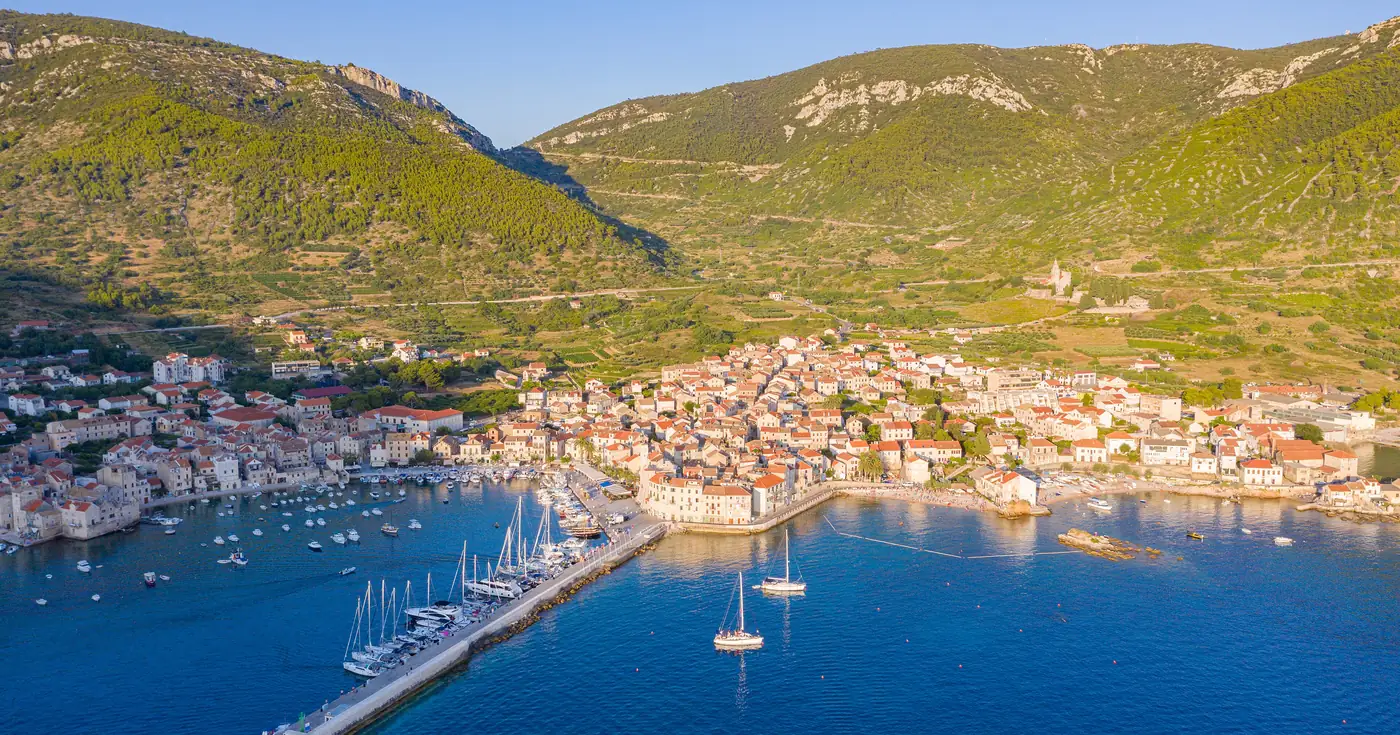
The program for 2024 to 2029 lists zone 27, the islands of Vis, Biševo, Brusnik and Svetac, as fourteen sites. Among them are the American B-17G bomber, the passenger and cargo ship Brioni, the tug Ursus, the merchant ship Vassilios, the wreck of the Teti, the remains of a Greek and Roman harbor, and two B-24 Liberators, one of them named Lady Luck.
At most 15 permits may be issued for the zone, each at a minimum of €2,000 a year, the joint highest floor in the program alongside the Baron Gautsch off Rovinj. The special conditions are short: no entry into the B-17, no entry into the Vassilios T, and at every wreck no entry into any part without a source of natural light.
The general rules in article 11 apply too. No entering or touching anything inside protective nets, no tying on to a wreck, a dive leader present on every dive, and at most two registered groups on one wreck at a time. The program caps a group at 15 divers per leader. Before taking a group down, the leader submits the dive list electronically to the heritage inspectors and the regional conservation department.
So the practical question in Split is not which boat is cheapest to Vis. It is whether the center holds a zone 27 permit for the 2024 to 2029 period. Wreck divers comparing coasts can set this against our list of wreck diving destinations.
.jpg)
Hvar, Šćedro and Rogoznica hold the other protected wreck zones near Split
Vis is not the only county zone in the program. Split-Dalmatia County has six in total. The zone around Hvar covers eight sites, seven ancient wrecks and one early modern one, with ten permits at a minimum of €300 each. Off Sućuraj on Hvar lies a second B-24 Liberator, with six permits at €260.
The steamship Dubrovnik and an ancient wreck off the islet of Šćedro each have six permits at €260 as well. Palagruža is a zone in its own right with eight permits at €650. The same rule applies in all of them: organized diving with a permit holder, and no individual diving.
One zone across the county line matters for divers based in Split. The program lists an ancient wreck at Rogoznica, in Šibenik-Knin County, with six permits at a minimum of €300. Two of the dive centers registered around Split are filed under Rogoznica, the town the zone is named after.
Brač and Šolta are the short ferry hops from Split, 50 and 60 minutes
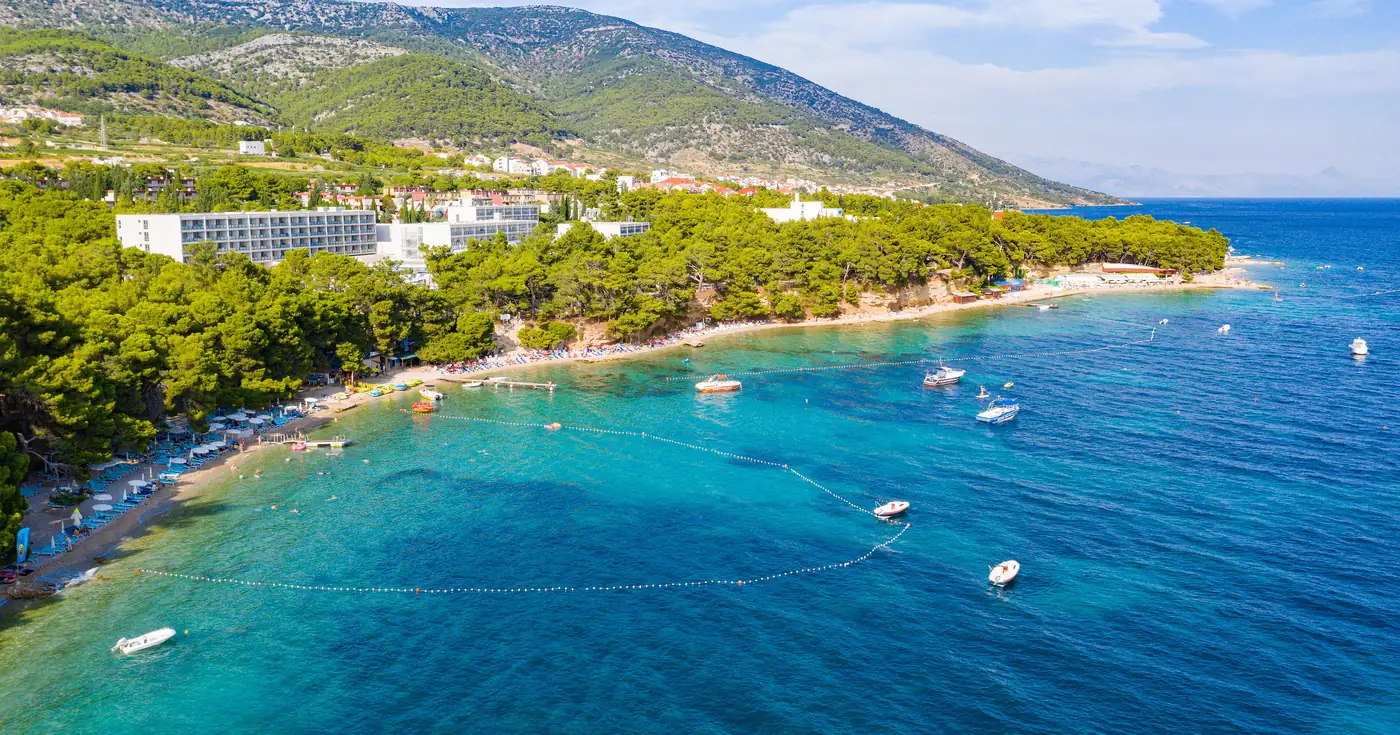
The islands on Split's doorstep are a different proposition. The 2024 to 2029 program lists no protected wreck zone off Brač, Šolta or Čiovo, so the ordinary rules apply there: a dive center, or a harbor master approval, a marked dive and the 40 meter limit. Nature protection rules still reach them, and so does the ban on ports and anchorages.
The state timetables published by the coastal line agency set the travel times. The car ferry on state line 631 from Split to Supetar on Brač takes 50 minutes one way. Line 636 to Rogač on Šolta takes 60 minutes. Both are run by Jadrolinija.
For Vis, state ferry line 602 leaves Split and arrives at Vis two hours and twenty minutes later on the 2026 timetable, for example 11:00 out and 13:20 in. The fast passenger line 9602, run by Kapetan Luka Krilo, links Vis, Hvar, Milna on Brač and Split. If you are choosing a base between the two coasts, our Split against Kotor comparison covers the rest of the trade-off.
.jpg)
Posidonia meadows around Split are strictly protected under Croatian law
The seagrass under a Split dive boat is not scenery the law ignores. The state Institute for Environment and Nature describes Posidonia oceanica as a strictly protected species under the Nature Protection Act, with protection at European level through the Habitats Directive. It is one of four seagrasses in the Adriatic and endemic to the Mediterranean.
Its depth range depends on light. In the northern Adriatic, where the water is less clear, meadows reach about 20 meters. In the central and southern Adriatic, which includes the water off Split, they extend to about fifty meters. Leaves grow up to about a meter long, and because the plant grows slowly, some individuals are over 1,000 years old.
The institute counts more than 20 percent of known Mediterranean species living in the meadows, and more than 100 fish species using them to feed, spawn or grow. It names anchoring as a direct threat: an anchor dragged through a meadow damages the network of rhizomes, which the waves then tear apart. A diver kneeling on it does the same job more slowly.
Split's sea read 23.0°C at the surface on 24 September 2026
The state meteorological service publishes the sea temperature at its coastal stations every day. On 24 September 2026, the day this guide was written, the Split station read 23.0°C and Komiža on Vis read 23.5°C. Šibenik, up the coast, read 22.0°C.
Read those figures for what they are. The service's method note says the observer lowers a shielded thermometer about 30 centimeters below the surface, at a spot at least 1.8 meters deep, holds it there for three minutes and reads it quickly. It is a surface reading. It says nothing about the water at depth, where a wreck dive off Vis spends most of its time.
The daily table is the tool to use: check it the week you travel and pack a wetsuit for the number you see, plus a margin for the thermocline.
Calling for help off Split: 195, 112 and VHF channel 16
For an accident or incident at sea, the government portal gives 195, the free number of the national maritime rescue coordination center in Rijeka, MRCC Rijeka. Help can also be requested on VHF channel 16 or through the European emergency number 112, which puts the call through to the same center.
Where the nearest recompression chamber is, and whether it can take a diver that day, is a question for the dive center before the boat leaves. The rulebook puts that duty on the organizer: the chamber numbers must be displayed at the dive site. Ask to see them, and check what your policy covers in our dive insurance guide.
Split's four SSI dive centers are filed in Omiš, Rogoznica and Bol
The Split operator list holds 4 dive centers, read on 20 September 2026, all published by SSI in its register of affiliated centers. SSI files one under Omiš, two under Rogoznica and one under Bol on Brač. None is filed under Split itself. All four publish a website in the register.
SSI rates one of the two Rogoznica centers for Extended Range, which is a statement about its listing and not evidence that a course runs this season. A listing also says nothing about the concession approval or a Ministry of Culture zone permit, which are the two documents that decide where a Split dive boat may take you. Ask for both.
Which registers can be read sets out what each source does and does not show. For life on land between dives, the Split nomad base guide covers the city, and Cable Park Split the wake park.
FAQ: diving in Split, Croatia
Do you need a diving permit to dive in Split?
Not if you dive with a dive center. The Croatian Diving Association card, once compulsory for every diver, was repealed by a Government decision published in Narodne novine 96/2010 on 6 August 2010. Diving on your own is different: the rulebook still requires an individual diving approval from a harbor master's office, and Split has one.
How much does the individual diving permit cost in Croatia?
The government portal gov.hr gives 318.53 euros, valid for one year from the date of issue, from any harbor master office including Split. Article 5a of the rulebook on underwater activities still states the fee as 2,400 kuna. The paragraph that set the one-year validity was repealed in 2010, so confirm the dates with the office that issues it.
Can you dive the Vis wrecks from Split on your own?
No. The Vis, Biševo, Brusnik and Svetac sites, including the B-17G, the Brioni, the Teti and the Vassilios, form a protected zone in the Ministry of Culture's 2024 to 2029 program. Article 2 of its rulebook allows only organized diving with a permit there and prohibits individual diving. At most 15 permits exist for the zone.
How long is the ferry from Split to Vis?
Two hours and twenty minutes on state ferry line 602, which Jadrolinija runs; on the 2026 timetable a departure from Split at 11:00 arrives in Vis at 13:20. Line 9602, a fast passenger line run by Kapetan Luka Krilo, links Vis, Hvar, Milna on Brač and Split. Brač is 50 minutes away on line 631 and Šolta 60 minutes on line 636.
What is the maximum depth for recreational diving in Croatia?
Forty meters on air. Article 9 of the rulebook on underwater activities sets that limit for sport and recreational diving, and article 14 fines a diver 1,000 to 4,000 kuna for going deeper. The rulebook also requires every dive area to be marked with a buoy at least 30 centimeters across or a diving flag.
Note: Conditions, safety guidance and regulations change. Verify current information with official sources, including the dive operator, the harbor master's office and the relevant ministry, before you travel or dive.
Founder of NOMADREEF and a former digital nomad. This guide is sourced from the references below; conditions, prices and rules change, so verify current details, and follow qualified local guidance and safety briefings. About the author · LinkedIn ↗
Sources
- The diving rulebook as first made (primary). Pravilnik o obavljanju podvodnih aktivnosti, Ministry of Maritime Affairs, Transport and Communications, Narodne novine 47/1999 of 17 May 1999: article 4 on marking (orange or red buoy of at least 30 cm, diving flag or code flag A, a flashing yellow or white night light visible at 300 m); article 5 on the diving card issued by the Croatian Diving Association; article 8 on the 100 kuna fee and the 60 percent allocation; article 9 on the 40 m limit on air; article 10 on prohibited areas; article 11 on the permit zones including Zona Vis (42°55'–43°08' N, 15°40'–16°20' E); articles 13 to 16 on fines. NN 47/1999. Read 24 September 2026.
- Organized and individual diving (primary). Pravilnik o izmjenama i dopunama Pravilnika o obavljanju podvodnih aktivnosti, Narodne novine 23/2003 of 14 February 2003: new articles 1a (organized and individual diving, the R*** leader), 1b (the logbook certified by the harbor master), 1c (first aid and oxygen kit, VHF or GSM, displayed recompression chamber and search and rescue numbers, transport plan), 2a (individual diving on the basis of an approval) and 5a (approval issued by the harbor master, 2,400 kuna); article 10 extended to sites protected under cultural heritage rules; article 11 deleted; article 15 extended to individual diving contrary to article 2a. NN 23/2003; the concession requirement as amended by NN 52/2003 and corrected by NN 58/2003. Read 24 September 2026.
- The end of the diving card (primary). Odluka o ukidanju članka 5., članka 5.a stavka 2. i članka 8. Pravilnika o obavljanju podvodnih aktivnosti, Government of the Republic of Croatia, adopted 23 July 2010, Narodne novine 96/2010 of 6 August 2010, in force on the eighth day after publication, with the order to pay unspent card fees into the state budget within 30 days. NN 96/2010. Read 24 September 2026. The consolidated database at Zakon.hr, updated 16 September 2026, lists the 1999 rulebook as in force.
- The individual diving approval today (primary). Government portal gov.hr, “Ronjenje”: the approval for individual diving at 318.53 euros, valid for one year from the date of issue, from the harbor master offices in Pula, Rijeka, Senj, Zadar, Šibenik, Split, Ploče and Dubrovnik or their branches. gov.hr, Ronjenje; the older kuna figure on the Ministry of the Sea, Transport and Infrastructure diving page. Read 24 September 2026.
- The common version (secondary, quoted as the claim this page corrects). “First of all you need a Croatian diving permit in order to dive legally in Croatia. It costs €15 and can be obtained from dive centres and dive clubs”. Croatia Traveller, Scuba Diving in Croatia. Read 24 September 2026.
- Diving in protected cultural heritage zones (primary). Pravilnik o postupku i načinu izdavanja dopuštenja za obavljanje podvodnih aktivnosti u unutarnjim morskim vodama i teritorijalnom moru Republike Hrvatske u područjima gdje se nalaze kulturna dobra, Ministry of Culture, Narodne novine 49/2019 of 15 May 2019: article 2 (only organized diving with a permit, individual diving prohibited); article 3 (five-year program); article 9 (dive list sent before each group); article 11 (no entry inside protective nets, no tying to wrecks, dive leader present, at most two groups on a wreck). NN 49/2019, with the correction in NN 55/2019 and the amendment in NN 79/2020. Read 24 September 2026.
- The zones, permits and fees for 2024 to 2029 (primary). Ministry of Culture and Media, Program of underwater activities in areas with cultural goods for 2024 to 2029: zone 27 (Vis, Biševo, Brusnik and Svetac, fourteen sites, 15 permits, minimum €2,000, no entry into the B-17 or the Vassilios T, no entry without natural light); zone 3 (Baron Gautsch, €2,000); zones 26 and 28 to 31 in Split-Dalmatia County; zone 25 (Rogoznica); the group limit of 15 divers per leader. Program 2024–2029 and the tender for 2024–2029. Read 24 September 2026. Which businesses won the zone 27 permits was not published on either page, so none is named here.
- Posidonia (primary). Institute for Environment and Nature (Zavod za zaštitu okoliša i prirode), “Morske cvjetnice”, page dated 7 December 2017: four seagrasses in the Adriatic; meadows to about 20 m in the north and about fifty meters in the central and southern Adriatic; leaves to about a meter; individuals over 1,000 years old; over 20 percent of Mediterranean species and over 100 fish species; anchoring damage; strict protection under the Nature Protection Act (NN 80/13, 15/18, 14/19, 127/19) and the Habitats Directive. haop.hr, Morske cvjetnice. Read 24 September 2026.
- Sea temperature (primary). Croatian Meteorological and Hydrological Service (DHMZ), “Temperatura mora 24.09.2026.”: Split 23.0°C, Komiža 23.5°C, Šibenik 22.0°C, and the method note on the thermometer lowered about 30 cm below the surface for three minutes. meteo.hr, Temperatura mora. Read 24 September 2026.
- Ferries (primary). Agency for Coastal Line Maritime Transport, 2026 timetables: state ferry line 602 Vis to Split (Jadrolinija); state ferry line 631 Supetar to Split, 50 minutes one way (Jadrolinija); ferry line 636 Rogač to Split, 60 minutes one way (Jadrolinija); state fast line 9602 Vis, Hvar, Milna and Split (Kapetan Luka Krilo). agencija-zolpp.hr, Linije 2026, line 602 (PDF), line 631 (PDF), line 636 (PDF), line 9602 (PDF). Read 24 September 2026. Jadrolinija's own site did not respond on that date; the agency that awards the state lines publishes the same timetables.
- Emergency numbers (primary). Government portal gov.hr, “195 Maritime Search and Rescue Service”: 195 as the free number of MRCC Rijeka; VHF channel 16 and 112 as alternatives. gov.hr, 195. Read 24 September 2026.
- The four businesses. Four dive centers on the Split operator list, read 20 September 2026, all published by SSI in its register of affiliated centers, filed under Omiš, Rogoznica (two) and Bol; all four publish a website there; SSI rates one for Extended Range. The register's town field records where a body files a business, not necessarily where it operates.
- Left out, and why. The recompression chamber nearest Split: no primary source could be reached, and a safety statement needs one, so none is named. Monthly average sea temperatures for Split: the peer-reviewed series (Grbec and co-authors, Pure and Applied Geophysics 175, 2018) could not be read in full, so no monthly figure is given. Individual dive sites off Brač, Šolta and Čiovo: none could be confirmed at a primary source, so none is described. A 2022 draft rulebook on diving safety went to public consultation; its consultation page no longer resolved on 24 September 2026, and the 1999 rulebook is the one the Ministry of Culture's 2024 tender cites.