Split and the Dalmatian Coast: a digital-nomad base for wild sea swimming
 by Yannick Schroth
Jul 31, 2026
7 min read
by Yannick Schroth
Jul 31, 2026
7 min read
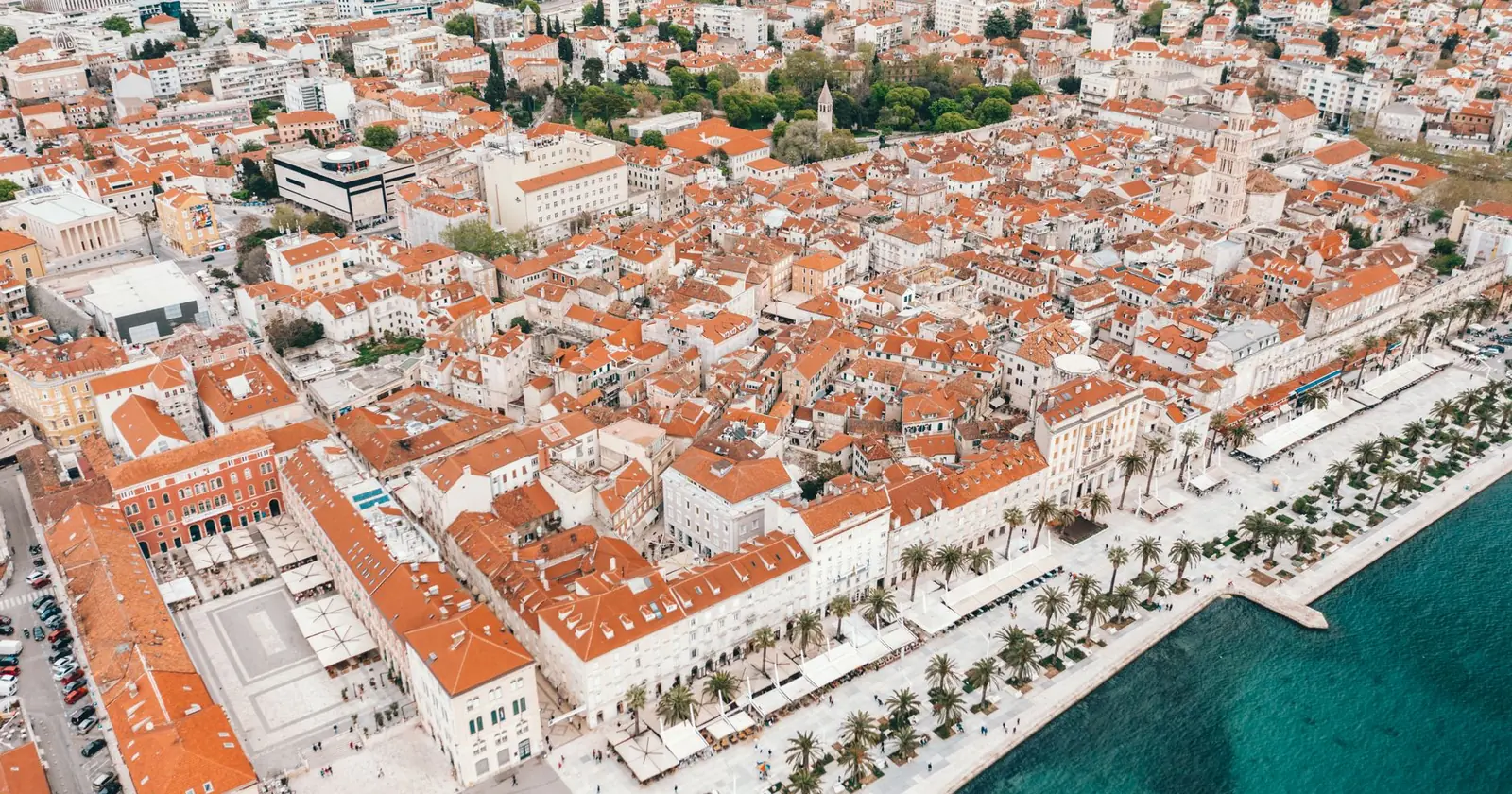
Photo: Spencer Davis / Pexels.
Figures are indicative and "as of 2026"; verify prices, seasons and visa rules before you rely on them.
Key takeaways
- Warm, clear Adriatic swimming from roughly May to October, with sea around 22 to 25C at the height of summer (verify current readings before you rely on it)
- Public ferries and catamarans make Brač, Hvar and Šolta easy day trips for swimming and snorkeling
- Croatia has a real digital-nomad residence permit (up to 18 months) plus 90-day visa-free entry for many nationalities
- Budget roughly 1,200 to 1,800 EUR a month as a single nomad outside peak season; July to August costs spike hard
- Rocky entries, sea urchins, boat traffic and occasional jellyfish are the main day-to-day hazards, not big surf
The watersport: wild sea swimming and easy island-hopping
Split is built for swimming rather than for waves. The water is clear and calm on most summer days, and you can walk from the center to Bačvice, a rare sandy, shallow bay where locals play picigin, the traditional shallow-water ball game. Nearby Firule and the longer Žnjan stretch add sheltered swimming plus rented kayaks and stand-up paddleboards.
The real magic is the islands. Cheap ferries and faster catamarans run from Split harbor to Brač (Bol, and the famous Zlatni Rat spit), Hvar and quieter Šolta, all of which give you clear coves for snorkeling and open-water swimming away from the town crowds.
This is not a surf or whitewater destination. Think long swims, snorkeling over seagrass and rock, gentle sea-kayak paddles and boat days, with the occasional windier afternoon when the maestral picks up.
When to go: shoulder-season sweet spots and the peak-summer crush
Best is broadly May to October. June and September are the sweet spot: the sea is warm, the light is long, and the town is busy but bearable. As of 2026 summer sea temperatures sit around 22 to 25C, peaking in August, though you should check live readings before a cold-water swim.
July and August are the downside. Split fills with cruise passengers and holidaymakers, prices jump, and accommodation gets scarce and expensive. If you are coming to live and work rather than holiday, aim for late spring or early autumn.
Winter is quiet, cheaper and mild by northern-European standards, but many island ferries thin out, a lot of coastal businesses close, and the sea gets too cold for casual swimming.
The nomad reality: wifi, cost of living, and the residence permit
Split has a proper summer nomad scene and several coworking spaces; day passes commonly run around 15 to 25 EUR and monthly desks roughly 170 to 375 EUR as of 2026 (verify current rates). Home wifi is generally solid EU-grade fibre, but older old-town apartments can be flaky, so confirm a speed test with any host and carry a backup eSIM or local SIM.
Budget-wise, a single nomad can live reasonably on about 1,200 to 1,800 EUR a month outside peak season, with a one-bedroom flat often from around 500 EUR (cheaper in areas like Žnjan, much higher in the center in high summer). These are ballparks as of 2026, so verify before you commit.
On staying legally: many nationalities (including UK, US, Canada, Australia) get 90 days visa-free in any 180-day period, since Croatia is in Schengen. For longer, Croatia's digital-nomad residence permit runs up to 18 months (non-renewable back-to-back; you must leave for six months before reapplying). As of 2026 it is aimed at non-EU remote workers and carries a high income threshold, reported around 3,600 EUR per month or a lump-sum equivalent, plus proof of accommodation and health insurance. Rules and figures change, so confirm current requirements with the official Croatian sources before applying.
Getting there and getting around
Split has its own airport with wide European connections in summer, plus buses and ferries linking the coast. The old town, ferry port and main bus station are close together, so you can arrive and be swimming the same afternoon.
Once based, you rarely need a car. Local buses cover the city, and the Jadrolinija and catamaran services handle the islands. A car is only really worth it if you want to roam inland or up and down the wider Dalmatian coast toward Trogir, Zadar or the Makarska Riviera.
Safety note: rocky shores, sea urchins and boat traffic
The main hazards here are unglamorous but real. Most entries are rocky, and sea urchins are common, so water shoes save a lot of pain; slippery rocks cause more injuries than currents do.
Watch boat and jet-ski traffic near popular beaches, swim inside marked zones where they exist, and be cautious on exposed island sides where wind and swell can pick up. Jellyfish appear in patches some summers, and cliff or pier jumping into unknown water depth is a classic avoidable injury, so check depth first.
Summer sun and heat are underrated risks for long swims and boat days: hydrate, cover up, and if you are doing serious open-water distances, swim with a buddy and a tow float and tell someone your route.
Croatia is in Schengen now, and what that does to your 90 days
Sailing out of Split used to be a way to stretch a European season, because Croatia sat outside the Schengen count. It does not any more, and the Commission's own pages let you check that rather than take it on trust. The Schengen area “is composed of 29 countries: 25 EU Member States and 4 non-EU countries (Iceland, Norway, Switzerland and Liechtenstein)”, with “Bulgaria and Romania being the last countries to join on 1 January 2025”. Of the 27 EU member states, the Commission names only two that stand apart: Ireland, which “is exceptionally allowed by the Schengen Protocol not to apply the Schengen rules”, and Cyprus, which “participates in the Schengen cooperation” without being in the border-free area. Twenty-five of twenty-seven, minus those two: Croatia is inside. And inside means “up to 90 days in any 180-day period”, counted with everyone else.
The practical consequence for a Dalmatian season: days spent in Split now come out of the same allowance as days spent in Greece or Italy, and the Commission's mechanics apply in full: “They can enter Schengen area countries as many times as they want, but only stay for a total of 90 days, every 180 days”. A flotilla that used to be a reset is now just more of the same window. Montenegro, an hour or two further down the coast, still is outside it, which is why Kotor turns up in so many Dalmatian itineraries.
Above 90 days the rules stop being European: “Visas for stays exceeding 90 days are subject to national procedures”. Croatia's own digital nomad residence permit is one of those national procedures.
FAQ: Split and the Dalmatian Coast
Is Split good for swimming or is it all rocky beaches?
Both. The famous Bačvice is a genuine sandy, shallow bay in the city, but most of the coast and islands are rocky or pebbly. The water is clear and good for swimming and snorkeling; just bring water shoes for the rocky entries.
Do I need a visa to base myself there for a couple of months?
Many nationalities, including UK, US, Canadian and Australian citizens, can stay visa-free for up to 90 days in any 180-day period because Croatia is in Schengen. For longer stays there is a formal digital-nomad residence permit. Confirm your own nationality's rules with official sources before you travel.
What does the Croatia digital-nomad permit actually require?
As of 2026 it is aimed at non-EU remote workers, lasts up to 18 months (not renewable back-to-back), and requires proof of remote income above a fairly high threshold (reported around 3,600 EUR per month or a lump-sum equivalent), plus accommodation and health insurance. Figures change, so verify current requirements with the Croatian Ministry of the Interior before applying.
How much does living in Split cost as a nomad?
Roughly 1,200 to 1,800 EUR a month for a single person outside peak season, with a one-bedroom flat often from around 500 EUR and coworking day passes around 15 to 25 EUR. In July and August rents and everything else spike, so shoulder season is far better value. Treat these as 2026 ballparks and verify.
When is the best time to go?
June and September are the sweet spot: warm sea, long days, and fewer crowds than the July to August peak. May and October still work for swimming on warm days. Winter is cheap and quiet but too cold for casual swimming, with reduced ferries.
Yannick Schroth
Founder of NOMADREEF and a former digital nomad. This guide is sourced from the references below; conditions, prices and rules change, so verify current details, and follow qualified local guidance and safety briefings. About the author · LinkedIn ↗
Sources
- One area, one count. European Commission, Migration and Home Affairs, visa policy (page dated 23 June 2025): “all 29 countries in the Schengen area apply the same visa rules. Non-EU nationals need a visa to enter the Schengen area for a visit of up to 90 days in any 180-day period”; “They can enter Schengen area countries as many times as they want, but only stay for a total of 90 days, every 180 days”; “Visas for stays exceeding 90 days are subject to national procedures.” home-affairs.ec.europa.eu. Read 12 September 2026.
- Who is actually in the area. European Commission, Migration and Home Affairs, the Schengen area: it “is composed of 29 countries: 25 EU Member States and 4 non-EU countries (Iceland, Norway, Switzerland and Liechtenstein)”, with “Bulgaria and Romania being the last countries to join on 1 January 2025”; Ireland “is exceptionally allowed by the Schengen Protocol not to apply the Schengen rules (‘opt out’)”, and Cyprus “participates in the Schengen cooperation” without being in the border-free area. home-affairs.ec.europa.eu. Read 12 September 2026.
- Croatian government and Ministry of Foreign Affairs statements on Croatia joining Schengen and the euro on 1 January 2023
- Official Croatia digital-nomad residence permit guidance and 2026 income-threshold updates from Croatian immigration and legal advisories
- EU/Schengen short-stay entry rules (90 days in any 180-day period) for visa-exempt nationalities
- Cost-of-living and coworking pricing from multiple 2026 Split digital-nomad guides (cross-checked ranges, not single figures)
- Adriatic sea-temperature datasets and Croatian tourism/beach guides for seasonal water conditions and named swimming spots