Split vs Kotor: Which Adriatic Nomad Base in 2026?
 by Yannick SchrothAug 3, 20266 min read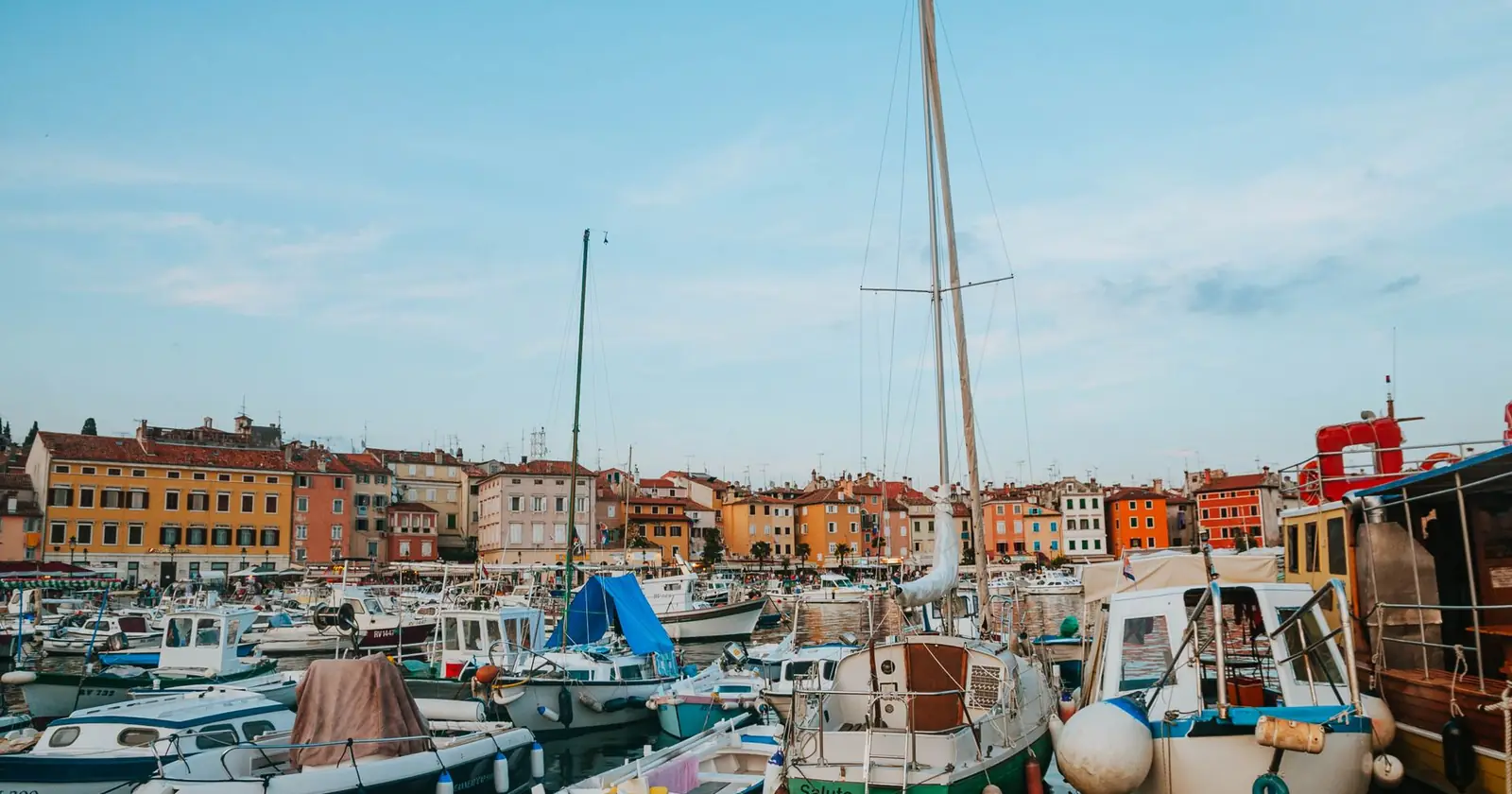
Photo: Helena Jankovičová Kováčová / Pexels.
Best for
- A connected Croatian city with a nomad visa: Split, Croatia
- A cheaper, dramatic Montenegrin bay: Kotor, Montenegro
| Split | Kotor | |
|---|---|---|
| Setting | Walkable Dalmatian city, islands offshore | Fjord-like Bay of Kotor, medieval town |
| Watersports | Sailing hub, swimming, day-sails | Bay sailing and kayaking, swimming |
| Wifi and amenities | Fast (city fibre, no figure of our own | Solid) smaller-town, no figure of our own |
| Cost | Mid EU | Cheaper Adriatic |
| Visa | Croatia nomad permit (up to 18 months) | Montenegro nomad permit, program sunsetting (end 2026) |
| Vibe | Busy city, tourism, nightlife | Quiet, scenic, historic |
| Best for | A connected city base and sailing | A cheaper, dramatic, quieter bay |
Connection levels are defined on Fast, Solid, Basic and Thin.
Split in short
Split is a proper Dalmatian city: a walkable old town around Diocletian's Palace, fast fibre, a huge charter-and-sailing scene with the islands on the doorstep, and Croatia's digital-nomad permit (up to 18 months). It is busier and more touristy than Kotor, but as a connected base with amenities, sailing and a real visa, it is the stronger long-term choice for most nomads.
Kotor in short
Kotor sits at the head of a dramatic, fjord-like Adriatic bay in Montenegro, wrapped around a medieval walled town, with sailing and kayaking on calm water and cheaper living than Croatia. It is quieter, smaller and jaw-droppingly scenic. The catch is the visa: Montenegro's nomad program is currently set to sunset at the end of 2026, so confirm its status before planning a long stay around it.
The verdict: Split or Kotor
Choose Split for a connected city base, fast fibre, a big sailing scene and a stable nomad visa; choose Kotor for a cheaper, quieter, more dramatic bay if you value scenery and cost over city amenities, and if the visa timing works. They are close enough on the coast to combine on an Adriatic trip.
Split or Kotor: which to pick
- If you want a connected city, fast fibre and a stable nomad visa: Split.
- If you want a cheaper, dramatic, quieter bay: Kotor (check the visa sunset).
- Both are Adriatic and scenic; Split is a bigger EU-track city, Kotor a smaller Montenegrin bay.
Two World Heritage harbours, and only one of them runs your Schengen clock
What they share. Both are UNESCO World Heritage properties, and both are the kind where you tie up inside the listing rather than beside it. Split is the “Historical Complex of Split with the Palace of Diocletian”, whose ruins were “built between the late 3rd and the early 4th centuries A.D.”, with a cathedral later built “in the Middle Ages, reusing materials from the ancient mausoleum”. Kotor is inscribed as the “Natural and Culturo-Historical Region of Kotor”, where “four Romanesque churches and the town walls” were badly damaged by the 1979 earthquake and restored “largely with UNESCO's help”.
What separates them is a counter. The Schengen area “is composed of 29 countries: 25 EU Member States and 4 non-EU countries”, and of the 27 EU states the Commission names only two standing apart, Ireland, which “is exceptionally allowed by the Schengen Protocol not to apply the Schengen rules”, and Cyprus, which “participates in the Schengen cooperation” without being inside the border-free area. Croatia is in. Montenegro is not.
So days in Split come out of the “up to 90 days in any 180-day period” that a non-EU sailor gets across the whole area, counted together: the Commission is explicit that travellers “can enter Schengen area countries as many times as they want, but only stay for a total of 90 days, every 180 days”. Days in Kotor do not. For a season spent working from a boat that is not a detail; it is the difference between a spring in Dalmatia costing you your summer in Greece and not costing you anything.
FAQ: Split vs Kotor
Is Split or Kotor better for digital nomads?
Split, for most: it is a bigger, connected city with fast fibre, amenities and Croatia's nomad permit (up to 18 months). Kotor is cheaper and more scenic but smaller, and Montenegro's nomad program is set to sunset at the end of 2026, which complicates long stays.
Which is cheaper?
Kotor, generally: Montenegro is cheaper than Croatia, so living costs in Kotor tend to run lower than in Split, especially outside peak summer. Split offers more amenities and a bigger scene for the extra cost.
Do both have a nomad visa?
Croatia has an operational digital-nomad permit (up to 18 months) covering Split. Montenegro has a nomad program covering Kotor, but it is currently set to expire at the end of 2026, so confirm its status before relying on it; the tourist route is the fallback.
Sources
- Both harbours, as listed. UNESCO World Heritage Centre. Historical Complex of Split with the Palace of Diocletian (property 97): “The ruins of Diocletian’s Palace, built between the late 3rd and the early 4th centuries A.D.”; “The cathedral was built in the Middle Ages, reusing materials from the ancient mausoleum.” Natural and Culturo-Historical Region of Kotor (property 125): “A large number of the monuments (including four Romanesque churches and the town walls) were seriously damaged by the 1979 earthquake but the town has been restored, largely with UNESCO’s help.” whc.unesco.org. Read 13 September 2026. whc.unesco.org. Read 13 September 2026.
- Who is inside the counted area. European Commission, Migration and Home Affairs: the Schengen area “is composed of 29 countries: 25 EU Member States and 4 non-EU countries (Iceland, Norway, Switzerland and Liechtenstein)”, with “Bulgaria and Romania being the last countries to join on 1 January 2025”; Ireland “is exceptionally allowed by the Schengen Protocol not to apply the Schengen rules” and Cyprus “participates in the Schengen cooperation” without being in the border-free area. Visa policy: visits of “up to 90 days in any 180-day period”; “They can enter Schengen area countries as many times as they want, but only stay for a total of 90 days, every 180 days.” home-affairs.ec.europa.eu. Read 13 September 2026. home-affairs.ec.europa.eu. Read 13 September 2026.
- This comparison is assembled from our two full destination guides, and every cost, wifi, season and visa claim above is one those guides already verify: Split, Kotor.
- How we work: editorial standards.