Oahu Diving: Hanauma Bay’s Rules, the Wrecks Sunk on Purpose and a North Shore for Summer
 by Yannick Schroth
Sep 24, 2026
14 min read
by Yannick Schroth
Sep 24, 2026
14 min read
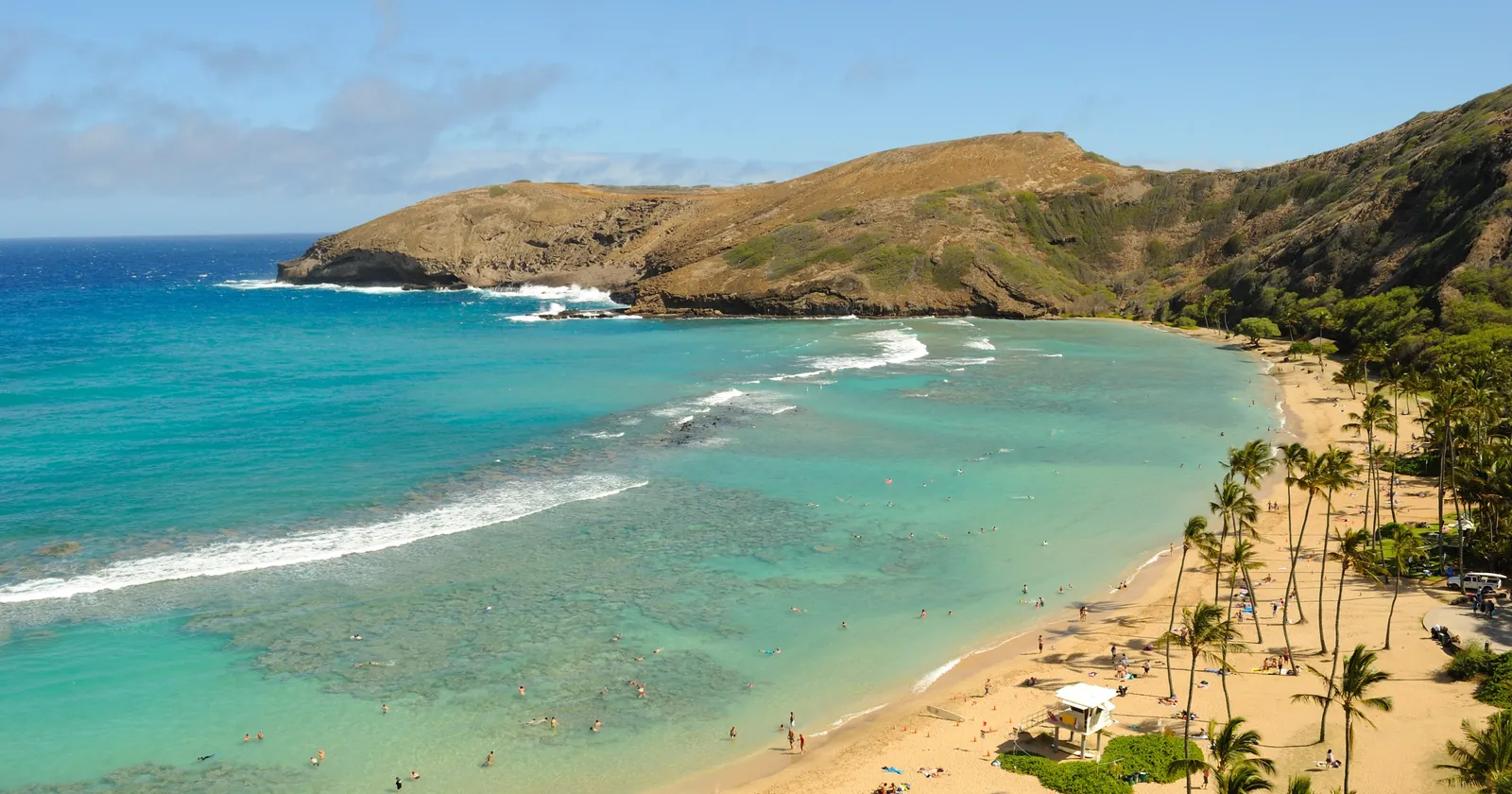
Photo: Daniel Ramirez, Wikimedia Commons, CC BY 2.0.
.jpg)
Key takeaways
- Chapter 13-28 of the Hawaii Administrative Rules bans fishing, collecting and fish feeding in Hanauma Bay, but its list of prohibitions never mentions scuba
- The Hanauma Bay Nature Preserve is closed on Mondays and Tuesdays, and non-residents aged 13 and over pay $25 to enter
- The city’s commercial scuba rules for Hanauma Bay allow groups of six at most, 130 people at once, and weekdays only
- The state describes Pupukea on the North Shore as generally calm from about May through October and extremely dangerous in winter, with no lifeguards at Shark’s Cove or Three Tables
- Swimming within 50 yards of a Hawaiian spinner dolphin is a federal offense since 2021; the 10-foot turtle and 50-foot monk seal distances are NOAA guidance
- Hawaii’s sunscreen statute bans selling products with oxybenzone or octinoxate, not wearing them, and names only those two filters
Hanauma Bay on Oahu bans taking, feeding and fishing, but not scuba
Hanauma Bay became a Marine Life Conservation District in 1967, and its rulebook is chapter 13-28 of Title 13 of the Hawaii Administrative Rules, run by the Division of Aquatic Resources of the state Department of Land and Natural Resources. The district reaches from the high-water mark to a line across the mouth of the bay, from Palea Point to Pai‘olu‘olu Point.
Section 13-28-2 lists four things nobody may do there. You may not fish for, take, injure, possess or remove any marine life or its eggs, from finfish to opihi and limu. You may not take or alter sand, coral or rock. You may not carry fishing gear or any device that could take marine life, and simply having one counts as prima facie evidence of a violation. And you may not put food or any other substance in the water to feed or attract fish.
Now read it for what is missing. Scuba appears nowhere in the prohibitions, and the only thing section 13-28-3 expressly permits is a knife carried for personal safety. A breach of the chapter is a petty misdemeanor under section 13-28-5.
The state’s own site description does the diving briefing. The outer bay runs to about 70 feet and is recommended only for experienced divers. Rip currents in the channel near the telephone cables can be strong, especially on ebb tides, and a current near the left side of the mouth, which the Division calls the Moloka‘i Express, is hazardous in the same conditions. Witches’ Brew and the Toilet Bowl are to be avoided in rough water.
The Oahu preserve at Hanauma Bay closes two days a week and shows a film every visit
The water belongs to the state; the land belongs to the City and County of Honolulu, and the city runs the gate. The Hanauma Bay Nature Preserve admits visitors Wednesday through Sunday, with entry from 6:45 a.m. to 1:30 p.m., and is closed on Mondays, Tuesdays, 25 December and 1 January. The beach is cleared at 3:30 p.m. and everyone must be out by 4 p.m.
Non-residents aged 13 and over pay $25, plus a 2.35 percent fee online. Hawaii residents with ID, children 12 and under, and active US military with their dependents enter free. Reservations open two days ahead at 7 a.m. Hawaii time, so Wednesday goes on sale on Monday morning, and roughly a quarter of daily capacity is kept for walk-ins. Parking costs $3 for non-residents, cash only.
One rule applies to repeat visitors too. The city requires every visitor to watch the educational video in the theater on every visit, not just the first time, so allow for it when you choose an entry slot before the 1:30 p.m. cutoff.
An older document on the city’s site disagrees with all of this, which matters if you find it first. The 1998 visitor-use rules, still published among the city’s park rules, close the preserve on Tuesdays only and set the non-resident fee at $7.50. The current park page carries the days and the fee applied today. Separately, the city closed the preserve from 3 to 18 August 2026 for sewer work and expects a second closure early in 2027, dates to be announced.
Commercial scuba at Hanauma Bay on Oahu runs in groups of six, on weekdays
A dive business needs a city permit to guide in the preserve, and the rules for it, adopted on 2 October 1992 as Part IV of the city’s commercial scuba and snorkeling rules, are tight. No more than 130 people may take part in commercial scuba diving and snorkeling at any one time. No group may exceed six, instructors and assistants included, and each permittee may have only one group in the bay at once.
Section 25 limits the activity to weekdays during park hours and bans it on weekends and holidays. Put that next to today’s opening days and the arithmetic is short. With the preserve shut on Mondays and Tuesdays, a guided scuba dive at Hanauma Bay can only happen on a Wednesday, Thursday or Friday that is not a holiday.
The permits are scarce by design. The city may issue up to six annual scuba and six annual snorkel permits, five monthly and four daily ones, and draws lots on 1 December when annual applications outnumber them. Each permittee must carry $1 million of liability cover per occurrence. Instructors must stay in the water with their group throughout, and on days the bay is unsuitable the permit may be used at other city beach parks, except Koko Head Sandy and Makapuu.
.jpg)
Oahu’s North Shore dive sites are calm from May to October and dangerous in winter
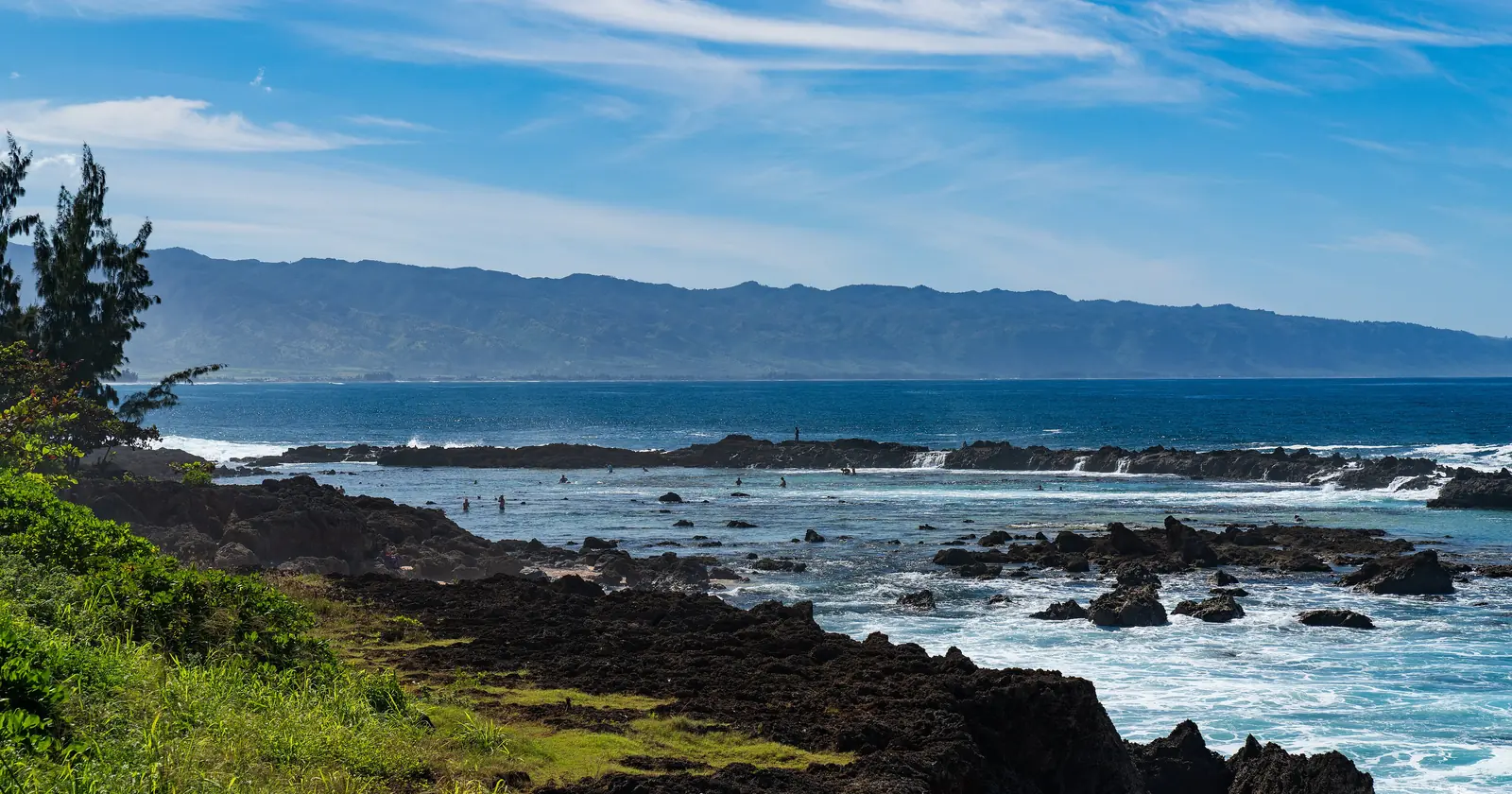
Pupukea, on the North Shore, is the second of the three districts by age, established in 1983 under chapter 13-34 and last amended in August 2021. It runs from Kulalua Point south to the Wananapaoa Islets off Waimea Bay, and it holds the two North Shore sites the Division describes in detail: Shark’s Cove at the northern end and Three Tables at the southern.
The Division describes both precisely. Shark’s Cove is fairly shallow, up to 20 feet at the mouth, with caves around its northwest point. Visibility inside the cove is generally poor but improves quickly outside, where the bottom slopes to about 45 feet. At Three Tables the water near the tables averages about 15 feet, and the best diving is at 30 to 45 feet, among ledges, arches and lava tubes.
The season is written into the same description, and it is blunt. From about May through October the water is generally calm, though surges are possible. In the winter months, the Division writes, current and wave conditions become extremely dangerous in all areas of the district, the tide pools included. Lifeguards are on duty at Waimea Bay, but not at Three Tables or Shark’s Cove.
The surf record explains why. Daily North Shore observations began in 1968, logged first by Larry Goddard and later continued by Patrick Caldwell, whose Oahu surf climatology lists NOAA’s National Centers for Environmental Information among its links and a noaa.gov contact. It treats September to May as the North Shore’s active season, with January the peak month, and puts the active-season average at 12 feet peak face, plus or minus 8. On days above about 30 feet, Sunset Beach itself closes out.
The Pupukea rules differ from Hanauma’s in one way a diver notices. Section 13-34-2 makes it unlawful to have any spear, trap, net or crowbar in the water, and the fishing that survives stays inside Waimea Bay: hook-and-line from shore with two poles at most, opelu by net in August and September, akule by net in November and December. Anywhere in the district, limu kohu and limu lipe‘epe‘e may be picked by hand in small amounts, holdfast left in place.
Waikiki’s Oahu conservation district is a shallow reef flat with a summer surf season
Chapter 13-36 created the Waikiki district in 1988, off Kapiolani Beach Park, between the groin at the end of Kapahulu Avenue and the western wall of the Waikiki War Memorial Natatorium. It reaches 500 yards (457.2 meters) out from the high-water mark, or to the seaward edge of the fringing reef where that lies farther out. The prohibitions match Pupukea’s: no taking of marine life, sand or rock, and no spear, trap, net or crowbar in the water.
It is not deep water. The Division puts the reef flat at generally less than 3 to 4 feet, the channel at about 8 feet and the drop at the outer edge at about 15 to 20 feet, over rubble and coralline algae with small patches of live coral. Sediment covers the bottom, so visibility is best when there is little or no wave action. Most fish keep to the channel’s small caves and the Natatorium wall.
Here the calendar flips. The Division warns that summer swells frequently bring high surf to the southern shoreline, most dangerous at the outer edge of the reef. Caldwell’s south shore record, begun in 1972, makes June the peak month and March to October the active season. It averages about 5.5 feet peak face at high-refraction breaks such as Ala Moana and Diamond Head, and about 4 feet around Waikiki.
The southern swell is much smaller than the northern winter one, because it travels more than 3,000 nautical miles to get here. But it arrives in exactly the months the North Shore goes quiet, so the calmer coast of Oahu in July is not the calmer coast in January.
The Oahu wrecks off Waikiki and Waianae were sunk as artificial reefs
The state was sinking things off Oahu long before the dive boats did. The Division of Aquatic Resources traces its artificial reef program to 1957, when the Territory of Hawaii began looking at shelters for areas of sparse natural habitat. The first reef went down in 1961 in Maunalua Bay, 74 acres. Waianae followed in 1963 with 141 acres, Kualoa in 1972, and the Ewa Deepwater reef, 31 acres, in 1986.
The materials changed by the decade: car bodies from 1961 to 1963, then concrete pipe until 1985, a period in which several barges and a minesweeper were also sunk, then concrete and tire modules until 1991. The Division credits its reefs with up to 20 times the fish biomass and up to five times the species diversity of the barren ground they replaced. It does not name the minesweeper.
The wrecks divers book were sunk for the same reason by private owners. The YO-257, a former US Navy yard oiler, was scuttled off Waikiki in 1989 by the submarine tour operator Atlantis Submarines as an artificial reef. Off the Waianae coast, the Mahi, a former US Navy minesweeper, was sunk as an artificial reef in 1982. Whether the Mahi is the minesweeper in the state’s history, the Division’s page does not say.
Both wreck histories rest on several independent dive and reference sources rather than a government record, and are marked as triangulated below. Published depths for them disagree from one source to the next, so none is given here: get the briefing depth from the operator and plan them as deep dives. The wreck diving list covers coasts built around this kind of site.
.jpg)
Turtles, monk seals and dolphins off Oahu: which distances are federal law
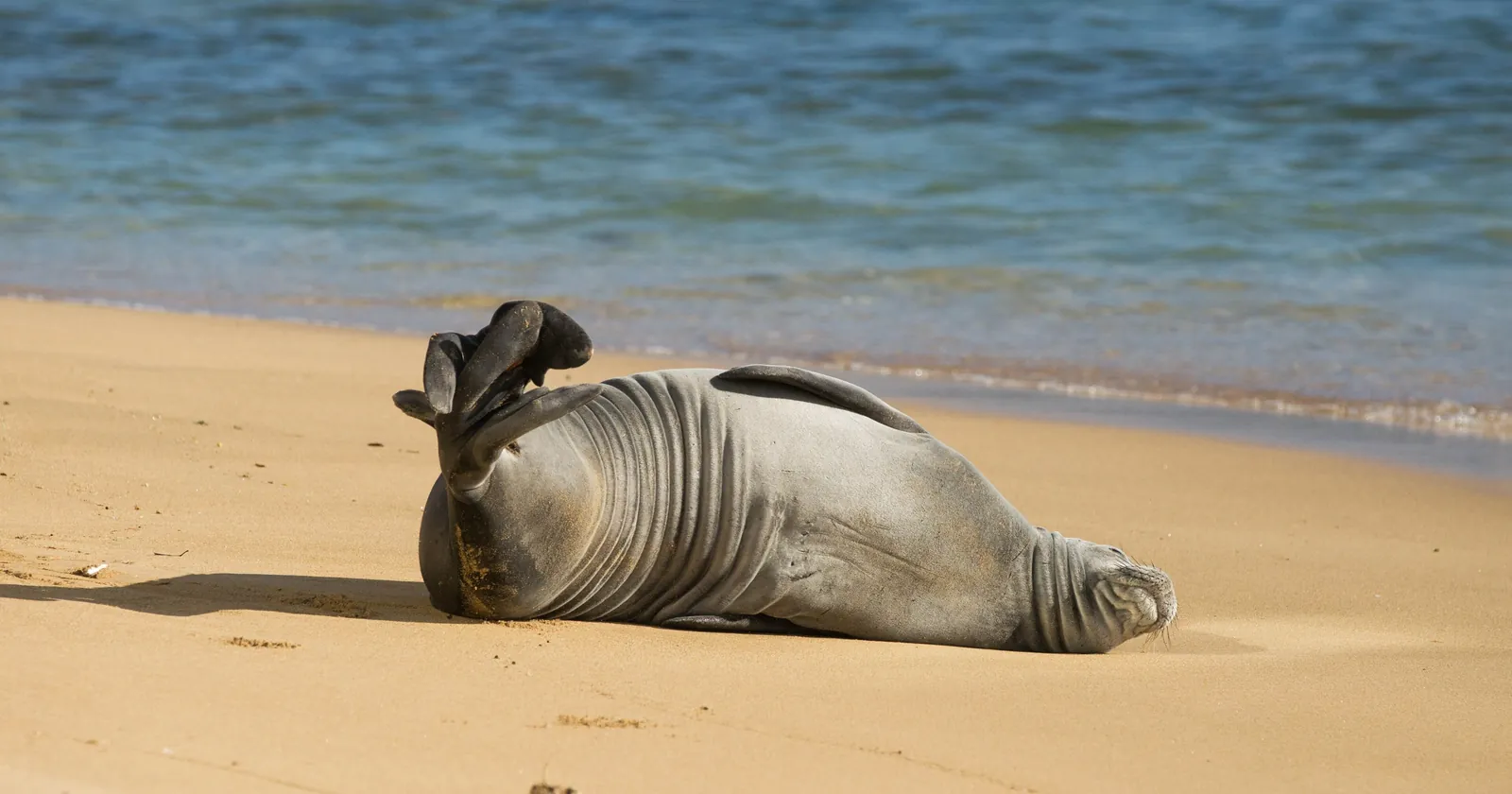
The green turtles the Division calls fairly common in Hanauma Bay belong to the Central North Pacific population, listed as threatened under the Endangered Species Act by the rule that split green turtles into eleven distinct population segments, published on 6 April 2016 and effective 6 May. The Hawaiian monk seal has been listed as endangered since 1976. NOAA Fisheries estimates about 1,600 seals, some 1,200 in Papahānaumokuākea and about 400 in the main Hawaiian Islands.
NOAA’s Hawaii viewing guidance asks for at least 10 feet (3 meters) from sea turtles and 50 feet (15 meters) from monk seals, on land and in the water, and 150 feet from a mother seal with a pup. Those are recommendations, and NOAA presents them as such. The animals themselves are protected under state and federal law, which NOAA gives as the reason never to touch, chase or feed them. The turtle swimming guide compares how other places handle the same animal.
Two distances are regulation rather than guidance. Since a rule of 28 September 2021, 50 CFR 216.20 makes it unlawful, within 2 nautical miles of the main Hawaiian Islands, to approach or remain within 50 yards (45.7 meters) of a Hawaiian spinner dolphin, and separately to swim within 50 yards of one. A diver approached by dolphins is exempt only if they make no effort to engage and move away at once. Humpback whales get 100 yards under 50 CFR 216.19, anywhere within 200 nautical miles of the islands.
Hawaii’s sunscreen law bans selling two filters on Oahu, not wearing them
The statute is section 342D-21 of the Hawaii Revised Statutes, added by Act 104 of 2018. Since 1 January 2021 it has been unlawful to sell, offer for sale or distribute for sale in the State any sunscreen containing oxybenzone or octinoxate, or both, without a prescription from a licensed healthcare provider. The Act’s findings name the places it was written for: elevated levels of both chemicals at Waimea Bay, Hanauma Bay and Waikiki Beach on Oahu, and at Honolua Bay and Ahihi-Kinau on Maui.
The verbs are the point. The law regulates sale and distribution. It says nothing about bringing a bottle from home or wearing what is already on your skin. It also excludes products marketed as a cosmetic for the face, so a day cream with oxybenzone falls outside its definition of sunscreen. The obligation lands on the shop, not on the diver, although leaving both filters at home is the choice the Act was written to encourage.
Many travel pages add avobenzone and octocrylene to the state ban, some crediting a 2021 act. That is wrong on the text. The compiled statute, current to 1 January 2025, still names only oxybenzone and octinoxate. The 2021 bill that would have added the other two, SB 132, passed the Senate and then died in the House Consumer Protection and Commerce Committee. The reef-safe sunscreen guide covers what to pack instead.
Oahu’s recompression chamber is at Kuakini Medical Center in Honolulu
The Hyperbaric Treatment Center, operated by University Health Partners of Hawaii, is on the ground floor of the HPM Tower at Kuakini Medical Center, 347 N. Kuakini Street, Honolulu. It describes itself as the only multi-place hyperbaric facility in the state and lists 24/7 emergency dive medicine and hyperbaric treatment. Its page is plain about the order of things: in an emergency, call 911.
The University of Hawaii dates the center to 1984 at Kewalo Basin and its move to Kuakini to 1994, and calls it the only 24/7 emergency hyperbaric facility in the Pacific. For a diver, that means one chamber for the island, reached through the emergency system rather than by driving to the door. The dive insurance guide covers whether a policy pays for evacuation and chamber time.
Seven Oahu dive businesses are in the SSI register
The Oahu operator list holds 7 businesses, all published by SSI in its register of affiliated centers and read on 20 September 2026. Four are filed under Honolulu, one under Aiea, one under Waianae and one under Oahu itself, and all seven publish a website there. The town field is where SSI files a business, not necessarily where its boat leaves from.
SSI rates four of the seven for Freediving and Extended Range, and rates Affinity Freediving in Aiea for Freediving and Mermaid; two carry no program rating at all. None of that says whether a course runs this season, or whether a shop holds one of Hanauma Bay’s commercial permits, which is a question to put to the shop directly. Which registers can be read explains what each source returns. For the neighbor islands, the Maui guide covers the wind side and the Kona manta night dive the Big Island.
FAQ: scuba diving on Oahu
Can you scuba dive at Hanauma Bay?
The state rules do not forbid it. Chapter 13-28 of the Hawaii Administrative Rules bans fishing, taking marine life, sand or coral, carrying fishing gear and feeding fish, and says nothing about scuba. Guided dives need a city permit, limited to groups of six on weekdays, and the preserve is closed on Mondays and Tuesdays, which leaves Wednesday to Friday outside holidays.
When is the best time to dive the North Shore of Oahu?
Summer. The Division of Aquatic Resources describes the water at Pupukea, which includes Shark's Cove and Three Tables, as generally calm from about May through October, and says current and wave conditions become extremely dangerous in all areas of the district in winter. There are no lifeguards at Shark's Cove or Three Tables.
How close can you get to turtles and monk seals on Oahu?
NOAA recommends staying at least 10 feet from sea turtles and 50 feet from Hawaiian monk seals, in the water and on land, and 150 feet from a mother seal with a pup. Those distances are guidance. The 50-yard limit for Hawaiian spinner dolphins, which also bans swimming within 50 yards, is federal regulation under 50 CFR 216.20.
Which sunscreens are banned in Hawaii?
Section 342D-21 of the Hawaii Revised Statutes, added by Act 104 of 2018, has made it unlawful since 1 January 2021 to sell or distribute sunscreen containing oxybenzone or octinoxate without a prescription. It bans the sale, not the wearing, and excludes cosmetics for the face. The compiled statute does not name avobenzone or octocrylene.
Where is the recompression chamber on Oahu?
The Hyperbaric Treatment Center is at Kuakini Medical Center, 347 N. Kuakini Street, Honolulu, on the ground floor of the HPM Tower. It lists 24/7 emergency dive medicine and describes itself as the only multi-place hyperbaric facility in the state. In an emergency, call 911 first.
Note: Conditions, safety guidance and regulations change. Verify current information with official sources, including the dive operator, the park authority and the relevant government department, before you travel or dive.
Founder of NOMADREEF and a former digital nomad. This guide is sourced from the references below; conditions, prices and rules change, so verify current details, and follow qualified local guidance and safety briefings. About the author · LinkedIn ↗
Sources
- Primary. Hanauma Bay district rules. Hawaii Administrative Rules, Title 13, chapter 13-28, Hanauma Bay Marine Life Conservation District: section 13-28-1 on the boundary and the map of 16 August 1967; section 13-28-2 on the four prohibited activities, including gear possession as prima facie evidence and the ban on introducing food or substances; section 13-28-3 permitting a knife for personal safety; section 13-28-5 making a violation a petty misdemeanor. History notes: effective 26 May 1981, amended and compiled 15 April 1999. HAR 13-28-2 (LII reproduction), 13-28-3, 13-28-5. Read 24 September 2026.
- Primary. The state’s description of Hanauma Bay. Division of Aquatic Resources: established 1967; boundary from Palea Point to Pai‘olu‘olu Point; outer bay to about 70 feet, recommended only for experienced divers; rip currents near the telephone cables on ebb tides; the Moloka‘i Express; Witches’ Brew and Toilet Bowl; turtles fairly common. DAR, O‘ahu: Hanauma Bay. Read 24 September 2026. The same page lists operating a watercraft among the prohibited activities; that item is not in section 13-28-2, and its legal basis was not traced, so it is left out above.
- Primary. The preserve’s days, hours, fees and reservations. City and County of Honolulu, Department of Parks and Recreation: open Wednesday to Sunday, entry 6:45 a.m. to 1:30 p.m., closed Mondays, Tuesdays, 25 December and 1 January; beach cleared at 3:30 p.m., out by 4 p.m.; reservations two days ahead from 7 a.m. HST; about 25 percent of capacity for walk-ins; $25 non-resident fee for ages 13 and over plus a 2.35 percent online fee; free entry categories; $3 non-resident parking, cash only; the education video required for every visit. DPR, Hanauma Bay Nature Preserve. Read 24 September 2026.
- Primary. The 1998 visitor rules. Amended Rules and Regulations Relating to Visitor Use Levels and Controls at Hanauma Bay Nature Preserve, adopted 1 July 1998: section 5(a) closing the preserve every Tuesday except holidays; section 6(a)(1) setting a $7.50 non-resident fee; section 4 on penalties. DPR rules (PDF). Read 24 September 2026.
- Primary. Commercial scuba in the preserve. Amended Rules and Regulations Governing Commercial Scuba Diving (to Include Snuba) and Snorkeling Activities in Hanauma Bay Nature Park, Part IV, adopted 2 October 1992: section 24 (130 persons at a time, groups of six including instructors, one group per permittee); section 25 (weekdays only, no weekends or holidays); section 27 (six annual scuba, six annual snorkel, five monthly and four daily permits, the 1 December lottery, use of other city beach parks except Koko Head Sandy and Makapuu); section 28 ($1 million insurance per occurrence, instructors to remain in the water). DPR Part IV rules (PDF). Read 24 September 2026. Whether all of these permits are currently issued is not published on the pages read, so it is left as a question for the operator.
- Primary. The 2026 and 2027 closures. DPR news release of 2 July 2026: closure from 3 to 18 August 2026 for sewer work, and a second closure expected early in 2027 with dates to be announced. DPR, sewer system improvements. Read 24 September 2026.
- Primary. Pupukea. HAR chapter 13-34: section 13-34-1 (boundary, amended and compiled 27 August 2021); section 13-34-2 (prohibitions, including any spear, trap, net or crowbar in the water); section 13-34-3 (Waimea Bay hook-and-line fishing, opelu in August and September, akule in November and December, hand-harvest of limu kohu and limu lipe‘epe‘e). Division of Aquatic Resources site page: established 1983; Shark’s Cove and Three Tables depths and features; generally calm from about May through October; extremely dangerous in winter; lifeguards at Waimea Bay but not at Three Tables or Shark’s Cove. HAR 13-34-2, 13-34-3, DAR, O‘ahu: Pūpūkea. Read 24 September 2026.
- Primary. Waikiki. HAR chapter 13-36: section 13-36-1 (boundary between the Kapahulu groin and the Natatorium wall, 500 yards or 457.2 meters or to the edge of the fringing reef, effective 27 May 1988); section 13-36-2 (prohibitions). Division of Aquatic Resources site page: reef flat depths, channel, outer edge, bottom and visibility; summer swells bringing high surf to the southern shoreline. HAR 13-36-1, 13-36-2, DAR, O‘ahu: Waikīkī. Read 24 September 2026.
- Primary. Surf seasons. Patrick Caldwell, Oahu Surf Climatology, University of Hawaii Sea Level Center (contact at noaa.gov, links to NOAA/NESDIS/NCEI): visual observations from 1968 on the north shore and 1972 on the south shore, begun by Larry Goddard; Hawaii scale converted to peak face by a factor of 2; North Shore active season September to May averaging 12 feet plus or minus 8 peak face, peak month January, Sunset Beach closing out above about 30 feet peak face; South Shore active season March to October, peak month June, about 5.5 feet peak face at high-refraction breaks and about 4 feet around Waikiki; southern swell traveling beyond 3,000 nautical miles. Oahu Surf Climatology. Read 24 September 2026.
- Primary. The state artificial reef program. Division of Aquatic Resources: the 1957 start; Maunalua Bay 1961 (74 acres), Waianae 1963 (141 acres), Kualoa 1972, Ewa Deepwater 1986 (31 acres); car bodies, concrete pipe, barges and a minesweeper, then concrete and tire modules to 1991; modules of about 2,800 pounds; up to 20 times the fish biomass and five times the species diversity. DAR, Artificial Reefs and FADs. Read 24 September 2026.
- Triangulated. The YO-257. Former US Navy yard oiler, sunk off Waikiki in 1989 by Atlantis Submarines as an artificial reef, stated independently by Wikipedia, YO-257, oahudiving.com, Rainbow Scuba and, for the year and the yard oiler, Dive Oahu. No government record of the scuttling was found. Read 24 September 2026.
- Triangulated. The Mahi. Former US Navy minesweeper sunk off Waianae as an artificial reef in 1982, stated independently by Wikipedia, USS Scrimmage, The Hiking HI and Rainbow Scuba, with Dive Hawaii for the minesweeper and the Waianae location. Rainbow Scuba calls it a mine layer; the other three say minesweeper. Read 24 September 2026.
- Primary. Viewing distances. NOAA Fisheries, Viewing Marine Wildlife in Hawai‘i: 10 feet (3 meters) from sea turtles, 50 feet (15 meters) from monk seals, 150 feet from mothers with pups, as recommendations; the statement that the animals are protected under state and federal law. NOAA Fisheries, Viewing Marine Wildlife in Hawai‘i. Read 24 September 2026.
- Primary. The spinner dolphin and humpback rules. 50 CFR 216.20(a) to (c): within 2 nautical miles of the main Hawaiian Islands, no approaching or remaining within 50 yards (45.7 meters) of a Hawaiian spinner dolphin and no swimming within 50 yards, with the exception for a person approached who makes no effort to engage and moves away, 86 FR 53841, 28 September 2021. 50 CFR 216.19: 100 yards (91.4 meters) from humpback whales within 200 nautical miles of Hawaii, 81 FR 62017, 8 September 2016. eCFR 50 CFR 216.20, 50 CFR 216.19. Read 24 September 2026.
- Primary. Green turtle and monk seal status. Final rule listing eleven distinct population segments of the green sea turtle, 81 FR 20058, published 6 April 2016, effective 6 May 2016; NOAA Fisheries species pages: the Central North Pacific DPS listed as threatened; the Hawaiian monk seal endangered since 1976, about 1,600 seals, nearly 1,200 in Papahānaumokuākea and 400 in the main Hawaiian Islands. Federal Register, 81 FR 20058, NOAA, green turtle, NOAA, Hawaiian monk seal. Read 24 September 2026.
- Primary. The sunscreen statute and the Act. HRS section 342D-21, subsections (a) to (c), history note L 2018, c 104, section 2, including the exclusion of products marketed as a cosmetic for the face; S.B. 2571 C.D. 1 (2018), enacted as Act 104, section 1 findings naming Waimea bay, Hanauma bay and Waikiki beach on Oahu and Honolua bay and Ahihi-Kinau on Maui, section 5 effective 1 July 2018. The Legislature’s site refused automated requests on 24 September 2026, so the text was read in archived copies of its own pages and in a reproduction current to 1 January 2025: HRS 342D-21 (archived 5 February 2025), SB 2571 CD1 (archived), FindLaw reproduction. Session laws of 2025 and 2026 could not be read for the same reason: gap, needs human check for any amendment after 1 January 2025.
- Secondary. The 2021 bill that failed. Honolulu Civil Beat, August 2021: SB 132, adding avobenzone and octocrylene, passed the Senate in March and died in the House Consumer Protection and Commerce Committee. Civil Beat. Read 24 September 2026.
- Primary. The chamber. University Health Partners of Hawaii, Hyperbaric Treatment and Wound Care Center: Kuakini Medical Center, HPM Tower ground floor, 347 N. Kuakini Street, Honolulu, HI 96817; “If Emergency, call 911”; the sole multi-place facility in the state; 24/7 emergency dive medicine and hyperbaric treatment capability. University of Hawaii News, 23 March 2025: established 1984 at Kewalo Basin, relocated to Kuakini Medical Center in 1994, described as the only 24/7 emergency hyperbaric facility in the Pacific. UHP Hawaii, Hyperbaric Treatment Center, UH News. Read 24 September 2026.
- The seven businesses. Seven dive businesses on the Oahu operator list, all published by SSI in its register of affiliated centers, read 20 September 2026: four filed under Honolulu and one each under Aiea, Waianae and Oahu; all seven with a website in the register; four rated for Freediving and Extended Range, one for Freediving and Mermaid, two with no program rating. The limits of each source are set out on which registers can be read.
- Gaps. The Sea Tiger wreck off Honolulu is left out: no source read here gave a consistent, checkable account of its seizure and scuttling. Depths of the YO-257, the Mahi and the Sea Tiger differ between sources and are not given. County-level sunscreen ordinances were not checked.