The Kona Manta Ray Night Dive
 by Yannick Schroth
Sep 6, 2026
8 min read
by Yannick Schroth
Sep 6, 2026
8 min read
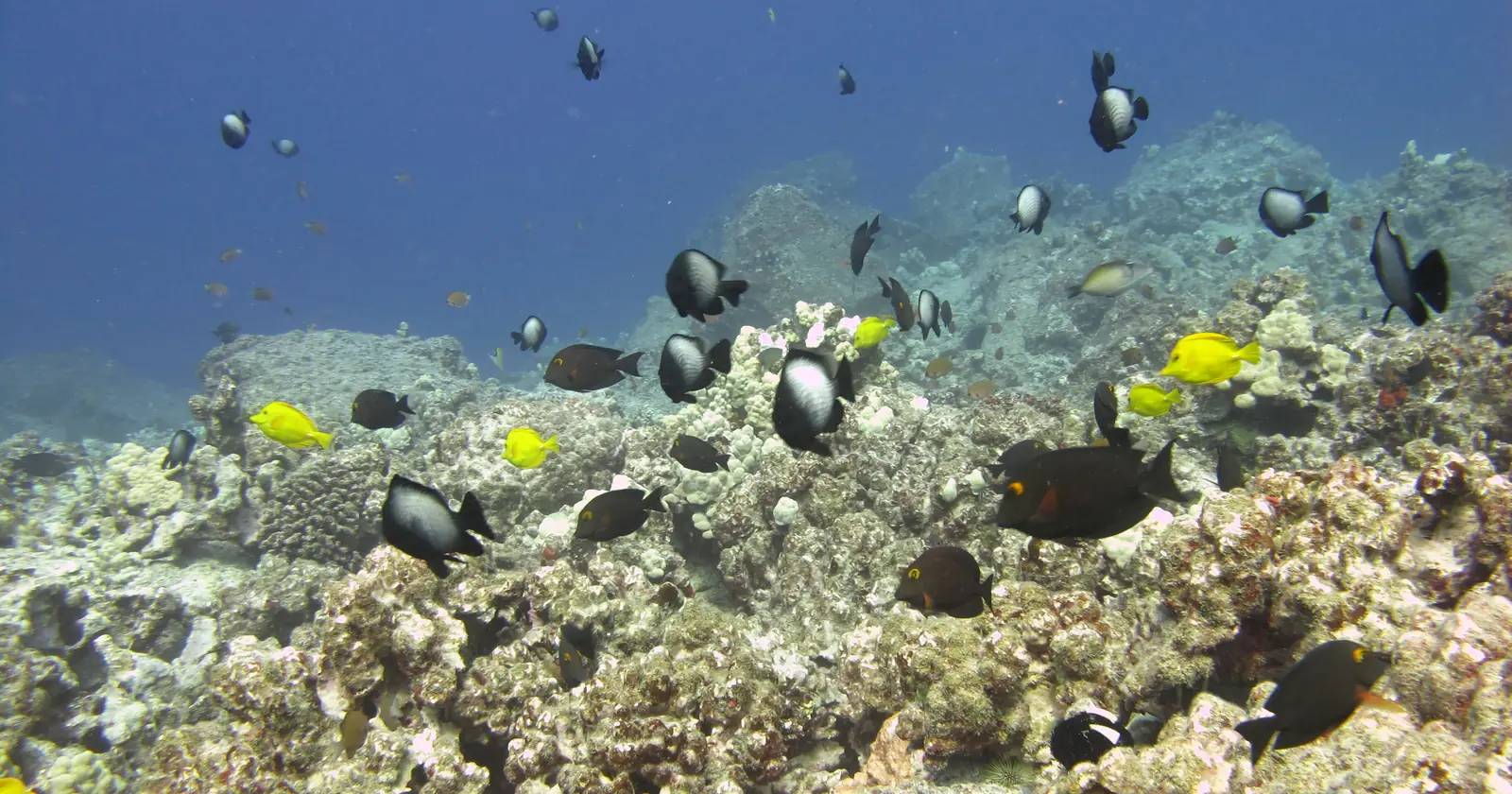
Reef on the Kona coast, in Kaloko-Honōkohau National Historical Park. Photo: NPS, Wikimedia Commons, public domain.
.JPG)
What actually happens in the water
Two ways to do it. Divers go down to something like ten meters and kneel or lie on sand, rubble or boulders, lights pointed up. Snorkellers hold a float at the surface with lights pointed down. The mantas feed in the lit water column between the two groups.
The reason for that arrangement is not comfort, it is manoeuvring room. The code puts it plainly: divers stay on or near the bottom because an open water column is what the mantas need to turn in, and snorkellers stay on the surface and do not duck-dive into it. A person hanging in mid-water is standing in the middle of the dance floor.
The code the operators wrote themselves
In 2013, after state and federal officials asked the industry to produce one, Kona's operators, guides and captains wrote their own code of conduct for the site. It is short and every line has a reason behind it:
What the code asks of you
- Observe only, no touching. Not even a passing stroke: contact rubs off the protective mucus coating that keeps a manta's skin healthy.
- Divers stay on or near the bottom, on sand, rubble or boulders. The open water above you is the animals' room to manoeuvre.
- Snorkellers stay on the surface and do not dive down into the column where the mantas are feeding.
A code written by the operators rather than imposed on them is worth exactly as much as the boat you are standing on chooses to make it. That is the thing to test when you book.
How many mantas there actually are
Kona is not a numbers destination and it does not need to be. The Manta Pacific Research Foundation has been photographing bellies here since 1991: every manta's spot pattern is unique, like a fingerprint, and its catalog for Hawai‘i Island holds on the order of 290 individually identified animals, built with volunteer divers doing the photographing. The first one on the list was nicknamed Lefty.
For scale, the Maldives catalog passed five thousand. Kona's value is not abundance, it is that a known, resident, individually catalogued population turns up at a known spot most nights. See our manta roundup for how that compares.
How reliable the Kona manta night dive is
Operators publish sighting rates in the high eighties to low nineties per cent, and one site reported a 96% season. Those numbers come from the businesses selling the trip and no independent audit of them, so treat them as a claim with a commercial interest rather than a measurement.
What is not in dispute is the mechanism. Lights draw plankton every night whether or not anyone is watching, which is a far better basis for a promise than a migration or a season. If you have one evening on Hawai‘i Island and you want to see a large animal underwater, this is the best odds on offer anywhere in this journal.
Why we have no operator list for Kona
A real gap, and it says something about the island. This site builds its directories from three registers that publish a page per member we can link and quote: SSI, IKO and VDWS. Between them they hold one entry for the Kona coast.
Kona really has dozens of dive operators. The island is PADI territory, and PADI publishes no per-operator page we can cite, so a directory built from our sources would list one shop out of thirty and imply that was the market. That would misrepresent the place rather than be brief, so there is no Kona directory here and this page says why instead.
The animal you are looking at
Reef mantas, Mobula alfredi, listed by the IUCN as Vulnerable. They reach about five meters across, they have no sting and no teeth worth the name, and they are filter feeders: the barrel roll is how they keep a plankton cloud in the mouth. In Hawaiian they are hāhālua.
Getting there and what it costs you
Boats leave from the Kona coast in the early evening and the whole thing takes a couple of hours. The trip runs year-round because the mechanism is artificial: there is no season to wait for and no monsoon to dodge, which makes Kona one of the very few animal encounters on this site you can put in the middle of a fixed itinerary without a contingency plan.
The trade-off is people. The same lights that make it reliable concentrate every boat on the same patch of water, and the practice has drawn local criticism for exactly that. Pick an operator that caps numbers and says so.
FAQ: Kona Manta Ray Night Dive
Is the Kona manta ray night dive worth it?
It is the most reliable manta encounter in the world, because it is engineered rather than natural: lights on the sea floor draw plankton and the plankton draws reef mantas. Operators report sighting rates in the high eighties to low nineties per cent, though those are their own figures. It runs year-round, which almost no other large-animal encounter does.
Do you have to be a diver for the Kona manta night dive?
No. Snorkellers hold a float at the surface with lights pointed down while divers kneel on the bottom with lights pointed up, and the mantas feed in the lit column between them. The code of conduct asks snorkellers to stay on the surface and not duck-dive into the water column, because that is the space the mantas need to turn in.
Can you touch the manta rays in Kona?
No. The code of conduct Kona operators wrote in 2013 is explicit: observe only, no touching, not even a stroke in passing. Contact rubs off the protective mucus coating on a manta's skin. Divers are also asked to stay on or near the bottom and snorkellers on the surface, to leave the water column open.
Sources
- Manta Pacific Research Foundation: photo-identification off Hawai‘i Island since 1991, a catalog on the order of 290 individually identified mantas built with volunteer divers, and the code of conduct Kona operators wrote in 2013. Read 6 September 2026. mantapacific.org and its published history
- The code of conduct in full, including the reasons for the no-touching, stay-on-the-bottom and stay-on-the-surface rules. As published by Kona operators. Read 6 September 2026. Kona operator publication
- Reef manta, Mobula alfredi, listed Vulnerable by the IUCN. IUCN specialist group and the assessment summarised on the species page
- Sighting rates in the high eighties to low nineties per cent are published by Kona operators selling the trip; we found no independent audit. Read 6 September 2026.
- Our own register reading: SSI, IKO and VDWS hold one entry for the Kona coast between them, read 6 September 2026, which is why this page carries no operator list.