How to Choose a Beginner Surfboard
 by Yannick Schroth
Jul 28, 2026
11 min read
by Yannick Schroth
Jul 28, 2026
11 min read
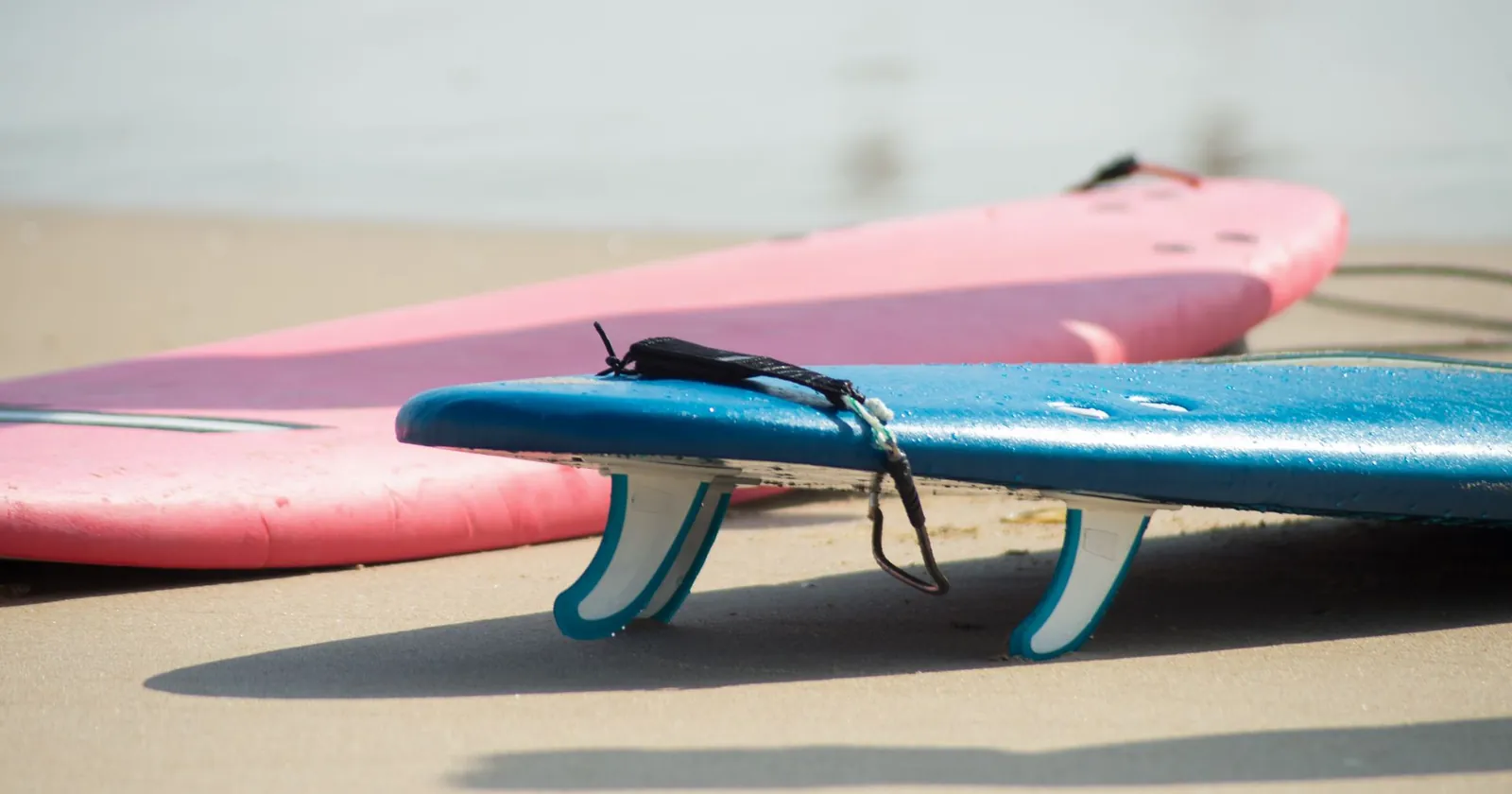
Photo: Kampus Production via Pexels (free license).
Sizing guidance is a rule of thumb; try boards where you can and confirm specs with the maker.
Stable, forgiving and safe to learn the pop-up on, exactly what schools use.
Browse on Amazon →Keeps the stability while you start learning to turn.
Browse on Amazon →Beginner boards take a beating; a solid second-hand one saves money.
Browse on Amazon →Recommendations by type and spec, not a tested product ranking; confirm fit/size with a shop. Any price is live at the retailer. See our disclosure.
Key takeaways
- Buy a soft-top foamie, ~8 ft: stable, buoyant, safe, catches waves.
- Size by volume, not length: aim for ~your body weight in kg as litres.
- Minimum ~60 litres; heavier riders want 8 ft+ and more volume.
- Rent first, buy once you surf regularly. Boards are bulky to travel with.
- Avoid shortboards until you consistently ride green waves.
Buy a soft-top foamie (this is the whole answer)
For a complete beginner, the best board is not a debate: a soft-top foam board (a "foamie"), around 8 feet or longer. Foamies are stable and buoyant so they catch waves easily and forgive your balance, and their soft construction is safe if the board hits you or another surfer, which, while you are falling off constantly, matters a lot. They are the fastest, safest and most fun way to learn, and even experienced surfers keep one for small, playful days. See how it fits into the learn-to-surf process.
Size by volume, not just length
The rookie mistake is choosing a board by length alone. What actually matters is volume (measured in litres), which determines how much the board floats you, and float is what gives you stability and lets you catch waves. A widely used beginner rule of thumb: aim for a volume in litres roughly equal to your body weight in kilograms (so a 70 kg surfer looks at about 70 litres), with a minimum around 60 litres (SurfSpotGuide). Length is one lever into volume, but width and thickness matter too, which is why a wide, thick foamie floats a beginner so well.
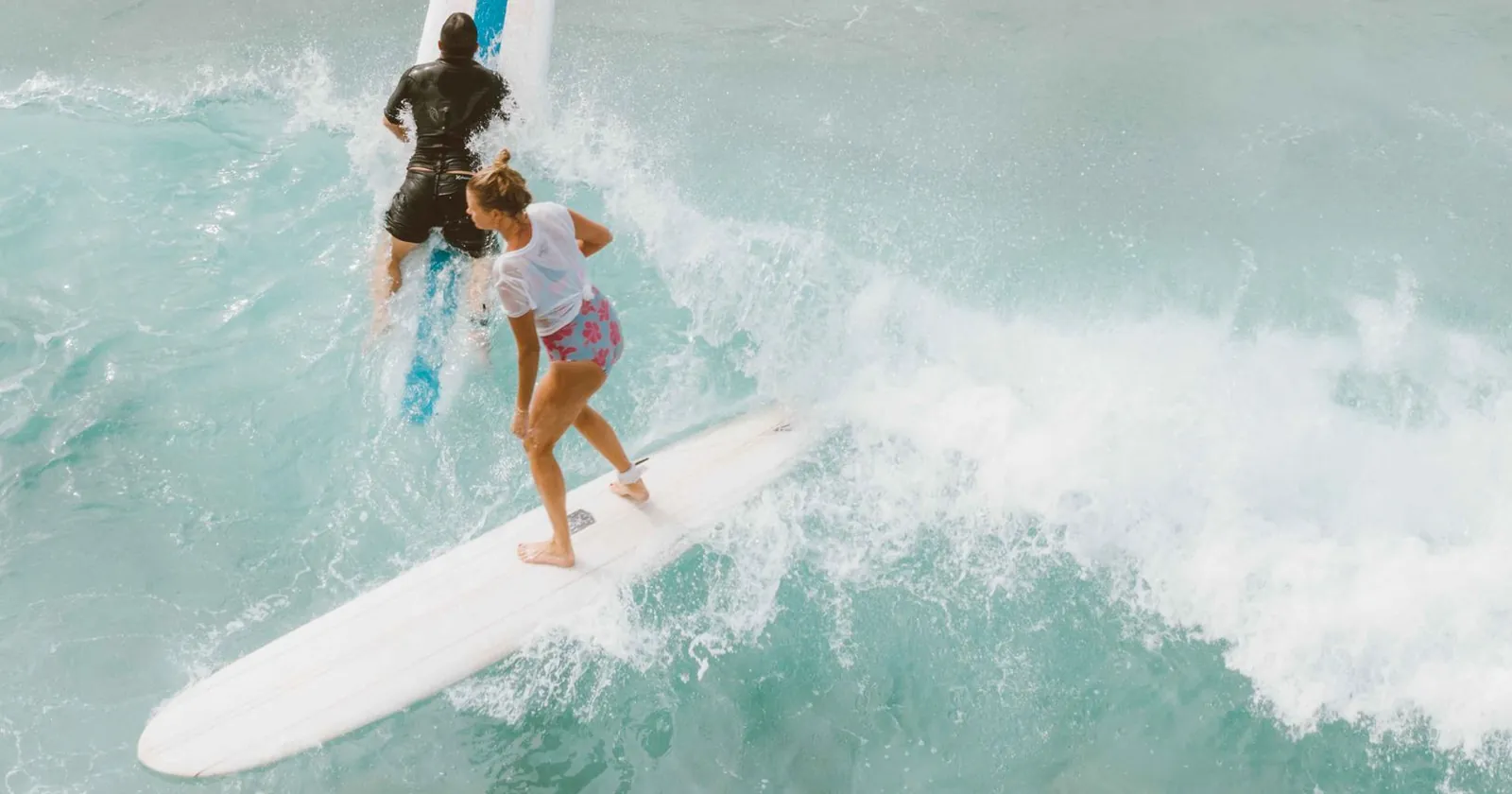
A rough beginner size chart
| Your weight | Typical soft-top length | Rough volume target |
|---|---|---|
| Under 60 kg | 7'0" to 7'6" | ~55 to 65 L |
| 60 to 75 kg | 7'6" to 8'0" | ~65 to 80 L |
| 75 to 90 kg | 8'0" to 8'6" | ~80 to 95 L |
| Over 90 kg | 8'6"+ / 9'+ | ~95 L and up |
Treat this as a starting point, not gospel; when unsure, go bigger, more float means an easier learn. Confirm the actual litre volume of any board with the maker before buying.
Board types, quickly
- Soft-top / foamie: the beginner board. Stable, safe, buoyant. Start here.
- Longboard / mini-mal (funboard): the natural progression, a hard board with plenty of length and glide once you have the basics.
- Fish: shorter and wider with float for its size, an intermediate step for smaller waves.
- Shortboard: low volume, high performance, hard to catch waves on. Not a beginner board, no matter how good the pros make it look.
Buy vs rent (and the travel question)
Rent or borrow to start. It is cheaper, lets you try different boards, and surf schools include one in a lesson. Buy your own soft-top once you are surfing regularly and know you love it. For a traveling nomad there is a bigger catch: surfboards are bulky and expensive to fly with (airline board fees are steep and boards get dinged), so many nomads simply rent at each destination rather than lugging a board around the world. If you do travel with one, protect it in a proper board bag (guide coming soon).
The board this page recommends is one you cannot fly with
There is an awkward consequence of the advice above that most beginner guides skip: the size that makes learning easy is the size that makes air travel impossible.
Airlines cap board bags by linear dimensions, length plus width plus height added together: and the cap is a refusal, not a surcharge. Delta publishes it plainly: “If the outside linear dimensions (length + width + height) exceed 115 linear inches (292 cm), the item will not be accepted.”
Now do the sum on the board this page tells you to buy. A 8'0" foamie is about 244 cm before it is in a bag; add a modest 55 cm of width and 15 cm of packed depth and you are at roughly 314 cm, over the line by more than 20 cm, and that is one of the smaller beginner boards. A 9'0" is further over again.
Which is not an argument against buying one. It is an argument for being clear about what you are buying it for: a big soft-top is a home board, bought where you live and ridden until you have outgrown it. The travelling board comes later and shorter, and until then renting at the destination is not a compromise but the only thing the baggage rules allow. Caps and fees differ by carrier and route, so measure the packed bag on all three sides and check the number your airline publishes before you assume otherwise.
The extras: leash, wax, fins
- Leash: attaches the board to your ankle so it cannot become a runaway hazard. Match the length roughly to the board.
- Wax or traction pad: for grip; wax the deck (and re-wax as it wears).
- Fins: most beginner foamies come with soft or included fins, ready to surf. Keep a fin key and a spare leash.
- Exposure protection: a rashguard or wetsuit to match the water, per the wetsuit guide.
Popular beginner soft-tops include boards from Wavestorm, Catch Surf (Odysea), Softech and South Bay Board Co, among others; buy the right size in a reputable soft-top and you are set. Check beginner surfboard prices on Amazon (affiliate).
New vs used, and how much to spend
You do not need an expensive board to learn, and arguably should not buy one. A decent new soft-top is an affordable, sensible first purchase, and because beginner foamies are popular and durable, the used market is excellent: a lightly-worn foamie at a good price is often the smartest buy, and holds its value if you resell. Prioritise the right size and a reputable brand over a bargain on a too-small board. Save the money you did not spend on a fancy hard board for lessons and travel, that is where it actually improves your surfing.
FAQ: choosing a beginner surfboard
What is the best surfboard for a beginner?
A large, stable soft-top foam board (a 'foamie'), around 8 feet or longer for most adults. Foamies are buoyant, catch waves easily, and are safe if the board hits you or others, which makes them the fastest and safest way to learn. Once you can consistently catch and ride unbroken waves, you can size down to a hard board.
What size surfboard should a beginner get?
Volume matters more than length. A common beginner guideline is to aim for a volume in litres roughly equal to your body weight in kilograms (so a 70 kg surfer looks at about 70 litres), with a minimum around 60 litres. For length, most adult beginners do well on a 7 to 8 foot soft-top; riders over about 85 kg usually want 8 feet or more.
Should a beginner buy or rent a surfboard?
Rent or borrow at first, it is cheaper, you try different boards, and surf schools include one. Buy your own soft-top once you are surfing regularly and know it is for you. For travel, remember boards are bulky and expensive to fly with, so many nomads rent at each destination rather than carrying a board around.
Why is board volume more important than length?
Volume (measured in litres) determines how much the board floats you, which controls stability and how easily you catch waves, the two things beginners need most. Length is one input into volume, but width and thickness matter too. Sizing by volume relative to your weight is the reliable way to get a board that actually supports you.
Do you need special fins or a leash for a beginner board?
Most beginner soft-tops come with soft or included fins and are set up ready to surf. You do need a leash (which attaches the board to your ankle so it does not become a runaway hazard) and wax or a traction pad for grip. Match the leash length roughly to the board length, and keep a spare leash and fin key in your kit.
Yannick Schroth
Founder of NOMADREEF and a former digital nomad. This guide is researched against surf-sizing convention and dive-travel practice; board names are examples, and you should confirm the actual volume and current specs with the maker, and try boards where you can. About the author · LinkedIn ↗
Sources
- The airline size cap. Delta Air Lines, sporting equipment: surfboards travel under the standard baggage allowance, those “weighing over 50 lbs. will be charged the applicable excess weight fee”, and “If the outside linear dimensions (length + width + height) exceed 115 linear inches (292 cm), the item will not be accepted.” One carrier's published rule, quoted as such; caps and fees differ by airline and route. delta.com. Read 11 September 2026. The centimetre sums above are ours, from the board lengths in this guide plus a typical bag width and packed depth, and are worked examples rather than measurements of a specific bag.
- SurfSpotGuide and surf-sizing guides, beginner surfboard volume/size charts. surfspotguide.com.
- Our own learn-to-surf and wetsuit guides.