Koh Phangan Diving: Sail Rock, Koh Ma and the Rules on Phangan’s Water
 by Yannick Schroth
Sep 25, 2026
13 min read
by Yannick Schroth
Sep 25, 2026
13 min read
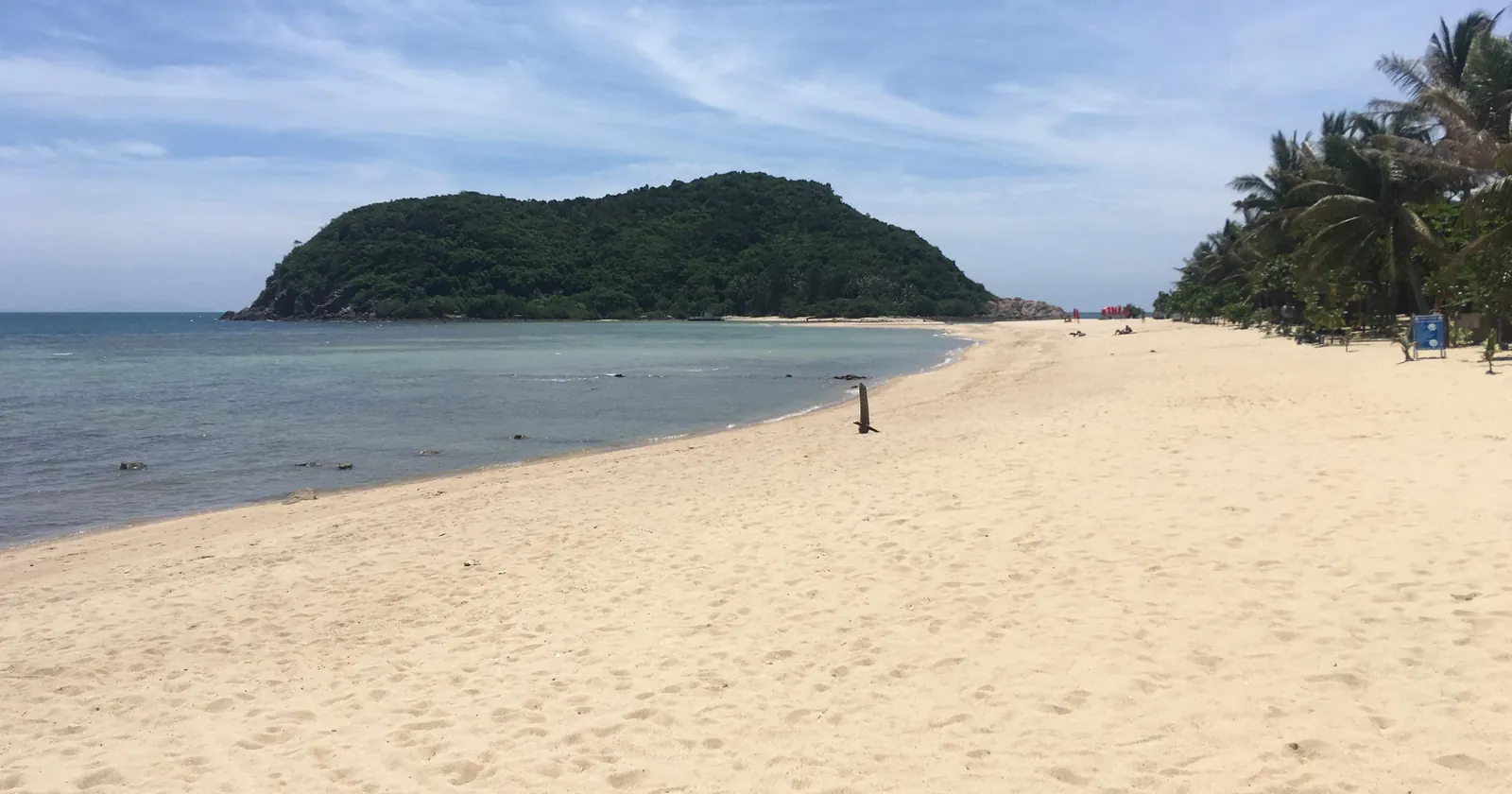
Ko Ma seen from Mae Haad beach, northwest Koh Phangan, June 2018. Photo: Christophe95, Wikimedia Commons, CC BY-SA 4.0.

Key takeaways
- Two Chaloklum operators put the crossing to Sail Rock at one hour and at one hour fifteen minutes, and four Phangan centers price the two-dive day at 3,200 to 3,400 baht
- The 2025 notification covers the Ko Pha-ngan, Ban Tai and Ko Tao subdistricts together, because Koh Tao is administratively part of Ko Pha-ngan district
- Its annex lists 101 entries of ornamental fish that nobody may catch or keep, among them requiem sharks up to 100 cm, parrotfish up to 50 cm and every wrasse, angelfish and butterflyfish
- Koh Ma is zoned too: buildings on it must stand at least 10 meters from the shore and stay under 6 meters high
- Whale shark sightings around Koh Tao and Sail Rock peak in April to May and October to November, and the whale shark is a conserved wild animal under Thai law
Koh Phangan diving runs from Chaloklum to Sail Rock, about an hour north
The standard dive day from Koh Phangan goes to one place. Sail Rock, the granite pinnacle Thai marine orders call Kong Hin Bai, sits in open water between Phangan and Koh Tao, and the Phangan centers run to it from the harbor at Chaloklum on the north coast. None of them is far from the rock, and the times they publish are close.
France Plongée, based at Haad Salad, meets divers at 7:20, leaves Chaloklum at 8:00 and gives one hour of crossing, with the second dive done and the boat home between 13:45 and 14:15. The Divers Boat leaves Chaloklum at 10:00 and states 1 hour 15 minutes to the rock, back at 16:00. Haad Yao Divers departs at 8:00 and returns around 14:30.
Prices for the two-dive Sail Rock day are equally close. The Divers Boat asks 3,200 baht, The Dive Inn 3,300, and Blue Horizon and Haad Yao Divers 3,400 each, as their own booking pages showed on 25 September 2026. That is well under what Samui centers charge for the same rock, which the Koh Samui diving guide sets out, because a Samui boat has further to go.
The operators agree on Sail Rock’s signature, a vertical swim-through called the chimney entered in the high teens of meters. They disagree on how deep the rock goes, from 30 to 47 meters depending on whose page you read, so this page gives no single figure.
Koh Ma and Mae Haad are Koh Phangan’s shallow second dive
The rest of Phangan’s diving sits on its northwest corner. Koh Ma is the small wooded island off Mae Haad beach, and Blue Horizon, whose shop is on the road out to it, describes it as a relaxing shallow dive and an easy second dive after Sail Rock. The Dive Inn calls it a gently sloping reef with hard and soft corals and lists seahorses, cuttlefish and razorfish among the finds.
Beach diving happens along the same coast. France Plongée offers direct access from the sand at Haad Salad to the reef in front of it, and Blue Horizon names Haad Yao, Haad Salad and Mae Haad as beach dives for beginners and night dives. Haad Yao Divers runs its night dives off Haad Yao beach, and prices a night dive at Sail Rock itself on request.
For choosing where to stay, that puts the shops, the house reefs and the Sail Rock harbor on the north and west coasts; one center’s pickups exclude the east coast and Haad Rin.
One rulebook covers Koh Phangan and Koh Tao, because Tao belongs to Phangan district
The instrument that governs this water is a Ministry of Natural Resources and Environment notification signed on 24 April 2025 under section 45 of the Enhancement and Conservation of National Environmental Quality Act of 1992. It was published in the Royal Gazette on 21 May 2025 and, by its clause 18, runs from the following day for five years. It replaced a 2014 notification for the same places.
Its title names seven subdistricts of Ko Samui district and three of Ko Pha-ngan district: Ko Pha-ngan, Ban Tai and Ko Tao. That is not a drafting shortcut. Koh Tao is administratively a subdistrict of Phangan’s district, and a 2020 marine order likewise listed Chumphon Pinnacle, Sail Rock and the Koh Tao pinnacles together as sites in Ko Pha-ngan district.
Clause 4 splits the area into seven zones. Area 1 is the sea inside a box in UTM coordinates, which the notification’s own map draws around both Koh Samui and Koh Phangan. Area 7(2) is a second sea box around Koh Tao. Converted, the Sail Rock box from the 2020 order falls about 3.6 km inside Area 7(2) and 11 km north of Area 1. In the notification’s terms the rock is Koh Tao water, and the bans are the same either way.
The bans in clause 5(1) are one list for both sea areas. Anchoring, or any act affecting the seabed, is banned where there are coral reefs, artificial reefs, coral rock and natural underwater rock piles. So is collecting, destroying or harming sea turtles, giant clams, sea fans, starfish, anemones, coral, dead coral and seagrass, and so is fishing in coral reef areas.
That last item settles a question visitors ask: spearfishing on Phangan’s reefs is fishing in a coral reef area. The water sports item reads wider than its summaries. It covers water sports and water tourism “of every kind”, naming scooters, jet skis, hydrofoils, parasail and banana boats as examples, plus anything that may harm the coast or disturb people, except in zones Surat Thani province designates. Diving is not among the examples.
Clause 13 adds that where another law protects something more strictly, the stricter law applies, so this notification is a floor rather than the whole of the rules. The navy is exempt from the water sports and anchoring items when it uses the area for official purposes.
Koh Phangan’s protected fish list runs to 101 entries, small sharks included
One item in clause 5(1) points outside the clause. It bans catching or possessing ornamental fish as listed in the annex, sea cucumbers included. The annex runs to four pages and 101 numbered entries, most of them whole genera or whole families rather than single species, which makes it much wider than the phrase “ornamental fish” suggests.
Whole families on it include the wrasses, the angelfish, the butterflyfish and bannerfish, the damselfish and clownfish, the moray eels, the scorpionfish and lionfish, the cardinalfish, the frogfish, the triplefins and the guitarfish. The zebra shark, Stegostoma fasciatum, is listed by name. So are eight genera of pipefish and the Moorish idol.
Four entries carry a size limit, and the limit is part of the rule. Requiem sharks, the family Carcharhinidae, are listed only up to 100 cm. Parrotfish are listed up to 50 cm, and the surgeonfish genera Acanthurus and Naso up to 30 cm. A parrotfish longer than 50 cm is outside the annex, though on a reef the fishing ban above still covers it.
The 100 cm cap matters in this water. Newborn blacktip reef sharks of about 30 to 60 cm are recorded year-round in the Koh Tao area, according to the shark area factsheet below, and every one of them falls inside it. The exceptions are narrow: state agencies doing research, conservation or breeding, licensed zoos, and private holders licensed to breed or to run a zoo.
Koh Ma and the islets off Koh Phangan are zoned against building
The same notification reaches onto land, and Koh Ma is named in it. Area 4 is the land of a list of small islands, and the Ko Pha-ngan entries are Ko Ma and Ko Tae Nai. There, any building must stand at least 10 meters back from the shoreline, rise no higher than 6 meters, and cover no more than 75 square meters in total, with at least 75 percent of the plot left open.
The islets beyond are stricter. In Area 5, which names Ko Kong Klieng, Ko Kong Than Sadet and Ko Tae Nok for Ko Pha-ngan, nothing may be built except for public benefit or by a state agency, and then no higher than 3 meters. Area 6 covers named islets and every other island in Area 1’s water not listed elsewhere, and bans building outright except what navigation safety needs.
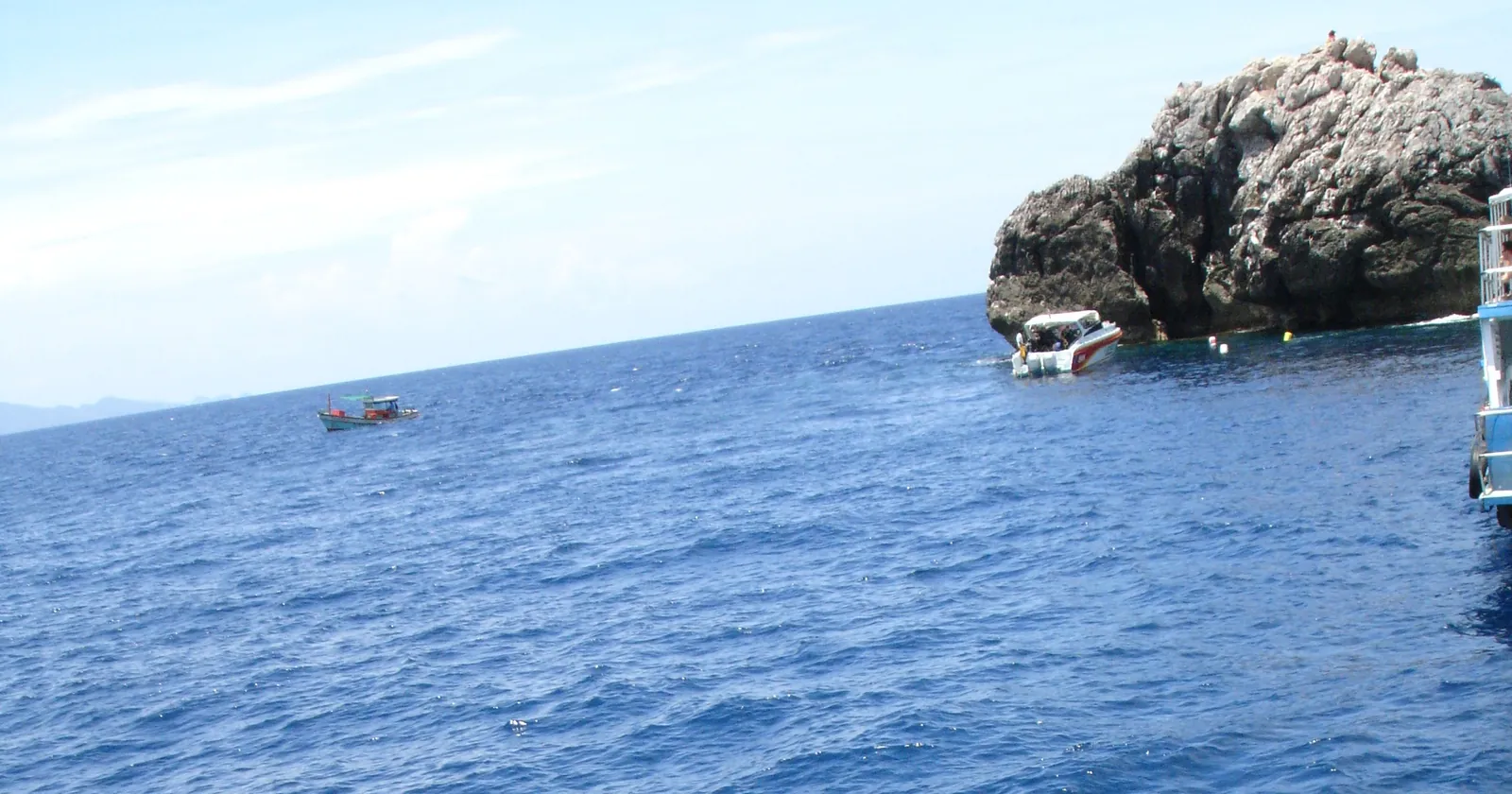

Sail Rock is in the Koh Tao shark and ray area, and Koh Phangan’s coast is not
In 2024 the IUCN Species Survival Commission’s Shark Specialist Group recognized the Koh Tao Important Shark and Ray Area: 664.91 km² of water from the surface to 45 meters. Its factsheet names Sail Rock inside it, and its map draws the line around Koh Tao and closes it north of Koh Phangan. Two species qualify it, the Endangered whale shark and the Vulnerable blacktip reef shark.
The whale shark numbers are the reason Phangan boats talk about the rock the way they do. Between 1991 and 2023, 1,409 whale shark observations were recorded from Chumphon Pinnacle, Koh Tao and Sail Rock, which the factsheet puts at 48 percent of all 2,911 sightings in Thailand in that period. A photo-identification study counted 178 individual whale sharks from 249 sightings at Koh Tao between 2004 and 2019.
Most of those individuals have never been resighted, and the factsheet calls the gathering an undefined aggregation: feeding has been seen, but the reason they come is unknown. It records an aggregation at Sail Rock in August 2021. An ISRA is a scientific designation, not a regulation.
The law that protects the animal itself is national. The Wild Animal Conservation and Protection Act of 2019 lists the whale shark among its conserved wild animals, and section 12 forbids hunting one. The Act defines hunting as collecting, trapping, catching, shooting, killing or otherwise harming. Under section 89, doing that to a conserved animal carries three to five years in prison or a fine of 300,000 to 1.5 million baht, or both.
Koh Phangan’s whale shark months sit on the edges of the monsoon
The factsheet records whale sharks around Koh Tao and Sail Rock year-round, with peaks in April to May and October to November. Those are the monsoon transitions, when upwelling strengthens and brings plankton with it. The better chance of the big fish and the worse weather overlap in the second of those windows.
The Thai Meteorological Department’s monthly summaries show what that meant in the last season. In October 2025 the southwest monsoon still covered the Gulf in the first half of the month. In November 2025 the northeast monsoon prevailed over the Gulf of Thailand almost the whole month and became rather strong at its end, and a low-pressure cell covered the lower Gulf from 19 to 21 November.
Read the rainfall figures carefully, because the department gives them as departures from normal, not as totals. For the southern east coast it reported November 2025 at 311.3 mm above normal, 91 percent above. December 2025 ran 97.9 mm below normal there, with the monsoon moderate to rather active and rain mainly along the east coast, and January 2026 was 82.0 mm below.
One season is one season. For a long stay on a Destination Thailand Visa, November is the month to plan boat days loosely.
Ang Thong and Koh Phangan’s own national park charge different fees
Some Phangan boats go west instead. Blue Horizon lists dive sites in the northern part of Mu Ko Ang Thong National Park, Haad Yao Divers prices an Ang Thong day at 4,200 baht, and The Dive Inn describes the park’s caves, swim-throughs and soft corals. A national park brings a fee, and the Department of National Parks sorts every park into four fee groups under a regulation in force since 7 June 2022.
Mu Ko Ang Thong is in group 2: 200 baht for a foreign adult and 100 for a child, 40 and 20 baht for Thais. Koh Phangan has a national park of its own, Than Sadet–Ko Pha-ngan, and it sits in group 1: 100 baht for a foreign adult, 50 for a child. Ask whether your trip price includes the fee; Haad Yao Divers lists marine-park permits inside its Open Water course price.
Inside any national park, bringing in or using sunscreen that contains oxybenzone, octinoxate, 4-methylbenzylidene camphor or butylparaben has been banned since August 2021, with a fine of up to 100,000 baht. The reef-safe sunscreen guide lists the other places with similar bans.
One boundary is worth asking about. The 2020 order that protected Sail Rock also mapped a pinnacle at Ko Wao, at about 9°47' north and 99°40' east. Converted, that sits west of Area 1’s western edge, outside both sea areas of the 2025 notification, and the 2020 order ran out in 2023. Whether the park boundary covers it is a question for the rangers.
Koh Phangan’s operator list holds seven dive centers and a kite school
The Koh Phangan operator list holds 8 watersports businesses, compiled on 5 September 2026: seven dive centers that SSI publishes in its register of affiliated centers, and one kite school published by IKO. Six of the eight publish a website in the register. SSI files four of the dive centers under Koh Phangan and three under Surat Thani, the province.
The town field is a filing address, not a harbor. Puffer Divers, one of the three filed under Surat Thani, titles its own dive-site page “Koh Samui Dive Sites”, and The Divers Boat describes itself as operating from both Chaloklum and Koh Tao. The register cannot tell you which island a boat leaves from; the operator can.
Eight is not the number of dive shops on the island: Haad Yao Divers, quoted above, teaches PADI courses and is not on the list. Which registers can be read explains the gap, and a listing says nothing about the boat, the teaching or whether a center is open this season.
Two things are worth asking any Phangan center before paying. First, which recompression chamber its emergency plan names and how an injured diver gets there; then check the answer against your policy in the dive insurance guide. If you are still deciding where to learn, the Koh Tao and Koh Phangan comparison and the Koh Tao open water course guide cover the island next door, and the Koh Tao list is far longer.
FAQ: scuba diving on Koh Phangan
How long is the boat from Koh Phangan to Sail Rock?
About an hour from Chaloklum on the north coast. France Plongée leaves Chaloklum at 8:00 and gives one hour of crossing, and The Divers Boat states one hour fifteen minutes on its 10:00 departure. Both are back by mid-afternoon after two dives at the rock.
How much does a Sail Rock dive trip cost from Koh Phangan?
Four Phangan centers priced the two-dive Sail Rock day at 3,200 to 3,400 baht on their own booking pages on 25 September 2026: The Divers Boat at 3,200, The Dive Inn at 3,300, and Blue Horizon and Haad Yao Divers at 3,400. Koh Tao and Ang Thong days cost more; Haad Yao Divers lists both at 4,200 baht.
Is spearfishing allowed around Koh Phangan?
Not on the reefs. The 2025 Ministry notification for Koh Samui, Koh Phangan and Koh Tao bans fishing in coral reef areas in both of its sea areas, and separately bans catching or possessing the 101 entries of ornamental fish in its annex, which include requiem sharks up to 100 cm, parrotfish up to 50 cm and every wrasse and angelfish.
When is the best time to see whale sharks from Koh Phangan?
The Koh Tao Important Shark and Ray Area factsheet records whale sharks around Koh Tao and Sail Rock year-round, with peaks in April to May and October to November at the monsoon transitions. It records 1,409 observations from Chumphon Pinnacle, Koh Tao and Sail Rock between 1991 and 2023, and an aggregation at Sail Rock in August 2021.
Can boats anchor at Sail Rock or Koh Ma?
Not on the reef. Clause 5(1) of the 2025 notification bans anchoring, or any act affecting the seabed, where there are coral reefs, artificial reefs, coral rock and natural underwater rock piles. It applies in the sea box around Koh Samui and Koh Phangan, where Koh Ma lies, and in the Koh Tao box, where Sail Rock lies.
Note: Conditions, safety guidance and regulations change. Verify current information with official sources, including the dive operator, the park authority and the relevant government department, before you travel or dive.
Founder of NOMADREEF and a former digital nomad. This guide is sourced from the references below; conditions, prices and rules change, so verify current details, and follow qualified local guidance and safety briefings. About the author · LinkedIn ↗
Sources
- The 2025 notification (primary). Notification of the Ministry of Natural Resources and Environment on the designation of areas and environmental protection measures in Taling Ngam, Bo Phut, Maret, Mae Nam, Na Mueang, Ang Thong and Lipa Noi subdistricts of Ko Samui district and Ko Pha-ngan, Ban Tai and Ko Tao subdistricts of Ko Pha-ngan district, Surat Thani, B.E. 2568, signed 24 April 2025, made under section 45 of the Enhancement and Conservation of National Environmental Quality Act B.E. 2535, Royal Gazette volume 142, special issue 199 D, 21 May 2025, pages 14 to 24, with its annex list of ornamental fish (four pages, entries 1 to 101), its building requirements annex and its map: clause 1 repealing the notification of 8 May 2014 and its 2023 extension; clause 4 on Areas 1, 4, 5, 6 and 7(2), including Ko Ma and Ko Tae Nai in Area 4 and Ko Kong Klieng, Ko Kong Than Sadet and Ko Tae Nok in Area 5; clause 5(1) items on harming listed marine life, catching or possessing annex fish including sea cucumbers with the two exceptions, fishing in coral reef areas, water scooters and similar craft, and anchoring; clause 6 on building in Areas 4, 5 and 6; clause 13 on stricter laws; clause 18 on entry into force the day after publication for five years. Royal Gazette text (PDF, 20 pages), with the effective date of 22 May 2025 stated by the Office of Natural Resources and Environmental Policy and Planning, onep.go.th. Read 25 September 2026 from the page images, the full 20 pages including the annex and map. The conversion of the 2020 Hin Bai and Ko Wao boxes into UTM (WGS 84, zone 47 north), and the distances from them to the edges of Areas 1 and 7(2), were calculated for this page and are not figures in either instrument.
- Sail Rock and the pinnacles in law (primary). Department of Marine and Coastal Resources Order 1148/2563 on protecting coral at underwater pinnacles in Surat Thani, Pattani, Phang Nga and Krabi, signed 26 August 2020, Royal Gazette volume 137, special issue 221 D, 23 September 2020, page 61: clause 1 naming Kong Hin Chumphon, Kong Hin Wong, Ko Kong Sai Daeng, Kong Hin Tung Ku, Kong Hin Bai, Kong Hin Ko Wao, Ko Tung Ku and Ko Tung Ka in Ko Pha-ngan district; clause 5 on a three-year term; map 5 of 11 (Hin Bai, 9°56'31" to 9°56'51" N, 99°53'51" to 99°54'11" E) and map 6 of 11 (Hin Ko Wao, 9°47'26" to 9°47'46" N, 99°40'14" to 99°40'34" E). DMCR order index, with the order and maps (PDF). Read 25 September 2026.
- The shark and ray area (primary, scientific). IUCN SSC Shark Specialist Group (2024), Koh Tao ISRA Factsheet: 664.91 km², 0 to 45 m; criteria A, C1 and C5; whale shark (Endangered) and blacktip reef shark (Vulnerable) as qualifying species; neonate blacktips of about 30 to 60 cm TL recorded year-round since 2013; 1,409 whale shark observations from Chumpon Pinnacle, Koh Tao and Sail Rock in 1991 to 2023, 48 percent of 2,911 in Thailand; aggregations including Sail Rock in August 2021; peaks in April to May and October to November at the monsoon transitions; the buffer “for use in the development of appropriate place-based conservation measures”. sharkrayareas.org, Koh Tao factsheet (PDF). Read 25 September 2026. The 178 individuals from 249 sightings in 2004 to 2019 are Magson K and co-authors (2022), Citizen science reveals the population structure and seasonal presence of whale sharks in the Gulf of Thailand, Journal of Fish Biology 101: 540–549, doi:10.1111/jfb.15121, as reported in the factsheet; the paper itself was not read.
- The whale shark in Thai law (primary). Wild Animal Conservation and Protection Act B.E. 2562, Royal Gazette volume 136, part 71 A, 29 May 2019: the section 4 definition of hunting (collecting, trapping, catching, shooting, killing or otherwise harming); section 12; section 89 paragraph two (three to five years or 300,000 to 1,500,000 baht for conserved wild animals); section 113 naming the whale shark among conserved wild animals; the annex list. Thai text as gazetted, published by the Department of National Parks (PDF) and the Office of the Council of State’s unofficial English translation (PDF). Read 25 September 2026.
- The monsoon (primary). Thai Meteorological Department, monthly weather summaries: October 2025 (southwest monsoon over the Gulf in the first half of the month), November 2025 (northeast monsoon over the Gulf almost the whole month, rather strong at the end; low-pressure cell over the lower Gulf 19 to 21 November; southern east coast 311.3 mm, 91 percent, above normal), December 2025 (moderate to rather active monsoon; southern east coast 97.9 mm, 37 percent, below normal) and January 2026 (southern east coast 82.0 mm below normal). October 2025, November 2025, December 2025, January 2026. Read 25 September 2026. The regional figures are departures from normal, as the department’s own sentences state (“above normal”, “below normal”), not monthly totals.
- Park fees (primary). Department of National Parks, Wildlife and Plant Conservation, on its fee regulation in force from 7 June 2022: group 1 including Than Sadet–Ko Pha-ngan at 10 and 20 baht for Thai children and adults, 50 and 100 baht for foreign children and adults; group 2 including Mu Ko Ang Thong at 20 and 40, 100 and 200 baht. DNP news, 2 June 2022. Read 25 September 2026.
- Sunscreen (triangulated). The Department of National Parks notice published in the Royal Gazette on 3 August 2021, banning the bringing and use in national parks of sunscreen containing oxybenzone, octinoxate, 4-methylbenzylidene camphor or butylparaben, with a fine of up to 100,000 baht, as reported by three independent sources: Tourism Authority of Thailand, Thai PBS (section 20 with section 47 of the National Park Act B.E. 2562) and The Standard. Read 25 September 2026. The Gazette’s own copy refused automated requests on that date.
- The boats, times and prices (operators’ own pages, primary for their own trips). France Plongée, Koh Phangan (Haad Salad base, 7:20 meeting, 8:00 departure from Chaloklum, one-hour crossing, return 13:45 to 14:15, beach access to the reef); The Divers Boat, plongée Koh Phangan (Chaloklum, 10:00 to 16:00, 1 h 15 min, 3,200 THB); Haad Yao Divers, fun dives and pricing (Sail Rock 8:00 to about 14:30 at 3,400 THB, Koh Tao and Ang Thong at 4,200 THB, pickup zone, marine-park permits in the Open Water price, Sail Rock chimney entered at 18 m); The Dive Inn, Sail Rock trip (3,300 THB, chimney entry around 18 m) and dive sites (Koh Ma, Mae Haad, Ang Thong); Blue Horizon, fun diving (Sail Rock 3,400 THB) and dive sites (Koh Ma, beach dives, Ang Thong north, chimney entrances at 5, 13 and 19 m, walls to 47 m); Puffer Divers, dive sites (Sail Rock 5 to 40 m). All read 25 September 2026. The depth of Sail Rock differs between these pages (30, 40, 42 and 47 m), so no figure is given; The Divers Boat’s page states 42 m.
- The eight businesses. Eight watersports businesses on the Koh Phangan operator list, compiled 5 September 2026: seven dive centers published by SSI in its register of affiliated centers and one kite school published by IKO in its register of affiliated schools. Six publish a website in the register; four dive centers are filed under Koh Phangan and three under Surat Thani. The register’s town field records where a body files a business, not necessarily where it operates, and the limits of each source are set out on which registers can be read.
- Gaps. No recompression chamber is named on this page: the chamber operator’s site refused automated requests on 25 September 2026, and a safety statement needs its primary source. Whether the Ko Wao islets lie inside Mu Ko Ang Thong National Park could not be read in the park’s own boundary decree, and the Ang Thong closure dates for the 2026 season were not found in a Department notice; both are left out: gap, needs human check.