Best Whale Shark Destinations
 by Yannick SchrothAug 3, 20266 min read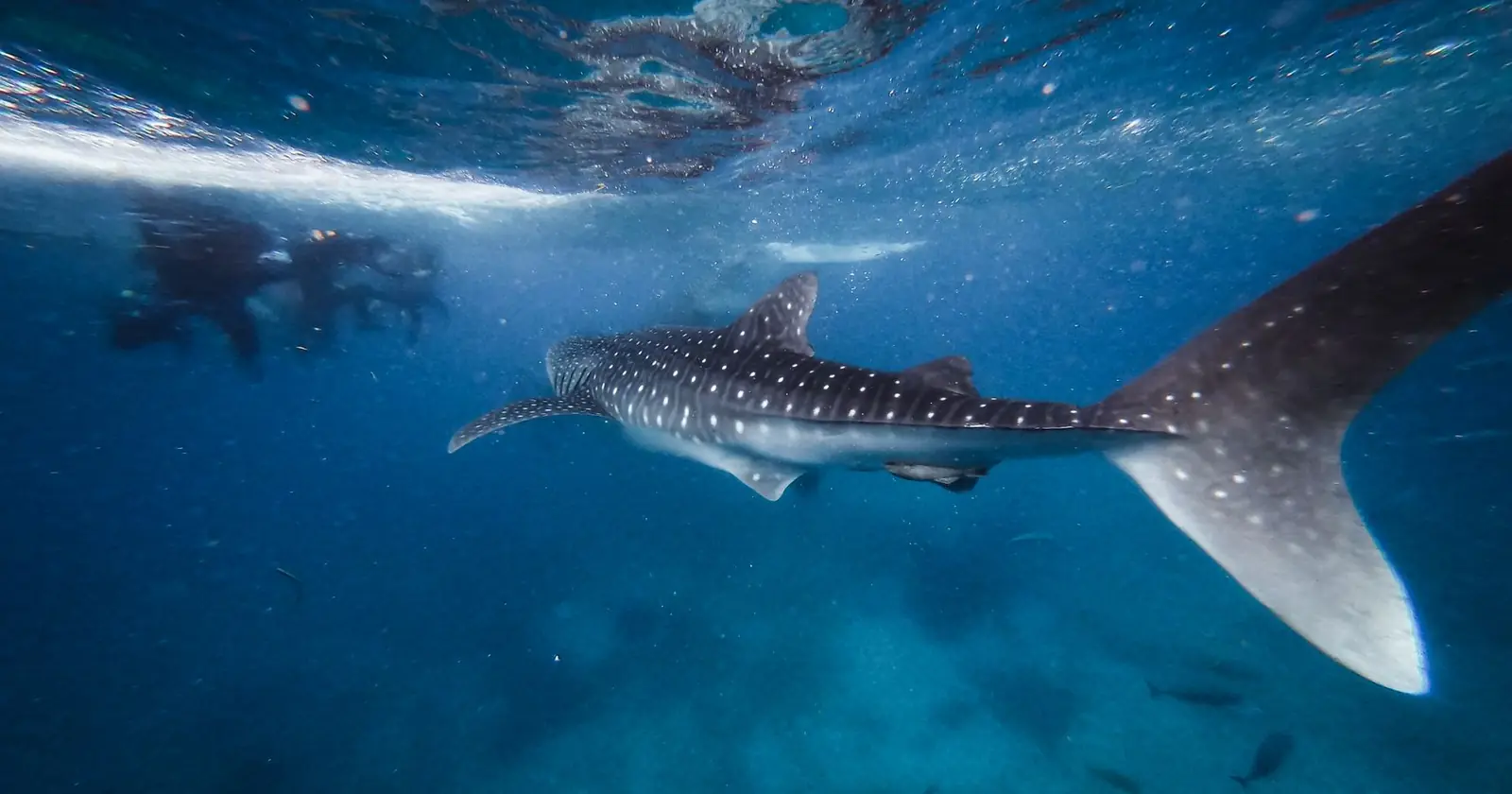
Photo: Elgin Renz Rocili / Pexels.
Why the list is really a calendar
Whale sharks turn up where the food is. The Convention on Migratory Species describes movements that follow “local productivity fluctuations, specifically to plankton blooms and spawning events”, on animals that make migrations of up to 13,000 km, one tracked from Mexico to Tonga, another from east Africa to Thailand. That is why a destination is only ever a destination in season, and why nobody can promise a sighting inside one.
The species is Endangered on the IUCN Red List, uplisted from Vulnerable in 2016 after an inferred decline of more than 50% over three generations, with the Indo-Pacific subpopulation down around 63%. It sits on CMS Appendix I since 2017 and Appendix II since 1999. That is the backdrop to every operator choice on this page.
Why fed sites are not on this list
At provisioned sites the sharks are fed to hold them in place, which turns a seasonal animal into a daily one. The best-studied is Oslob in the Philippines, and the published findings are specific: sharks with a long resighting history showed anticipatory behaviour and arrived on average five minutes after the feeder boats, and animals seen there repeatedly were less likely to avoid being touched or bumped by boats.
The crowding is measured too. Non-compliance with the two-metre minimum distance rose from 79% of surveys in 2012 to 97% in 2014. The researchers are careful that the long-term effects are unknown; what is documented is that the behaviour changes. That is the reason no fed site appears below, and it is a finding rather than a preference.
Tofo
Whale sharks and manta rays off a remote Mozambique beach, among the world's best.
Whale sharks + mantasRead the guide → 16°06′N 86°56′W · HondurasUtila
Seasonal whale sharks off one of the cheapest dive islands on earth.
Seasonal, cheapRead the guide → 3°54′N 73°21′E · MaldivesMaldives local islands
Whale sharks and mantas across the atolls, from budget local islands.
Atolls, big animalsRead the guide → 8°38′N 98°15′E · ThailandKhao Lak (Similan)
Seasonal whale sharks on Similan and Koh Tachai liveaboard trips.
Similans, seasonalRead the guide → 6°16′S 39°32′E · TanzaniaZanzibar (Paje)
Whale sharks in the wider region (Mafia Island) off warm Indian-Ocean Zanzibar.
Indian Ocean regionRead the guide → 16°23′N 86°26′W · HondurasRoatán
Occasional whale sharks on the Mesoamerican Reef off a cheap Caribbean island.
Caribbean, occasionalRead the guide →Picking a whale-shark spot
- Year-round-ish and manta-rich: Tofo in Mozambique.
- Cheap and seasonal: Utila in Honduras and the Similans (Khao Lak).
- Warm Indian Ocean: the Maldives and Zanzibar's wider region.
Two countries wrote the same swimming rule and a wildly different crowd rule
Ningaloo and South Ari Atoll are the two whale-shark destinations with a written, enforceable protocol rather than an operator's promise. Put the two documents side by side and something useful happens: the part about you and the animal is almost word for word the same, and the part about how many people may be there at once differs by a factor of six.
The identical half. In Western Australia the rule is a 250 m approach zone around a shark, and a swimmer may not “approach closer than three metres from the head or body and four metres from the tail”. In the Maldives the zone is also “a 250 metres (820.2 feet) radius around megafauna”, and a person in the water “must always maintain a distance of at least 3 metres from the head or body of the whale shark… 4 metres from the tail”. Both forbid touching or riding (“must not touch or ride on, or attempt to touch or ride, a whale shark under any circumstance”), and Western Australia also bans flash photography and motorised swimming aids. Two administrations on opposite sides of the Indian Ocean arrived at the same three numbers. Treat 3 m, 4 m and no hands as the global floor, whatever a guide tells you.
The half that differs, and it decides what the day feels like. At Ningaloo, “only one vessel at a time may operate within the zone for a maximum of 90 minutes and at a speed of six knots or less”, that vessel “must not approach closer than 30 metres to a shark”, and no more than “10 people in the water at any one time”. In South Ari the management plan allows “6 vessels (including the ranger vessel)… within the contact zone at once”, five of them watching, and from a single contact vessel the number of people entering the water is “limited to a maximum of 60 visitors in total”, guides included, with time in the water capped at 15 minutes when others are queuing. Vessels stay 15 m off the shark and 25 m from each other, and speed is stepped down from 10 knots inside the protected area to 5 in the contact zone, 2 within 50 m, and gear neutral closer than 15 m.
Neither set of numbers is the wrong answer. Ningaloo rations the animal; South Ari rations the time and organises the queue by radio, with a ranger hotline and a live vessel tracker deciding who goes next. But they produce different days out, and the difference is worth knowing before you book a month somewhere: ten people and ninety minutes is a different encounter from sixty people and fifteen minutes, and no brochure states it because the limit sits in a management plan rather than in the price list.
What to do with this: ask any operator, anywhere, which written protocol applies and who enforces it. In these two places the answer is a document with a date on it. Where the answer is a shrug, the 3 m and 4 m are still the right distances: they are just nobody's job to enforce.
FAQ: Whale Shark Destinations for Nomads
Where is the best place to swim with whale sharks?
Tofo in Mozambique is among the best, with whale sharks and mantas much of the year. Utila (Honduras) and the Similans (Khao Lak) have strong seasonal encounters, and the Maldives sees them across its atolls. Whale sharks are wild and migratory, so timing and a bit of luck matter; check the season in each guide.
Is it ethical to swim with whale sharks?
It can be, with the right operator. Avoid places that feed or corral them (a real concern at some sites), keep the required distance, never touch, ride or block them, and limit numbers in the water. Choose operators that follow a code of conduct and support research or conservation.
Sources
- Ningaloo, Western Australia, as a legislated protocol. Department of Biodiversity, Conservation and Attractions, whale shark management in Western Australia: an approach zone of “a 250 metres radius applies around any whale shark”; “Only one vessel at a time may operate within the zone for a maximum of 90 minutes and at a speed of six knots or less”; a vessel “must not approach closer than 30 metres to a shark”; swimmers may not “approach closer than three metres from the head or body and four metres from the tail”, nor “attempt to touch or ride on a whale shark”, use flash photography or motorised propulsion, and no more than “10 people in the water at any one time”. dbca.wa.gov.au. Read 13 September 2026.
- South Ari Atoll, Maldives, as a management plan. Ministry of Tourism and Environment, South Ari Marine Protected Area: Guide Examination Study Material, Version 2, May 2025, following the first amendment to the SAMPA Management Plan: a contact zone is “a 250 metres (820.2 feet) radius around megafauna such as whale sharks and manta rays”; “Only 6 vessels (including the ranger vessel) are allowed within the contact zone at once”; “The number persons entering the water from a contact vessel is limited to a maximum of 60 visitors in total. Guides are included in this number of visitors”; “Visitors in water must not exceed a duration of 15 minutes, if there are other vessels queuing”; “Contact vessels must maintain a distance of at least 15 m from the nearest whale shark”; “Vessels should maintain 25 meters between other vessels”; speed limits of 10 knots within SAMPA, 5 in a contact zone, 2 within 50 m and gear neutral closer than 15 m; in the water, “at least 3 metres from the head or body of the whale shark… 4 metres from the tail” and “must not touch or ride on, or attempt to touch or ride, a whale shark under any circumstance”. protectedareas.environment.gov.mv (PDF). Read 13 September 2026.
- Migration and what drives it. Convention on the Conservation of Migratory Species of Wild Animals: movements following “local productivity fluctuations, specifically to plankton blooms and spawning events”, migrations of up to 13,000 km, and the listings on Appendix II since 1999 and Appendix I since 2017. cms.int. Read 8 September 2026.
- Conservation status. IUCN, on the 2016 uplisting of the whale shark from Vulnerable to Endangered: numbers “more than halved over the last 75 years”, an inferred decline of more than 50% over three generations and about 63% in the Indo-Pacific. iucn.org. Read 8 September 2026.
- What provisioning does, measured. Thomson et al., “In-water observations highlight the effects of provisioning on whale shark behaviour at the world's largest whale shark tourism destination”, Royal Society Open Science 7(12), 200392. Anticipatory arrival about five minutes after feeder boats, reduced avoidance of touch and boat contact in frequently resighted animals. royalsocietypublishing.org. Read 8 September 2026.
- The crowding figures. Schleimer et al., “Learning from a provisioning site: code of conduct compliance and behaviour of whale sharks in Oslob, Cebu, Philippines”, PeerJ. Non-compliance with the two-metre minimum distance rising from 79% of surveys in 2012 to 97% in 2014. ncbi.nlm.nih.gov. Read 8 September 2026.
- Each entry links to our full guide for that place, and those guides carry the external sources and read dates behind the claims summarised here. They are the place the readings are recorded, not the evidence for them: Tofo, Utila, Maldives local islands, Khao Lak (Similan), Zanzibar (Paje), Roatán.