Thailand's Destination Thailand Visa (DTV): The 2026 Guide
 by Yannick SchrothAug 6, 20268 min read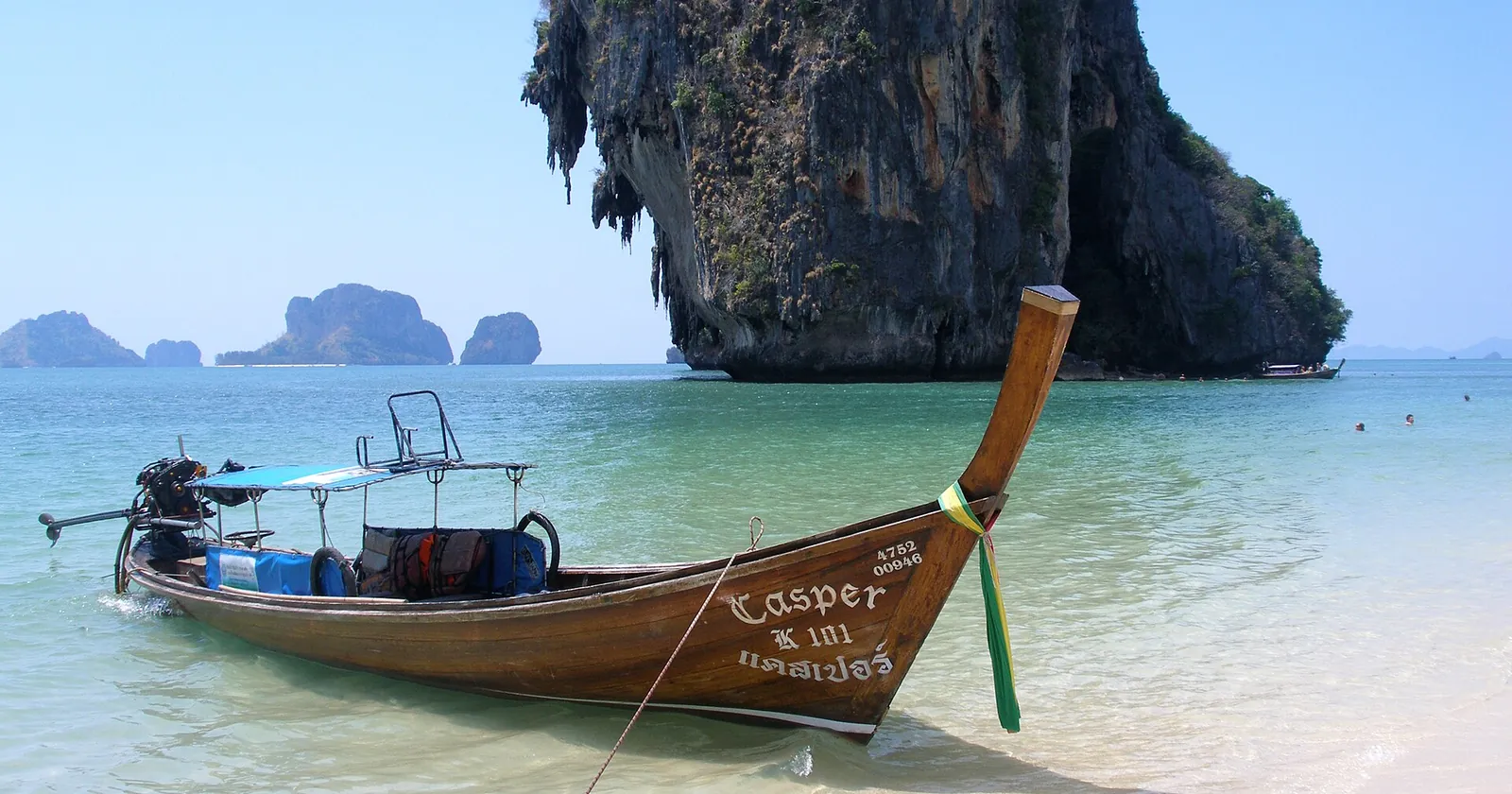
Railay, Krabi, on the Andaman coast. Photo: Vyacheslav Argenberg / Wikimedia Commons, CC BY 4.0, cropped.
Figures checked against Thai Ministry of Foreign Affairs visa sheets on 6 August 2026.
What the DTV actually gives you
The DTV is the most generous headline of any visa in this series, and the most widely misunderstood. The Ministry of Foreign Affairs sheet is blunt about the structure: the visa is multiple entry, valid five years from the issue date, and each entry buys you 180 days. It is not a five-year residence permit. It is a five-year permission to keep arriving, with a long clock on each arrival.
That distinction matters. The five years belong to the visa; the 180 days belong to the entry. Leave and come back and a fresh 180 days starts, which is why the DTV reshaped how people plan long stints on Koh Tao or the Andaman coast.
The official DTV requirements
| What the MFA sheets list | |
|---|---|
| Entries | Multiple |
| Validity | 5 years from the issue date |
| Stay per entry | 180 days each time |
| Financial test | Bank statements for the past three months showing a balance of no less than 500,000 THB, issued within one month |
| Who qualifies | Workcation (digital nomad, remote worker, foreign talent, freelancer); Thai soft-power activities such as Muay Thai, Thai culinary training and medical treatment; and spouses and children under 20 of DTV holders |
| Proof of activity | Two or more of: certificate of employment plus company registration, an employment contract, or a professional portfolio showing your status |
| Fee | Set by the post you apply through, paid by card through the e-visa system and non-refundable |
The 500,000 THB is a balance, not income. That is unusual and it cuts both ways: a freelancer with an uneven year but savings in the bank can clear it, while a well-paid employee who spends everything cannot. Around 13,000 EUR or 14,000 USD at 2026 rates, it has to be visible across three months of statements, so moving money in the week before you apply does not work.
On the fee: there is no single global number, and anyone quoting one is guessing. Thai missions set it locally. The Tokyo sheet, for example, lists 52,000 yen. Check the fee on the page of the specific post you are applying through, and note that it is non-refundable whether or not the visa is granted.
The requirement that catches people out
Consular checklists for the DTV ask for proof of prolonged residence in Thailand for at least six months, such as a condominium rental or lease agreement. That is a real hurdle for someone applying cold from abroad with no Thai address yet, and it is the single most common reason a straightforward-looking application stalls. Requirements are assembled post by post, so read the checklist for your specific embassy or consulate rather than a generic summary, including this one.
Extending a stay in country
The 180 days can be extended once per entry at an immigration office inside Thailand. The fee is widely reported as 1,900 THB, which is the standard Thai extension-of-stay fee, but is not confirmed it on an official Immigration Bureau page while writing this, so treat it as unverified and check it at the office. The extension is granted at an officer's discretion rather than automatically. If you would rather not rely on it, the cheaper mental model is simply to leave and re-enter, which restarts the 180 days for as long as the visa is valid.
Where to base in Thailand on a DTV
180 days is long enough to settle rather than tour. These are the Thai bases we cover in full, with the wifi, cost and season detail.
Koh Tao
One of the cheapest places on earth to learn to dive, with a long-standing nomad scene and decent island wifi.
Diving · low costRead the guide → 8°38′N 98°15′E · Andaman coastKhao Lak
The launch point for the Similan Islands, whose national park season runs 15 October to 15 May.
Diving · liveaboardsRead the guide → 13°45′N 100°30′E · BangkokThai Wake Park
A full cable park inside reach of the capital, for wake sessions between work days.
Wake · cableRead the guide → 12°33′N 99°57′E · Hua HinBlack Mountain
A cable park in Hua Hin, an easy weekend move from Bangkok.
Wake · cableRead the guide →What the DTV is worth depends on the alternative, and the alternative halves on 15 September 2026
A long-stay visa is only as valuable as the thing it saves you from. For Thailand that thing is the visa exemption: and it is about to get considerably smaller.
The UK Foreign, Commonwealth and Development Office, describing Thai entry rules for its own travellers, states it plainly: “From 15 September 2026, if you enter Thailand under the visa exemption scheme, you can stay for up to 30 days for tourism.” Anyone wanting longer “must get the appropriate visa before you travel or, if eligible, apply for an extension through the Thai immigration authorities”. And the FCDO is explicit about the category question that sits underneath every nomad-visa discussion: “If you plan to work, study, retire or live in Thailand, you must get the appropriate visa before you travel.”
Three more practical points from the same source, all of which catch people out:
- Passport validity. It must have “an ‘expiry date’ at least 6 months after the date you arrive” and “at least 1 blank page”.
- The arrival card. “From 1 May 2025, all foreign nationals entering Thailand, whether by air, land or sea must complete a digital arrival card online before arrival”, and registration opens “within 3 days before they arrive”.
- Overstaying has a tariff. “If you overstay the period of your visa, you will get a fine of 500 Thai baht a day up to a maximum of 20,000 baht.”
Put together, that is the case for the DTV rather than a marketing one. A thirty-day exemption makes the hop-in-and-out pattern much less workable than it used to be, and the category rule means that working remotely from Thailand was never what the exemption was for. This is a foreign ministry describing another country's rules to its own citizens, so treat it as a well-maintained second reading rather than as the Thai authority itself: the Thai requirements are the ones that bind, and they are cited above.
FAQ: Thailand Digital Nomad Visa (DTV)
How long is the Thailand DTV valid, and how long can you stay?
The Ministry of Foreign Affairs sheets list the DTV as a multiple-entry visa valid five years from the issue date, with a stay of 180 days each time you enter. It is not a five-year residence permit: the five years belong to the visa, and each fresh entry restarts the 180-day clock.
How much money do you need for the DTV?
A bank statement for the past three months showing an ending balance of no less than 500,000 THB, issued within one month of the application. It is a balance test rather than an income test, so savings count and salary alone does not.
What does the DTV cost?
There is no single global fee. Thai missions set it locally and it is paid by card through the e-visa system and is non-refundable. As one published example, the Tokyo sheet lists 52,000 yen. Check the fee on the page of the post you are applying through.
Do you need a Thai address before applying for a DTV?
Consular checklists ask for proof of prolonged residence in Thailand for at least six months, such as a condominium rental or lease agreement. This is the requirement that most often stalls an application made from abroad, and it is applied post by post, so read your own embassy's checklist.
Who else can use the DTV besides remote workers?
The same visa covers Thai soft-power activities, explicitly including Muay Thai training, Thai culinary training and medical treatment, and it covers spouses and children under 20 of DTV holders.
Sources
- What the exemption gives, from a second government’s reading of the Thai rules. UK Foreign, Commonwealth & Development Office, Thailand travel advice, entry requirements: “From 15 September 2026, if you enter Thailand under the visa exemption scheme, you can stay for up to 30 days for tourism”; “If you want to stay longer, you must get the appropriate visa before you travel or, if eligible, apply for an extension through the Thai immigration authorities”; “If you plan to work, study, retire or live in Thailand, you must get the appropriate visa before you travel”; the passport must have “an ‘expiry date’ at least 6 months after the date you arrive and have at least 1 blank page”; “From 1 May 2025, all foreign nationals entering Thailand, whether by air, land or sea must complete a digital arrival card online before arrival”, registering “within 3 days before they arrive”; “If you overstay the period of your visa, you will get a fine of 500 Thai baht a day up to a maximum of 20,000 baht.” gov.uk. Read 13 September 2026.
- Ministry of Foreign Affairs, Kingdom of Thailand, official Destination Thailand Visa sheet: multiple entry, five years from issue date, 180 days each time, 500,000 THB balance over three months, eligible purposes and required documents, fee example of 52,000 yen. MFA DTV visa sheet (PDF), checked 6 August 2026.
- Ministry of Foreign Affairs, Kingdom of Thailand, official DTV document checklist: the 500,000 THB balance, proof of prolonged residence in Thailand for at least six months, salary slips for the last six months, and the employment or portfolio evidence. MFA DTV checklist (PDF), checked 6 August 2026.
- The 1,900 THB in-country extension fee is unverified: it is widely reported and matches the standard Thai extension-of-stay fee, but we could not confirm it on an official Thai Immigration Bureau page. Confirm at the immigration office.