Best Whale-Watching Destinations
 by Yannick SchrothAug 3, 20266 min read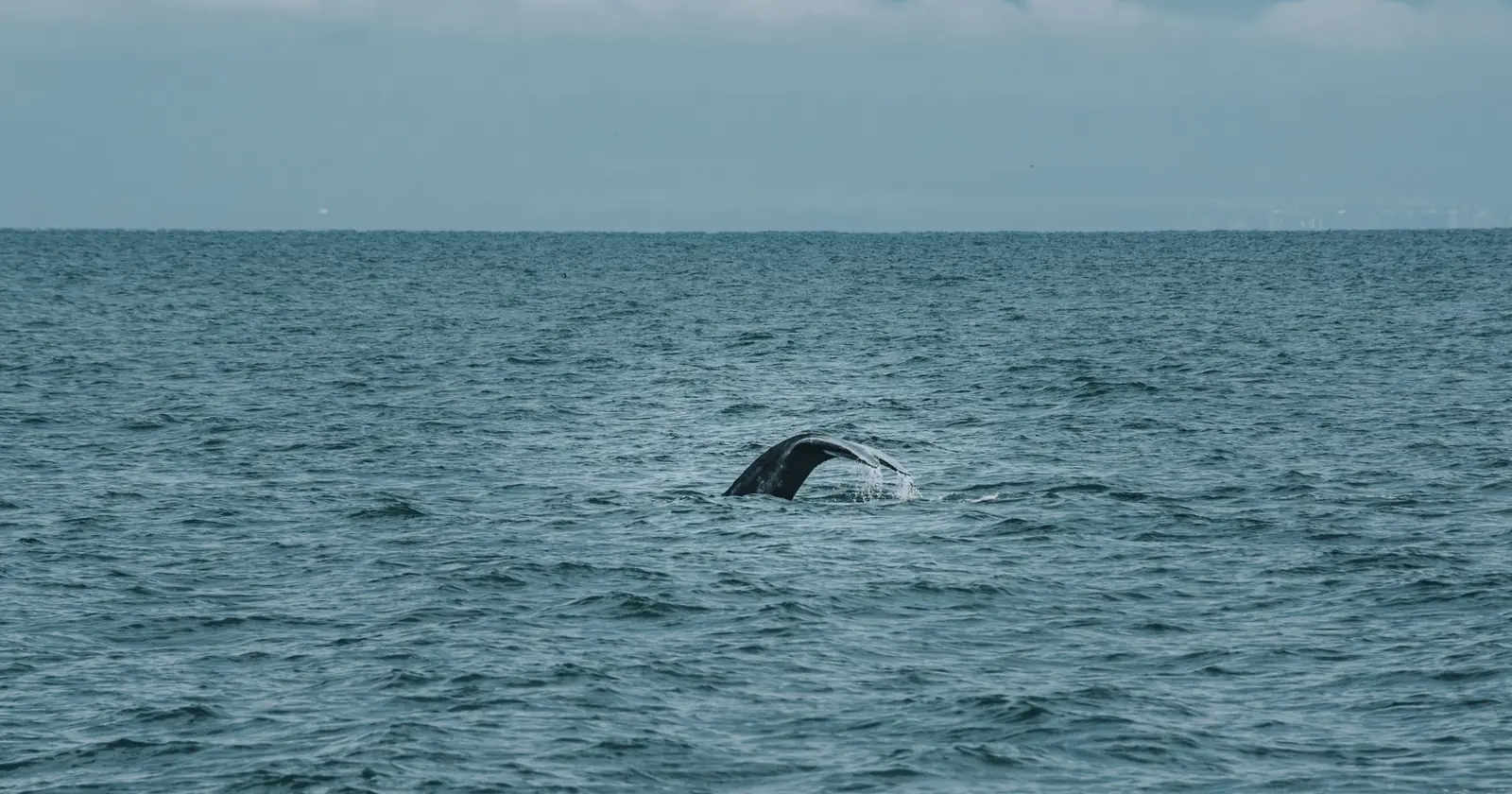
Photo: Sandra Seitamaa / Pexels.
What makes a whale-watching season reliable
The places below sit on migration routes and calving grounds with documented seasons, because that is what makes a sighting likely rather than lucky, and each is somewhere you could live for a month rather than visit for a morning. Species differ by location and month; the linked guide names which.
How to tell a good boat from a bad one
Approach rules are national, but the International Whaling Commission's Whale Watching Handbook sets out the shape they follow, and it is specific enough to watch for from the deck. The no-approach zone is within 100 m of a whale, and it extends to 300 m directly in front of or behind the animal, a boat should never park in the path of a pod. The caution zone is within 300 m either side, where no more than three vessels should be present at once and everyone runs at no-wake speed.
Those three numbers are the whole test. A skipper who cuts across the front of a moving pod, or joins as the fourth boat on an animal, is breaking the pattern the IWC describes whatever the local rule says. It is worth asking before you pay, and worth watching once you are out.
Tenerife
Year-round whales and dolphins offshore, plus the fastest fibre in the Canaries.
Year-round, fibreRead the guide → 37°44′N 25°40′W · PortugalThe Azores
One of the world's great whale-watching regions, with many species in the mid-Atlantic.
Atlantic, many speciesRead the guide → 5°58′N 80°25′E · Sri LankaSri Lanka
Mirissa is a top spot to see blue whales, the largest animal on earth, in season.
Blue whales, MirissaRead the guide → 28°38′S 153°37′E · AustraliaByron Bay
Humpback whales pass close on their migration off Australia's most easterly point.
Humpback migrationRead the guide → 23°51′S 35°33′E · MozambiqueTofo
Humpback whales in season alongside whale sharks and mantas off Mozambique.
Humpbacks + big animalsRead the guide → 15°52′N 97°04′W · MexicoPuerto Escondido
Dolphins year-round and humpback whales in season off the Oaxaca coast.
Dolphins, humpbacksRead the guide →Picking a whale-watching base
- Year-round whales and dolphins with fast fibre: Tenerife.
- Blue whales in season: Sri Lanka (Mirissa).
- Whale-rich Atlantic and migration hotspots: the Azores and Byron Bay.
The distance is a number in law, and the number changes with the country and the species
The pattern above is guidance. What binds a skipper is national law, and two countries that both take this seriously write it differently enough that a traveller should ask which rule applies before the boat leaves.
In the United States, NOAA Fisheries states the general rule as a distance you can picture: “Observe whales from a safe distance of at least 100 yards—the length of a football field—unless other species-specific rules apply.” The exceptions are where it gets sharp, because they are statutory rather than advisory: “federal law requires vessels to remain 100 yards away from humpback whales in Hawaii and Alaska waters, 200 yards from killer whales in Washington State inland waters, and 500 yards away from North Atlantic right whales anywhere in the U.S.” Two more limits from the same source rarely make it into a tour description: “Limit time observing marine mammals to 30 minutes or less”, and for anyone tempted by a scenic flight, “Maintain a 1,000-foot minimum altitude when viewing marine mammals from the air”.
In Canada, the numbers sit in the Marine Mammal Regulations themselves. Schedule VI sets the standard approach distance for whale, dolphin and porpoise at 100 m in “all Canadian fisheries waters”, every day of the year. The regulation then doubles it for the situation most likely to arise on a good day out: approaching a whale, dolphin or porpoise “in resting position or with its calf” at “an approach distance of less than 200 m” counts as disturbance. In the St. Lawrence Estuary the distance for species listed as at risk is 400 m, or “any greater distance that is provided for under the Species at Risk Act”. And the aircraft rule is written as a prohibition on the manoeuvre rather than on the altitude: below “304.8 m (1,000 ft.)” and within half a nautical mile of a marine mammal, no flight manoeuvre may be performed “for the purpose of bringing the aircraft closer to the marine mammal or otherwise disturbing it”.
Read side by side, the useful lesson is not the arithmetic: 100 yards is 91 m, and the difference would not be visible from a deck. It is that the species you came to see can change the legal distance by a factor of five, and that a rule about resting animals and mothers with calves exists in one country and not as law in the other. A good operator will answer “which rule applies here, and to this animal” without hesitating. So will a good national park office, which is worth a call in a place where the boats all say the same thing.
Neither of these is a world standard, and neither travels. They are quoted here because they are written down, enforceable and public, which is more than most whale-watching destinations can offer: and because they show what a real rule looks like when you are trying to judge one you cannot read.
FAQ: Whale-Watching Destinations for Nomads
Where can I see blue whales?
Sri Lanka's Mirissa, on the south coast, is one of the world's top spots to see blue whales, the largest animal on earth, roughly November to April. It is also easy to combine with the south-coast surf and nomad scene. As always, choose a responsible operator and note that sightings are seasonal and never guaranteed.
Which base is best for year-round whale watching?
Tenerife: the waters off the southwest coast have resident whales and dolphins year-round, and it pairs that with the fastest fibre in the Canaries for a work-first base. The Azores are outstanding in the migration seasons, and Sri Lanka, Byron Bay, Tofo and Puerto Escondido are strong seasonal options.
Sources
- The United States, as a distance and as a time. NOAA Fisheries, Marine Life Viewing Guidelines: “Observe whales from a safe distance of at least 100 yards—the length of a football field—unless other species-specific rules apply”; “federal law requires vessels to remain 100 yards away from humpback whales in Hawaii and Alaska waters, 200 yards from killer whales in Washington State inland waters, and 500 yards away from North Atlantic right whales anywhere in the U.S.”; “Limit time observing marine mammals to 30 minutes or less”; “Maintain a 1,000-foot minimum altitude when viewing marine mammals from the air”. fisheries.noaa.gov. Read 13 September 2026.
- Canada, as regulation text. Marine Mammal Regulations (SOR/93-56), Schedule VI and section 7: the approach distance for “Whale, dolphin and porpoise” is 100 m in “all Canadian fisheries waters” from January 1 to December 31; for a whale, dolphin or porpoise “in resting position or with its calf”, disturbance includes approaching “at an approach distance of less than 200 m”; in the St. Lawrence Estuary the distance for listed species is “400 m, or any greater distance that is provided for under the Species at Risk Act”; and below “304.8 m (1,000 ft.)” within half a nautical mile, no flight manoeuvre may be performed “for the purpose of bringing the aircraft closer to the marine mammal or otherwise disturbing it”. laws-lois.justice.gc.ca. Read 13 September 2026.
- Approach zones and vessel numbers. International Whaling Commission, Whale Watching Handbook: a no-approach zone within 100 m of a whale extending to 300 m directly in front of or behind it, and a caution zone within 300 m either side limited to three vessels at no-wake speed. wwhandbook.iwc.int. Read 8 September 2026.
- How national rules compare. International Whaling Commission, A Review of Whale Watch Guidelines and Regulations Around the World, the compendium the handbook rests on. iwc.int. Read 8 September 2026.
- Each entry links to our full guide for that place, and those guides carry the external sources and read dates behind the claims summarised here. They are the place the readings are recorded, not the evidence for them: Tenerife, The Azores, Sri Lanka, Byron Bay, Tofo, Puerto Escondido.