Best Snorkelling Destinations for Digital Nomads (2026)
 by Yannick Schroth
Jul 28, 2026
8 min read
by Yannick Schroth
Jul 28, 2026
8 min read
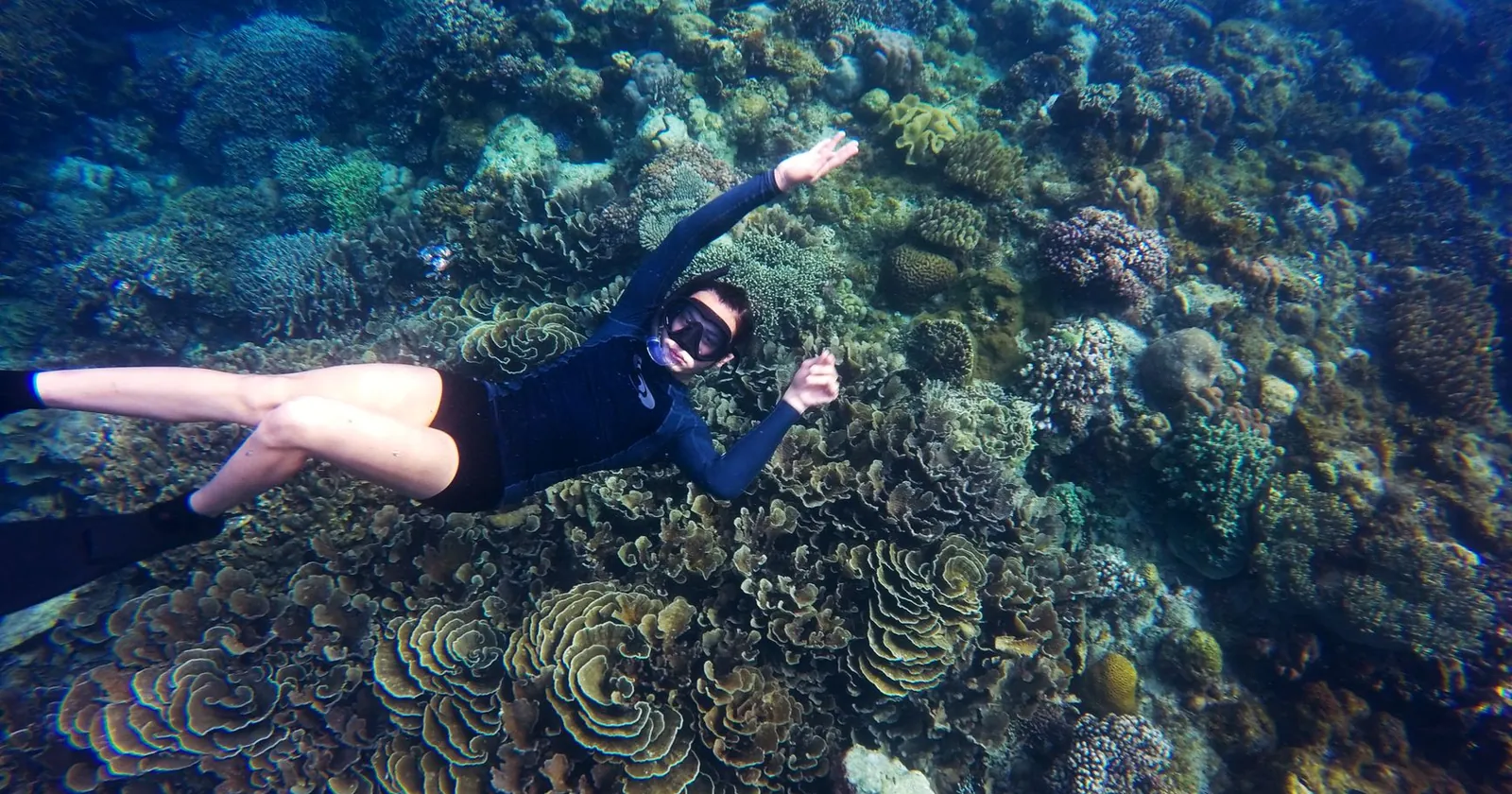
Photo: John Cahil Rom via Pexels (free license).
Costs, wifi and conditions are "as of 2026" and vary by season, verify before you rely on them.
How to read this list
- Turtles: Gili Islands, Amed, Moalboal.
- Big spectacle: Moalboal (sardine run), Cozumel (reef wall).
- Easy shore snorkeling: Amed, Gili, Koh Tao.
- Island-hopping reefs: El Nido.
What makes snorkeling good rather than wet
This is a curated list of the bases we have researched and written full guides for, chosen where snorkeling is genuinely great and the place also works as a remote-work base. Each links to its own guide with costs, wifi and visa notes. Many of these are famous for diving too, snorkeling simply lets you enjoy the same reefs without a tank. The list grows as we cover more.
Gili Islands
Car-free calm off Lombok with turtles you can snorkel with straight off the beach, and gentle, warm, shallow water perfect for beginners.
Turtles · easy shore snorkelling Read the guide → 9°57′N 123°23′E · PhilippinesMoalboal
The famous sardine run, millions of fish swirling metres off the beach, plus turtles, all snorkellable from shore on Cebu.
Sardine run · turtles Read the guide → 10°06′N 99°50′E · ThailandKoh Tao
Cheap island living and warm, clear bays with easy shore and boat snorkelling over coral, alongside its famous dive scene.
Warm bays · budget island Read the guide → 11°12′N 119°25′E · PhilippinesEl Nido
Palawan's island-hopping paradise: lagoons and reefs reached by boat tours, dramatic scenery above and below the water.
Island-hopping reefs Read the guide → 20°25′N 86°55′W · MexicoCozumel
World-class Caribbean reef off the coast of the Yucatán, superb visibility and marine life, with reliable wifi to work.
World-class reef · good wifi Read the guide → 8°20′S 115°41′E · IndonesiaAmed, Bali
Gentle black-sand bays with a shallow Japanese wreck and coral gardens you can snorkel straight off the beach, cheap and calm.
Shore wreck · budget calm Read the guide →Two numbers that apply to every entry on this list
A ranking of reefs implies the reefs will be there. One of these figures is about what you are going to see; the other is about what you put on your face to see it.
The reef. The IUCN Red List, version 2026-1, counts “more than 49,500 species threatened with extinction”, which is “28% of all assessed species”. Broken down by group, the figure for reef corals is 44 per cent, the highest of any group on that list bar cycads, and well above mammals at 26 or birds at 11. That is the context for every entry below: these are good places to snorkel now, and “now” is doing real work in that sentence.
The mask. On 5 March 2026 the US Consumer Product Safety Commission told consumers to stop using a named full-face snorkel mask “immediately due to risk of serious injury and death from drowning hazard”, describing “labored breathing” that can lead to “loss of consciousness or excess fluid in the lungs”, and “increased levels of carbon dioxide”. About 84,000 had been sold on one marketplace since 2019. That is a warning about one product rather than the whole category, but it describes a failure mode inherent to any large enclosed mask, and a cheap mask that does not publish how it separates inhaled from exhaled air is telling you something.
Neither point changes where to go. Both change what you carry and how much of the reef you expect to find intact.
Picking your snorkeling base
- Total beginner or nervous? Gili Islands and Amed: shallow, calm, warm, straight off the beach.
- Want a spectacle? Moalboal's sardine run and Cozumel's reef are bucket-list.
- Turtles? Gili, Amed and Moalboal are strong bets.
- Scenery and variety? El Nido's island-hopping is unmatched.
Snorkelling gear worth packing
A well-fitting mask makes or breaks snorkeling, see our best snorkel gear guide and best travel mask. A rashguard protects against sun and stings, and travel health insurance is worth sorting before you go.
How these snorkelling destinations differ from each other
Snorkelling has a short list of things that matter: what lives there, how far you swim to reach it, and whether the water is calm enough to enjoy it. Cost varies more than people expect.
| Base | What it is best at | Monthly cost |
|---|---|---|
| Gili Islands | turtle-rich diving and snorkeling, car-free calm, and a social island break | roughly $1,000 to $1,220 a month; a bungalow $300 to $500 |
| Moalboal | cheap, world-class diving: the year-round sardine run, turtles and Pescador Island | roughly $700 to $1,100 a month; a long-stay room $250 to $450 |
| Koh Tao | getting certified or a short, dive-intensive stint; nomads who like a social scene | roughly $470 to $625 a month; studio ~$378 |
| El Nido | spectacular island hopping, lagoons and snorkeling in Bacuit Bay | roughly $900 to $1,600 a month; risen with tourism |
| Cozumel | world-class Caribbean drift diving with reliable wifi, a rare combo | roughly $1,500 to $2,300 a month; pricier because it is an island |
| Amed, Bali | focused solo nomads and couples who dive most days and do not need office-grade wifi | roughly $1,070 to $1,480 a month, cheaper than Canggu; a villa is $600 to $1,200 |
Who these snorkelling destinations are wrong for
Some of the best snorkeling in the world sits behind a boat ride, a current or a price you did not plan for. These are the reasons to choose elsewhere.
- Gili Islands:
think twice if you need reliable bandwidth; the wifi is the weak point
- Moalboal:
think twice if you need fast, guaranteed wifi or big-city amenities
- El Nido:
think twice if you need reliable wifi or hardcore wreck scuba (try Coron)
- Cozumel:
think twice if you want rock-bottom costs or a big coworking scene
- Amed, Bali:
think twice if you need reliable high-bandwidth video calls all day or a large coworking community
1 of the 6 guides here do not state a drawback in their summary.
FAQ: Snorkelling Destinations for Digital Nomads
Do I need to be a strong swimmer to snorkel?
You need to be comfortable in water and able to keep yourself afloat. A buoyancy aid or a float removes most of the risk for weaker swimmers and is normal, not embarrassing. Snorkel with someone, and check for current before you get in: the swim back is the part people underestimate.
What is the one thing beginners get wrong?
Mask fit. A mask that leaks ruins the day and no amount of technique fixes it. Fit it before you travel, and if you wear glasses, look into a prescription lens rather than squinting at a blurry reef for a week.
How do I snorkel without damaging the reef?
Do not stand on it, do not touch it, and keep your fins up and away. Most reef damage from snorkellers is accidental kicking in shallow water. Use a reef-cautious mineral sunscreen, and remember that several countries here ban oxybenzone and octinoxate outright.
Sources
- What the Red List says about the things you came to see. IUCN Red List of Threatened Species, version 2026-1: “More than 49,500 species are threatened with extinction”, “28% of all assessed species”, with the share threatened by group including reef corals 44%, sharks & rays 38%, amphibians 41%, mammals 26% and birds 11%. iucnredlist.org. Read 11 September 2026.
- The full-face mask warning. US Consumer Product Safety Commission, 5 March 2026, telling consumers to stop using OUSPT full-face snorkel masks “immediately due to risk of serious injury and death from drowning hazard”: the mask causes “labored breathing” leading to “loss of consciousness or excess fluid in the lungs that can lead to drowning” and “increased levels of carbon dioxide which can exacerbate the difficulty of breathing”; “About 84,000 of these full-face snorkel masks were sold from March 2019 through February 2026”. A warning about one named product, not a finding against the category. cpsc.gov. Read 11 September 2026.
- Each entry links to our full guide for that place, and those guides carry the external sources and read dates behind the claims summarised here. They are the place the readings are recorded, not the evidence for them; the claims here are the ones those guides already verify: Gili Islands, Moalboal, Koh Tao, El Nido, Cozumel, Amed, Bali.