How to Snorkel for Beginners
 by Yannick Schroth
Jul 28, 2026
9 min read
by Yannick Schroth
Jul 28, 2026
9 min read
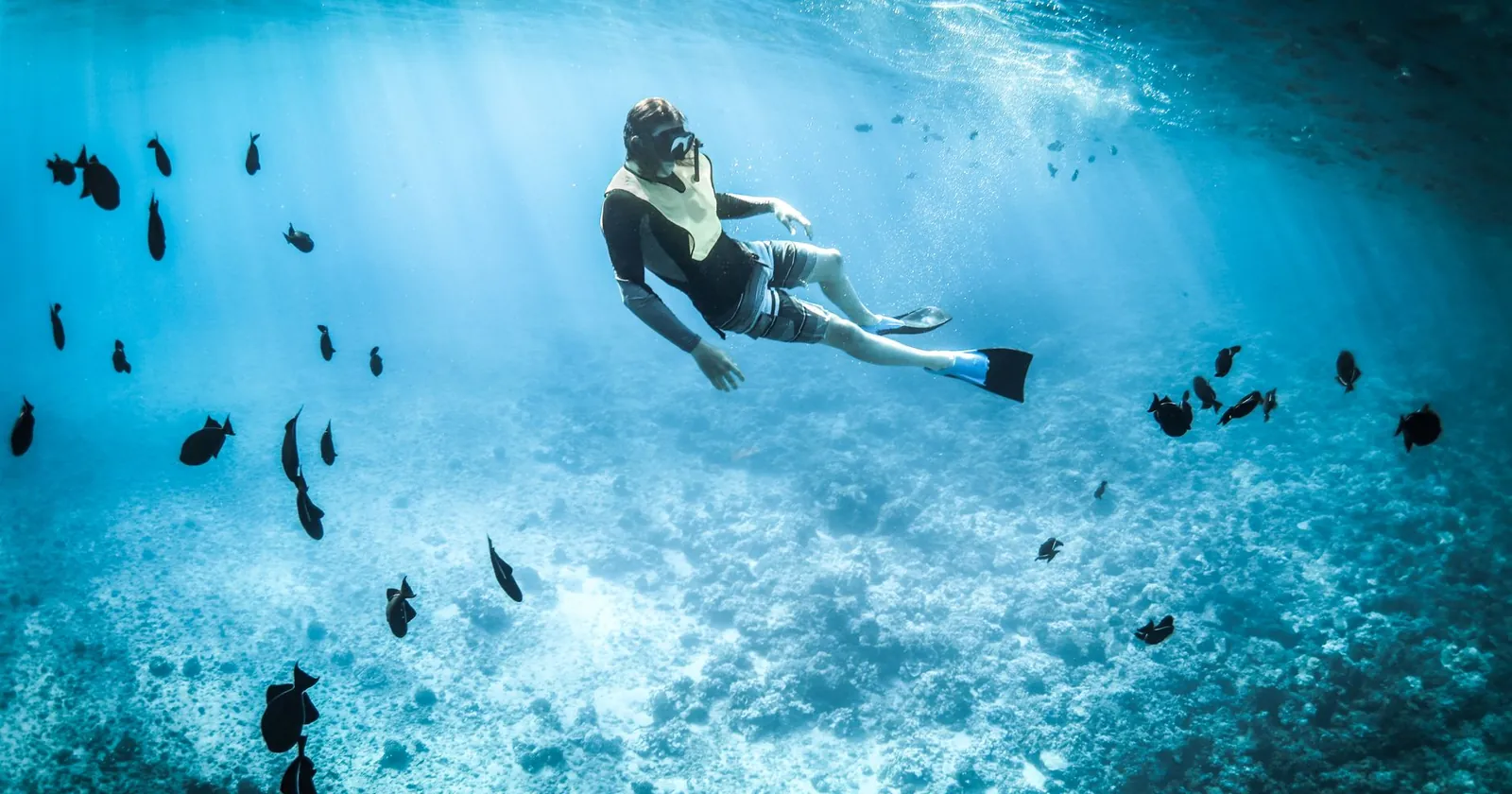
Photo: Miles Hardacre via Pexels (free license).
This is general information. Be a competent swimmer, check conditions, and snorkel within your ability.
Key takeaways
- Fit is everything: a mask that seals, defogged, plus a snorkel and fins.
- Breathe slow and calm through the snorkel; practice in shallow water first.
- Learn to clear the snorkel (blow sharply) and mask (exhale through the nose).
- Fin gently from the hips; keep arms still and let the fins work.
- Relax, buddy up, and never touch the coral or marine life.
Step 1: Get gear that fits
Snorkelling needs almost nothing: a mask, a snorkel and fins. The one thing that matters most is a mask that fits and seals on your face (test it by holding it on without the strap and breathing in through your nose, it should stay put). Defog it, add a comfortable snorkel and a pair of fins, and you are ready. We cover choosing all of it in the snorkel gear guide and mask fit in the dive mask guide.
Step 2: Practise breathing in shallow water
Do not swim off immediately. Stand or float in shallow, calm water, put your face in with the snorkel up, and simply breathe slowly and deeply through your mouth until it feels natural. Almost every beginner problem is fast, panicky breathing; slow it down and relax. Once breathing feels automatic and boring, you are ready to swim.
Step 3: Learn to clear the snorkel and mask
Two little skills remove all the anxiety. To clear the snorkel when water gets in (a small wave, or you dipped under), blow out sharply to blast the water out of the top, then breathe gently. To clear a flooded mask, look slightly up, press the top of the frame against your forehead, and exhale through your nose, the air pushes the water out the bottom. Practise both in the shallows; once you can clear without standing up, snorkeling becomes relaxing.
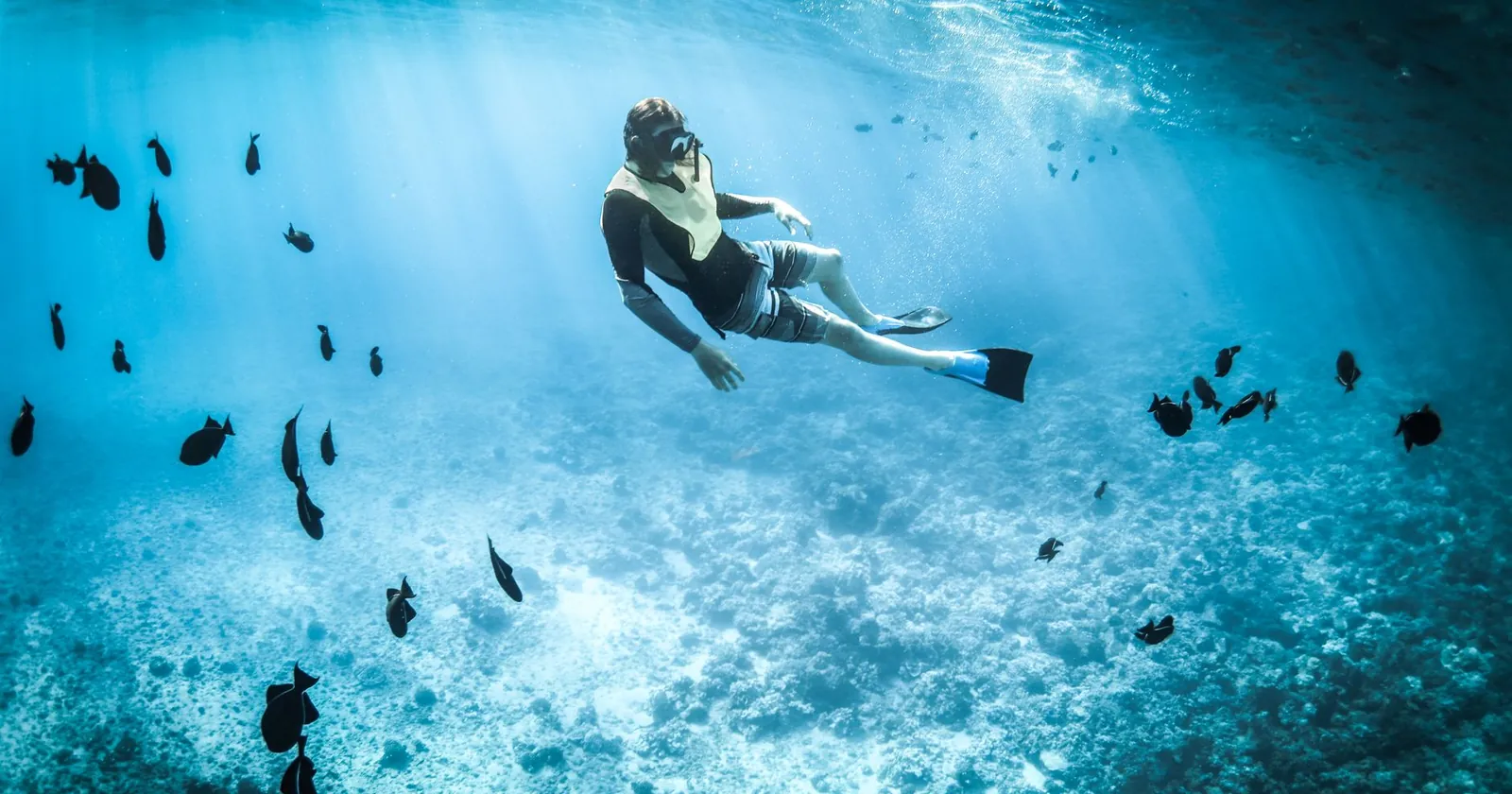
Step 4: Fin slowly and efficiently
Good snorkeling looks lazy. Use slow, relaxed kicks from the hips with fairly straight legs, and keep your arms still at your sides (waving your arms wastes energy and scares fish). Let the fins do the work; you should glide, not thrash. This is efficient, calm and keeps your heart rate down, which is safer and lets you stay out longer. In shallow or delicate reef areas, mind your fins so you never kick the coral.
Step 5: Relax, float and enjoy
The final skill is the most important: relax. Float calmly on the surface, breathe steadily, and let the reef reveal itself, turtles, fish and coral appear when you are still and quiet. Snorkel with a buddy, in calm, clear water, and keep an eye on your position relative to shore or the boat. And the golden rule of the reef: look, don't touch, never stand on, grab or chase marine life.
Common beginner snorkeling mistakes
- A leaky, ill-fitting mask. The number-one frustration. Choose on fit, and don't trap hair under the skirt.
- Skipping the defog. A new mask fogs until you remove the factory film; do it once at home.
- Breathing fast and shallow. Slow, deep breaths keep you calm and comfortable. Panic starts in the lungs.
- Waving your arms. Keep them still; it saves energy and stops you scaring the fish.
- Standing on the reef to rest. Never. Float, or head to sand. Coral is alive and fragile.
- Drifting without noticing. Look up regularly to check your position relative to shore or the boat; currents are sneaky.
- Forgetting the sun. Your back cooks while you feel cool, wear a rashguard.
Where to snorkel as a beginner
Choose calm, clear, shallow water with easy entry and, ideally, a guide or lifeguard, protected bays and reef flats are perfect. Many of our destinations are superb for snorkeling straight off the beach, from the turtles of the Gili Islands to the reefs of Moalboal and the lagoons of El Nido. Avoid strong current, boat channels and rough, murky conditions while you are learning.
The current you will not notice, because you are looking down
A snorkeller is in the worst possible posture for spotting trouble: face down, ears full, eyes on the reef, and no reason to look back at the beach for twenty minutes. That is why the current matters more here than it does for a swimmer, and why it is worth learning to see it before you get in.
NOAA describes a rip current as a “strong, narrow, seaward flow of water that extends from close to the shoreline to outside of the surf zone”, and lists what it looks like from the shore: “darker, narrow gaps of water heading offshore between areas of breaking waves and whitewater”, “narrow regions of choppy, rippled water heading offshore”, and “plumes of sand or foam offshore of the breakers”. Look from an elevated position, and through polarized sunglasses, which is what makes the colour difference visible at all.
The reason not to argue with one: a channel rip “typically flows about 1 to 2 feet per second and may reach speeds up to 8 feet per second”, which NOAA notes is “on par with the top speeds of some of the fastest Olympic swimmers”, and “attempting to swim back to shore against the seaward flowing current can quickly result in exhaustion”. In fins you are faster than a swimmer, but not that fast, and exhaustion in a mask you cannot clear is how a good day turns bad.
Two habits worth building: look at the water for a full minute from the highest point you can reach before you kit up, and every few minutes in the water, lift your head and find a fixed thing on land. If it has moved, you have.
FAQ: snorkeling for beginners
Can you snorkel if you can't swim well?
You should be a comfortable, competent swimmer before snorkeling in open water. Beginners and weak swimmers can wear a buoyancy aid or snorkel vest, stay in shallow, calm water, and go with a buddy or guide. Fins and a float help, but snorkeling still happens in the sea, so build basic water confidence first and never overestimate your ability.
How do you breathe when snorkeling?
Keep your face in the water with the snorkel tube above the surface, and breathe slowly and deeply through your mouth. Practise in shallow water first until it feels automatic. Stay relaxed: panicky, shallow breathing is the main beginner problem. If water gets in, blow sharply to clear the snorkel and carry on.
How do you stop a snorkel mask from fogging?
Remove the factory film from a new mask once (gently scrub the inside of the lens with non-gel toothpaste or a mask cleaner), then before each snorkel use anti-fog drops or a little saliva, rub it around, and rinse briefly. Most fogging comes from skipping the initial film removal. A well-defogged mask stays clear.
Do you need fins to snorkel?
Fins are not strictly essential but strongly recommended: they let you move efficiently, hold position against light current, and cover distance without tiring, which is also safer. Short travel fins are fine for snorkeling. In very shallow or delicate reef areas, mind your fins so you never kick the coral.
Is snorkeling safe for beginners?
Snorkelling is one of the most accessible watersports, but it still carries real risks: currents, sunburn, boat traffic and overestimating your swimming. It is safe when you snorkel in calm, clear, lifeguarded or guided conditions, with a buddy, within your ability, and after checking currents. See our snorkeling safety guide before you go.
Yannick Schroth
Founder of NOMADREEF and a former digital nomad who has based across Asia and Latin America. This guide is researched against snorkeling and water-safety best practice and reef-friendly guidance; it is not a substitute for a guide or lessons where you need them. About the author · LinkedIn ↗
Sources
- Spotting a rip current, and why not to fight it. NOAA National Weather Service: a rip current is a “strong, narrow, seaward flow of water that extends from close to the shoreline to outside of the surf zone”, visible as “darker, narrow gaps of water heading offshore between areas of breaking waves and whitewater”, “narrow regions of choppy, rippled water heading offshore” and “plumes of sand or foam offshore of the breakers”, best seen from an elevated position and through polarized sunglasses; channel rips “typically flow about 1 to 2 feet per second and may reach speeds up to 8 feet per second”, and “attempting to swim back to shore against the seaward flowing current can quickly result in exhaustion”. weather.gov. Read 11 September 2026.
- RNLI water-safety and beach-safety guidance (currents, swim between the flags). rnli.org.
- Our own snorkelling safety and snorkel gear guides.