Freediving Safety and Shallow Water Blackout: What Every Freediver Must Know
 by Yannick Schroth
Jul 25, 2026
11 min read
by Yannick Schroth
Jul 25, 2026
11 min read
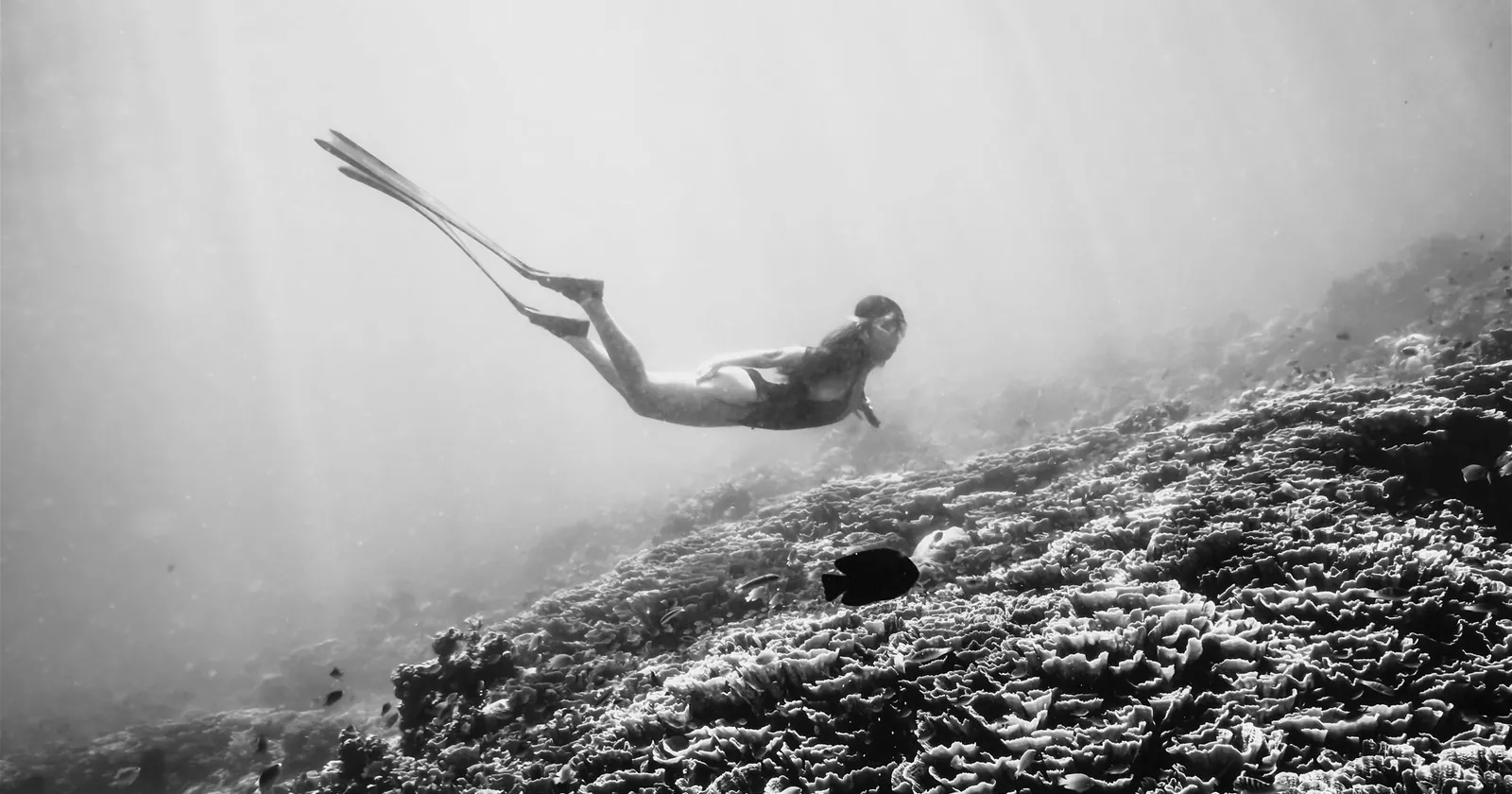
Photo: Emma Li via Pexels (free license).
This is general safety information, not training. Freediving safety must be learned in person from a certified instructor.
Key takeaways
- Shallow water blackout is silent and often strikes near the surface on ascent.
- Never hyperventilate: it removes the urge to breathe that warns you to surface.
- Never freedive alone. One-up, one-down with a trained buddy, every time.
- "Big bubbles mean big troubles": a large bubble release is a blackout sign (DAN).
- After any blackout or samba, stay out of the water 24 hours and seek medical advice.
What shallow water blackout is
Shallow water blackout (also called hypoxic blackout) is a sudden, silent loss of consciousness underwater caused by low oxygen after breath-holding. The cruel part is the timing: it often happens near the surface on the ascent, in the last few meters, where the diver feels almost home and safe. It can happen to fit, experienced people, and it gives little or no warning to the person it strikes. This is the single most important risk in freediving, and understanding it is the foundation of every safety rule that follows.
Why it happens (the physiology, simply)
Two things combine. First, your urge to breathe is driven mostly by rising carbon dioxide, not falling oxygen. If you hyperventilate (fast, forced breathing) before a dive, you flush out CO2 and remove that warning, so you can keep holding your breath while your oxygen quietly runs down. Second, on the ascent, the surrounding pressure drops rapidly, which lowers the partial pressure of the oxygen left in your lungs and blood, so an oxygen level that was just about adequate at depth can crash near the surface. The result is a blackout with no struggle and no noise. Prevention is the whole game.
Warning signs a buddy watches for
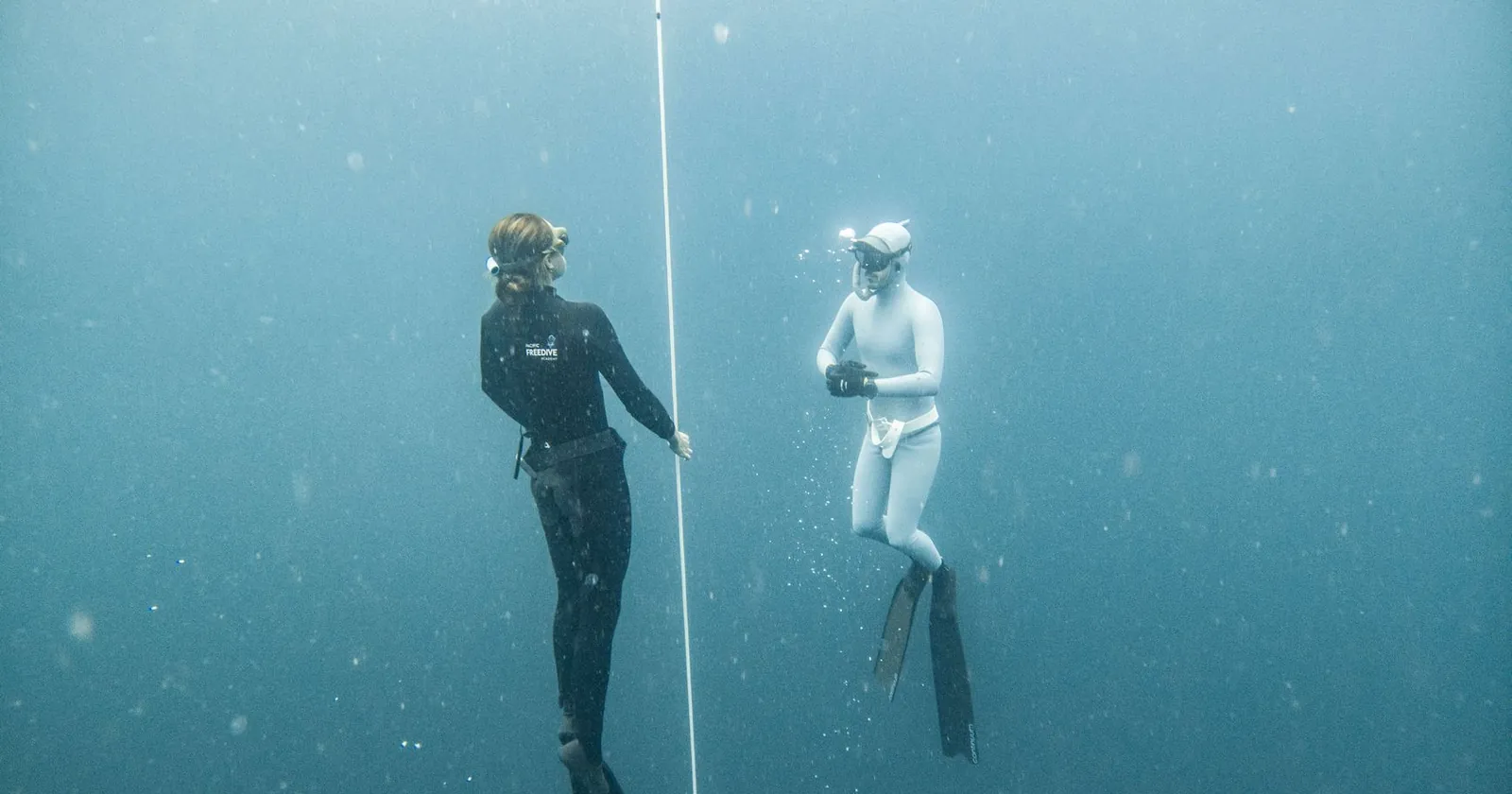
A blackout is quiet, but trained buddies learn to read the run-up to it. Per DAN, the clearest single sign is bubbles: "big bubbles mean big troubles", a large release of air from the mouth is a universal indicator of a blackout. Other signs that can precede unconsciousness include loss of motor control (trembling fingers, a "samba", or deteriorating technique), blue lips (cyanosis), and changes in body language or facial expression. This is exactly why the diver at the surface must be watching, not distracted, through the whole ascent and for 30 seconds after the diver surfaces.
Who is most at risk of a freediving blackout
DAN notes the freedivers most at risk are usually overexerted, overweighted and undersupervised. Spearfishers are a particular concern: they dive repeatedly, focus intently on the hunt rather than their own state, and too often dive alone. Anyone pushing their depth or breath-hold, diving without a trained buddy, or wearing too much weight is stacking the odds against themselves. None of these risk factors is about talent or fitness, they are about habits and supervision, which is good news, because habits can be fixed.
The rules that prevent it
- Never freedive alone. Use the one-up, one-down system: one dives, one watches from the surface, ready to rescue. This is the single most important rule.
- Never hyperventilate. Breathe slowly and calmly; keep your CO2 warning intact.
- Get proper training. A certified course teaches weighting, technique, buddying and rescue, the things that keep you alive.
- Weight yourself lightly. Be buoyant at the surface, so an unconscious you floats up, not down.
- Never push to your limit. Surface with air to spare; ego has no place underwater.
- Rest between dives. Take long surface recovery intervals (often several times your dive time) so oxygen fully recovers.
- Never freedive after scuba diving on the same day, it raises decompression-sickness risk.
- Stop if you feel unwell, lightheaded, or overly cold or tired.
Rescue basics (why you learn them in a course)
If a buddy blacks out, the trained response is to bring them to the surface, keep their airway clear, remove their mask and use the "blow, tap, talk" method to stimulate breathing, and give rescue breaths if needed while calling for help. This is deliberately brief, because reading it is not learning it: rescue is a hands-on skill you must practice under an instructor until it is automatic. That is precisely why self-teaching freediving is so dangerous, and why a course is non-negotiable.
After a blackout or samba: recover properly
Treat any loss of motor control (a samba) or full blackout as a serious event, not a party trick. After one, DAN advises staying out of the water for at least 24 hours, and you should seek medical assessment. Do not laugh it off and jump back in, the underlying causes (overexertion, low oxygen, pushing limits) do not vanish, and a second event the same day can be far worse. Make sure your travel health insurance actually covers freediving, as many policies exclude it.
FAQ: freediving safety and shallow water blackout
What is shallow water blackout?
Shallow water blackout, also called hypoxic blackout, is a sudden, silent loss of consciousness underwater caused by low oxygen after breath-holding. It often strikes near the surface on ascent, where falling pressure drops the oxygen level in the blood sharply. It gives little warning and can be fatal without an attentive buddy, which is why prevention and supervision are everything.
Why does hyperventilation cause blackouts?
Hyperventilating (fast, forced breathing) before a dive flushes out carbon dioxide. Because it is rising CO2, not falling oxygen, that triggers your urge to breathe, low CO2 removes that warning, so you can stay down until your oxygen is dangerously low and black out without ever feeling the need to breathe. This is why freedivers are taught never to hyperventilate.
What are the warning signs of a freediving blackout?
Per DAN, a large release of bubbles from the mouth is a universal sign of a blackout ("big bubbles mean big troubles"). Loss of motor control, such as trembling fingers or deteriorating technique, blue lips (cyanosis) and changes in body language or facial expression can precede unconsciousness. A watching buddy is trained to spot these and act immediately.
How do you prevent shallow water blackout?
Never freedive alone; use the one-up, one-down buddy system. Never hyperventilate. Get proper training. Weight yourself so you are buoyant at the surface, not overweighted. Never push to your limit or ignore the urge to breathe, take long surface recovery intervals between dives, and never freedive after scuba diving. Stop diving if you feel unwell.
Who is most at risk of shallow water blackout?
DAN notes those most at risk are usually overexerted, overweighted and undersupervised freedivers and spearfishers. Spearfishers are a particular concern because they often dive repeatedly, focus on the hunt, and may dive alone. Anyone pushing depth or breath-hold limits without a trained buddy is at heightened risk.
What should you do after a blackout or near-blackout?
Treat it seriously. Get the person out of the water and ensure they are breathing; a trained buddy performs rescue and, if needed, rescue breaths. After any loss of motor control (a samba) or blackout, DAN advises staying out of the water for at least 24 hours, and you should seek medical assessment. Do not shrug it off and keep diving.
Yannick Schroth
Founder of NOMADREEF and a former digital nomad. This safety guide is researched against DAN guidance and freediving agency standards and cites them; it is not a substitute for certified, in-person instruction and rescue training, which every freediver needs. About the author · LinkedIn ↗
Sources
- DAN (Divers Alert Network), "Shallow-Water Blackout" (warning signs, at-risk divers, prevention, 24-hour recovery). dan.org.
- AIDA International and PADI, freediving course safety standards. aidainternational.org, padi.com.