Spearfishing Gear for Beginners
 by Yannick Schroth
Jul 29, 2026
8 min read
by Yannick Schroth
Jul 29, 2026
8 min read
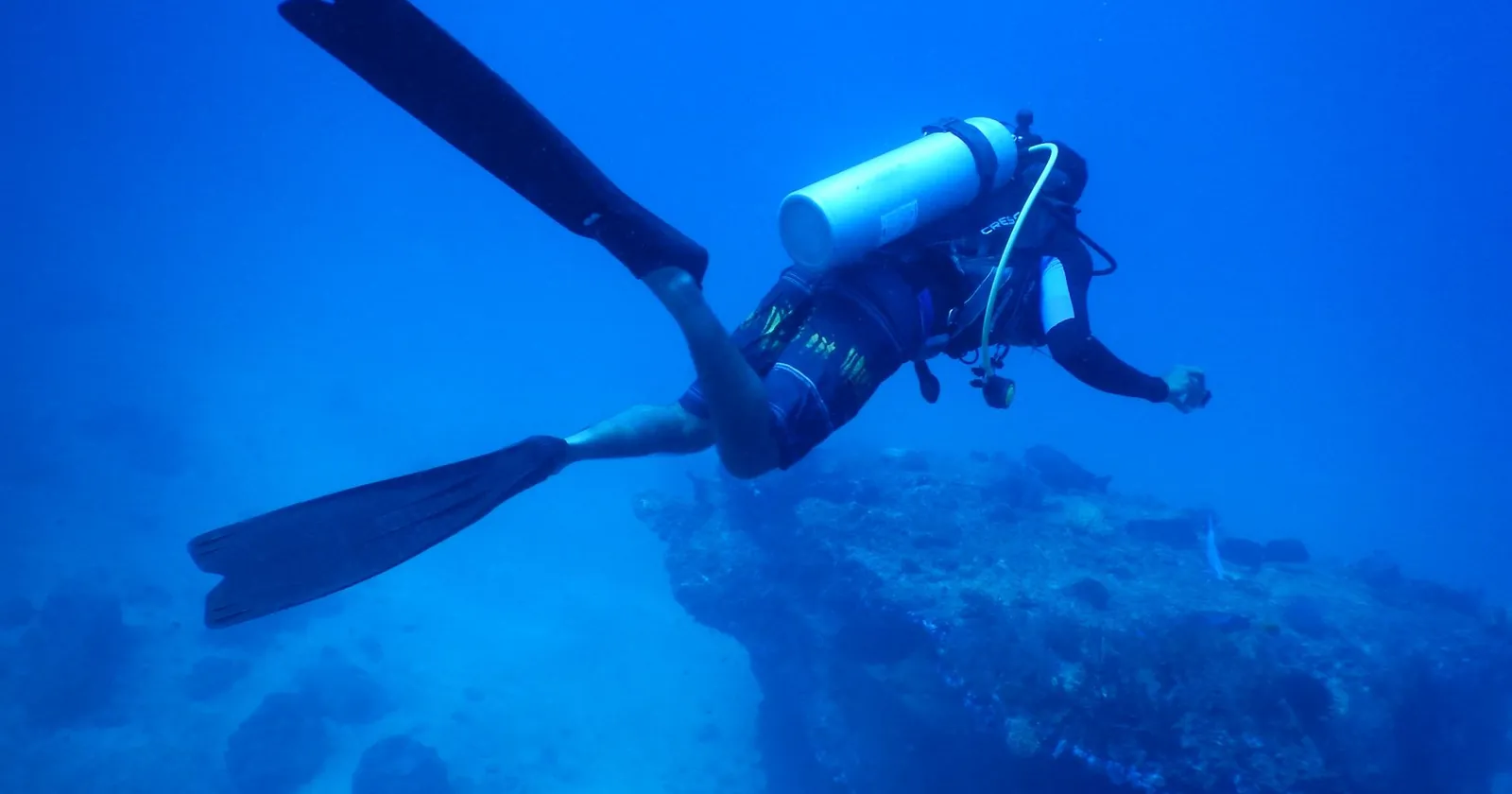
Photo: Debal Das via Pexels (free license).
Get fitted and weighted on a course; no gear replaces the buddy rule and diving within your limits.
Simple and selective; skills matter far more than the weapon.
Browse on Amazon →Ditchable weights and a visible float are safety-critical.
Browse on Amazon →Fitted freedive kit beats cheap mismatched pieces.
Browse on Amazon →Recommendations by type and spec, not a tested product ranking; confirm fit/size with a shop. Any price is live at the retailer. See our disclosure.
Key takeaways
- Core kit: spear/gun, wetsuit, weight belt, fins, mask, knife, float + flag.
- Safety-critical: quick-release weight belt and the float with dive flag.
- Start simple: a pole spear or a modest speargun; skills over weapon.
- Get weighted on a course; be buoyant at the surface, never overweighted.
- No gear replaces the rules: never dive alone, dive within your limits.
The spear: pole spear or speargun
A pole spear (a simple spear powered by a stretched rubber loop) is a great affordable start: simple, selective, and it forces good, close diving. A modest speargun adds range and power and suits many fisheries. The right first choice depends on what and where you fish and local advice. Whichever you pick, freediving skill matters far more than the weapon.
Safety-critical: weight belt and float
- Weight belt with quick-release: offsets your wetsuit's buoyancy, and must ditch instantly in an emergency. Correct weighting (buoyant at the surface, never overweighted) is a safety issue, get it checked on a course.
- Float and dive flag: makes you visible to boats (often a legal requirement), holds your catch and line away from your body, and gives you a rest point. This is essential, not optional.
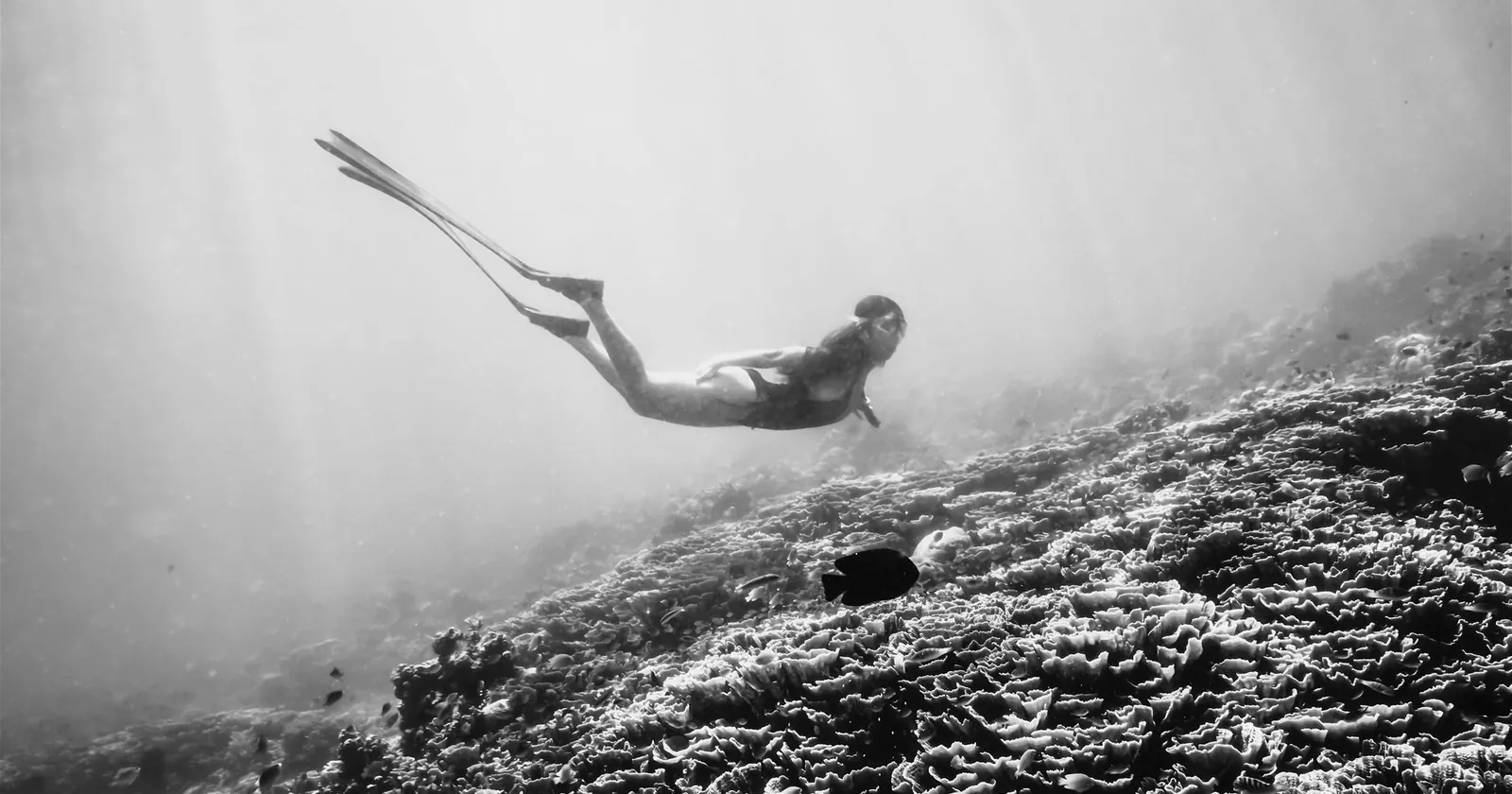
Wetsuit, fins, mask and knife
- Freediving wetsuit: often a two-piece with an open-cell interior for warmth; camo patterns are common. Warmth lets you dive longer and safer.
- Long freediving fins: efficient, so you use less oxygen than short fins.
- Low-volume mask and snorkel: a small mask is easy to equalise and clear; a simple snorkel.
- Knife: for safety (line entanglement) and dispatching catch humanely.
- Gloves: protect your hands on rock and fish.
The two things the fatality data says, and one of them is a surprise
The weight belt and float above are on this page because of how people die doing this. The largest review of the deaths says something more specific than “drowning”, and the biggest single factor is not the one the sport talks about.
A 2025 study went through 317 snorkelling and breath-hold diving deaths in Australia between 2000 and 2021. The median victim was 48 years old, “two-thirds were overweight or obese”, and almost half had health conditions, ischaemic heart disease and left ventricular hypertrophy among them. One-third were “likely disabled by cardiac arrhythmias”. Of the deaths, at least 137 were primary drowning, and 34 followed apnoeic hypoxia, blackout.
Read those two numbers side by side. Blackout is the risk the sport discusses, and it accounts for 34 of 317. The heart accounts for roughly a hundred. The paper's own conclusion splits by age: pre-existing conditions dominate in older participants, while hypoxic drownings “persist in younger breath-hold divers who should avoid pushing their limits without close monitoring”. Whichever group you are in, the gear on this page addresses only one of the two: a medical check-up is the other half, and it is not sold in a dive shop.
And where blackout actually happens. DAN puts it plainly: “99 percent of blackouts happen either at the surface or within 16 feet of it”. Not at depth, at the top, the moment the diver relaxes and the buddy looks away. Which is why the float and the buddy matter more than the speargun: “Freedivers need to have eyes on each other on every dive and be close enough to intervene if needed”, and the visible sign is “bubbles, specifically in a large release from the mouth”.
Spearfishing brands worth a look
| Item | Beginner priority | Examples |
|---|---|---|
| Spear / speargun | Simple, suited to local fish | JBL, Rob Allen, Cressi, Beuchat, Riffe |
| Wetsuit | Warm, good fit | Cressi, Beuchat, Salvimar, Mares |
| Fins | Long freediving blades | Cressi, Mares, Beuchat |
| Float + flag | Visible, tough, legal flag | Riffe, Rob Allen, Salvimar |
These are examples, not a ranked verdict; get fitted and weighted through a course or club for your body and local fishing. Browse spearfishing gear on Amazon (affiliate), and specialist freedive and spearfishing shops for guns and wetsuits.
FAQ: spearfishing gear
What gear do you need to start spearfishing?
The core kit is a pole spear or speargun, a freediving wetsuit, a weight belt with a quick-release buckle, long freediving fins, a low-volume mask and snorkel, a knife, and a surface float with a dive flag. Gloves and a dive watch or gauge are common additions. The float and dive flag are safety-critical for being seen by boats. As with all freediving, none of the gear replaces the core safety rules: never dive alone, and dive within your limits.
Should a beginner use a pole spear or a speargun?
A pole spear (a simple spear powered by a stretched rubber loop) is a popular, affordable starting point: it is simple, forces you to get close and dive well, and is very selective. A modest speargun offers more range and power and suits many local fisheries. The right first choice depends on what and where you fish, and local advice from a course or club. Either way, good freediving skills matter far more than the weapon.
Why do I need a weight belt with a quick-release?
A weight belt offsets the buoyancy of your wetsuit so you can dive comfortably, but it must have a quick-release buckle so you (or your buddy) can ditch the weights instantly in an emergency, for example if you need to get to the surface fast. Correct weighting is a safety issue in freediving: you should be positively buoyant at the surface and never overweighted. Get your weighting checked on a course rather than guessing.
Why is a float and dive flag important?
A surface float with a dive flag makes you visible to boats, which is one of the real dangers of spearfishing, and gives you somewhere to attach your catch and line and to rest. In many places flying a dive flag is also a legal requirement. It is safety-critical kit, not an optional extra, and it helps keep your fish away from your body, which is sensible where larger predators may be attracted to a struggling or bleeding catch.
Should I buy or rent spearfishing gear?
Most spearfishing gear is personal and fitted (wetsuit, mask, fins, weighting), so people tend to buy rather than rent, but a course or club is the best place to try gear and get advice before you spend. Start with quality safety-critical items (a well-fitting mask, correct weighting with a quick-release belt, and a float and flag), a suitable wetsuit and fins, and a simple first weapon. You can add and upgrade as your skills and local fishing dictate.
Yannick Schroth
Founder of NOMADREEF and a former digital nomad. This guide explains spearfishing gear categories and beginner priorities; brand names are examples, and fit and weighting should be set on a course. Gear does not replace the safety rules, never dive alone. About the author · LinkedIn ↗
Sources
- What actually kills snorkellers and breath-hold divers. Lippmann JM, “Snorkelling and Breath-Hold Diving Fatalities in Australia — A Review of 317 Deaths”, International Journal of Environmental Research and Public Health, 2025, doi 10.3390/ijerph22010119, using the Australasian Diving Safety Foundation database and the National Coronial Information System for 2000–2021: median age of the 317 victims 48, “two-thirds were overweight or obese”, almost half had health conditions including ischaemic heart disease and left ventricular hypertrophy, “One-third of victims were likely disabled by cardiac arrhythmias and at least 137 deaths were from primary drowning, with 34 following apnoeic hypoxia”; the paper concludes that hypoxic drownings “persist in younger breath-hold divers who should avoid pushing their limits without close monitoring”. Australian data, quoted as such. europepmc.org. Read 12 September 2026.
- Where blackouts happen, and what the buddy is for. Divers Alert Network on freediving safety: “99 percent of blackouts happen either at the surface or within 16 feet of it”; “Freedivers need to have eyes on each other on every dive and be close enough to intervene if needed”; and for deeper or longer dives, “buddies may need to meet the diver at one-third their depth to ensure protection of the airway in case of an underwater blackout”. On recognising one: “Bubbles, specifically in a large release from the mouth, are the universal sign of a blackout”, and the rescue sequence is “1. Recognize. 2. Retrieve. 3. Revive. 4. Recover.” dan.org, shallow-water blackout. Read 12 September 2026.
- Spearfishing and freediving gear conventions (weighting and quick-release, float and dive flag, freedive fins).
- Our own how to start spearfishing and freediving safety guides.