Best Watersports Destinations in Southeast Asia
 by Yannick SchrothAug 3, 20266 min read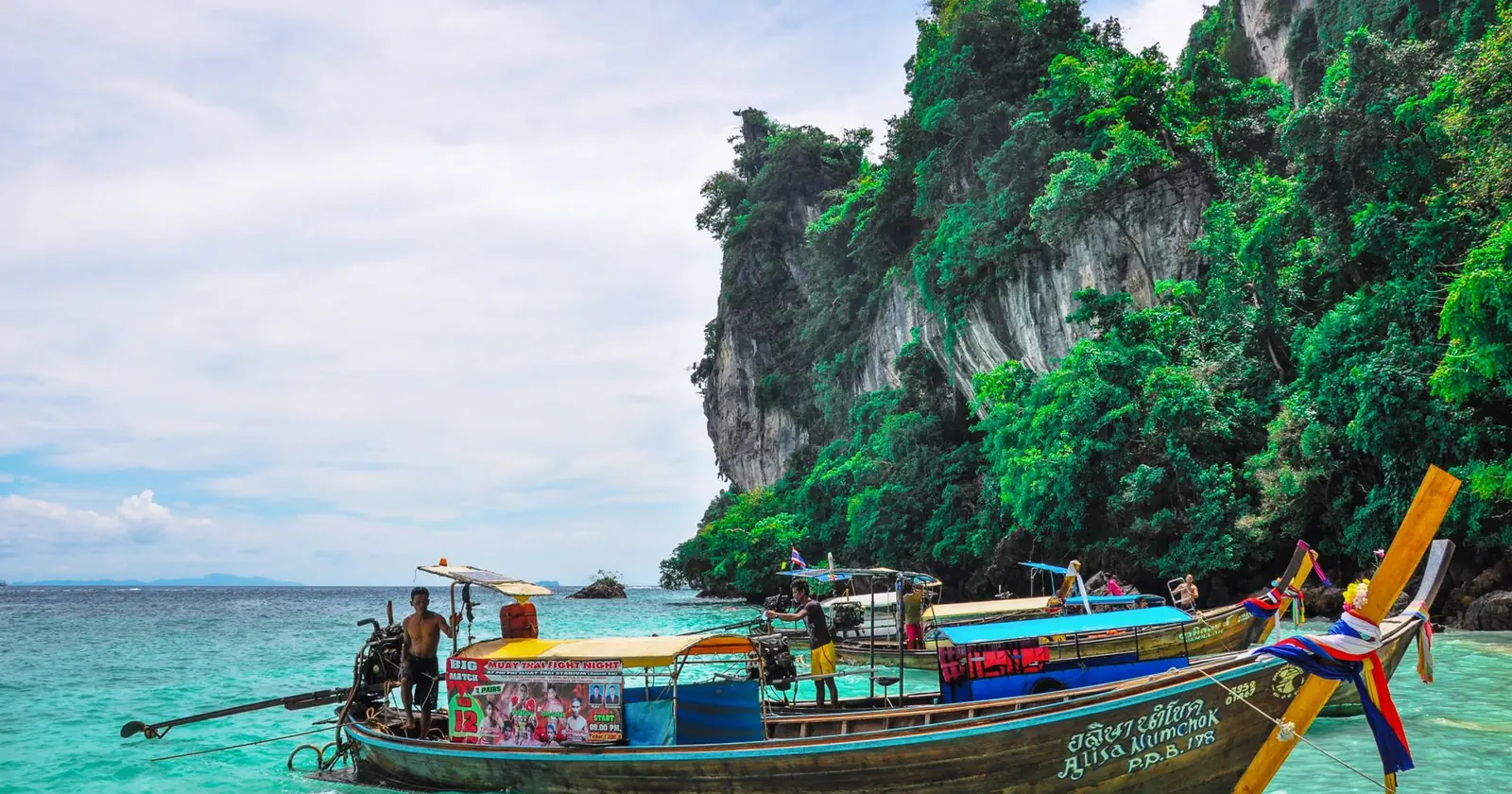
Photo: jaspreet kaur / Pexels.
What makes a good Southeast Asian base
Southeast Asia is where cost and water quality overlap most generously, so the selection is less about finding good water than about which places also survive a working month. Connectivity is the usual failure point, and monsoon timing the other: this region rewards moving with the seasons rather than picking one base and hoping.
On the legal side, two countries here now have a proper remote-work route rather than a tourist workaround: Indonesia through the E33G remote worker visa and Thailand through the Destination Thailand Visa. Both guides are checked against the issuing authority.
Canggu, Bali
Bali's biggest surf-and-nomad hub, mellow beginner waves and the best coworking on the island.
Surf, IndonesiaRead the guide → 8°50′S 115°05′E · IndonesiaUluwatu, Bali
Bukit-peninsula reef breaks and clifftop warungs, a dry-season surf machine.
Surf, IndonesiaRead the guide → 9°57′N 123°23′E · PhilippinesMoalboal
A year-round sardine run and turtles off the beach at rock-bottom Philippine prices.
Diving, PhilippinesRead the guide → 9°33′N 123°46′E · PhilippinesPanglao, Bohol
Balicasag walls, easy reefs and a well set-up nomad base in the Visayas.
Diving, PhilippinesRead the guide → 12°00′N 120°12′E · PhilippinesCoron, Palawan
World-class WWII wreck diving and karst lagoons in warm Palawan water.
Diving, PhilippinesRead the guide → 11°12′N 119°25′E · PhilippinesEl Nido
Jaw-dropping island-hopping and snorkelling in Bacuit Bay.
Islands, PhilippinesRead the guide → 9°51′N 126°03′E · PhilippinesSiargao
The Philippines' surfing capital at Cloud 9, plus lagoons and island life.
Surf, PhilippinesRead the guide → 10°06′N 99°50′E · ThailandKoh Tao, Thailand
The world's dive-training island: cheap courses, easy reefs and a huge scene.
Diving, ThailandRead the guide → 8°38′N 98°15′E · ThailandKhao Lak (Similan)
Gateway to the Similan Islands, classic Andaman liveaboard territory.
Diving, ThailandRead the guide → 16°03′N 108°14′E · VietnamDa Nang
A cheap, fast-wifi Vietnamese beach city with a big nomad scene and seasonal surf.
Surf, VietnamRead the guide → 10°56′N 108°17′E · VietnamMui Ne
Vietnam's kite capital: strong season wind, warm water and cheap living.
Kite, VietnamRead the guide → 8°21′S 116°03′E · IndonesiaGili Islands
Calm, warm, clear water and turtles off car-free islands near Lombok.
Diving, IndonesiaRead the guide → 8°44′S 115°33′E · IndonesiaNusa Penida
Mantas and mola mola in clear water off Bali's dramatic neighbour.
Diving, IndonesiaRead the guide → 4°29′N 118°37′E · MalaysiaSemporna (Sipadan)
Sipadan's permit-limited wall dive and Mabul macro, off Malaysian Borneo.
Diving, MalaysiaRead the guide →Picking a Southeast Asia base
- Cheapest and easiest to base: the Philippines (Moalboal, Panglao) and Bali.
- Best diving: the Visayas, Palawan, and Indonesia (see the scuba roundup).
- Best surf: Bali (Canggu, Uluwatu) and Siargao; best kite: Mui Ne and Boracay.
How these Southeast Asian bases differ from each other
Southeast Asia's spread is the widest of any region here, from islands where a month costs less than a European week to bases with genuine city infrastructure.
| Base | What it is best at | Monthly cost |
|---|---|---|
| Canggu | beginner surf plus the most developed nomad scene in Bali | roughly $1,200 to $2,200 a month; pricier than the rest of Bali |
| Moalboal | cheap, world-class diving: the year-round sardine run, turtles and Pescador Island | roughly $700 to $1,100 a month; a long-stay room $250 to $450 |
| El Nido | spectacular island hopping, lagoons and snorkeling in Bacuit Bay | roughly $900 to $1,600 a month; risen with tourism |
| Siargao | island surf life, from world-class Cloud 9 to beginner waves | roughly $900 to $1,700 a month; affordable with a mild island premium |
| Koh Tao | getting certified or a short, dive-intensive stint; nomads who like a social scene | roughly $470 to $625 a month; studio ~$378 |
| Gili Islands | turtle-rich diving and snorkeling, car-free calm, and a social island break | roughly $1,000 to $1,220 a month; a bungalow $300 to $500 |
| Nusa Penida | world-class manta ray and mola mola diving off Bali | roughly $1,000 to $1,800 a month; a premium over mainland Bali |
Who these Southeast Asian bases are wrong for
Cheap and warm hides the real constraints in this region, which are connectivity, monsoon timing and how far you are from a hospital. Here is which applies where.
- Canggu:
think twice if you want quiet, empty waves or dislike traffic and crowds
- Moalboal:
think twice if you need fast, guaranteed wifi or big-city amenities
- El Nido:
think twice if you need reliable wifi or hardcore wreck scuba (try Coron)
- Siargao:
think twice if you need easy access and rock-solid infrastructure
- Gili Islands:
think twice if you need reliable bandwidth; the wifi is the weak point
- Nusa Penida:
think twice if you are a new diver (strong currents) or need reliable wifi
1 of the 7 guides here do not state a drawback in their summary.
Southeast Asia does not have one season, it has two calendars
The thing that makes this region hard to plan is that neighbouring islands can be in opposite halves of the year. Two published calendars do most of the explaining.
The first is the typhoon count. The Japan Meteorological Agency has kept monthly numbers for the western North Pacific since 1951, and its 1991–2020 normals run 0.3 in January and February, 1.7 in June, 3.7 in July, 5.7 in August, 5.0 in September and back down to 1.0 in December, for 25.1 a year. That curve is the single best summary of when the Philippines and the South China Sea are easy and when they are not.
The second is the Philippine season definition, which PAGASA publishes rather than leaves to custom: the rainy season from June to November and the dry season from December to May, the dry half splitting into a cool dry season, December to February, and a hot dry one, March to May. Add the detail that the country's average monthly humidity runs from 71 per cent in March to 85 per cent in September, and the shape of a year's travel falls out of it: dive and kite in the cool dry months, take the rainy season cheap and wet, and plan August around the forecast rather than the brochure.
FAQ: Watersports Destinations in Southeast Asia
Where are the best watersports in Southeast Asia?
For diving, the Philippines (Moalboal, Coron, Panglao), Indonesia (Gili, Nusa Penida, plus Raja Ampat and Komodo by liveaboard) and Malaysia's Sipadan lead. For surf, Bali (Canggu, Uluwatu) and Siargao; for kite, Mui Ne and Boracay. Thailand's Koh Tao is the cheapest place to learn to dive.
Which is cheapest?
The Philippines and Indonesia (outside the priciest parts of Bali) and Vietnam are the most affordable, with comfortable nomad months achievable on a modest budget. See our cheapest-destinations roundup, and always verify current prices in each guide.
Sources
- The typhoon year, month by month. RSMC Tokyo – Typhoon Center, Japan Meteorological Agency, annual and monthly numbers of tropical cyclones reaching tropical storm intensity or higher since 1951. Normals 1991–2020: 0.3 (Jan), 0.3 (Feb), 0.3 (Mar), 0.6 (Apr), 1.0 (May), 1.7 (Jun), 3.7 (Jul), 5.7 (Aug), 5.0 (Sep), 3.4 (Oct), 2.2 (Nov), 1.0 (Dec), annual 25.1. jma.go.jp. Read 12 September 2026.
- The Philippine seasons as defined. PAGASA, Climate of the Philippines: “(1) the rainy season, from June to November; and (2) the dry season, from December to May”, the dry season subdividing into “the cool dry season, from December to February” and “the hot dry season, from March to May”; “The average monthly relative humidty varies between 71 percent in March and 85 percent in September” (spelling as published). pagasa.dost.gov.ph. Read 12 September 2026.
- Each entry links to our full guide for that place, and those guides carry the external sources and read dates behind the claims summarised here. They are where the readings are recorded, not the evidence for them: Canggu, Uluwatu, Bali, Moalboal, Panglao, Bohol, Coron, Palawan, El Nido, Siargao, Koh Tao, Khao Lak (Similan), Da Nang, Mui Ne, Gili Islands, Nusa Penida, Semporna (Sipadan).