Mauritius Diving: Two Marine Parks, the Dolphin Rules and the Reef the Wakashio Hit
 by Yannick Schroth
Sep 24, 2026
18 min read
by Yannick Schroth
Sep 24, 2026
18 min read
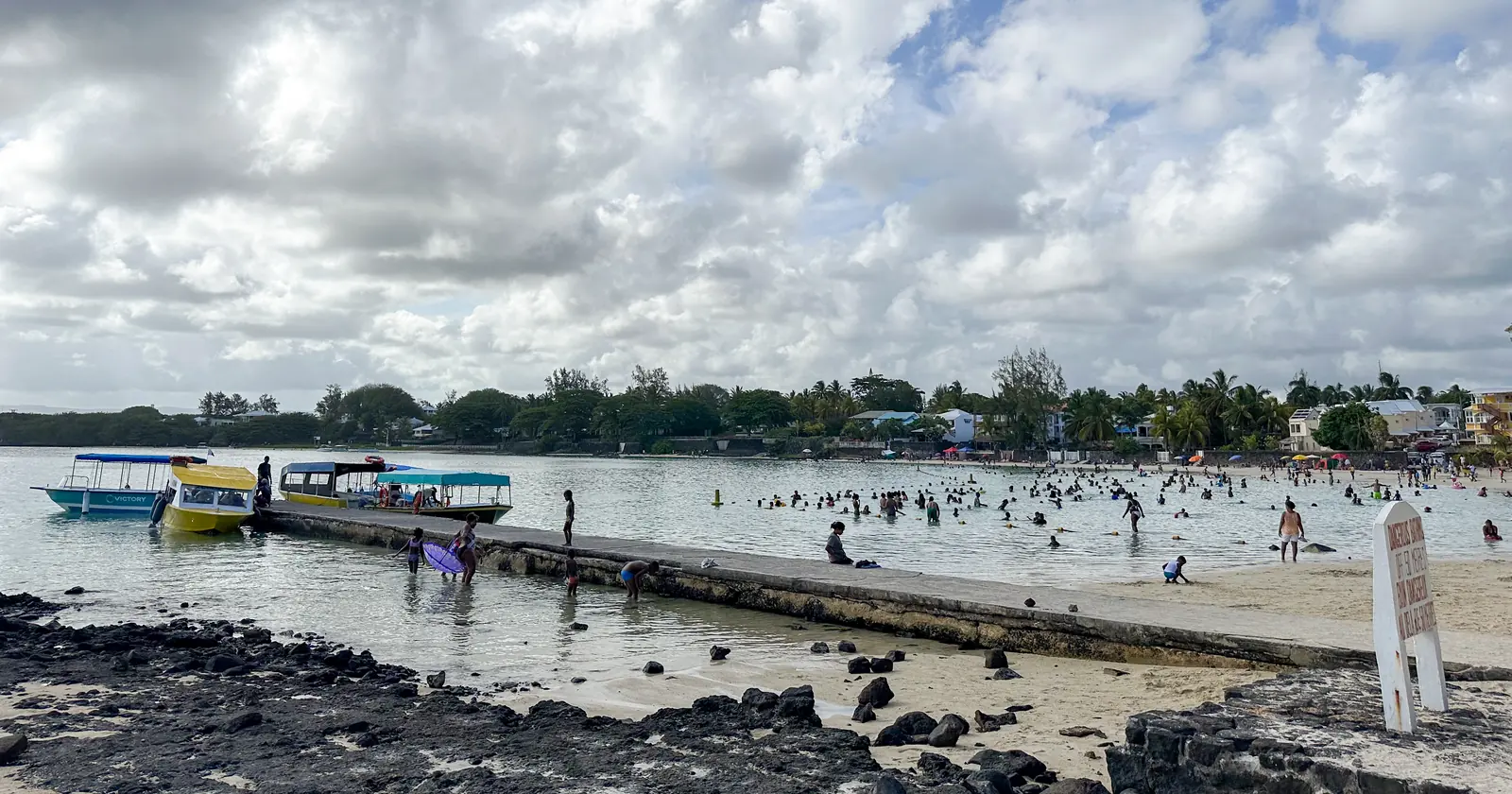
Photo: dronepicr, Wikimedia Commons, CC BY 2.0.
.jpg)
Key takeaways
- Operating a scuba diving center is a licensed tourist enterprise under the Tourism Authority Act 2006, and a business trading from fixed premises must display that license where customers can see it
- Blue Bay Marine Park covers 353 hectares and Balaclava 485; inside both, nobody may take, kill or feed marine life without a permit, and no diver may enter the water unless the boat flies the A-flag
- Paid dolphin swims are legal only from licensed boats between 06:00 and noon, three people in the water at a time including the life-saver, and swimming, diving or snorkeling with whales is banned outright
- The Fisheries Act 2023 bans swimming with turtles as a recreational activity and the possession of native coral, dead or alive, without an authorization
- Mauritius Meteorological Services treats 1 November to 15 May as the tropical cyclone season
A Mauritius dive center operates under a Tourism Authority license
The document that makes a dive shop legal in Mauritius is not a training agency certificate. The Tourism Authority Act 2006, in force since 1 May 2007, lists in Part B of its First Schedule the activities that count as a tourist enterprise, and operating a scuba diving center is one of them, alongside operating a helmet diving center and the two dolphin activities. Section 26(1) says no person may run a tourist enterprise without a tourist enterprise license.
Section 28 makes the license valid for 12 months from issue, and section 29 lets it lapse if it is not renewed within 30 days of expiry. Running a tourist enterprise without one is an offense under section 26(8), with a fine of Rs 10,000 to Rs 100,000 and up to two years in prison. On a second conviction, section 26(9) raises that to Rs 20,000 to Rs 200,000 and up to five years.
There is one carve-out, and it matters for boat-only operators. Section 26(2) says that, unless the Authority determines otherwise, no tourist enterprise license is required where the person using a pleasure craft for commercial purposes holds a pleasure craft license for that craft. Pleasure craft are registered and licensed separately under Parts V and VI of the same Act, and the person driving one needs a skipper's license under Part VIII.
Two sections turn the license into something a customer can check. Section 31A requires anyone running a tourist enterprise from fixed premises to display a copy of the license at a conspicuous place, on pain of a fine of Rs 3,000 to Rs 25,000. Section 39(3), read with the Second Schedule, forbids trading under a business name containing words such as Diving, Scuba diving or Helmet diving without holding the license. A shop with Diving in its name is making a claim you can ask to see.
None of this runs through the training agencies. The Mauritius Scuba Diving Association describes itself as the national scuba federation, set up in 1988 at the request of the Minister of Youth and Sports, recognized as the national federation in 1990 and a member of CMAS since 1989. Its label, in its own words, guarantees divers that standards and procedures are adhered to. That is a sports federation's label; the license under section 26 is the Tourism Authority's.
Where dive boats may go inside the two Mauritius marine parks
The fisheries ministry counts eight marine protected areas around the main island, and two of them are marine parks: Blue Bay and Balaclava. The other six are fishing reserves, at Poste Lafayette, Poudre d'Or, Trou d'Eau Douce, Port Louis, Grand Port Mahebourg and Rivière Noire. Both parks were proclaimed national parks under the Wildlife and National Parks Act in October 1997 and designated marine parks in June 2000 under the Fisheries and Marine Resources Act 1998.
Blue Bay covers 353 hectares on the south-east coast, from Pointe Corps de Garde in the north to Pointe Vacoas in the south, and was listed as a Ramsar wetland of international importance on 31 January 2008. The regulations draw its outer edge one kilometer beyond the coral reef and split the water into zones, each described by grid coordinates in the Third Schedule.
The zone that matters most to a diver is tiny. Strict conservation zone A, about 8.9 hectares off the Blue Bay coast, is where regulation 27 allows a glass-bottom boat or a boat carrying snorkelers or divers, on a time schedule the Permanent Secretary may set. Strict conservation zone B, about 29.7 hectares around Pointe Hélène, admits no boat of any kind; the only activity regulation 27 opens there is pole-and-line fishing from the shore.
The conservation zone, about 146 hectares, takes in Ilot des Deux Cocos and the water up to 100 meters beyond the outer edge of the reef, and boats in it may not exceed 3 knots or raise a wake. The 162-hectare multiple use zone runs from that line out to the park boundary. The regulations call it the zone where a specified range of recreational activities is permitted, against a limited number in the conservation zones.
Balaclava is larger, at 485 hectares, and runs along the coast of the Pamplemousses district from Petite Pointe aux Piments to Batterie des Mortiers, with a lagoon along its whole length and a boundary one kilometer seaward of the fringing reef. Its conservation zone of about 167 hectares reaches roughly 100 meters beyond the reef crest, with a 313-hectare multiple use zone outside it. Regulation 29 lets boats carrying snorkelers and divers use that conservation zone, subject to the permit rule in regulation 19(2).
That permit rule is worth reading twice. Regulation 19(2) says no person may enter into or remain in any conservation zone unless he holds a permit, and regulation 20(2) says the same of the strict zones. The permits in the ministry's fee table go to boats and businesses: Rs 5,000 a year or Rs 100 a week for a boat, and Rs 5,000 a year for a commercial activity permit covering glass-bottom boats and boats carrying snorkelers or divers, applied for with the operator's tourist enterprise license.
What a diver may not do inside a Mauritius marine park
Regulation 8 is the core of it. Inside a marine park, no person may take or kill any marine flora or fauna, fish, feed any marine fauna, carry fishing equipment or do research without a permit. The regulations define marine fauna to include the skeleton or shell of an animal, dead or alive, so a shell lifted off the bottom counts. Regulation 5(1) adds that nobody may collect or remove sand, rock or rubble from a marine protected area without a permit.
The dive boat carries most of the rest. Under regulation 12(3), a boat inside a park may drop anchor only in a mooring zone, may not stay tied to a mooring placed for dive or snorkel boats for more than 90 continuous minutes, and may not let any diver or snorkeler enter or remain in the water unless it is flying the A-flag. Every boat entering a park needs a permit for that boat under regulation 12(1).
Two rules catch people in the water rather than boats. Traffic lanes, ten meters wide and marked by white buoys with vertical red stripes, are closed to swimming, snorkeling and diving under regulation 21(3). Regulation 24(4) goes further: no person may swim in a marine protected area anywhere other than a swimming zone, marked on its seaward side by yellow floats. The regulations name swimming, snorkeling and diving separately, so that clause is about swimmers, and read literally it covers the six fishing reserves as well as the two parks.
A first conviction under these regulations carries a fine of Rs 2,000 to Rs 20,000. A second adds up to six months in prison and a fine of Rs 20,000 to Rs 35,000; a third, up to two years and Rs 35,000 to Rs 50,000.
The rules are older than the law now above them. They were made in 2001 under the Fisheries and Marine Resources Act 1998 and amended in 2007. The Fisheries Act 2023, in operation since 12 December 2023, repealed the Fisheries and Marine Resources Act, and its section 18 leaves the declaration and management of marine protected areas to regulations.
Section 17(1) of the Interpretation and General Clauses Act keeps subsidiary legislation in force after its parent act is repealed, so far as it is not inconsistent with the new one. The ministry still names the 2001 regulations, as amended in 2007, as the ones both parks are managed under.
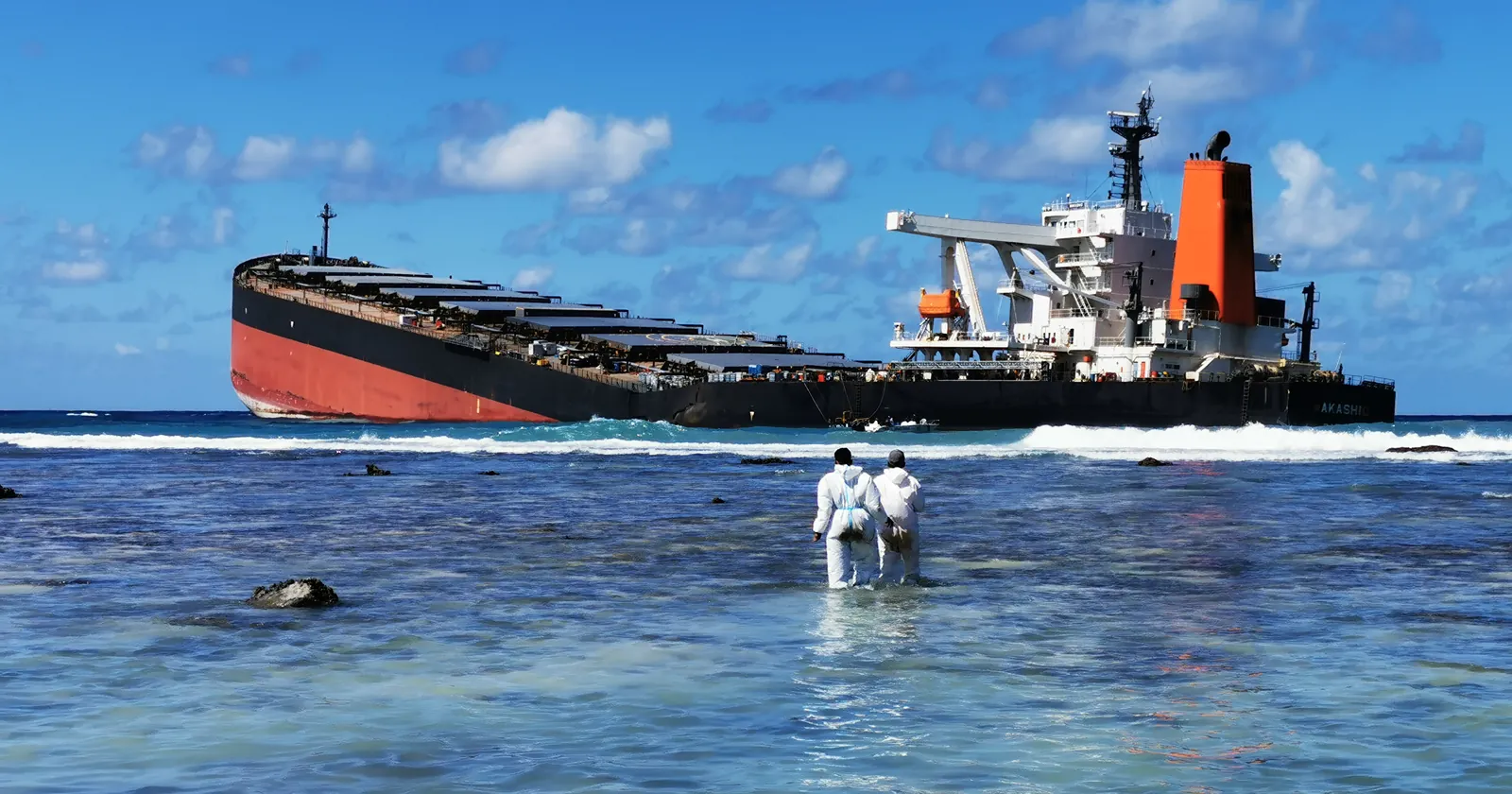
The MV Wakashio on the reef off Pointe d'Esny, 13 August 2020. Photo: International Maritime Organization (imo.un), Wikimedia Commons, CC BY 2.0.

What the Wakashio grounding did to the reef off Pointe d'Esny, Mauritius
The bulk carrier MV Wakashio ran onto the reef off Pointe d'Esny, on the south-east coast, on 25 July 2020. The IMO puts the fuel on board at about 3,894 metric tons of low-sulfur fuel oil, 207 of diesel and 90 of lubricant oil, and says about 1,000 metric tons had leaked by 11 August. An estimated 3,000 were removed before the ship broke in two on 15 August, and the bow section was sunk on 24 August about 13 nautical miles out, in some 2,000 meters of water.
The fuel was a first. A 2021 paper in Marine Pollution Bulletin calls the spill, to the authors' knowledge, the first documented one involving very low sulfur fuel oil, a fuel class introduced to meet IMO rules. Its aromatic content was relatively low, which the authors read as a potential for toxic harm that may be less than in traditional fuel oil spills. A modeling study in the same journal found winds were the primary driver of the slick, and that about 60 percent of the spilled oil beached.
The IMO's summary lists Blue Bay Marine Park among the ecologically sensitive areas the spill affected. The government's Court of Investigation, whose 223-page report was released in October 2025, gives a narrower account of the park itself. It found that the oil, under south-easterly currents, passed between Ile aux Aigrettes and the shore and drifted north to Pointe du Diable, and that protection booms first laid off Blue Bay were of no use, because the oil was moving away from the park.
The booms, the court added, did more harm than good, because they were damaging the corals in the lagoon. In the court's account, then, the harm the response did to the park came from the booms, and the reef damage it describes in detail is at the grounding site off Pointe d'Esny.
That damage is mostly physical. Several hundred meters of reef were physically damaged where the ship struck the outer reef, and more as it drifted about 1,800 meters north along it. A joint survey on 27 February 2022 by the Mauritius Oceanography Institute and the fisheries ministry's research station at Albion, with the coast guard, found an area of about 3,000 by 150 meters affected by sediment, up to about a meter thick near the grounding site, where the reef structure was completely buried.
Farther out the sediment thinned to centimeters and then millimeters. The survey recorded a few soft corals and turf algae colonizing the reef, a few crown-of-thorns starfish, and clear water. The court concluded that the physical damage had definitely reduced coral cover, noted coral nursery work by NGOs with the ministry, and said the experts could not yet estimate how many years at least partial recovery would take.
For a diver, access is the practical point. The report says recreational activities on the affected shoreline were authorized again in November 2020, while fishing was still banned at the grounding site when the court wrote. Oil also lingers where divers do not go: sediment sampled in March 2023 in one of two Mauritius mangrove systems still carried weathered Wakashio fuel, according to a 2024 study in Marine Pollution Bulletin.
Mauritius dolphin trips: three swimmers, mornings only, no diving within 500 meters
Dolphin and whale watching in Mauritius runs under the Tourism Authority (Dolphin and Whale Watching) Regulations 2012, in force since 1 November 2012 across the territorial sea. They separate two activities: watching from a boat, and watching together with swimming with dolphins. Each needs its own license, a skipper certified by the Authority, an Authority label on the boat and an approved propeller guard. The swim version also needs a life-saver aboard, a first aid kit, an oxygen kit and liability insurance.
The distances are written as zones. Within 50 meters of the closest dolphin, or 100 meters of the closest whale, is the prohibited zone, where no boat may operate. From 50 to 150 meters for a dolphin, and from 100 to 200 meters for a whale, is the regulated zone, crossed at no-wake speed. Boats must approach from the side and run parallel; approaching from behind or head-on, circling, driving through a pod, feeding, touching and making noise to attract the animals are all banned.
Whales get a flat rule. Regulation 8(1)(b) says no person may swim, dive or snorkel with a whale, and the Tourism Authority reminded operators in a communiqué of 5 July 2024 that letting passengers do so during a watching trip is an offense. Only dolphins can be swum with, and only on the terms below.
Paid trips are limited to the morning. Regulation 9 first allowed watching from 06:00 to noon and swimming only from 06:00 to 09:00; an amendment gazetted on 29 December 2012 replaced 09:00 with noon, so both now end at midday unless the Authority authorizes otherwise in writing. No more than three people may be in the water at once, and that count includes the life-saver. Each swimmer signs a disclaimer and is briefed on calm and silent swimming first.
The clause that reaches a scuba diver directly is regulation 10: no person may knowingly do kite surfing, jet skiing, paragliding, diving or windsurfing within 500 meters of the closest dolphin or whale. It applies to everyone, not only to dolphin boats, which is why it also binds kiters on the Le Morne lagoon. The Fisheries Act 2023 adds that no person may take, harass, intentionally feed or intentionally kill a marine mammal.
Two clauses sit awkwardly together. The licensed swim activity is defined as entering the sea from a boat to swim, dive or snorkel with dolphins, while regulation 10 bars knowingly diving within 500 meters of one. The regulations do not reconcile them. For someone on scuba the safer reading is simple: a dive boat is not a licensed dolphin-swim boat, and a pod near the site is a reason to wait.
The Mauritius Fisheries Act 2023 bans recreational swimming with turtles and keeping coral
The Fisheries Act 2023 came into operation on 12 December 2023. Most of it concerns fishing fleets, but one clause reads directly on a dive boat. Section 33(3)(a) says no person may take, swim with as a recreational activity, harass, intentionally feed or intentionally kill any marine turtle, on shore or at sea. A turtle met on a dive is something to watch from a distance; a trip sold as swimming with turtles is the activity the section names.
Section 33(1) lists what nobody may fish, store, land, sell or possess without an authorization. It includes marine turtles and their carapaces, marine mammals, sea urchins and native coral, whether dead or alive. Coral is on the list by name, so a fragment picked up on a beach is covered as much as one broken off a reef. A contravention of section 33 is a Level 3 offense, with a maximum fine of Rs 25 million and up to two years in prison.
Spearfishing sits under two sections. Section 38(1)(f) says no person may fish with, or possess, a spear gun unless he holds a valid and applicable license. Section 129 says underwater fishing needs its own license, which may be issued only for catching ornamental fish or another purpose the supervising officer decides.
The same section closes the scuba route completely. No person may be in possession of a diving cylinder for the purpose of underwater fishing, and anyone found with fish and a cylinder together is deemed to have been fishing underwater. That is a Level 5 offense, with a maximum fine of Rs 50 million and up to ten years.
The Mauritius cyclone season runs from 1 November to 15 May
Mauritius Meteorological Services defines the tropical cyclone season as the period from 1 November to 15 May of the following year, and notes that a storm can still form outside it, in which case the warning center activates as normal. Its climate page describes a warm, humid summer from November to April and a relatively cool, dry winter from June to September, with May and October as transition months. The wettest months are February and March; the driest is October.
Warnings come in four classes, all keyed to gusts of 120 km/h. Class I is issued 36 to 48 hours before such gusts are expected, Class II so as to allow about 12 hours of daylight, Class III about six hours of daylight, and Class IV once the gusts are being recorded. The service also issues heavy swell and high wave warnings, and a wave rider buoy it launched off the Blue Bay coast in September 2009 monitors high waves.
For a diver the practical reading is short. A trip between November and mid-May carries weather risk you cannot book around, so read the dive center's cancellation terms and check what your dive insurance covers before paying a deposit.
Mauritius treats diving accidents in a state hyperbaric medicine unit
Mauritius has a public unit for diving accidents. The Pay Research Bureau's 2024 review of civil service pay describes a Hyperbaric Medicine Unit in the Ministry of Health and Wellness, whose doctors accompany patients inside the decompression chamber and whose nursing officers attend to diving accident patients, and to emergencies such as carbon monoxide poisoning, during and beyond normal working hours.
Its address and opening hours are not in that document. Before the first dive, ask the dive center where it would take an injured diver and how, and carry the emergency number your dive insurer gives you.
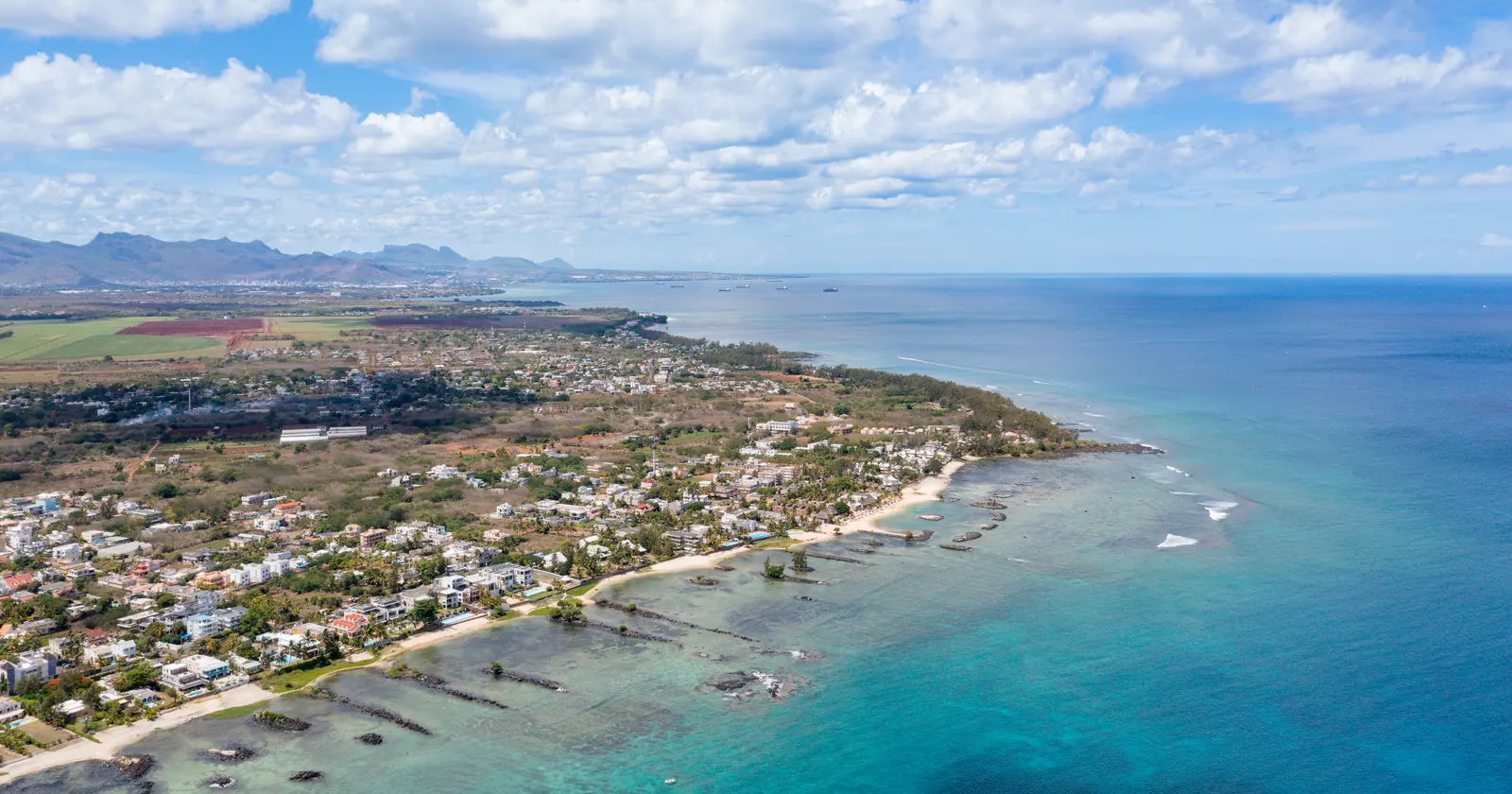
Trou aux Biches from the air. Photo: dronepicr, Wikimedia Commons, CC BY 2.0.
.jpg)
Nine SSI dive centers in Mauritius, from Trou aux Biches to Blue Bay
The Mauritius operator list holds 17 watersports businesses, read on 24 September 2026. Nine are dive centers published by SSI in its register of affiliated centers, and SSI files them under six towns: two each at Trou aux Biches, Grand Baie and Flic en Flac, and one each at Pereybere, Blue Bay and Pamplemousses. The other eight are kite schools, seven at Le Morne and one filed at Bel Ombre.
Twelve of the 17 appear in the SSI, IKO or VDWS registers. A register's town field records where the body files a business, not where its boats go, and an SSI listing is not the tourist enterprise license described at the top of this page. SSI rates three of the nine dive centers for Extended Range and one of those three for Freediving, which describes the listing rather than a course running this season.
Flic en Flac, where two of the nine are filed, is also where a 2007 Tourism Authority regulation caps pleasure craft at 5 knots between the shore and the reef, from Villa Caroline to Pointe du Sud at Baie du Tamarin. What each register can and cannot tell you is set out on which registers can be read.
FAQ: scuba diving in Mauritius
Do you need a permit to dive in Blue Bay Marine Park?
The permits the fisheries ministry lists go to boats and businesses, not to individual divers. A boat needs a permit to enter the park, and a boat carrying snorkelers or divers needs a commercial activity permit of Rs 5,000 a year. Regulation 19(2) still says no person may enter a conservation zone without a permit, so dive from a boat that holds one, and only in the zones the regulations open to dive boats.
Can you dive with dolphins in Mauritius?
Not on scuba from a dive boat. Regulation 10 of the Tourism Authority (Dolphin and Whale Watching) Regulations 2012 says no person may knowingly dive within 500 meters of the closest dolphin or whale. The one route the regulations open is a trip licensed for swimming with dolphins, between 06:00 and noon, with no more than three people in the water including the life-saver. Swimming, diving or snorkeling with whales is banned outright.
Is it legal to swim with turtles in Mauritius?
Not as a recreational activity. Section 33(3)(a) of the Fisheries Act 2023, in operation since 12 December 2023, says no person may take, swim with as a recreational activity, harass, intentionally feed or intentionally kill any marine turtle, on shore or at sea. A contravention of section 33 is a Level 3 offense, with a maximum fine of Rs 25 million and up to two years in prison.
When is cyclone season in Mauritius?
Mauritius Meteorological Services defines the tropical cyclone season as 1 November to 15 May of the following year, and notes that a storm can form outside it. Its climate page describes a warm, humid summer from November to April and a relatively cool, dry winter from June to September, with May and October as transition months.
Did the Wakashio oil spill damage the reef at Blue Bay?
The reef damage the government's Court of Investigation describes in detail is off Pointe d'Esny, where the ship struck and dragged along the outer reef. The court found the oil moved north, away from Blue Bay Marine Park, and that booms laid off Blue Bay did more harm than good by damaging lagoon corals. A February 2022 survey found about 3,000 by 150 meters of reef affected by sediment near the grounding site.
Note: Conditions, safety guidance and regulations change. Verify current information with official sources, including the dive operator, the park authority and the relevant government department, before you travel or dive.
Founder of NOMADREEF and a former digital nomad. This guide is sourced from the references below; conditions, prices and rules change, so verify current details, and follow qualified local guidance and safety briefings. About the author · LinkedIn ↗
Sources
- The dive center license (primary). The Tourism Authority Act 2006, Act 32 of 2006, proclaimed with effect from 1 May 2007, official copy published by the Tourism Authority: First Schedule Part B listing operating a scuba diving center, operating a helmet diving center, dolphin and whale watching and dolphin and whale watching together with swimming with dolphins; section 26(1), (2), (8) and (9) on the license, the pleasure craft carve-out and the fines; sections 28 and 29 on the 12-month validity and the 30-day lapse; section 31A on display at fixed premises; section 39(3) with the Second Schedule on business names; Parts V, VI and VIII on pleasure craft registration, licensing and skipper's licenses. Tourism Authority Act 2006 (PDF). Read 24 September 2026. The current fee for a scuba diving center license is published by the Authority only as an image schedule and is not quoted here.
- The dolphin and whale rules (primary). Tourism Authority (Dolphin and Whale Watching) Regulations 2012, GN No. 154 of 2012, Government Gazette No. 87 of 1 September 2012, in operation from 1 November 2012: regulation 2 on the prohibited and regulated zones and the definition of swimming with dolphins; regulations 3 and 4 on the licenses, certified skipper, label, propeller guard, life-saver, first aid and oxygen kits and insurance; regulation 6 on approach; regulation 8 on whales, feeding, touching, noise and circling; regulation 9 on hours, the three-swimmer limit, the disclaimer and the briefing; regulation 10 on the 500-meter radius. Regulations (PDF). The amendment moving the swimming cut-off from 09:00 to noon: Tourism Authority (Dolphin and Whale Watching) (Amendment) Regulations 2012, GN No. 228 of 2012, Government Gazette No. 131 of 29 December 2012, amendment (PDF). The reminder on whales: Tourism Authority communiqué, 5 July 2024. All read 24 September 2026.
- The Flic en Flac speed limit (primary). Tourism Authority (Flic en Flac and Wolmar Speed Limit for Pleasure Crafts) Regulations 2007, GN No. 199 of 2007, in operation from 1 December 2007: 5 knots in the stretch of sea from the high-water mark to the reef between Villa Caroline and Pointe du Sud, Baie du Tamarin. Regulations (PDF). Read 24 September 2026.
- The marine park rules (primary). Fisheries and Marine Resources (Marine Protected Areas) Regulations 2001, GN 172 of 2001, as amended by GN No. 196 of 2007: regulations 5 and 8 on interference, taking and feeding; regulation 2 defining marine fauna to include dead animals, skeletons and shells; regulation 12 on boat permits, anchoring, the 90-minute limit and the A-flag; regulations 19 to 24 on the zones, 3-knot limits, traffic lanes and swimming zones; regulations 25 to 29 and the First to Seventh Schedules on the Blue Bay and Balaclava boundaries, zone areas and permitted activities; regulation 30 on penalties. Consolidated text, FAOLEX (PDF). Read 24 September 2026.
- The parks, their areas and the permit fees (primary). Ministry of Blue Economy, Marine Resources, Fisheries and Shipping, Marine Conservation Division: eight marine protected areas on Mauritius, two of them marine parks; the 1997 and 2000 dates; Blue Bay at 353 ha and a Ramsar site from 31 January 2008; Balaclava at 485 ha from Petite Pointe aux Piments to Batterie des Mortiers; management under the 2001 regulations as amended in 2007; the boat, interference and commercial activity permits and their fees. Marine Conservation Division. Read 24 September 2026. The page places Balaclava on the north-east coast; that compass point is not repeated here, and the park is located only by the place names the page gives.
- The Fisheries Act 2023 (primary). Fisheries Act 2023, Act 15 of 2023, in operation from 12 December 2023 by Proclamation 31 of 2023, consolidated text certified by the Attorney-General's Office: section 2 definitions of fish, fishing, spear gun and underwater fishing; section 18 on marine protected areas; section 33(1) and (3) on protected species, turtles, marine mammals and native coral; section 38(1)(f) on spear guns; section 129 on underwater fishing and diving cylinders; section 207 repealing the Fisheries and Marine Resources Act; the Fourth Schedule, placing section 33(4) and section 38(3) at Level 3 and section 129(4) at Level 5, and fixing Level 3 at Rs 25 million and two years and Level 5 at Rs 50 million and ten years. Laws of Mauritius portal and National Assembly text (PDF). Read 24 September 2026.
- Why the 2001 regulations still apply (primary). Interpretation and General Clauses Act 1974, section 17(1): subsidiary enactments made under a repealed enactment remain in force so far as not inconsistent with the repealing enactment. MauritiusLII. Read 24 September 2026.
- The grounding and the fuel (primary). International Maritime Organization, Responding to MV Wakashio oil spill: grounding at Pointe d'Esny on 25 July 2020; 3,894 t of low-sulfur fuel oil, 207 t of diesel and 90 t of lubricant oil on board; about 1,000 t leaked by 11 August; about 3,000 t removed before the ship broke in two on 15 August; the bow sunk on 24 August 13 nautical miles out in 2,000 m; Blue Bay Marine Park among the sensitive areas. IMO Wakashio FAQ. Read 24 September 2026.
- The reef damage and the booms (primary). Report of the Court of Investigation into the grounding of MV Wakashio off Pointe d'Esny on 25 July 2020, under section 10 of the Merchant Shipping Act 2007: section 6.5.1 on the reef crushed at the grounding site, the drift of about 1,800 m, the joint survey of 27 February 2022 finding about 3,000 m by 150 m affected by sediment up to about 1 m thick, the soft corals, algae and crown-of-thorns, the reduced coral cover and the unknown recovery time; section 6.5.2 on recreational activities re-authorized in November 2020 and fishing still banned at the grounding site; section 6.5.3 on the oil drifting north to Pointe du Diable and the booms off Blue Bay damaging lagoon corals. Court of Investigation report (PDF, copy hosted by Maritime Safety Innovation Lab). Read 24 September 2026. The release in October 2025 and the length of 223 pages are triangulated from The Maritime Executive, Mongabay and Spill Control, because no government-hosted copy was found. Figures given by individual witnesses in the report, including a 96 km² affected area and damage valuations, are not used here.
- The fuel and where it went (primary, peer-reviewed). Scarlett AG, Nelson RK, Gagnon MM, Holman AI, Reddy CM, Sutton PA, Grice K (2021), MV Wakashio grounding incident in Mauritius 2020: The world's first major spillage of Very Low Sulfur Fuel Oil, Marine Pollution Bulletin 171: 112917, doi:10.1016/j.marpolbul.2021.112917. Gurumoorthi K, Suneel V, Trinadha Rao V, Thomas AP, Alex MJ (2021), Fate of MV Wakashio oil spill off Mauritius coast through modelling and remote sensing observations, Marine Pollution Bulletin 172: 112892, winds as the primary driver and about 60 percent of the spilled oil beached, doi:10.1016/j.marpolbul.2021.112892. Scarlett AG, Nelson RK, Gagnon MM, Reddy CM, Grice K (2024), Very low sulfur fuel oil spilled from the MV Wakashio in 2020 remains in sediments in a Mauritius mangrove ecosystem nearly three years after the grounding, Marine Pollution Bulletin 209: 117283, doi:10.1016/j.marpolbul.2024.117283. Abstracts read through Europe PMC on 24 September 2026; the publisher pages refused automated requests on that date.
- Cyclone season, climate and warnings (primary). Mauritius Meteorological Services: technical report CS 28, Cyclone Season of the South West Indian Ocean 2006 to 2007, section 2.2 defining the season as 01 November to 15 May, technical report (PDF); Climate of Mauritius for the seasons and the wettest and driest months; cyclone warning system for Classes I to IV; climate information for fisheries and marine for the Blue Bay wave rider buoy launched in September 2009. All read 24 September 2026.
- The hyperbaric unit (primary). Pay Research Bureau, Review Report 2024, Civil Service, Ministry of Health and Wellness, paragraphs 36.71 to 36.72 and 36.259 to 36.260 on the Hyperbaric Medicine Unit, the decompression chamber and the treatment of diving accident patients. PRB report, Ministry of Health and Wellness chapter (PDF). Read 24 September 2026. Gap: the chamber's address and hours were not found at any primary source. A dive club's page names a hospital for it; that is not a primary source for a safety statement, so no location is given on this page.
- The national federation (primary, self-description). Mauritius Scuba Diving Association, About us: set up in 1988 at the request of the Minister of Youth and Sports, recognized as the national federation in 1990, a CMAS member since 1989, and the wording of its label. MSDA, About us. Read 24 September 2026. Claims elsewhere that the association inspects every dive center were not found in any primary source and are not repeated here.
- The 17 businesses. Seventeen watersports businesses on the Mauritius operator list, read 24 September 2026: nine dive centers published by SSI in its register of affiliated centers, filed under Trou aux Biches, Grand Baie and Flic en Flac (two each) and Pereybere, Blue Bay and Pamplemousses (one each); eight kite schools, seven at Le Morne and one filed at Bel Ombre; twelve of the 17 in the SSI, IKO or VDWS registers; SSI program ratings of Extended Range for three dive centers and Freediving for one. The limits of each source are set out on which registers can be read.
- Left out. Where the dolphin trips leave from is not named, because no primary source for it was found. Dive site names, depths and visibility are not given, because none could be traced to a primary source.