How to Learn Kitesurfing for Beginners
 by Yannick Schroth
Jul 28, 2026
11 min read
by Yannick Schroth
Jul 28, 2026
11 min read
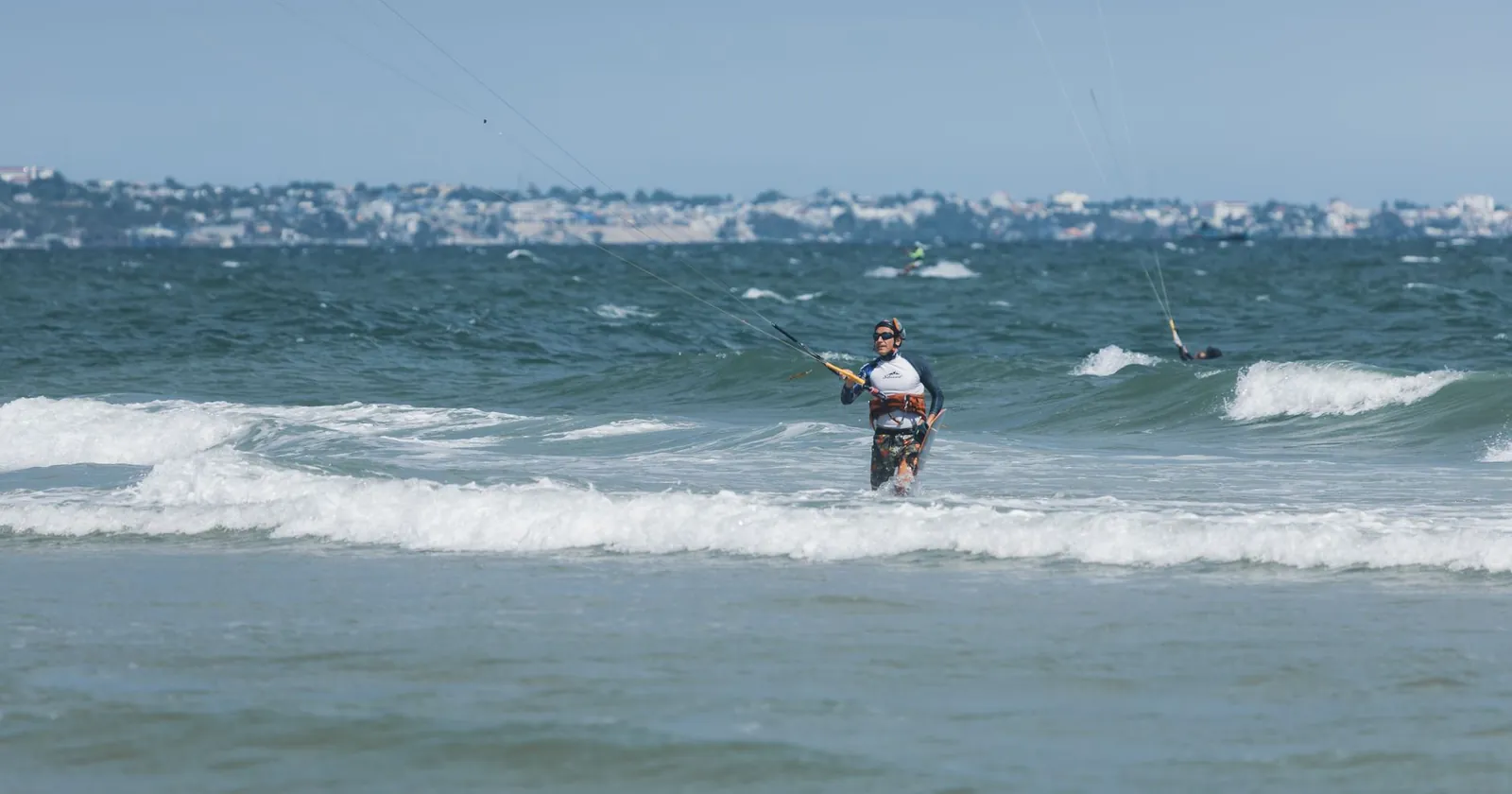
Photo: Serg Alesenko via Pexels (free license).
This is general information, not instruction. Kitesurfing must be learned in person at a certified school.
Key takeaways
- Lessons are non-negotiable. Learn at an IKO or equivalent certified school.
- Progression: kite control on land → body dragging → water start → riding.
- Timeline: ~9 to 12 hours of lessons, often 3 to 7 days, to ride independently.
- Safety systems first. Quick-release and self-rescue before any tricks.
- Be a confident swimmer; the harness, not your arms, takes the pull.
Step 1: Take lessons at a certified school
This is the one sport where self-teaching is genuinely dangerous, to you and to people on the beach. A kite on 20-plus meter lines can drag you across sand, into obstacles, or lift you, so you learn at a certified school. The IKO (International Kiteboarding Organization) system was built around safety and is the most common standard (IKO). A good school gives you the right kit, the right conditions, and, crucially, the safety systems and self-rescue before you ever get powered up. Book lessons; do not buy a kite and "figure it out".
Step 2: Master kite control on land
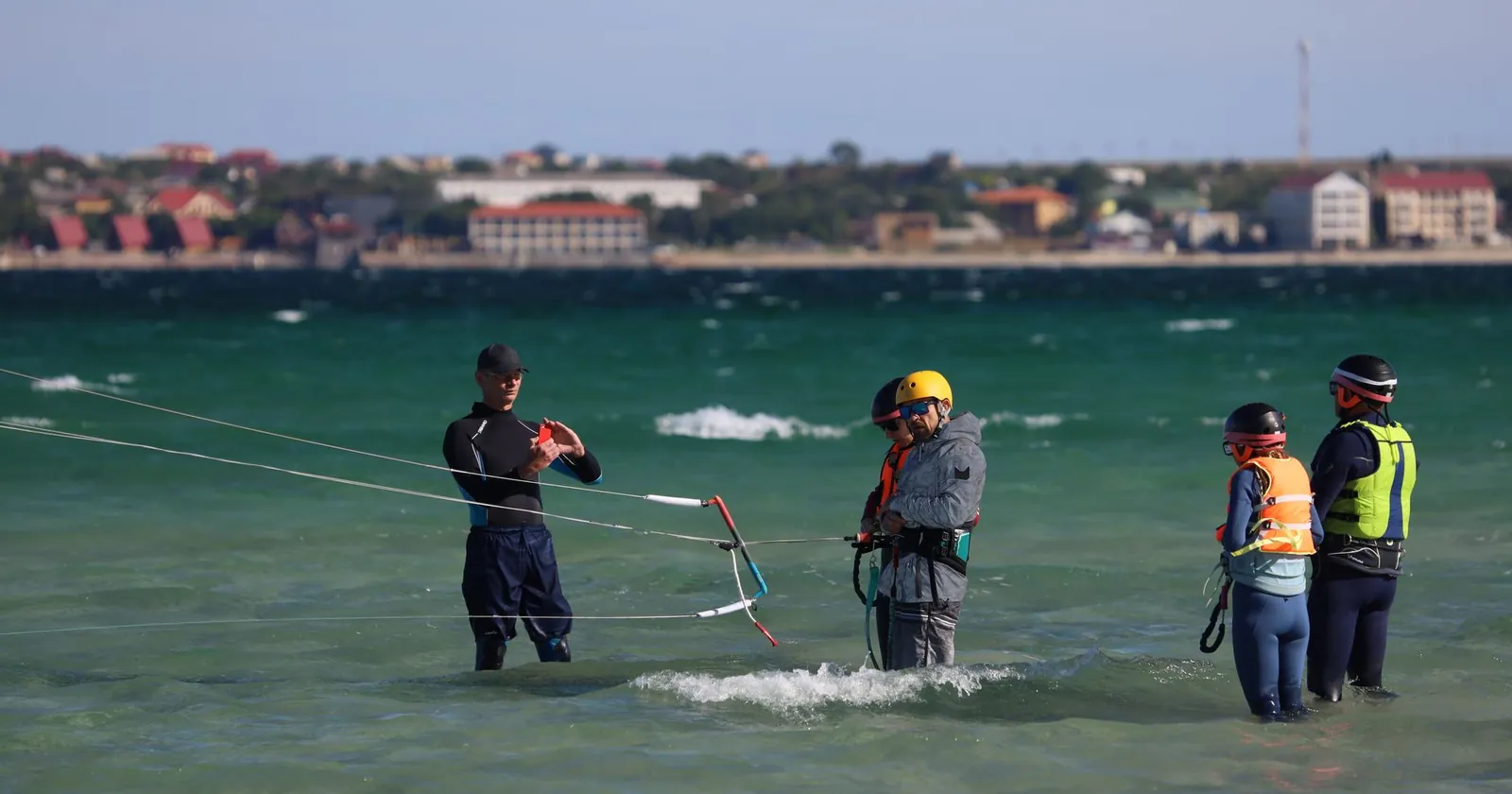
You start on the beach with a small trainer kite, learning to fly it in the wind window, steer smoothly, and control power, all without a board. This is where you build the instincts that keep you safe: where the power is, how to depower, and how to use the quick-release. It feels slow, but rushing this stage is how beginners get hurt. Only when your hands know the kite do you move to the water.
Step 3: Learn body dragging
Next, in the water without a board, you learn body dragging: using the kite to pull you through the water and control your direction. It sounds like a detour, but it is a core safety skill, it is how you recover a board you have lost, and it teaches you to manage the kite while your body is in the water. Confident body dragging is a milestone every instructor insists on before the board goes on your feet.
Step 4: Practise the water start
Now the board goes on. The water start is the key move: you dive the kite to generate a burst of power and let it pull you up onto the board and into a glide. It takes coordination and plenty of falls, everyone crashes learning this, but once it clicks, you are riding. Most three-day students are attempting water starts and getting up for a few seconds.
Step 5: Ride, stay upwind, and stay safe
The final stage is riding in both directions and staying upwind so you do not drift down the beach, plus self-rescue (packing down your kite in the water and getting back to shore). Respect the right of way (kiters have rules like surfers), give other water users space, check wind and conditions every session, and never ride overpowered or in offshore wind as a beginner. From here, progression, jumping, waves, foiling, is a lifetime of fun.
How to choose a kite school
- Certification: look for IKO (or equivalent) certified instructors and a recognized teaching system.
- Ratios and radios: small groups or private lessons, and instructors who use two-way radio helmets to coach you on the water are a big plus.
- Conditions: a school on flat, shallow water (a lagoon) with steady wind is far easier and safer to learn on than a wavy, gusty beach.
- Equipment: modern, well-maintained kites and working safety systems, ask to see them.
- Reviews and safety record: read recent, specific reviews, and choose on safety and teaching, not the lowest price.
The right school makes the difference between a frustrating, sketchy start and being safely up and riding within a week.
The one piece of hardware with a number attached
Your first lesson will spend a surprising amount of time on a plastic handle you pull when things go wrong. It is the most standardised object in the sport, and knowing the number behind it tells you what a school's gear should be.
Since 14 February 2020 there has been a worldwide standard for it. ISO 21853 covers “quick-release systems on kite bars and safety leashes”, and it sets measurable limits: a maximum release force of 170 N or less and an opening time of two seconds or less, held not only in ideal conditions but across dry and clean, dry sand, water with and without sand, and cold and wet. Conformity is certified at an independent test house, the Fraunhofer Institute in Rostock.
Two practical uses for that. When you are choosing a school, gear that postdates 2020 and states compliance is a fair proxy for a shop that replaces kit rather than running it into the ground: and it is a question you can ask without knowing anything about kites. And when you eventually buy, the bar is the component where a bargain from before the standard is a false economy, because the release is the part that has to work on the worst day of your kiting life rather than the best.
Kitesurfing vs wing foiling: which to learn?
If the learning curve or the powerful kite gives you pause, know that wing foiling is generally considered easier and gentler to start, with no long lines to manage. It is a genuine alternative for a beginner. We compare them properly in kitesurfing vs wing foiling, worth a read before you commit to lessons in either.
FAQ: learning to kitesurf
How long does it take to learn kitesurfing?
Most beginners need around 9 to 12 hours of lessons, typically over 3 to 7 days, to ride independently. After a three-day course many students reach IKO Level 2, body dragging confidently and attempting water starts. Becoming a competent, upwind rider takes more practice beyond that. Progress depends heavily on wind, conditions and how often you can practice.
Do you need lessons to learn kitesurfing?
Yes, absolutely. Kitesurfing generates powerful forces and involves a large kite on 20-plus meter lines, and self-teaching is genuinely dangerous to you and others on the beach. A certified school (IKO or equivalent) teaches kite control, the safety systems and self-rescue in the right order. This is one sport where lessons are not optional.
Is kitesurfing hard to learn?
It has a real learning curve. Managing a powerful kite on long lines, in the wind window, while also getting up on a board, is a lot to coordinate, and line management adds cognitive load. But with structured lessons most people are riding within a week. If you want a gentler start, wing foiling is generally considered easier to learn; see our comparison.
How fit and what swimming do you need to kitesurf?
You must be a competent, confident swimmer (you will spend time in the water, sometimes far from shore) and reasonably fit and coordinated. You do not need to be an athlete, as the harness takes the pull rather than your arms, but water confidence and the ability to self-rescue are essential. Get comfortable swimming before you book a course.
Where is the best place to learn to kitesurf?
Look for a spot with steady wind, shallow flat water (a lagoon is ideal) and a certified school, less crowded is safer for beginners. Classic learn-to-kite bases popular with nomads include Dahab in Egypt, Tarifa in Spain and Cabarete in the Dominican Republic. A good school will also steer you to beginner-friendly conditions.
Yannick Schroth
Founder of NOMADREEF and a former digital nomad. This guide is researched against IKO kiteboarding standards and school practice; it is not a substitute for certified, in-person instruction, which every kitesurfer needs. About the author · LinkedIn ↗
Sources
- The quick-release standard. Global Kitesports Association on ISO 21853:2020, in force “14th February 2020”, covering “quick-release systems on kite bars and safety leashes” with a “maximum release force (equal to or less than 170N) and opening time (equal to or less than 2 seconds)”, tested across dry and clean conditions, dry sand, water with and without sand, and cold and wet, and certified at the Fraunhofer Institute in Rostock. global-kitesports.org. Read 11 September 2026.
- IKO (International Kiteboarding Organization), certification levels and safety-first progression. ikointl.com.
- Kiteboarding school lesson-timeline and level guidance (context). kitecentrezanzibar.com.