Koh Lipe Diving: The Park Calendar, the Night Dive Ban and a Reef After 2024
 by Yannick Schroth
Sep 25, 2026
13 min read
by Yannick Schroth
Sep 25, 2026
13 min read
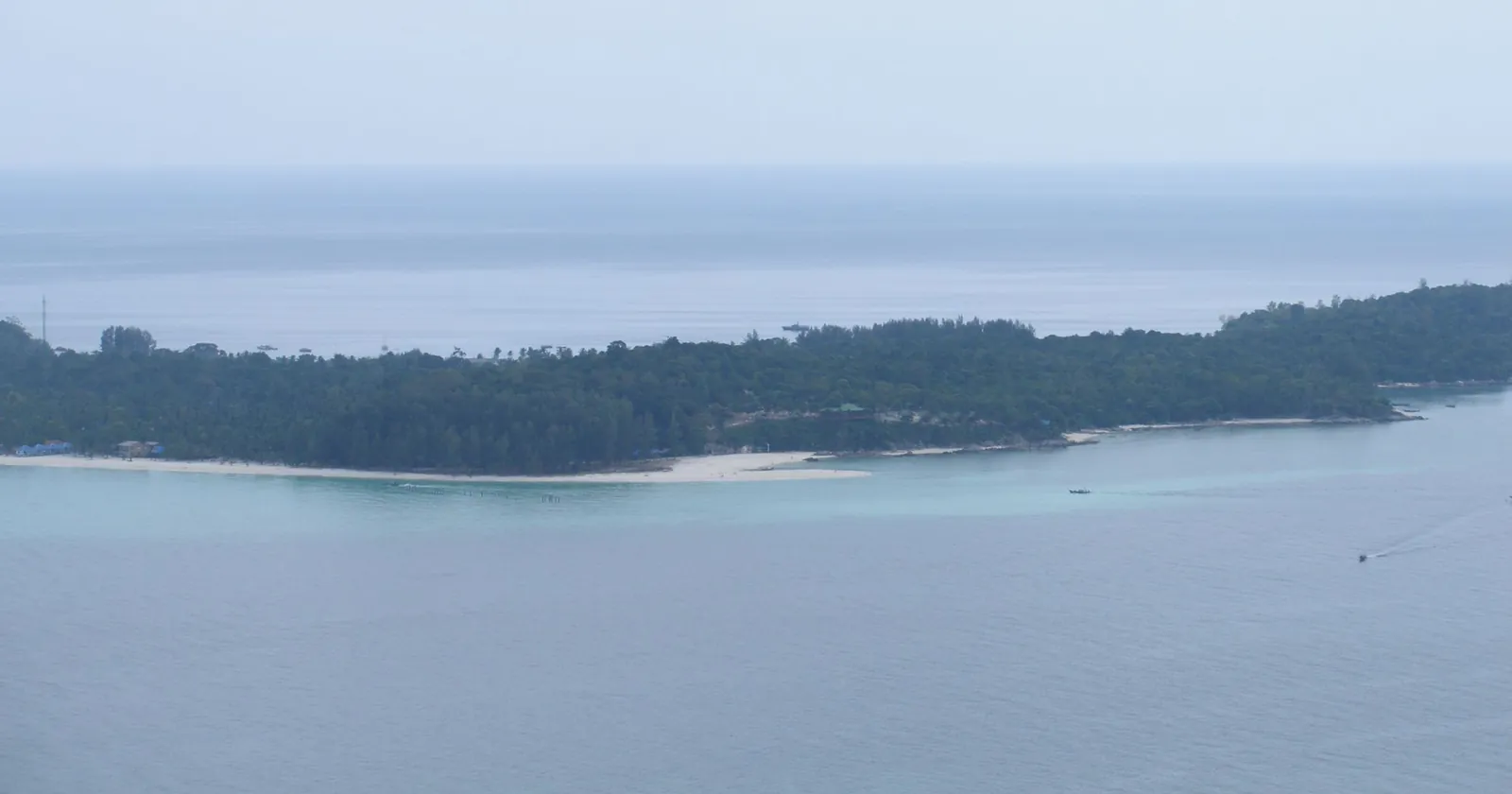
Koh Lipe from the top of Koh Adang, March 2007. Photo: Vyacheslav Argenberg, Wikimedia Commons, CC BY 2.0.
.jpg)
Key takeaways
- The 2026 closure schedule for Tarutao, dated 18 December 2025, shuts Koh Talang (Stonehenge), Koh Talang (Step), Koh Talang (Wall) and both sides of Koh Hin Ru from 1 October to 31 December 2026
- The same schedule closes Chabang, Koh Rawi at Hat Sai Khao, the south side of Koh Hin Ngam and eleven more named spots from 1 June to 30 September, and lists no Tarutao closure between January and May
- The park chief listed night diving, night plankton trips and snorkeling at Koh Talang as banned in 2018 and said so again in October 2022
- Tarutao is a band-two park under the 2021 fee regulation: 200 baht for a foreign adult, 100 for a foreign child
- Satun, the province Koh Lipe belongs to, had no reef rated damaged in 2023; after the 2024 mass bleaching, 3,695 rai were
Stonehenge and the other Koh Talang sites off Koh Lipe close from 1 October to 31 December 2026
Once a year the Department of National Parks, Wildlife and Plant Conservation publishes a schedule of which tourist sites in which parks close, and when. The one for 2026 is an annex to a department announcement dated 18 December 2025. Entry 58 is Tarutao, Satun province, and it is the document that decides where a Koh Lipe dive boat can go.
Its second block covers the last quarter of the year. From 1 October to 31 December 2026 it closes the north and east sides of Koh Adang, Koh Talang (Stonehenge), Koh Talang (Step), Koh Talang (Wall), and the east and west sides of Koh Hin Ru. The names in brackets are dive sites, written into the Thai annex as transliterations of their English names.
So in 2026 Stonehenge is shut in October, November and December, just as the monsoon closures lift elsewhere in the archipelago. The annex gives no reason for any single entry. When the 2024 edition came out, the Tarutao park chief described the schedule as a way to match each site to the weather of its season and to what the resource can carry, to let it recover, and to keep visitors safe.
Koh Talang was in good condition the last time the park wrote about it in public. A marine SMART patrol on 28 December 2021 cleared rubbish from the reef there and at Laem Son beach and reported the coral still abundant, with no threat found. Nothing published since suggests the 2026 closure is a rescue rather than a rest.
Chabang, south Hin Ngam and Rawi’s Hat Sai Khao near Koh Lipe close from 1 June to 30 September 2026
The first block of the same entry covers the monsoon months. From 1 June to 30 September 2026 the park closes Chabang off Koh Adang, Koh Yang, Koh Rawi at Hat Sai Khao, the south side of Koh Hin Ngam, Koh Phueng Noi and Koh Phueng Yai, Koh Dong at Ao Ling and at Ao Pa Nan, Koh Phai, Ao Ruea Bai on Koh Adang, Koh Sawang, Koh Palai, Koh Rok Loi and Hin Son.
The park’s own lodging goes with them. The accommodation and campsite at Laem Son on Koh Adang are closed for the same four months. Read the scope closely: only the south side of Hin Ngam is listed, and only named bays of Koh Dong and Koh Adang. The rest of those islands is not in the annex.
The weather behind the dates is ordinary Andaman monsoon. A 2007 UNESCO study of the Adang archipelago puts the monsoon season from May through October and the dry season from November to April, and records the park’s 1996 rainfall at 2,628 millimeters. The 2026 annex lists no Tarutao closure at all between January and May.
Put the two blocks together and the year has a shape. January to May, everything named is open. June to September, the Chabang and Rawi group is shut. October to December, those reopen and the Koh Talang group shuts. After May, no month in 2026 has every named site open at once.

The Koh Lipe closure calendar has changed since 2019, and mid-May to mid-October is out of date
Most descriptions of diving here repeat one rule of thumb: the park closes from mid-May to mid-October, or mid-November. That was true once. In May 2019 the park chief announced that the Adang-Rawi group would close from 16 May to 14 October 2019, and added that Koh Lipe itself and Koh Tarutao stayed open all year.
By 2024 the calendar had already split. A park announcement dated 9 May 2024, issued under section 20 of the National Park Act 2019, closed the lodging from 16 May to 30 September, Koh Lek, Koh Bissi, Koh Talang and the north and east of Koh Adang from 1 June to 31 July, and Chabang, Koh Rawi and the west of Koh Adang among others from 1 August to 30 September.
Compare Koh Talang across the two years. In 2024 it closed in June and July, inside the monsoon. In 2026 it closes from October to December, as the other group reopens. Nothing in the 2026 annex starts in May. The consensus dates are not a rule; the annex is, and it is reissued every year.
The practical consequence is simple. Before paying a deposit for a Koh Lipe trip that hangs on one site, find that year’s schedule and look for entry 58. The Tourism Authority of Thailand republished the 2026 annex in its announcements section, which is where it was read for this page.
The department treats Koh Lipe as part of Tarutao National Park
Travel pages often describe Koh Lipe as sitting outside the national park, or on its border. The department does not. In January 2023 its spokesman described the land disputes on “Koh Lipe, Tarutao National Park” as disputes over land overlapping the park, and reported that the park had brought 44 encroachment cases on Koh Lipe since 2014: 22 concluded, 18 with prosecutors and 4 in court.
The same statement described one surveyed plot of about 81 rai that overlaps homes of the original Urak Lawoi community, found two resorts operating outside it, and said buildings under final court judgments would be removed from the park area.
The history explains the tangle. The park was established in 1974, covers 1,490 square kilometers of which 85 percent is sea, and has 51 islands. The UNESCO study records that park offices opened in the Adang archipelago in 1977, and that in the 1980s the park authority pressed Urak Lawoi families on Koh Adang and Koh Rawi to move to Koh Lipe.
Land titles were still issued on Koh Lipe after the 1974 declaration. By 1998 the Satun land office counted nearly 40 percent of the island as privately owned. For a diver the point is narrower: the department treats the island and the water around it as park, so its rules on sunscreen, night diving and fishing are the ones to plan around.
What Tarutao has said Koh Lipe dive boats may not do: night dives, plankton trips, snorkeling at Koh Talang
When the marine season opened in October 2018, the Tarutao park chief issued visitor limits for each site in the Adang-Rawi group. Scuba sites were capped per time slot: 20 divers at the island the report spells Koh Tarang, 20 on the east side of Koh Yang, 30 at Koh Talu, 30 at Koh Sawang and Koh Palai, 20 at Koh Phueng and 20 at Ao Ruea Bai, every boat tied to a red mooring buoy.
Snorkel sites had their own numbers: 100 at a time at the Chabang pinnacle with every boat on a buoy, and 200 on the east side of Hin Ngam with boats kept off the beach. On Hin Ngam itself, stacking stones is forbidden. The notice banned spearfishing and fishing anywhere in the park, snorkeling at Koh Talang, every kind of dive at night, plankton-watching trips and sunset trips, and said diving businesses need a department permit.
The ban on night diving was not a one-off. When the park reopened on 1 October 2022, its chief repeated the list: no fishing, no snorkeling at Koh Talang, no diving at night and no night plankton viewing, on pain of prosecution under the National Park Act 2019.
The park’s current rule sheet could not be read directly, so treat the 2022 statement as the latest public version and ask the operator whether it still stands. If a night dive is the reason you are going, the night diving guide is better used somewhere else.
The Tarutao fee for Koh Lipe diving is the band-two rate of 200 baht
A department regulation on national park charges, published in the Royal Gazette on 9 December 2021 and in force from 7 June 2022, sorted every Thai national park into four price bands. The department’s own summary puts Tarutao in band two, alongside Mu Ko Lanta and Hat Noppharat Thara – Mu Ko Phi Phi.
Band two is 40 baht for a Thai adult and 20 for a Thai child, 200 baht for a foreign adult and 100 for a foreign child. Band four, the top one, holds only the Similan and Surin islands, at 500 baht for a foreign adult.
The band comes from the department’s announcement; the regulation text sits on the Royal Gazette server, which refused automated requests. Where on the route to Koh Lipe the fee is collected, and how long a ticket lasts, is in no source read here, so ask the operator. The Phi Phi diving guide shows how an older, higher rate can sit on top of a band.
Sunscreen on a Koh Lipe dive boat: four chemicals banned in every national park since 4 August 2021
The department announced a ban on bringing in and using sunscreen containing four chemicals that harm coral: oxybenzone (benzophenone-3), octinoxate (ethylhexyl methoxycinnamate), 4-methylbenzylidene camphor and butylparaben. It appeared in the Royal Gazette on 3 August 2021 and took effect the following day.
It rests on section 20 of the National Park Act 2019, and a breach falls under section 47, with a fine of up to 100,000 baht. The ban covers national parks, not the whole country, which is exactly why the park question in the section above matters for Koh Lipe.
The wording is a ban on bringing the product in as well as on applying it, so checking the label before you pack is the whole of compliance. Our reef-safe sunscreen guide sets the Thai rule next to the Hawaiian and Palauan ones, which ban different acts.
Every hard coral off Koh Lipe is a protected wild animal, and keeping a dead piece is barred too
Thailand’s list of protected wild animals was reissued as a ministerial regulation of 2024, published in the Royal Gazette on 24 September 2024 under the Wildlife Preservation and Protection Act 2019. Its schedule of protected aquatic invertebrates is short and sweeping.
It lists every species in the order Scleractinia, the hard corals, and all soft corals (Alcyonacea), sea fans (Gorgonacea), black corals (Antipatharia), sea anemones (Actiniaria), the fire corals of the genus Millepora, Stylasterina, the blue coral order Helioporacea, every giant clam in the subfamily Tridacninae and the triton’s trumpet, Charonia tritonis.
The Department of Marine and Coastal Resources sets out what follows from that listing. Section 12 of the Act bars hunting a protected wild animal and section 17 bars possessing one or its carcass, so a dead fragment of coral picked up on a Koh Lipe beach falls under section 17. For hunting or trading in a protected animal, section 89 sets up to ten years in prison, a fine of up to one million baht, or both.
Mantas are on the same regulation’s list of protected fish, as are several devil rays, three hammerheads and the leopard shark.
Koh Lipe’s province, Satun, had no damaged reef in 2023 and 3,695 rai of it after the 2024 bleaching
The Department of Marine and Coastal Resources publishes a reef status table by province each year. Satun has 13,426 rai of reef, about 21 square kilometers. In the 2023 survey 12,154 rai rated good, 1,272 moderate and none damaged, and the department named the south and east of Koh Adang among the Andaman reefs that had improved.
Then came the heat. Between April and July 2024 the department recorded mass coral bleaching across both the Gulf and the Andaman coasts. The 2024 table for Satun reads 7,819 rai good, 1,912 moderate and 3,695 damaged, which is about 28 percent of the province’s reef. Its average live coral cover was still 52 percent, second on the Andaman side after Phuket at 53.
That table is for the whole province, including the Tarutao and Phetra island groups, not for Koh Lipe alone. Recovery has a local record, though. After the 2010 bleaching the department measured live cover in the Adang-Rawi group growing about 4.7 percent a year on average, and about 9 percent a year at Koh Hin Ngam.
The reef type sets expectations as well. The UNESCO study, citing a 1987 survey, describes fringing reefs mostly within 50 to 300 meters of the shore at depths of three to twelve meters, with 137 of Thailand’s roughly 280 coral species and 288 fish species in the archipelago. It also records minimal damage from the 2004 tsunami. Good buoyancy control matters more on shallow reef than on a wall.
Three Koh Lipe dive centers in the SSI register, one of them filed under Satun
Our Koh Lipe operator list holds 3 dive businesses, read on 25 September 2026. All three are published by SSI in its register of affiliated centers. Two are filed under Koh Lipe and one under Satun, the province, which is the register’s own town field and not necessarily where the boat leaves from.
All three publish a website in the register, and one of those is a Facebook page. None of the three was assessed by anybody for the list, and a register entry says nothing about whether a center holds the department permit the park requires or is open this season. That is the question to put to them, alongside which sites the boat can reach in the month you are there. Which registers can be read explains what each source can and cannot show.
For the paperwork around a long stay, the Thailand digital nomad visa guide covers the DTV, and the dive insurance guide covers what a policy reaches on a remote island. For another Andaman park run by the same department, see Koh Lanta diving.
FAQ: scuba diving at Koh Lipe
When are the Koh Lipe dive sites closed in 2026?
In two blocks. The department's 2026 schedule for Tarutao National Park closes Chabang, Koh Rawi at Hat Sai Khao, the south side of Koh Hin Ngam and eleven more named spots from 1 June to 30 September. It then closes the north and east of Koh Adang, Koh Talang (Stonehenge, Step and Wall) and both sides of Koh Hin Ru from 1 October to 31 December. No Tarutao closure is listed from January to May.
Can you do a night dive at Koh Lipe?
Not in Tarutao National Park, according to the park itself. Its 2018 notice banned every kind of dive at night, plankton-watching trips and snorkeling at Koh Talang, and when the park reopened on 1 October 2022 its chief repeated the ban on night diving and night plankton viewing. The current rule sheet could not be read directly, so ask the operator whether it still stands.
How much is the Tarutao National Park fee for divers?
Tarutao is a band-two park under the department regulation published on 9 December 2021 and in force from 7 June 2022. Band two charges 200 baht for a foreign adult and 100 for a foreign child, and 40 and 20 baht for Thai adults and children. Where on the route to Koh Lipe the fee is collected is not published in any source read for this page.
Is Koh Lipe inside Tarutao National Park?
The department treats it as park land. In January 2023 its spokesman described the land disputes on Koh Lipe as disputes over land overlapping Tarutao National Park and reported 44 encroachment cases brought there since 2014. Land titles were still issued on the island after the park was declared in 1974, which is why ownership there remains contested.
Which sunscreen is banned at Koh Lipe?
Sunscreen containing oxybenzone, octinoxate, 4-methylbenzylidene camphor or butylparaben may not be brought into or used in any Thai national park. The department's announcement appeared in the Royal Gazette on 3 August 2021 and took effect the next day, with a fine of up to 100,000 baht under sections 20 and 47 of the National Park Act 2019.
Note: Conditions, safety guidance and regulations change. Verify current information with official sources, including the dive operator, the park authority and the relevant government department, before you travel or dive.
Founder of NOMADREEF and a former digital nomad. This guide is sourced from the references below; conditions, prices and rules change, so verify current details, and follow qualified local guidance and safety briefings. About the author · LinkedIn ↗
Sources
- The 2026 closure schedule (primary). Annex to the announcement of the Department of National Parks, Wildlife and Plant Conservation dated 18 December 2025 (B.E. 2568) on closing tourist sites and accommodation in national parks and forest parks for 2026 (B.E. 2569), entry 58, Tarutao, Satun: 1 June to 30 September for Koh Adang Chabang, Koh Yang, Koh Rawi (Hat Sai Khao), Koh Hin Ngam (south side), Koh Phueng Noi, Koh Dong (Ao Ling), Koh Dong (Ao Pa Nan), Koh Phai, Koh Adang (Ao Ruea Bai), Koh Phueng Yai, Koh Sawang, Koh Palai, Koh Rok Loi, Hin Son and the Laem Son accommodation and campsite on Koh Adang; 1 October to 31 December for Koh Adang (north), Koh Adang (east), Koh Talang (Stonehenge), Koh Talang (Step), Koh Talang (Wall), Koh Hin Ru (east) and Koh Hin Ru (west). Republished as page images by the Tourism Authority of Thailand, TAT announcement of 29 December 2025. Read 25 September 2026. The republication lists pages 1 to 21 without page 17; the Tarutao entry is on page 6, and page 17 belongs to another region’s parks.
- The 2024 schedule and its purpose. Park announcement of 9 May 2024 under section 20 of the National Park Act B.E. 2562, implementing the department announcement of 18 December 2023: lodging zones closed 16 May to 30 September; Koh Lek, Koh Bissi, Koh Talang and the north and east of Koh Adang from 1 June to 31 July; Koh Yang, Chabang, Koh Rawi, Koh Dong, Koh Hin Son, Koh Ro-Kloi, the west of Koh Adang, Koh Sawang and Koh Phai from 1 August to 30 September. Radio Thailand Satun, government Public Relations Department, report of 20 May 2024, quoting the park chief on the purpose of the schedule, and Krungthep Turakij, report of 14 May 2024, reproducing the park announcement. Read 25 September 2026.
- The 2019 closure. Adang-Rawi closed from 16 May to 14 October 2019, with Koh Lipe and Koh Tarutao open all year, as announced by the park chief on 13 May 2019. THE STANDARD, report of 13 May 2019, citing Thai News Agency of the Public Relations Department. Read 25 September 2026.
- Koh Talang in 2021 (primary). Marine SMART patrol and underwater clean-up at Koh Talang and Laem Son beach on 28 December 2021, coral found still abundant and no threat found. Department of National Parks, release of 29 December 2021. Read 25 September 2026.
- Koh Lipe and the park (primary). The department spokesman’s statement of 25 January 2023 on land disputes overlapping Tarutao National Park on Koh Lipe: 44 encroachment cases since 2014, 22 concluded, 18 with prosecutors and 4 in court; NS3 plot number 11 of 81 rai 3 ngan 40 square wa, overlapping the Urak Lawoi community; two resorts outside its boundary; removal of buildings under final judgments; resident surveys under section 64 of the National Park Act B.E. 2562. Department of National Parks, release of 25 January 2023. Read 25 September 2026.
- The park, the archipelago and the reefs. Arunotai N, Wongbusarakum S and Elias D, Bridging the gap between the rights and needs of indigenous communities and the management of protected areas: case studies from Thailand, UNESCO Bangkok, 2007, Coastal region and small island papers 22: park established 1974, 1,490 square kilometers, 85 percent sea, 51 islands; park offices in the Adang archipelago from 1977; relocation pressure on Urak Lawoi families on Adang and Rawi in the 1980s; land titles issued on Lipe after the 1974 declaration and nearly 40 percent of the island privately owned in 1998 according to the Satun land office; monsoon from May through October and dry season from November to April; 2,628 mm of rain recorded by the park in 1996; 137 of about 280 Thai coral species, reefs mostly within 50 to 300 m of shore at 3 to 12 m (Phongsuwan and Changsang 1987), 288 fish species, minimal tsunami damage. NOAA Institutional Repository copy. Read 25 September 2026.
- The park’s site limits and bans, 2018. Park chief’s notice on opening the 2019 marine season: scuba limits per time slot at the island spelled Koh Tarang (20), Koh Yang east (20), Koh Talu (30), Koh Sawang and Koh Palai (30), Koh Phueng (20) and Ao Ruea Bai (20), boats on red buoys; snorkel limits including 100 at the Chabang pinnacle and 200 at Hin Ngam east with no stone stacking; bans on spearfishing and fishing, snorkeling at Koh Talang, all diving at night, plankton viewing and sunset trips; diving businesses to hold a department permit. Thai PBS, report of 19 October 2018. Read 25 September 2026.
- The same bans in 2022. Reopening from 1 October 2022, with the park chief listing bans on fishing and spearfishing, snorkeling at Koh Talang, diving at night and night plankton viewing, enforceable under the National Park Act B.E. 2562. Krungthep Turakij, report of 6 October 2022. Read 25 September 2026. The park’s own notices were not reachable; whether the night diving ban is unchanged in 2026 is unverified and needs a check with the park.
- The fee bands (primary). Department regulation on charges in national parks, forest parks, botanical gardens and arboreta, B.E. 2564, published in the Royal Gazette on 9 December 2021 and in force from 7 June 2022; Tarutao in band two at 20 and 40 baht for Thai children and adults and 100 and 200 baht for foreign children and adults; band four at 500 baht for foreign adults, Mu Ko Similan and Mu Ko Surin only. Department of National Parks, release of 2 June 2022. Read 25 September 2026. The Royal Gazette file refused automated requests, so the regulation text itself was not read. Where the fee is collected for Koh Lipe visitors is a gap.
- The sunscreen ban. Department announcement banning the bringing in and use of sunscreen containing oxybenzone (benzophenone-3), octinoxate (ethylhexyl methoxycinnamate), 4-methylbenzylidene camphor and butylparaben in national parks, under section 20 of the National Park Act B.E. 2562, with a fine of up to 100,000 baht under section 47, published in the Royal Gazette on 3 August 2021 and in force from the following day. Wording as quoted in two independent reports, Thai PBS, 4 August 2021, and Prachachat, 4 August 2021. Read 25 September 2026. The Royal Gazette file itself refused automated requests.
- Protected corals, clams, rays and sharks (primary). Ministerial regulation designating protected wild animals, B.E. 2567, under the Wildlife Preservation and Protection Act B.E. 2562, Royal Gazette volume 141, part 58 Kor, 24 September 2024: the schedule of protected aquatic invertebrates listing all Antipatharia, Gorgonacea, Actiniaria, Scleractinia, the genus Millepora, Stylasterina, Helioporacea and Alcyonacea, the subfamily Tridacninae and Charonia tritonis; the fish schedule including Manta alfredi, Manta birostris, several Mobula species, three Sphyrna species and Stegostoma fasciatum. Gazette text (PDF), Department of National Parks. Read 25 September 2026.
- What the listing means (primary). Sections 12, 17 and 89 of the Wildlife Preservation and Protection Act B.E. 2562 as set out by the Department of Marine and Coastal Resources: no hunting of protected animals, no possession of them or their carcasses, and up to ten years or a fine of up to one million baht for hunting or trading in a protected animal. DMCR, laws on coral. Read 25 September 2026.
- Satun’s reefs, 2023 and 2024 (primary). Department of Marine and Coastal Resources reef status tables: Satun 13,426 rai; 2023, 12,154 good, 1,272 moderate, 0 damaged, with the south and east of Koh Adang among the improving Andaman reefs; 2024, 7,819 good, 1,912 moderate, 3,695 damaged; mass bleaching from April to July 2024; average live cover 52 percent in Satun against 53 in Phuket. Reef status 2023 and reef status 2024, updated 20 July 2026. Read 25 September 2026. The 21 square kilometers and 28 percent are our conversions at 1,600 square meters to the rai.
- Recovery after 2010 (primary). Live coral cover in the Adang-Rawi group recovering at about 4.7 percent a year on average and about 9 percent a year at Koh Hin Ngam after the 2010 bleaching. Department of Marine and Coastal Resources, long-term bleaching monitoring. Read 25 September 2026.
- The three businesses. Three dive businesses on the Koh Lipe operator list, read 25 September 2026, all published by SSI in its register of affiliated centers, two filed under Koh Lipe and one under Satun, all three with a website in the register, one of them a Facebook page. Register limits are set out on which registers can be read.
- Left out. The boundary text of the 1974 royal decree declaring the park was not read, because the Royal Gazette server refused automated requests; the page therefore rests the island’s status on the department’s statements. No primary source was found for a recompression chamber serving Koh Lipe, for emergency numbers or for currents at individual sites, so none is given. Dive sites that appear in operator material but not in any park or department document are not described.