Ishigaki Diving: Voluntary Manta Rules, Okinawa’s 2026 Safety Ordinance and a Bleached Lagoon
 by Yannick Schroth
Sep 25, 2026
13 min read
by Yannick Schroth
Sep 25, 2026
13 min read
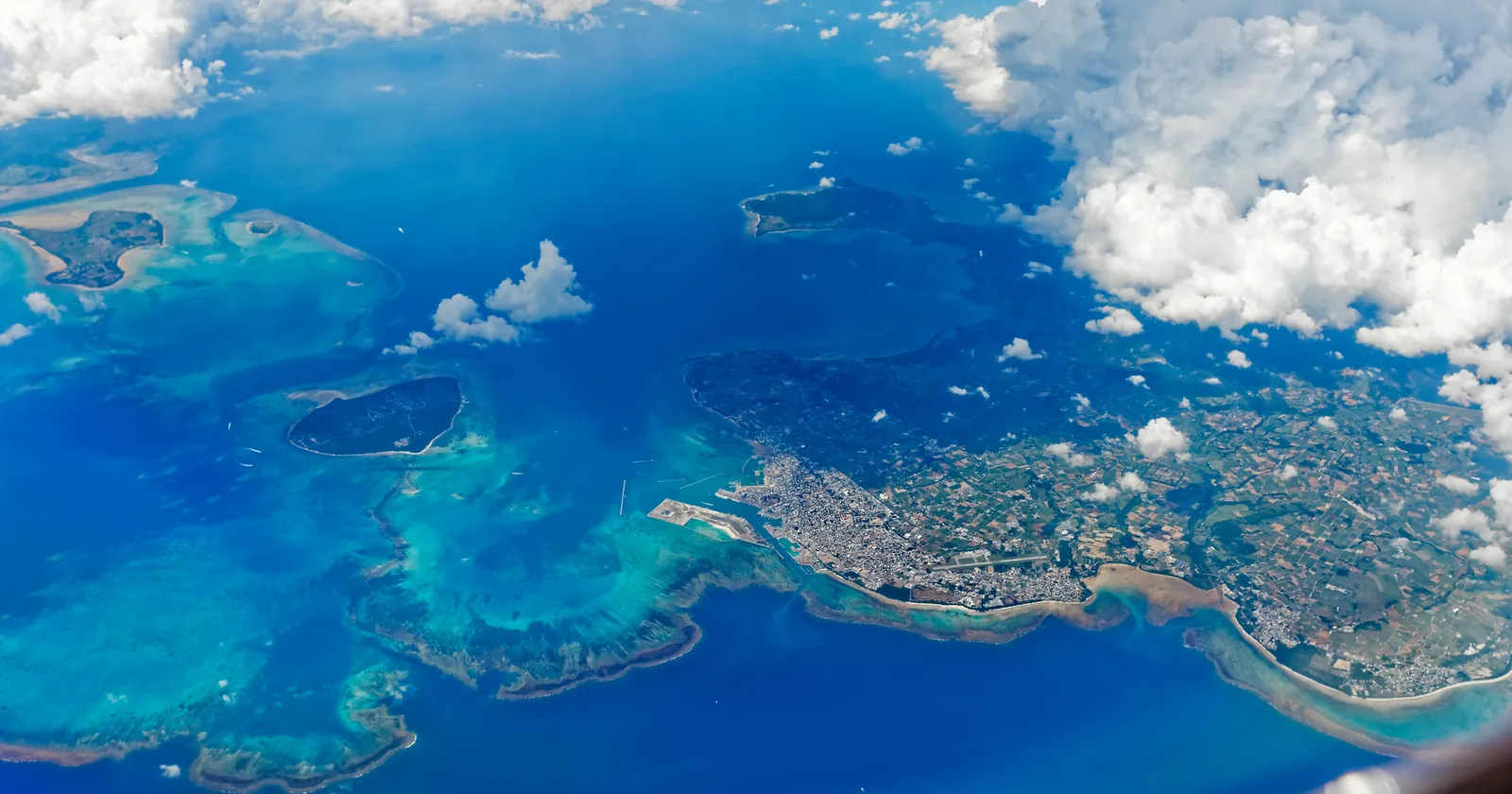
Photo: Junpei Abe, Wikimedia Commons, CC BY 2.0.

Key takeaways
- At the Kabira Ishizaki manta points the Yaeyama Diving Association caps Manta City at five boats and bans drift dives and skin diving; rules binding members, not law
- The reef mantas are a small resident population: 305 individuals in 11,111 logbook sightings from 1987 to 2009
- Since 1 April 2026 Okinawa’s ordinance requires a dive business to send a guide diver into the water with you and to turn you away if your health, experience or skill makes the dive unsafe
- Average coral cover at the 31 Ministry of the Environment sites in Sekisei Lagoon fell from 19.1 percent in June 2024 to 13.7 percent that December
- Typhoons approach the Okinawa region 7.7 times a year on the 1991 to 2020 normal, most often in August (2.2) and September (1.9)
The Ishigaki manta point runs on a dive association’s rules, not on a law
The manta dives that put Ishigaki on dive maps happen off Kabira Ishizaki, on the island’s north-west coast. The Yaeyama Diving Association, an incorporated association of dive and snorkel businesses, set up a manta conservation committee and wrote rules for what it calls the Kabira Ishizaki manta points, naming Scramble, City and others. It asks businesses and visitors alike to keep them.
The boat rules are specific. Boats come in and leave at dead slow, never anchor on the rocks where mantas hover, and at Manta City anchor only at one of five fixed positions. Manta City takes five boats at most, in the association’s words “strictly”. The guideline from anchoring to leaving is 60 minutes, gear is set up and the briefing done before anchoring, and kayaks and personal watercraft are banned from the point.
In the water the rules read like a briefing. Divers swim no higher than their guide, stop when a manta appears, and never wait on or swim across the outcrops where mantas may hover. Touching, chasing, blocking a manta or trying to turn it is out. So is banging a tank or sounding a dive alert to call others over, which the association keeps for emergencies. Drift dives, and towing divers behind a boat on a rope to search for mantas, are banned outright.
Snorkelers get their own list: a briefing and practice first, staff who know the point, enough floats for the group, and a wetsuit or life jacket. They approach the outcrops from down-current, stay flat on the surface holding a float, never drift, and never skin dive, meaning no breath-hold descents toward the animals.
None of this is statute. The association presents these as its own rules for its own members, and the national park and prefectural texts quoted further down say nothing about mantas or boat numbers at Kabira. The association also says about 150 dive and snorkel businesses operate on Ishigaki, some without the police notification the prefecture requires. Ask the shop whether it is a member and whether it follows the manta rules.
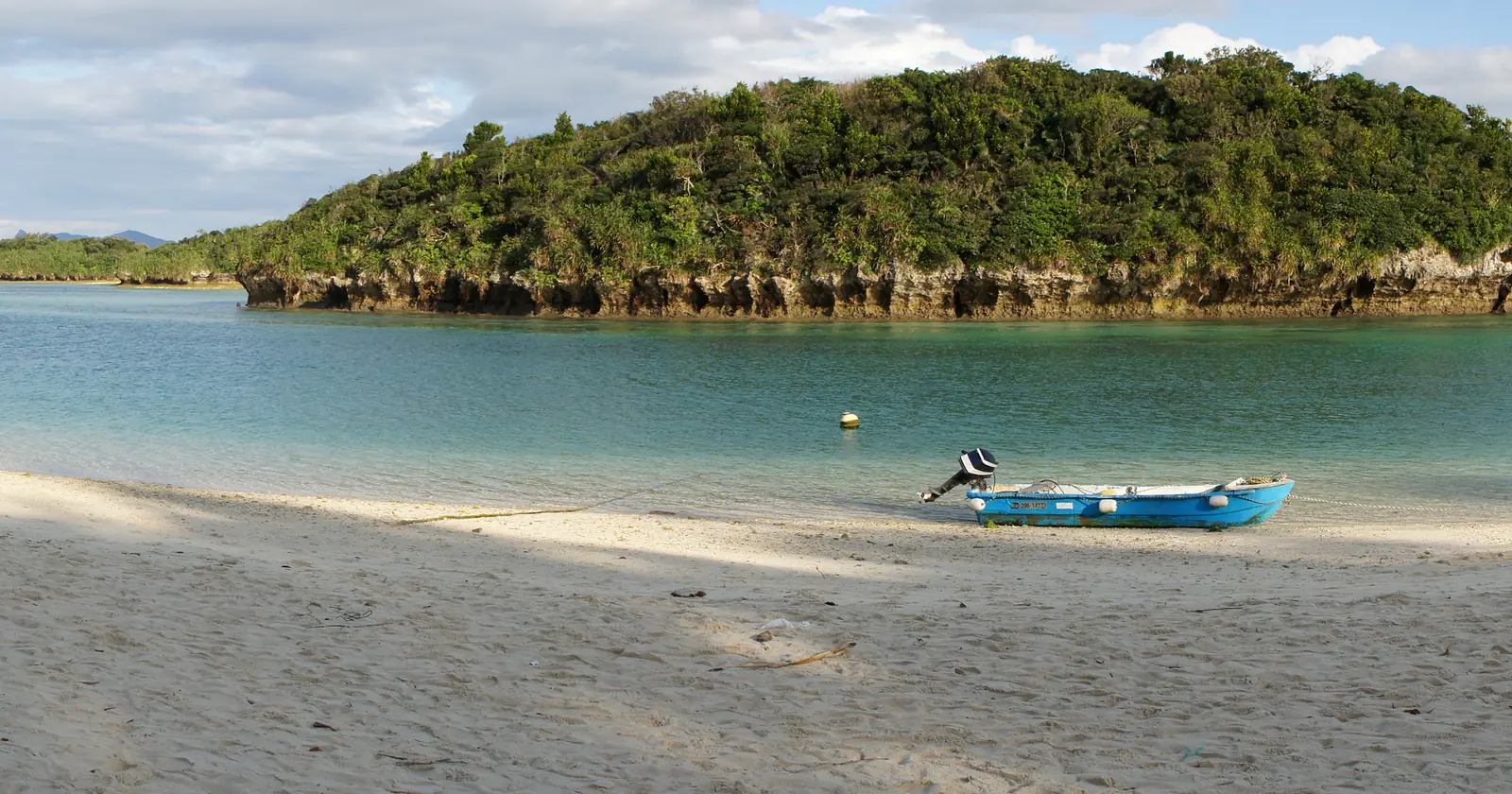

Ishigaki’s reef mantas are a small resident population divers have logged since 1987
The mantas at Kabira are reef mantas, Mobula alfredi, and they are unusually well documented because divers here have photographed and identified individuals since the mid-1970s. A University of Queensland doctoral thesis by Tsutomu Kashiwagi, completed in 2014, worked through the Yaeyama logbooks from 1987 to 2009: 11,111 sighting records of 305 individuals. It found the only year-round reef manta aggregation in Japanese waters in the Yaeyama Islands.
The population is small and it stays. Mark-recapture analysis put the upper limit for the aggregation at about 165 animals and the whole population at a maximum of about 202, with a genetic effective population size of 89. On those figures the thesis places it in the “very small wild subpopulation” category of the CITES guideline. The annual estimate grew over the study, from 36 to 159, and adult survival was put at 0.95 a year.
In 2024 the IUCN Shark Specialist Group declared 289.16 km² of the Yaeyama Islands, from the surface to 100 meters, an Important Shark and Ray Area. Its factsheet, built on the same logbooks, puts 80.5 percent of sightings at Kabira Bay, 9.7 percent in the Yonara Channel between Iriomote and Kohama, and 9.3 percent at Kanokawa. It records fresh mating wounds between March and August and pupping between April and July. The reef manta is listed Vulnerable on the IUCN Red List.
A diver who chases a manta off a cleaning station here is not disturbing one animal among thousands; the logbooks counted about three hundred in over two decades. For how Kabira compares with other sites, see the manta ray destinations.
Kabira Ishizaki is one of nine national park marine zones around Ishigaki
The national park reached Ishigaki later than many visitors assume. Iriomote National Park dates from 1972. On 1 August 2007 the Ministry of the Environment added part of Ishigaki, 7,022 hectares of land, about 31 percent of the island, and about 14,500 hectares of sea, and renamed the park Iriomote-Ishigaki National Park. The large 2016 expansion was a different change: it spread the park over almost all of Iriomote and added part of Ishigaki’s Hirakubo peninsula.
At sea the park draws marine park zones, its tightest category. Four around Ishigaki date from 2007: Hirakubo, Kabira Ishizaki at 274.8 hectares, Yonehara and Shiraho. Five more followed on 27 March 2012: Hirano, Akashi, Tamatorizaki, Yonehara Pukapi and Uganzaki. The zones in Sekisei Lagoon, between Ishigaki and Iriomote, go back to 1977; the largest, which takes in Yonara Channel, now covers 3,281.9 hectares. In March 2024 the park was extended over Nagura Bay.
What a marine park zone controls is set by article 22(3) of the Natural Parks Act. Without the Minister’s permission nobody may capture, kill, collect or damage the tropical fish, corals, seaweeds and other species the Minister designates for each zone. The same goes for reclaiming land, altering the seabed, mooring objects, discharging wastewater through drainage, and running a powered vessel in areas and periods the Minister designates. Some items are excepted for fishing gear and emergencies.
Two details matter to a diver. The mooring clause does not catch dive boats: article 13-3 of the Act’s enforcement regulations exempts mooring a vessel used solely for navigation. And what the zone does regulate is taking and damaging, so the shell in your pocket or the fin that snaps a designated coral is the act the park cares about. Diving itself is not on the list.
Where exactly a zone ends is not something to read off a map. The ministry’s own park page says precise boundaries cannot be judged from its maps alone and sends questions to the Ishigaki ranger office. Whether a given mooring at Manta Scramble or Manta City lies inside the Kabira Ishizaki zone is one of those questions.
Okinawa’s rewritten ordinance tells every Ishigaki dive business what it must do
Okinawa’s water accident ordinance was wholly rewritten by Prefectural Ordinance No. 54 of 2025, which took effect on 1 April 2026, so article numbers quoted from the 1993 text are out of date. Under the new article 15, anyone who guides people to a sea area and has them dive there must notify the Public Safety Commission at least ten days before starting. Guided snorkeling is a separate business type in the same list.
The ordinance defines diving as going underwater with equipment that supplies air; snorkeling is defined separately. Article 22 then lists what a notified dive business must do. It must keep a guide diver at every business location and send that guide into the water with you to lead, watch and instruct. It must inspect the equipment before you use it and keep rosters of divers and guides.
It must also stop you diving in three situations: if drink, drugs or anything else leaves you unfit; if your health, experience or skill means you cannot dive safely; or if the terrain, wind, weather, waves or current at the site endanger you. Any accident must be reported to the police at once.
Article 22(2) adds duties the business must endeavor to meet: set dive rules and make you keep them, carry a way to call the base or the boat, keep a life ring and rope ready, and train its guides at least once a year. From 1 April 2027 it must also endeavor to keep someone on the boat to watch divers and lead a rescue. Article 22(3) asks it to make sure a foreign diver understands the safety measures.
Running the business without notifying carries a fine of up to ¥100,000, and failing to report an accident up to ¥200,000. Operating a dive boat drunk carries up to three months’ imprisonment or a ¥500,000 fine. The Public Safety Commission can suspend a business for up to six months.
What an Ishigaki dive shop must ask you, and how many divers one guide may lead
The Public Safety Commission’s regulation under the ordinance fills in the paperwork. The diver roster must record your name, date of birth, address and emergency contact, the date you were certified, your training history and dive experience, the date of your last dive, your medical history and your health that day, plus when and where you dived and with which guide. The shop keeps it for a year.
Article 29 of the regulation tells the shop how to judge whether you can dive safely. At a minimum it weighs your complexion, breathing, body temperature and blood pressure, your age and medical history, whether and when you last dived, and whether you hold a certification and which one. A long gap since your last dive is a listed factor, not a formality.
Article 26 sets the guide standard. A guide diver must be certified as an instructor by a diving training organization, or hold a certification it treats as equivalent or higher, or be recognized as having equivalent skill. One guide may lead roughly two trial divers, who cannot manage themselves underwater, roughly four beginners who can but still need the guide’s help, roughly six intermediate divers who follow the guide’s instructions, and as many advanced divers as the guide judges fit.
Article 31 sets the minimum content of the rules a shop hands you: learn to use your equipment properly; do not dive overtired, short of sleep, straight after a meal, after drinking or on medication; always dive in a buddy system; do not harm fish or shellfish being farmed; and follow the guide.
There is one public list you can check. Under article 34 the Commission designates, on application and for up to a year, businesses whose safety measures meet its standard. The police list of designated diving businesses, as of 31 July 2026, has 35 entries across Okinawa. Two are in Yaeyama, one in Ishigaki city and one on Kohama, both branches of the same business. Since designation has to be applied for, a missing name proves nothing.
Average coral cover in Sekisei Lagoon off Ishigaki fell to 13.7 percent after the 2024 bleaching
Sekisei Lagoon is the reef system between Ishigaki and Iriomote; its name joins the first character of each island’s name. The Ministry of the Environment has monitored it since 2005 as part of a restoration project under the Nature Restoration Promotion Act. Since the 2016 mass bleaching it has used spot checks: a 15-minute snorkel over a patch about 50 meters square at each fixed site, sorting colonies into healthy, pale, bleached and dead.
In early September 2024 the average bleaching rate across the 31 sites was 84.0 percent. By early December it had eased to 65.5 percent, but 25.5 percent of the coral that had been alive before the event was dead. Average cover fell from 19.1 percent in June 2024 to 17.4 percent in September and 13.7 percent in December, roughly one square meter in seven of the reef surface that could carry coral.
The ministry names one likely reason the 2024 event lingered: water above 30°C, which usually ends by early September, lasted into late September. It also notes that typhoons No. 3 in July and No. 9 in August may have added physical damage.
It followed mass bleachings in 2016 and 2022. In 2016, across 35 sites, average cover fell from 29.5 percent in July and August to 11.6 percent by December. In 2022 the bleaching rate reached 92.8 percent in September, and cover fell from 26.2 percent in September 2021 to 17.0 percent by December 2022. The ministry warns against lining the events up directly, because the coral’s growth forms changed in between.
Ishigaki water runs from about 23°C in February to about 29.5°C in late July
The Japan Meteorological Agency publishes daily sea surface temperatures for two coastal areas on either side of the island, north of Ishigaki and south of Ishigaki. On the 1991 to 2020 normal, the water north of the island bottoms out at 23.1°C around 10 February and peaks at 29.6°C around 26 July. South of the island the range is 23.3°C to 29.5°C.
Recent years run warm late in the season. Averaging the agency’s daily figures for 2021 to 2025, September came out at 29.7°C in both areas, about a degree above its normal of 28.7°C north and 28.8°C south. The warmest daily value in those five years was 31.3°C, on a 19 July.
These are surface values averaged over a sea area, not a reading at depth over one reef, so treat them as the shape of the season.
Ishigaki typhoon season: 2.2 approaches to the Okinawa region in an average August
The agency counts a typhoon as approaching the Okinawa region when its center comes within 300 km of any of its stations there. On the 1991 to 2020 normal that happens 7.7 times a year: 0.4 times in May, 0.6 in June, 1.5 in July, 2.2 in August, 1.9 in September, 1.1 in October and 0.3 in November. The region logged 8 approaches in 2024 and 7 in 2025.
Article 22(1)(6) of the ordinance forbids a dive business to let you dive where terrain, wind or sea endangers you, and article 25 requires divers themselves to stay out when conditions make it unsafe. So leave spare days between July and October. The Okinawa diving guide covers the surface interval before your flight home.
At sea the Japan Coast Guard’s emergency number is 118. The ordinance separately obliges the dive business to report any accident to the police at once. Check that your dive insurance covers evacuation from an outer island before you book.
Four SSI-affiliated dive centers are listed for Ishigaki
The Ishigaki operator list holds 4 dive centers, all published by SSI in its register of affiliated centers and read on 20 September 2026. SSI files three under Ishigaki city and one under Taketomi town in Yaeyama district. Three publish a website in the register. SSI rates one for its Freediving and Mermaid programs, which describes the listing and does not prove a course runs this season.
Four is far below the roughly 150 businesses the Yaeyama Diving Association counts, because a training body’s register records affiliation and nothing more. None of the four is on the police list of designated diving businesses. Ask any shop for its police notification; which registers can be read sets out what each source can and cannot tell you.
FAQ: scuba diving in Ishigaki
Do you need a permit to dive the manta point on Ishigaki?
Not as a diver. The manta points off Kabira Ishizaki run on the Yaeyama Diving Association's own rules: at most five boats at Manta City, no drift dives or towing divers to find mantas, and no skin diving for snorkelers. Inside a marine park zone the Natural Parks Act requires the Minister's permission for taking or damaging designated species and similar acts; diving itself is not among them.
When is manta season in Ishigaki?
Reef mantas gather in the Yaeyama Islands year-round, according to a 2014 University of Queensland thesis built on diver logbooks from 1987 to 2009, which counted 305 individuals. The IUCN factsheet drawing on the same data places 80.5 percent of sightings at Kabira Bay, fresh mating wounds between March and August, and pupping between April and July.
What is the water temperature for diving in Ishigaki?
On the Japan Meteorological Agency's 1991 to 2020 normal, the sea surface north of Ishigaki bottoms out at 23.1 degrees Celsius around 10 February and peaks at 29.6 degrees around 26 July. From 2021 to 2025, September averaged 29.7 degrees, about one degree above normal.
When is typhoon season for Ishigaki diving?
Typhoons approach the Okinawa region 7.7 times a year on the 1991 to 2020 normal, counted when a center comes within 300 km of an agency station there. August averages 2.2 approaches, September 1.9, July 1.5 and October 1.1. Okinawa's ordinance forbids a dive business to let you dive when wind or sea endangers you.
How badly did Ishigaki's coral bleach in 2024?
At the Ministry of the Environment's 31 monitoring sites in Sekisei Lagoon, the average bleaching rate reached 84.0 percent in early September 2024. By December 25.5 percent of the coral alive before the event was dead, and average cover had fallen from 19.1 percent in June to 13.7 percent.
Note: Conditions, safety guidance and regulations change. Verify current information with official sources, including the dive operator, the park authority and the relevant government department, before you travel or dive.
Founder of NOMADREEF and a former digital nomad. This guide is sourced from the references below; conditions, prices and rules change, so verify current details, and follow qualified local guidance and safety briefings. About the author · LinkedIn ↗
Sources
- The manta point rules (primary: the rule-maker’s own text). Yaeyama Diving Association, “川平石崎マンタポイントのルール” (Kabira Ishizaki manta point rules): the manta conservation committee; approach and departure at dead slow; no anchoring on the rocks where mantas hover; anchoring at Manta City only at one of five set positions and “あくまでも5艘まで”, strictly five boats at most; kayaks and personal watercraft banned; 60 minutes from anchoring to leaving as the guideline; divers not to swim higher than the guide, to stop on meeting a manta, not to wait on or cross the hovering outcrops, not to touch, chase, block or redirect; no sound signals, tank-banging and dive alerts kept for emergencies; drift dives and towing divers by rope to search for mantas prohibited; for snorkelers, briefing and practice, floats, wetsuit or life jacket, no skin diving, no drift. yda-diving.com/manta. The page carries no date. The association’s description of itself, including “石垣島には150程のダイビング、スノーケリングの業者が存在します” (about 150 dive and snorkel businesses on Ishigaki) and that some have not filed the police notification, is its own statement: yda-diving.com/about_yda. Both read 25 September 2026.
- The manta population (primary). Kashiwagi T (2014), Conservation biology and genetics of the largest living rays: manta rays, PhD thesis, The University of Queensland: diver observation of identified individuals since the mid-1970s; logbook records from 1987 to 2009 with 11,111 sightings of 305 individuals; year-round aggregation of M. alfredi in Japanese waters found only in the Yaeyama Islands; upper confidence limit of 165 for the aggregation by capture-mark-recapture, a maximum of 202 for the total population by AgeNe model, effective population size 89; “very small wild subpopulation” category in the CITES guideline; annual population estimates rising from 36 to 159; adult survival 0.95. doi:10.14264/339455, abstract read 25 September 2026.
- The Important Shark and Ray Area (primary for the designation; it reports the thesis data). IUCN SSC Shark Specialist Group (2024), Yaeyama Islands ISRA Factsheet: 289.16 km², 0 to 100 meters; 80.5, 9.7 and 9.3 percent of sightings at Kabira Bay, Yonara Channel and Kanokawa; mating wounds between March and August; pupping between April and July; Manta City and Manta Scramble 300 meters apart; reef manta assessed Vulnerable (Marshall et al. 2022). sharkrayareas.org, Yaeyama Islands ISRA. Read 25 September 2026. The factsheet’s seasonal peaks for manta sightings rest on dive shop websites and personal communications, so they are not repeated here.
- The national park and its marine park zones (primary). Ministry of the Environment, Iriomote-Ishigaki National Park, overview and park plan page: the 海域公園地区 (marine park zone) table with Hirakubo 176.9 ha, Kabira Ishizaki 274.8 ha, Yonehara 129.7 ha and Shiraho 311.6 ha designated 1 August 2007; Hirano, Akashi, Tamatorizaki, Yonehara Pukapi and Uganzaki designated 27 March 2012; Taketomi Takidonguchi, Sekisei Lagoon North Reef and Yonara Channel at 3,281.9 ha and the other Sekisei Lagoon zones dated 1 July 1977; the history of plan changes from 1972 to the Nagura Bay extension of 28 March 2024; and the note that exact boundaries cannot be judged from the maps alone. env.go.jp, park overview. The 2007 incorporation of Ishigaki, 7,022 ha of land (about 31 percent of the island) and about 14,500 ha of sea: env.go.jp, 1 August 2007. The 15 April 2016 expansion over almost all of Iriomote and part of the Hirakubo peninsula: env.go.jp press release, 14 April 2016. All read 25 September 2026.
- What a marine park zone restricts (primary). Natural Parks Act (Act No. 161 of 1957), article 22(3), items 1 to 8, with the fishing and emergency proviso; and the Enforcement Regulations of the Natural Parks Act, article 13-3 item 7, exempting mooring a vessel used solely for navigation. Current texts from the e-Gov law database: Natural Parks Act and Enforcement Regulations. Read 25 September 2026. The ministerial notice listing the species designated for each zone of this park was not read in its final form (only the ministry’s 2012 consultation draft), so no species count is given: gap.
- The Okinawa ordinance as rewritten (primary). 沖縄県水難事故の防止及び遊泳者等の安全の確保等に関する条例, Okinawa Prefectural Ordinance No. 54 of 2025, which wholly revised Ordinance No. 29 of 1993 and took effect on 1 April 2026: article 2 definitions of diving and snorkeling; article 15 notification at least ten days in advance and the ban on lending one’s name; article 22 duties of a notified diving business, with 22(2)(3) and (4) in force from 1 April 2027 under supplementary provision 1; article 25 duties of swimmers; article 32 suspension up to six months; article 34 designation of safety-excellent businesses, on application, for up to one year; articles 42 to 44 penalties. Ordinance No. 54 of 2025 (PDF, Okinawa Prefectural Police). Read in full, 29 pages to the supplementary provisions, 25 September 2026. The 1993 text as amended in 2021, still posted by the police as a separate PDF, is superseded.
- The Public Safety Commission regulation (primary). Okinawa Prefectural Public Safety Commission Regulation No. 16 of 2025, dated 26 December 2025, in force 1 April 2026: article 26 guide qualification and the roughly 2, 4 and 6 diver standards; article 29 criteria for judging whether a diver can dive safely; article 30 contents of the diver roster, kept for one year; article 31 minimum content of dive rules. Regulation No. 16 of 2025 (PDF). The police summary for businesses, with the penalty table: “事業者等の皆さまへ” (PDF). Read 25 September 2026.
- The designated safety businesses (primary). Okinawa Prefectural Police, list of safety-excellent sea leisure providers, diving business, as of 31 July 2026: 35 entries, two in Yaeyama (Ishigaki city, Misaki-cho, and Taketomi town, Kohama). police.pref.okinawa.jp, マル優 list. Read 25 September 2026. The police page for the full list of notified businesses returned HTTP 404 on the same day, so notification of individual shops could not be looked up: gap.
- Coral monitoring in Sekisei Lagoon (primary). Ministry of the Environment, Okinawa Amami Nature Conservation Office: September 2024 survey (2 to 7 September, 31 sites, average bleaching rate 84.0 percent, cover 19.1 percent in June and 17.4 percent in September, typhoons No. 3 and No. 9), release of 9 October 2024, press_00103; December 2024 survey (1 to 6 December, 65.5 percent, 25.5 percent dead, cover 13.7 percent, water above 30°C into late September), release of 23 January 2025, press_00113; December 2022 survey (92.8 percent in September 2022, cover 26.2, 21.6 and 17.0 percent, the warning on comparing 2016 and 2022), press_01336; June 2017 survey (35 sites, 2016 cover 29.5 percent in July and August and 11.6 percent by December), press 104333. The name and the 1977 and 2007 zones: Ministry of the Environment, Sekisei Lagoon nature restoration document, “石垣島の「石」と西表島の「西」をとって”, sekisei0_2 (PDF). All read 25 September 2026. The ministry’s releases give the September to October 2016 peak bleaching rate as 97.1 percent in 2017 and 97.2 percent in 2024, so no 2016 peak rate is quoted. No 2025 survey release was found.
- Water temperature (primary). Japan Meteorological Agency, coastal sea surface temperature, areas 707 (north of Ishigaki) and 708 (south of Ishigaki): daily 1991 to 2020 normals and 2021 to 2025 averages and extremes. north of Ishigaki, south of Ishigaki. Read 25 September 2026. The September averages are means of the agency’s daily values, calculated for this page.
- Typhoons (primary). Japan Meteorological Agency, typhoon normals 1991 to 2020 for the Okinawa region and the definition of an approach as a center within 300 km of a station, typhoon normals; yearly approaches to the Okinawa region, Okinawa approaches. Read 25 September 2026.
- Emergency number (primary). Japan Coast Guard, 118 as the emergency number for incidents and accidents at sea. kaiho.mlit.go.jp. Read 25 September 2026. No recompression facility on Ishigaki could be confirmed at a primary source, so none is named here: gap.
- The four businesses. Four dive centers on the Ishigaki operator list, read 20 September 2026, all published by SSI in its register of affiliated centers. Three publish a website in the register; SSI rates one for Freediving and Mermaid. The register’s town field records where a body files a business, not necessarily where it operates, and the limits of each source are set out on which registers can be read.