Grand Cayman Diving: The 2021 Marine Park Rules, the Glove Ban and the Twenty-Boat Limit at Stingray City
 by Yannick Schroth
Sep 25, 2026
15 min read
by Yannick Schroth
Sep 25, 2026
15 min read
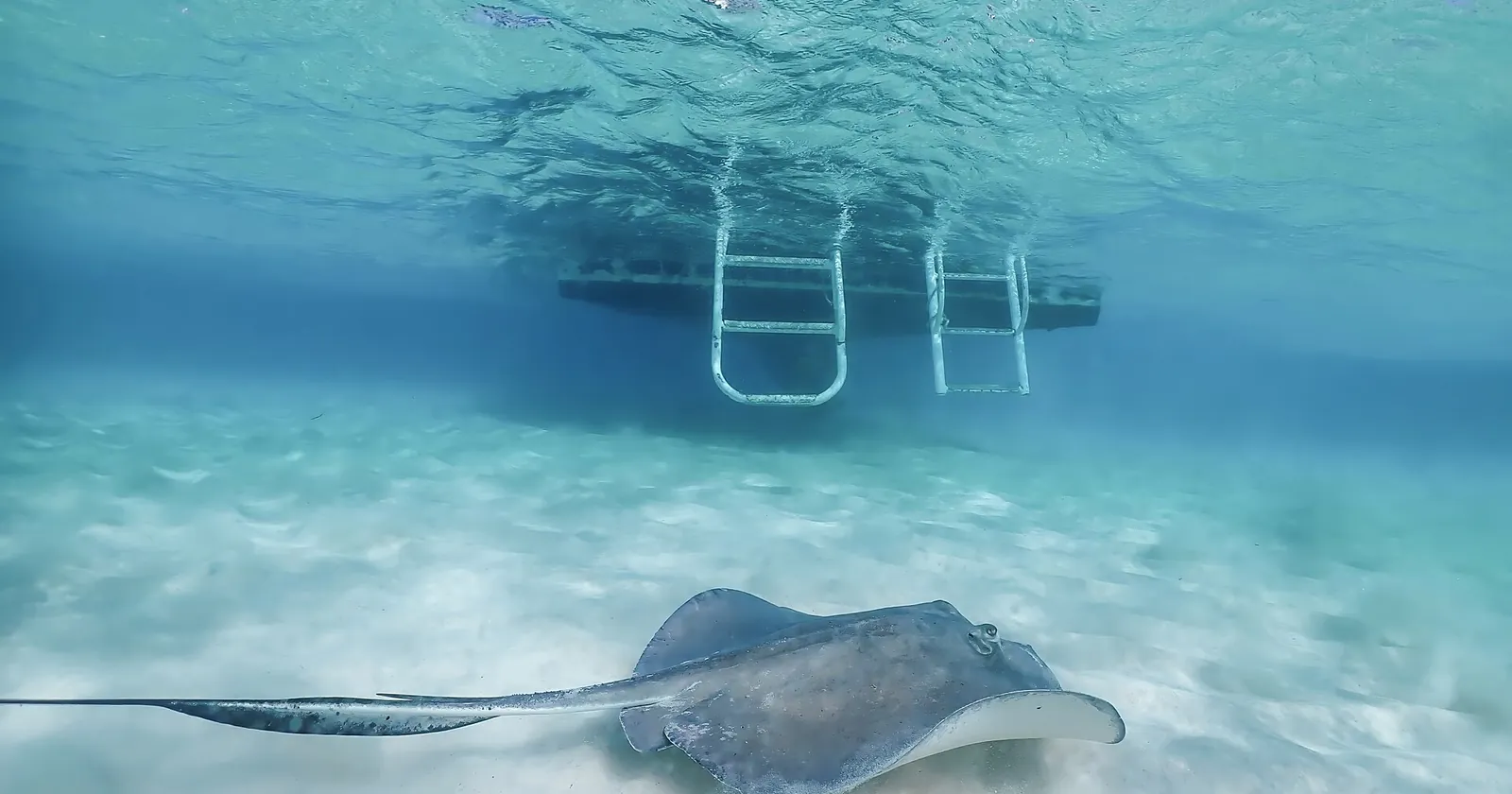
Photo: Symbiosis, January 2025, Wikimedia Commons, CC BY 2.0.

Key takeaways
- The National Conservation (Marine Parks) Regulations, 2021 repealed the old marine park, replenishment zone and restricted area rules; replenishment zones no longer exist
- Section 34(k) of the National Conservation Act makes wearing gloves of any type while diving or snorkeling in Cayman waters an offense, and section 34(b) does the same for taking anything while on scuba
- Scuba needs National Conservation Council authorization in seven no-diving zones around Grand Cayman, including a box inside the Stingray City Sandbar
- From 1 December to 30 April nobody may enter the water between the 50 and 200 foot contours at the Northeast and Southwest spawning sites or on 12 Mile Bank
- A tour boat may not enter the Sandbar Area when twenty are already there, may carry no more than one hundred passengers and may stay no longer than one hour
Grand Cayman’s marine parks run on 2021 regulations, and the replenishment zones are gone
A Department of Environment rule sheet from May 2013, still hosted on the department’s own site, shows Grand Cayman divided into marine park zones, replenishment zones and environmental zones. That map no longer has legal force. The National Conservation (Marine Parks) Regulations, 2021, SL 19 of 2021, were made in Cabinet on 9 March 2021 under section 50 of the National Conservation Act, 2013, and published with Legislation Gazette No. 21 on 12 March 2021.
Regulation 14 repealed three older instruments in one line: the Marine Conservation (Marine Parks) Regulations (2007 Revision), the Marine Conservation Regulations (2004 Revision) and the Restricted Marine Areas (Designation) Regulations (2004 Revision). In their place, regulation 4 sets seven categories: marine reserve zones, environmental zones, wildlife interaction zones, line fishing zones, shore line fishing zones, and two overlays, one for no diving and one for spawning aggregations.
The change is sharpest in the zone divers use most. In 2013 the old marine park zone allowed line fishing from shore and at depths of 80 feet or more. A marine reserve zone allows neither. Regulation 5 bars taking any specimen, with three exceptions: catch-and-release fishing for tarpon, bonefish and permit; up to 2.5 gallons of fry or sprat a day from shore or wading; and lionfish taken by a licensed culler. The replenishment zone, which closed conch and lobster but allowed line fishing, has no successor at all.
Schedule 1 names Grand Cayman’s marine reserve zones: Barkers, Bodden Town, East End, Frank Sound, George Town, North Sound, Queen’s Highway East and West, Seven Mile Beach, South Sound East and West, and West Bay Bight. The island’s one environmental zone is Little Sound, inside the North Sound, where regulation 6 forbids entering the water at all and caps boats at five miles per hour.
The expansion was announced two years before it was law. The department reports Cabinet approval on 26 March 2019, and REEF’s newsletter that April ran the headline “Expanded Marine Parks Implemented in the Cayman Islands”. Nothing in it was enforceable until the 2021 text; the department’s current brochure dates the rules as effective from 12 March 2021.
The department’s 2019 announcement put the national no-take share at about 14 percent before and 48 percent after, with marine parks running from the shore to the 150-foot depth contour unless marked otherwise.
Diving gloves are an offense in Grand Cayman waters, and so is taking anything on scuba
Section 34 of the National Conservation Act, 2013 lists what nobody may do in Cayman waters without authority, and two of its paragraphs are written for divers. Paragraph (b) makes it an offense to take a specimen while equipped with any kind of underwater breathing apparatus. Paragraph (k) makes it an offense, while diving or snorkeling in Cayman waters, “whether using underwater breathing apparatus or not”, to wear gloves of any type.
“Take” is wider than fishing. The General Regulations define it as collecting, hunting, killing, destroying, damaging, injuring, disturbing, harassing, harming, capturing, molesting or impeding a live specimen in any way, or attempting to, and it includes incidental taking. Paragraph (h) separately forbids anyone to cut, injure, displace or break underwater coral or plant growth, directly or indirectly.
Two more paragraphs of the same section matter on a dive boat. Paragraph (c) covers possessing or using a spear gun without authority, and paragraph (f) forbids feeding, attempting to feed, or using food to attract any shark in Cayman waters. Where no other penalty is set, section 38 provides a fine of five hundred thousand dollars or four years’ imprisonment, or both; the department’s brochure gives the figure as CI$500,000 and adds that the vessel or equipment may be forfeited.
The one glove exemption written into the permit rules is the lionfish culling permit, covered below. For protection against fire coral and scrapes, the answer here is a full suit rather than gloves, which is what the travel wetsuit guide is for.
Seven no-diving zones ring Grand Cayman, and each needs Council permission
Regulation 10 is short. A person shall not scuba dive in a no-diving overlay zone unless the National Conservation Council has authorized it, on an application in the approved form, and the Council may attach conditions. It is an overlay, so it sits on top of whatever zone lies underneath, and where the two overlap both sets of rules apply.
Schedule 6 names seven on Grand Cayman: East End, North Side East, North Side West, Rum Point Channel, South Sound, Stingray City Sandbar and West Bay Bight. Three of them follow the north shore, from North Side West to Rum Point Channel, and the fourth northern one sits in the North Sound on the Sandbar itself.
The Sandbar box is small and exact: four corners between 19°22.397′ and 19°22.755′ north and 81°18.130′ and 81°18.407′ west, inside the wildlife interaction zone of the same name. Snorkelers and waders there are untouched by regulation 10. A diver with a tank is not.
The ban is on scuba, not on boating or snorkeling, and outside marine parks the overlay does not stop lawful fishing. Before a shore dive anywhere described as North Side, check the boundaries in the department’s CaymanDoE app, which maps the zones and their rules across all three islands.
Two Grand Cayman spawning sites close to divers from December to April
Regulation 11 is the only rule in the set that runs on a calendar. From 1 December to 30 April, in a spawning aggregation overlay zone, nobody may take any specimen, enter the water or anchor a vessel between the 50-foot and 200-foot depth contours. Where it overlaps another zone, regulation 11 prevails.
Schedule 7 puts two of these zones on Grand Cayman, Northeast and Southwest, and two more on 12 Mile Bank, east and west boxes that lie west of the island on longitudes around 81°33′ to 81°37′ west. From 1 May to 30 November the rules of whatever zone lies underneath apply again.
The dates follow the Nassau grouper. Regulation 6 of the National Conservation (General) Regulations closes the Nassau grouper fishery from December to April, limits catches outside it to fish between 16 and 24 inches, and makes any Nassau grouper taken with a spear gun an offense at any time. For a diver the practical result is that, in winter, the band of reef between those two contours in each box is closed, and only the water inshore of the 50-foot line stays open.
Grand Cayman’s three wildlife interaction zones are the only places visitors may touch or feed marine life
Regulation 7(4) says no person shall engage in wildlife interaction with any specimen in Cayman waters outside a wildlife interaction zone, unless fishing lawfully or acting under a Council plan or permit. The regulations define wildlife interaction as touching or feeding marine life, or attempting to. Schedule 3 lists three zones, all of them on Grand Cayman: Stingray City Deep, Stingray City Sandbar and Water Cay.
Inside them regulation 7 still forbids taking any specimen, selling fish food from a vessel, anchoring in water shallower than three feet or with any anchor, chain or rope within twenty feet of reef, and wearing footwear in water shallower than four feet. Fins are allowed while snorkeling in water deeper than four feet. The department’s summary adds that stingrays may be fed only approved food, like squid or ballyhoo.
It is the boat that holds the permit, not the passenger. Directive 41 of the National Conservation Council (Licence and Permit) Directives bars an owner from using a vessel to carry tourists to or from a wildlife interaction zone without a permit in force. The permit runs for one year, and the application needs a trade and business license and a Port Authority registration and inspection certificate. The permit sticker must be displayed on two sides of the boat.
Directive 43 then caps the Sandbar Area itself. A tour boat may not enter when twenty tourist vessels are already there, may carry no more than one hundred passengers per trip, and may not put passengers into the water when more than 1,500 people are at the Sandbar. It may stay no longer than one hour, and may not carry paying passengers there after 2 p.m. on a Saturday or Sunday or after 3 p.m. on a public holiday.
Lifting a stingray at Grand Cayman’s Sandbar is take, and cradling it flat is tolerated
Southern stingrays are a Part 1 protected species under the Act, listed with all other sharks and rays, and protected from take at all times. The National Conservation Council’s guidance notes on handling them say it plainly: an individual holding a live stingray, or attempting to, would count as take. The notes are issued under the Act and enforced through regulation 7(2)(a).
What officers will tolerate is narrow and written down. Supporting a ray flat in the water on bent arms, without gripping or bending it, is not treated as take. Nor is stroking the upper or lower surface of the wings, or angling the ray so that only the nose, and not the mouth, spiracles or eyes, rises above the water. That last clause is the one that makes the Sandbar’s famous kiss photo lawful, and only in that form.
The rest is take: any lift that holds the spiracles, eyes, mouth or gills out of the water, bending any part of the ray, gripping its fins, touching the upper or lower midline, or slapping a wing against a person’s body. The notes say in bold that the back slap and back massage are no longer allowed. Their background paper explains that many rays at the zones are pregnant females, and that termination of pregnancy is a common response to stress.
Version 2.1 was passed by the Council on 27 February 2019 and reissued in October 2022. Consequences listed there include suspension of an operator’s wildlife interaction permit or prosecution. The same notes ask for sunscreen applied well before interacting, using zinc oxide or titanium dioxide in non-nano form, which the reef-safe sunscreen guide covers.
Anchoring off Grand Cayman: sand only, 60 feet and under, and free moorings for three hours
Anchoring is barred in marine reserve and line fishing zones, with one exception written into regulations 5(3) and 8(5). A vessel not exceeding sixty feet may anchor if it anchors in sand, uses no grappling hook, mushroom anchor or kellick, and keeps its anchor, chain and rope off coral. Environmental zones allow no anchoring, mooring, docking or grounding at all.
The alternative is the public moorings. The department’s brochure describes 18 and 24 inch white buoys with a yellow stripe and yellow pick-up line, free to use: the smaller ones for vessels up to 60 feet and the larger ones up to 100. It asks boats to stay no more than three hours, to leave the mooring when wind reaches 25 knots, and never to leave a boat unattended on one.
Regulation 12 lifts every anchoring ban during a declared state of emergency, while a hurricane warning is in force, or when the Port Director gives a specific vessel permission in an emergency. It is the clause a skipper reaches for in the hurricane months described below.
Lionfish are the one fish a visiting diver may cull in Grand Cayman, and only on a permit
Spearfishing is closed to visitors. Under Part 2 of the Licence and Permit Directives only a person who is Caymanian and over eighteen may hold a spear gun license, the Council may issue no more than 170 a year, and applications run from 1 June to 31 August. A license covers bony fish only, and never Nassau grouper or parrotfish. The spearfishing primer is for water where the law allows it.
Lionfish are handled in Part 6. An individual lionfish culling permit is open to anyone over eighteen, with no residency condition in the directive. It allows taking lionfish while on scuba, wearing gloves while culling, and taking lionfish under eight inches, which the general eight-inch minimum on bony fish would otherwise protect. It does not allow spear guns, and every cull must be reported by size class: under six inches, six to twelve, and over twelve.
The spear is separate. An individual lionfish spear permit is limited to Caymanians and residents, and the spear is issued by the department and stays its property. A visitor who holds a culling permit can use a spear only through a company that holds a corporate customers’ lionfish spear permit, and only during that company’s culling dives.
The individual culling permit excludes environmental zones and no-diving zones on the north coast of Grand Cayman, along with a restricted marine area and a designated grouper spawning area. Those last two names belong to instruments that have since been repealed, one of them by the 2021 marine parks regulations, and they survived the December 2021 consolidation. Inside the marine parks, the 2021 regulations separately require the culler to be authorized by the Council for that zone.
Grand Cayman’s coral cover averaged about 6 percent in 2024
The Department of Environment has run annual reef health assessments on all three islands since 1997. Coral cover then averaged about 25 percent; by 2023 the average across the islands had fallen to 11 percent, and in 2024 Grand Cayman’s own average was about 6 percent. The department dates its worst bleaching summers to 1998, 2005 and 2017, and calls 2023 the most extreme and prolonged on record.
Disease did the rest. Stony coral tissue loss disease was found on the north wall of Grand Cayman in June 2020. Removing sick corals, closing dive sites, disinfecting gear and applying experimental antibiotic paste did not stop it, and it spread completely around Grand Cayman within 18 months. It was confirmed on Little Cayman in August 2025, and the department credits gear hygiene with delaying that by about five years.
That is why a dive boat here may ask you to dip your kit. The department’s advice is to disinfect scuba and snorkel equipment between dive sites, and especially when moving gear between islands, and to disinfect boat bilge water on inter-island crossings. If Little Cayman or Cayman Brac follows Grand Cayman on your trip, the dive gear packing guide is worth reading with that in mind.
The Kittiwake wreck off Grand Cayman rolled onto its side in Tropical Storm Nate
The ship was built for rescue. The Navy’s own history records the Kittiwake (ASR-13), a Chanticleer-class submarine rescue ship 251 feet 4 inches long, launched at Savannah on 10 July 1945 and commissioned on 18 July 1946. On 20 July 1960 she stood by off Cape Canaveral as George Washington launched the first two Polaris missiles ever fired from a submarine beneath the sea.
The Cayman Islands Department of Tourism dates her sinking as an artificial reef off Grand Cayman to January 2011 and describes a ship of five decks, accessible to divers and snorkelers. What divers find today is not what went down. In October 2017, during Tropical Storm Nate, she rolled onto her port side, moved toward the neighboring reef and settled about 20 feet deeper than before.
Published depths for the wreck range from 55 to 65 feet, and entry fees quoted for it differ from source to source, so neither is given here; ask the operator what you pay and how deep you will go before booking. For coasts built around wrecks, the wreck diving list has more.
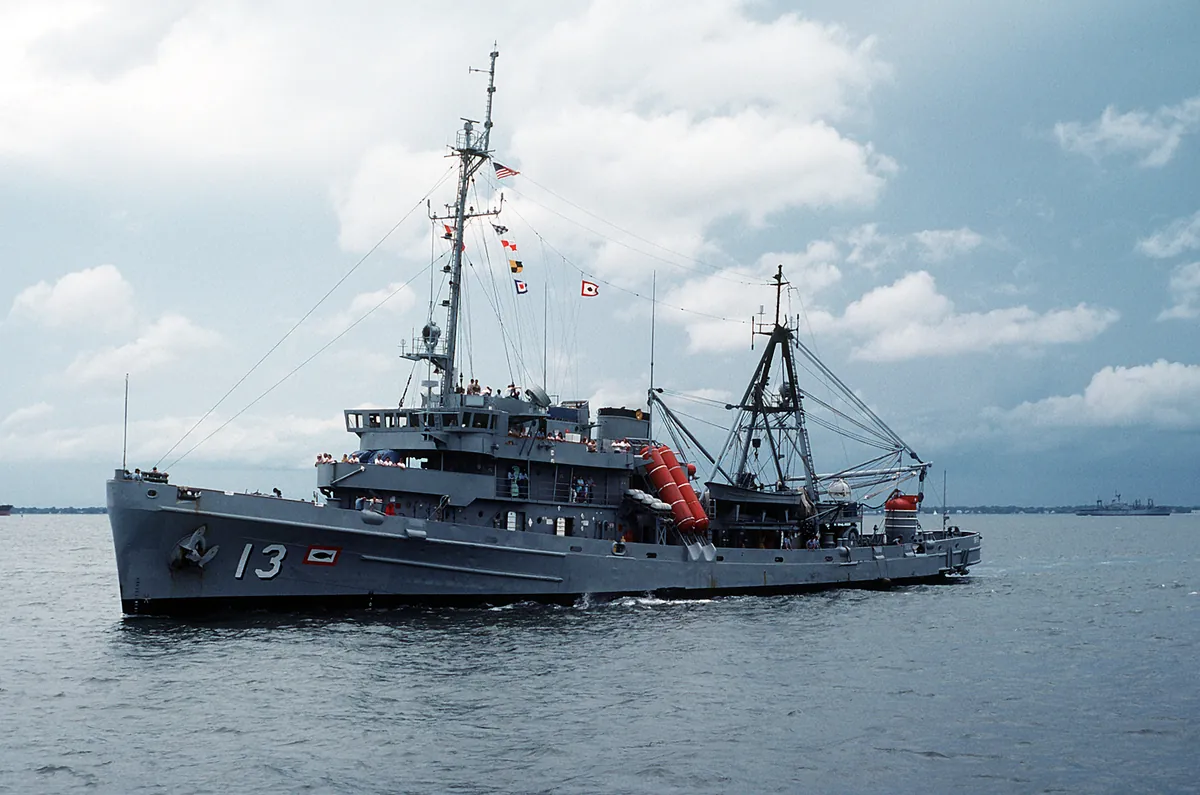
_underway_in_Hampton_Roads,_Virginia_(USA),_on_23_July_1988_(6434160).jpg)
Grand Cayman’s hurricane season, and what Hurricane Ivan did in 2004
The National Hurricane Center sets the Atlantic season, which includes the Caribbean Sea, at 1 June to 30 November. Its climatology puts the peak on 10 September, with most activity between mid-August and mid-October. Set against the spawning closures from 1 December to 30 April, May is the only month that falls outside both windows.
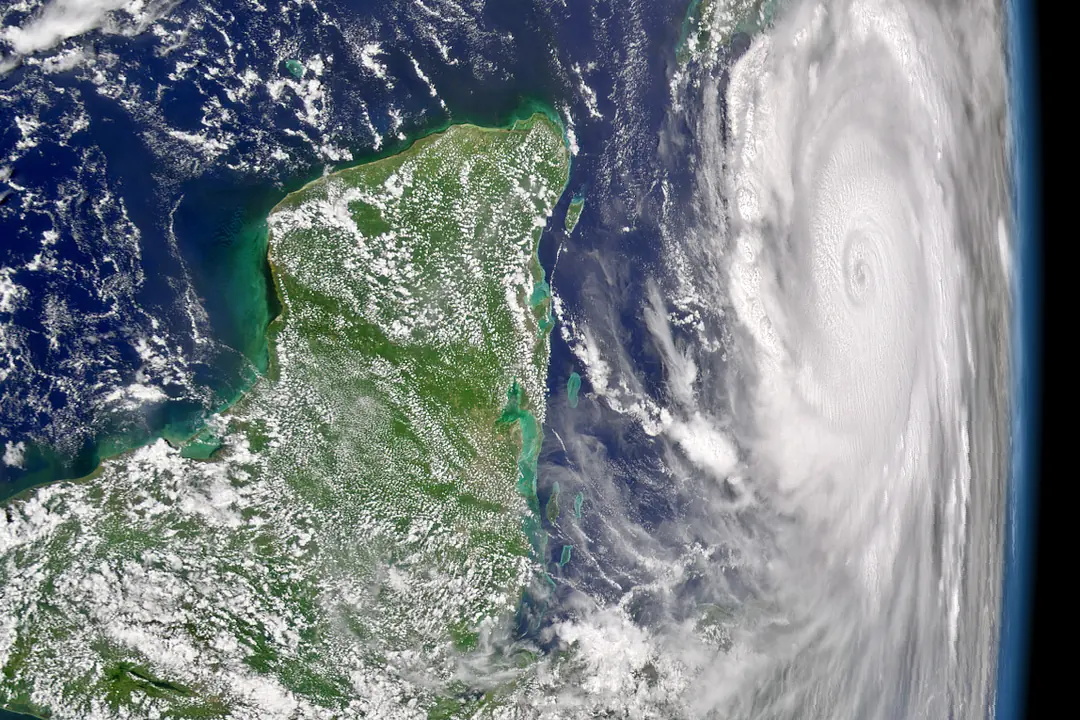
The storm the island measures itself against is Ivan. The Center’s report records that its center passed south of Grand Cayman on 12 September 2004 with sustained winds just below category 5 strength. The highest sustained wind measured over land in the Caribbean was 130 knots, gusting to 149, on Grand Cayman.
Storm surge of 8 to 10 feet with 20 to 30 foot waves put 5 to 8 feet of water over the island at times, and the surge swept all of it except the extreme northeast. The report lists 95 percent of homes and other buildings in the Cayman Islands as damaged or destroyed, two deaths there, and a Caribbean Development Bank estimate of US$1.85 billion in damage. Trip cover for storm cancellation is a separate question from dive cover, which the dive insurance comparison explains.

Cayman’s only recompression chamber is at George Town Hospital on Grand Cayman
The Health Services Authority states that Cayman Hyperbaric Services, a team of 30 part-time operators and attendants, runs Cayman’s only recompression chamber, located at the George Town Hospital. The unit is available 24 hours a day, 365 days a year, on an on-call basis, for diving emergencies and elective treatment.
The authority gives 949-2989 as the chamber’s telephone number. Because it is the only chamber in the territory, any recompression treatment in the Cayman Islands happens on Grand Cayman, which is worth knowing before a sister-island trip.
Nine Grand Cayman watersports businesses in the registers, eight of them dive centers
The Grand Cayman operator list holds 9 businesses. Eight are dive centers published by SSI in its register of affiliated training centers, and one, Kitesurfcayman in West Bay, is a kite school published by IKO; both registers were read on 20 September 2026. Seven of the nine publish a website in their register entry.
The SSI town field spreads the dive centers around the island. Four are filed under George Town, one spelled Georgetown: Atlantis Dive Center, Cayman Aggressor IV, Off The Wall Divers and Sunset Divers. Indepth Watersports is filed in West Bay, Ocean Frontiers in East End, Octopus under Grand Pavillon and Divetech simply under Grand Cayman. Where a business is filed is not always where it dives.
Two of the eight, Ocean Frontiers and Sunset Divers, are Green Fins digital members, read on 21 September 2026. Both self-evaluated, and neither was assessed in person. SSI rates Cayman Aggressor IV for Freediving and Extended Range, and Octopus for Extended Range and Extended Range instructor training; a rating is a listing, not evidence that a course runs this season. The website SSI publishes for Atlantis Dive Center carries a different business name.
No public register of licensed dive operators was found for the Cayman Islands, and the Department of Tourism’s licensing page covers tourist accommodation. One document a Stingray City trip must have is the boat’s wildlife interaction permit, with its permit sticker displayed on two sides of the vessel. Which registers can be read sets out what each source returns.
FAQ: scuba diving in Grand Cayman
Can you wear gloves when diving in Grand Cayman?
No. Section 34(k) of the National Conservation Act makes it an offense, while diving or snorkeling in Cayman waters, whether using breathing apparatus or not, to wear gloves of any type. The only exception in the rulebook is a lionfish culling permit, which lets the holder wear gloves while culling. Where no other penalty is set, section 38 provides a fine of five hundred thousand dollars or four years' imprisonment.
Where is scuba diving not allowed in Grand Cayman?
In seven no-diving overlay zones, unless the National Conservation Council authorizes it: East End, North Side East, North Side West, Rum Point Channel, South Sound, Stingray City Sandbar and West Bay Bight. From 1 December to 30 April nobody may enter the water between the 50 and 200 foot contours in the Northeast and Southwest spawning zones or on 12 Mile Bank, and nobody may enter the water in the Little Sound environmental zone at any time.
Is it legal to hold a stingray at Stingray City?
Holding a live stingray counts as take under the Council's guidance notes, and southern stingrays are protected from take. Officers will not treat as take supporting a ray flat on bent arms without gripping it, stroking its wings, or letting only the nose rise above the water. Lifting the eyes, spiracles, mouth or gills out of the water, bending or gripping the ray, touching its midline and the back slap are all take.
Can visitors spearfish in Grand Cayman?
No. A spear gun license is only open to Caymanians over eighteen, with no more than 170 issued a year. A visitor over eighteen can hold an individual lionfish culling permit, and can use a lionfish spear only through a company holding a corporate customers' lionfish spear permit, during that company's culling dives.
Where is the recompression chamber in the Cayman Islands?
The Health Services Authority states that Cayman's only recompression chamber is at the George Town Hospital on Grand Cayman, run by Cayman Hyperbaric Services and available 24 hours a day, 365 days a year, on an on-call basis. The authority gives 949-2989 as its number. Because it is the only chamber, any recompression treatment in the territory happens on Grand Cayman.
Note: Conditions, safety guidance and regulations change. Verify current information with official sources, including the dive operator, the park authority and the relevant government department, before you travel or dive.
Founder of NOMADREEF and a former digital nomad. This guide is sourced from the references below; conditions, prices and rules change, so verify current details, and follow qualified local guidance and safety briefings. About the author · LinkedIn ↗
Sources
- The marine park zones (primary). National Conservation (Marine Parks) Regulations, 2021, SL 19 of 2021, made in Cabinet on 9 March 2021 under section 50 of the National Conservation Act, 2013, Supplement No. 1 to Legislation Gazette No. 21 of 12 March 2021: regulation 2 defining wildlife interaction and tourist vessel; regulation 4 on the seven categories; regulation 5 on marine reserve zones, including the tarpon, bonefish and permit exception, fry and sprat at 2.5 gallons, the lionfish culler exception and the sixty-foot sand anchoring rule; regulation 6 on environmental zones; regulation 7 on wildlife interaction zones and interaction outside them; regulation 8(5) on anchoring in line fishing zones; regulation 10 on no-diving overlay zones; regulation 11 on spawning aggregation overlay zones from 1 December to 30 April between the 50 and 200 foot contours; regulation 12 on emergency anchoring; regulation 14 on the three repealed instruments; Schedules 1, 2, 3, 6 and 7 for the Grand Cayman and 12 Mile Bank zone names and corner coordinates. SL 19 of 2021 (PDF, Cayman Islands legislation site), also published by the National Conservation Council (PDF). Read 25 September 2026. The Department of Environment’s marine parks page offers a download labeled “Marine Parks Regulations 2024” whose link did not resolve on that date, and no amending instrument was found; the 2021 text as published is what this page relies on: unverified whether a later revision exists, needs human check.
- Gloves, taking on scuba, spear guns, shark feeding and penalties (primary). The National Conservation Law, 2013 (Law 24 of 2013, since cited as the National Conservation Act), as published with Extraordinary Gazette No. 9 of 5 February 2014: section 34(b), (c), (f), (h) and (k); section 38(1) on a fine of five hundred thousand dollars or four years’ imprisonment where no punishment is specifically prescribed. National Conservation Act, 2013 (PDF, National Conservation Council). Read 25 September 2026. This is the text as enacted; a consolidated revision was not located, so any later amendment to section 34 or 38 is unverified, needs human check.
- The definition of take and the Nassau grouper rules (primary). National Conservation (General) Regulations (2022 Revision), Supplement No. 2 to Legislation Gazette No. 6 of 27 January 2022: regulation 2 defining take; regulation 6 on Nassau grouper sizes of 16 to 24 inches, the December to April closure and spear gun catches; regulation 7(c) on the eight-inch minimum for bony fish, with exceptions for goggle eye, sprats and fries only. General Regulations (2022 Revision) (PDF). Read 25 September 2026.
- Spear gun licenses, lionfish permits and wildlife interaction vessel permits (primary). National Conservation Council (Licence and Permit) Directives (2022 Revision), consolidated to 31 December 2021: directives 5A, 5B, 6 and 7 on spear gun licenses; directives 27 to 38 on the four lionfish permits, their eligibility, conditions, reporting by size class and excluded areas; directives 40 to 43 on tourist vessel permits, the application documents, the sticker, the holding tank and the Sandbar Area limits of twenty vessels, one hundred passengers, 1,500 persons, one hour and the weekend and holiday cut-off times. Licence and Permit Directives (2022 Revision) (PDF). Read 25 September 2026.
- Stingray handling (primary). National Conservation Council, Guidance Notes on the Legal Handling of Stingrays, version 2.1, passed 27 February 2019, reformatted and reissued October 2022, with background information: stingrays as a Part 1 species; holding as take; approved and prohibited interactions; the end of the back slap; pregnant females; sunscreen; suspension of permits. Stingray Handling Guidance Notes (PDF). Read 25 September 2026.
- The department’s rule sheets, old and new (primary). Department of Environment, Marine Parks brochure, revised 21 April 2021 and marked effective 12 March 2021: general zone rules including the 150-foot contour, approved stingray food, public moorings, the CI$500,000 penalty and forfeiture. Marine Parks Brochure, April 2021 (PDF). And the superseded sheet: Rules for Cayman Islands Marine Parks, May 2013, showing marine park, replenishment and environmental zones and the 80-foot line fishing rule. Marine Parks rules, May 2013 (PDF). Read 25 September 2026.
- Cabinet approval and the no-take share (primary). Department of Environment, “Cayman’s marine parks system expanded, enhanced”, 30 March 2019: Cabinet approval on 26 March 2019, no-take zones from about 14 percent to 48 percent nationally, marine areas between the shore and 150 feet. doe.ky. The April 2019 headline is from REEF (secondary), which dates the approval to 1 April 2019; the department’s own date is used here. REEF, April 2019. The CaymanDoE app is described on the department’s marine parks page. Read 25 September 2026.
- Coral cover and coral disease (primary). Department of Environment, “Cayman’s Coral Reefs Are Dying: A Crisis Beneath the Waves”, 24 September 2025: assessments since 1997, cover of about 25 percent then, 11 percent by 2023 and about 6 percent in Grand Cayman in 2024, bleaching in 1998, 2005, 2017 and 2023. doe.ky. And the department’s SCTLD page: discovery on the north wall of Grand Cayman in June 2020, spread around the island within 18 months, confirmation on Little Cayman in August 2025, the five-year delay, disinfection advice. doe.ky/marine/sctld. Read 25 September 2026.
- The ship (primary). Naval History and Heritage Command, Dictionary of American Naval Fighting Ships, Kittiwake (ASR-13): length 251 feet 4 inches, launched 10 July 1945 at Savannah, commissioned 18 July 1946, standing by for the first submerged Polaris launch on 20 July 1960. NHHC, DANFS. The sinking in January 2011 and the five decks are from the Cayman Islands Department of Tourism, Kittiwake. Read 25 September 2026.
- The wreck in Tropical Storm Nate (triangulated). No primary account was found. The roll onto the port side in Tropical Storm Nate in October 2017, the move toward the neighboring reef and the settling about 20 feet (6 m) deeper are each reported by three independent outlets: Cayman News Service, 9 October 2017, Divernet and DeeperBlue. Read 25 September 2026. Left out: the wreck’s depth (sources give 55, 60, 62, 64 and 65 feet), the entry fee (sources give different amounts for divers, snorkelers and passes), and who holds title and manages the site, which could not be confirmed from three independent sources.
- Hurricane season and Ivan (primary). National Hurricane Center, Tropical Cyclone Climatology: the Atlantic season from 1 June to 30 November, peak on 10 September, most activity from mid-August to mid-October. nhc.noaa.gov/climo. National Hurricane Center, Tropical Cyclone Report, Hurricane Ivan (AL092004): passage south of Grand Cayman on 12 September 2004, 130 knots sustained with a gust to 149, surge over all but the extreme northeast, 8 to 10 feet of surge with 20 to 30 foot waves, 95 percent of buildings damaged or destroyed, two deaths, the Caribbean Development Bank estimate of US$1.85 billion. NHC report on Ivan (PDF). Read 25 September 2026.
- The recompression chamber (primary). Health Services Authority, Diving & Hyperbaric Medicine: Cayman Hyperbaric Services, 30 part-time operators and attendants, Cayman’s only recompression chamber at the George Town Hospital, available around the clock on call, telephone 949-2989. hsa.ky. Read 25 September 2026.
- Operator licensing (gap). The Department of Tourism’s licensing page covers tourist accommodation under the Tourism Law; no license for dive operators under that law, and no public register of licensed dive businesses, was found. Department of Tourism, Licensing and Inspection. Read 25 September 2026. The only operator document confirmed from the rulebook is the wildlife interaction vessel permit in source 4.
- The nine businesses. Nine watersports businesses on the Grand Cayman operator list: eight dive centers published by SSI in its register of affiliated centers and one kite school published by IKO in its register of affiliated schools, read 20 September 2026; two Green Fins digital members read 21 September 2026, self-evaluated and not assessed in person. Seven of the nine publish a website in the register. The town field records where a register files a business, not necessarily where it operates, and the limits of each source are set out on which registers can be read.