Best Caribbean Watersports Destinations
 by Yannick SchrothAug 3, 20266 min read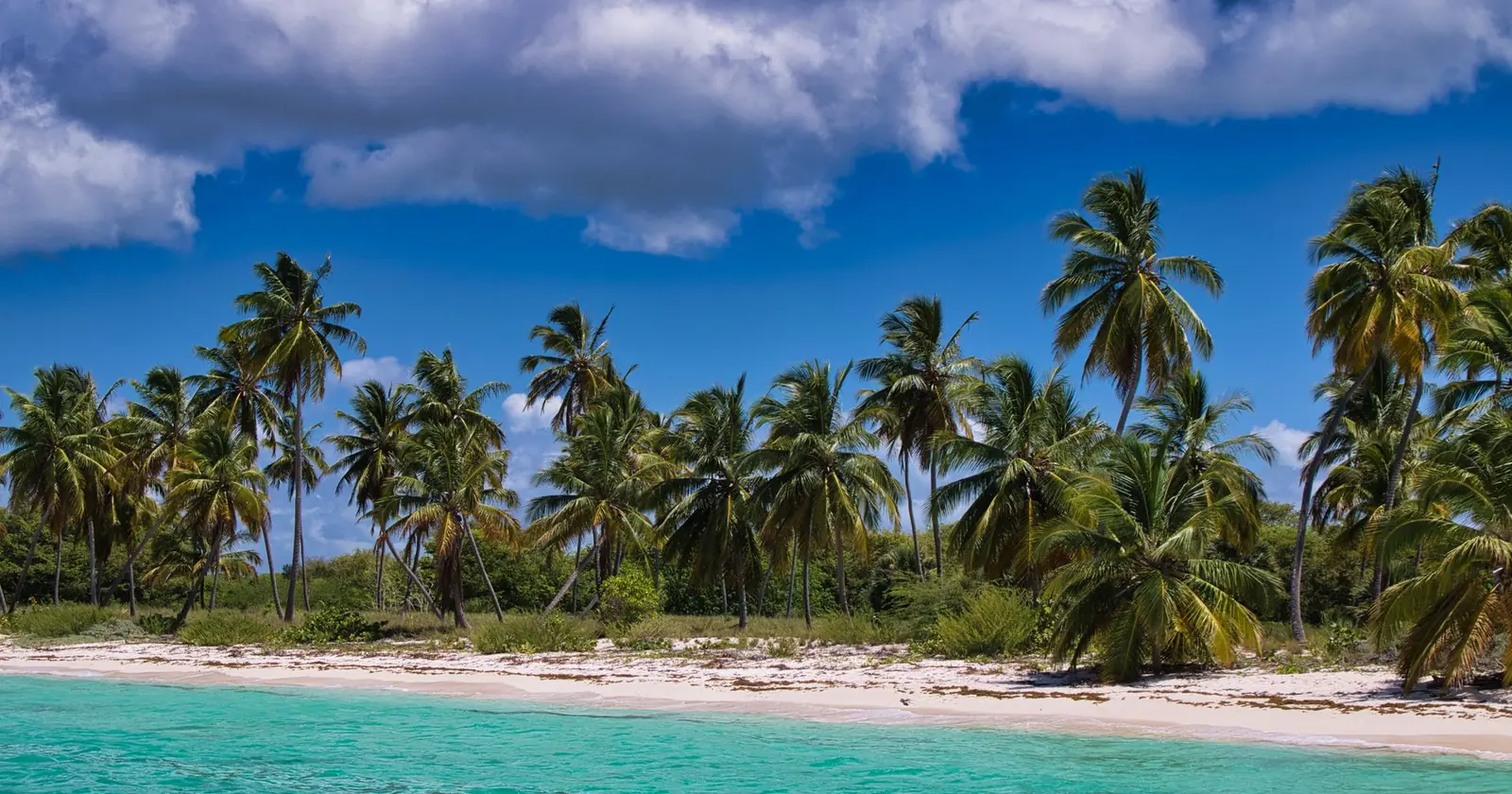
Photo: Mr Pixel / Pexels.
What makes a good Caribbean base
The Caribbean rewards picking by which coast and which season, not by island. We selected for reliable water conditions in a defined window, plus infrastructure that survives a working month: power, connectivity, and getting back out again. The limit of any Caribbean list is hurricane season, roughly June to November, which does not cancel a trip but does change the insurance and flexibility you want.
Cozumel
World-class Palancar drift diving on a rare dive island with real fibre.
Diving, MexicoRead the guide → 12°11′N 68°16′W · Caribbean NetherlandsBonaire
The shore-diving capital: drive-and-dive a protected reef any month.
Diving, Caribbean NLRead the guide → 16°23′N 86°26′W · HondurasRoatán
Warm Mesoamerican-reef diving and cheap courses on a laid-back island.
Diving, HondurasRead the guide → 16°06′N 86°56′W · HondurasUtila
One of the cheapest places on earth to get certified, with whale sharks in season.
Diving, HondurasRead the guide → 9°20′N 82°15′W · PanamaBocas del Toro
A laid-back archipelago of snorkelling, reefs and surf, with a real nomad visa.
Dive & surf, PanamaRead the guide → 19°45′N 70°25′W · Dom. Rep.Cabarete
A Dominican watersports hub for kite, windsurf and surf on one bay.
Kite & surf, Dom. Rep.Read the guide → 12°31′N 70°02′W · ArubaAruba
Near-constant trade winds for kite, plus stable Dutch-Caribbean infrastructure.
Kite, ArubaRead the guide → 18°20′N 67°15′W · Puerto RicoRincon
Caribbean winter surf on a US territory, no visa for US citizens.
Surf, Puerto RicoRead the guide → 20°12′N 87°27′W · MexicoTulum and the Yucatan cenotes
Freshwater cenote diving and snorkelling on Mexico's Riviera Maya.
Cenotes, MexicoRead the guide →Picking a Caribbean base
- Best diving with real wifi: Cozumel and Bonaire.
- Cheapest dive certs: Utila and Roatan in Honduras.
- Best kite and surf: Cabarete, Aruba and Rincon.
How these Caribbean bases differ from each other
Caribbean islands look interchangeable on a map and are not. Cost swings by a factor of three across this list, and the sport each place is genuinely good at differs just as much.
| Base | What it is best at | Monthly cost |
|---|---|---|
| Cozumel | world-class Caribbean drift diving with reliable wifi, a rare combo | roughly $1,500 to $2,300 a month; pricier because it is an island |
| Roatán | world-class reef diving with reliable fibre wifi and comfort | roughly $1,500 to $2,500 a month; pricier than Utila |
| Utila | the world's cheapest scuba certification, whale sharks and reef time on a budget | budget beds around $23 a night; long stays cheaper by the month |
| Bocas del Toro | snorkeling, surf and Caribbean island life, plus a real remote worker visa | roughly $1,200 to $1,900 a month; pricier because everything comes by boat |
| Cabarete | kitesurfing, windsurfing and surfing from one Caribbean base | roughly $1,200 to $2,200 a month; moderate for the Caribbean |
Who these Caribbean bases are wrong for
The Caribbean's failure modes are specific: island pricing, thin infrastructure and a hurricane season nobody advertises. These are the ones each place carries.
- Cozumel:
think twice if you want rock-bottom costs or a big coworking scene
- Roatán:
think twice if you want backpacker prices, go to Utila instead
- Utila:
think twice if you need fast, guaranteed wifi or more than a small island offers
- Bocas del Toro:
think twice if you want high-visibility scuba or fast, guaranteed wifi
- Cabarete:
think twice if you need polished infrastructure and rock-solid internet and power
The Caribbean has a season, and it has a date
Any Caribbean list has to say when it is talking about. The National Hurricane Center's dates are not weather forecasts, they are the administrative frame everything else hangs on: “The Atlantic hurricane season runs from June 1 to November 30”, and the Atlantic basin explicitly includes the Caribbean Sea. On the 1991–2020 climate period an average season has 14 named storms, 7 hurricanes and 3 major hurricanes, and “The peak of the Atlantic hurricane season is September 10, with most activity occurring between mid-August and mid-October”.
Read the progress table and the season has a shape rather than a wall. The average season's first named storm is dated 20 June, its first hurricane 11 August, its first major hurricane 1 September. So June and early July are inside the season and almost always empty; September is the month to treat differently; December to May is out of season entirely, which is why the winter trade-wind months carry every kitesurfing list in the region.
It is worth holding the other half of that in view. The World Meteorological Organization's fifty-year accounting attributes 1,945 disasters to tropical cyclones, with 779,324 people killed and US$1.4 trillion lost, an average of 43 deaths a day. A cancelled kite trip is the smallest thing a hurricane season does.
FAQ: Caribbean Watersports Destinations for Nomads
Where are the best watersports in the Caribbean?
For diving, Cozumel and Bonaire (with real fibre) and the cheap Honduran islands of Utila and Roatan lead. For kite, Aruba and Cabarete; for surf, Rincon in Puerto Rico and Cabarete. Tulum adds unique freshwater cenote diving on the Mexican coast.
Which Caribbean bases have decent wifi?
Cozumel and Bonaire are the standouts, rare dive islands with real fibre. Aruba has stable infrastructure too. Many smaller islands are patchy, so vet your specific accommodation and bring a local SIM or eSIM as backup.
Sources
- The season, and its shape. NOAA National Hurricane Center, tropical cyclone climatology: “The Atlantic hurricane season runs from June 1 to November 30. The Atlantic basin includes the Atlantic Ocean, Caribbean Sea” and the Gulf; an average season (1991–2020) has 14 named storms, 7 hurricanes and 3 major hurricanes; “The peak of the Atlantic hurricane season is September 10”; progress table dates, first named storm 20 June, first hurricane 11 August, first major hurricane 1 September. nhc.noaa.gov. Read 12 September 2026.
- What the season costs where it lands. World Meteorological Organization, tropical cyclone hazard page: “Over the past 50 years, 1,945 disasters have been attributed to tropical cyclones, which killed 779,324 people and caused US$ 1.4 trillion in economic losses – an average of 43 deaths and US$ 78 million in damages daily.” wmo.int. Read 12 September 2026.
- Each entry links to our full guide for that place, and those guides carry the external sources and read dates behind the claims summarised here. They are where the readings are recorded, not the evidence for them: Cozumel, Bonaire, Roatán, Utila, Bocas del Toro, Cabarete, Aruba, Rincon, Tulum and the Yucatan cenotes.