CamSur Watersports Complex (CWC): A Wakeboarding Trip Guide
 by Yannick Schroth
Jul 31, 2026
7 min read
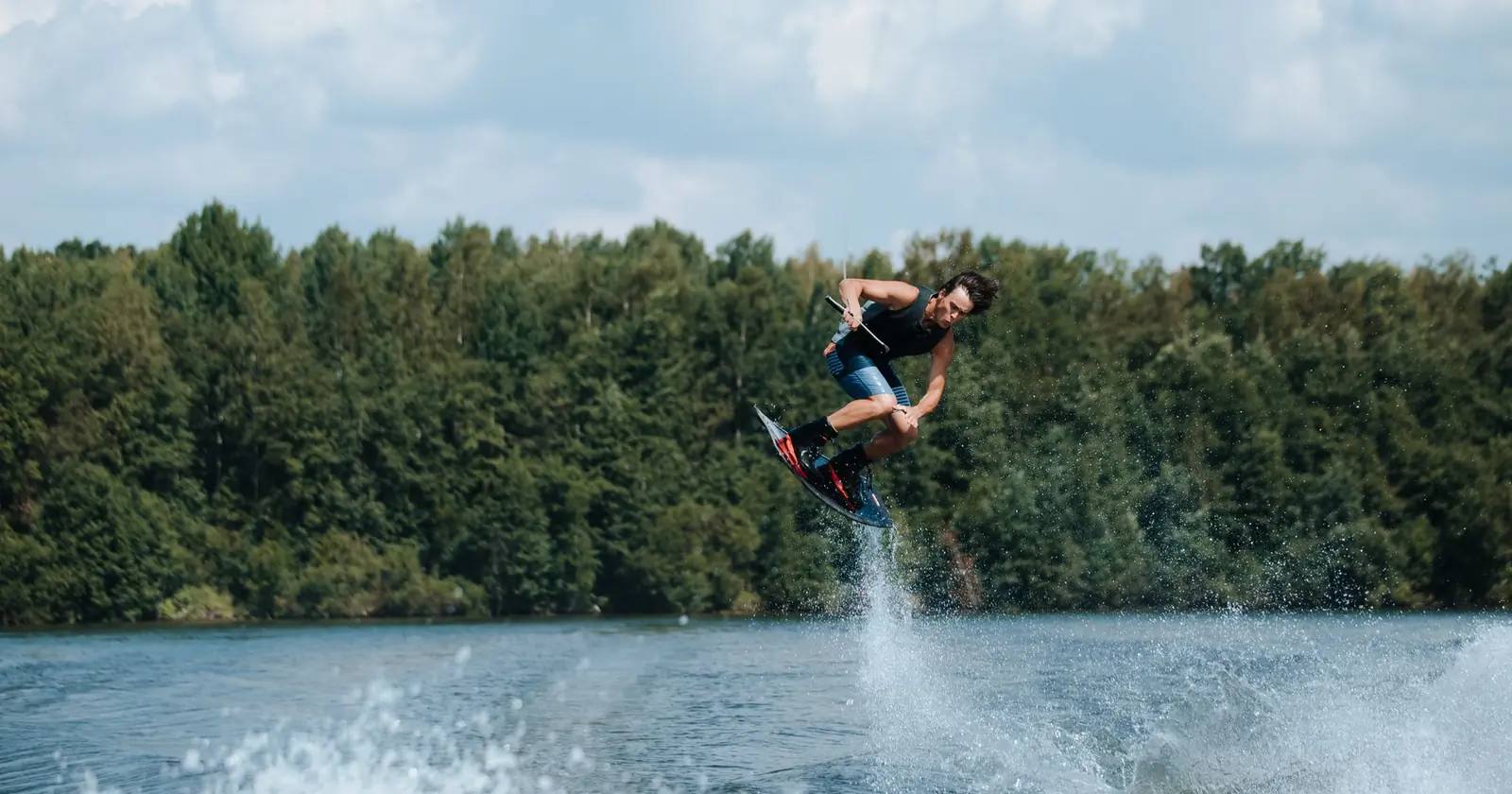
Photo: Ron Lach / Pexels.
Key takeaways
- World-class six-tower cable park in Pili, Camarines Sur, that has hosted the WWA Wake Park World Championships
- Genuinely all-levels: a beginner cable and coaching alongside a full obstacle park for advanced riders
- Very affordable ride time, roughly a few hundred pesos an hour as of 2026, verify before you rely on it
- Go in the dry season (about November to May); June to October is peak typhoon risk in Bicol
- A trip destination for the wakeboarding, not a nomad base; fly into Naga, it sits about 15 minutes away
What CWC actually is and why riders fly in
CamSur Watersports Complex, universally shortened to CWC, is a cable wakeboarding park built around a man-made lake inside the Provincial Capitol Complex in Pili, Camarines Sur. Instead of a boat, an overhead cable running between towers tows you around a fixed circuit, which means constant, predictable pulls and far more ride time for your money than boat wakeboarding.
The main attraction is the full-size cable, a six-tower system feeding a course studded with obstacles: kickers, ramps and sliders you can session as your confidence grows. This is not a token tourist setup. CWC has hosted the WWA Wake Park World Championships more than once, including in 2008 and again in 2016, and it draws serious riders from across Asia and beyond.
Wakeboarding at CWC: the grade and how to progress
Cable wakeboarding is one of the most beginner-friendly ways into the sport because the pull is smooth and you can be up and riding on your first session. Many parks, CWC included, run a separate lower-intensity beginner cable or a two-tower system so you learn the basics of getting up and edging before you take on the full main cable and its obstacles.
If you have never ridden, book a lesson: an instructor will set your stance, sort your body position and get you standing far faster than trial and error. Once you can ride the full circuit comfortably, the obstacle park is where the progression and the fun really open up, from your first small slider to airs off the kickers.
If you want to understand the fundamentals before you arrive, our how-to-wakeboard guide covers stance, edging and the first getting-up technique.
When to go, and the weather picture
Aim for the dry season, roughly November to May, when Bicol sees the most reliable sunshine and calm conditions. The tail of the dry season, around March to May, tends to be the hottest and busiest.
Be clear-eyed about the downside: Camarines Sur is in one of the most typhoon-exposed parts of the Philippines, and the wet, storm-prone season runs from about June to October. Heavy rain and typhoons can shut riding down and disrupt travel, so if you come in those months, keep your plans flexible and watch PAGASA forecasts. Weekends and Philippine holidays also bring domestic crowds, so a weekday session is calmer.
Getting there, costs and what to expect on site
The easy route is a domestic flight into Naga (Pili) airport, which sits close to the complex, roughly 15 minutes away, with taxis and vans running to the CWC gate. Manila is also reachable overland if you prefer a longer bus journey.
Ride time is cheap by watersports standards. As of 2026, wakeboarding was priced at around a few hundred pesos per hour with cheaper half-day and whole-day passes, plus a night-riding rate under floodlights; treat these numbers as a ballpark and verify current rates before you rely on them. On site you will find board and gear hire, cabanas and food, and accommodation clustered right around the park, so you can stay and ride without a car.
This is a destination for the activity, not a nomad workbase. Do not count on strong, reliable wifi for video calls out here; come for the riding and treat any connectivity as a bonus.
Safety note: warm water still bites
Cable wakeboarding is low-risk compared with whitewater, but injuries are real. The most common are wrist, shoulder and knee tweaks from catching an edge, plus impacts when you misjudge an obstacle. Always wear the buoyancy vest and, sensibly, a helmet on the obstacle park, and let go of the handle when you fall rather than fighting it.
Progress obstacles in order and do not session kickers or sliders beyond your level to impress anyone. Fatigue causes most falls late in a session, so stop when your arms are cooked. The water is warm but it is not clean open ocean; rinse cuts and grazes properly to avoid infection in a tropical climate.
Finally, respect the weather. If a storm is inbound the park will close, and that call is for your safety; do not try to ride around it.
FAQ: CamSur Watersports Complex (CWC)
Is CWC good for complete beginners or only experienced riders?
Both. It is one of the best places in Asia to learn: the cable gives a smooth, consistent pull, beginner setups and lessons are available, and most people can stand up and ride within their first session. Experienced riders come for the full obstacle park and the championship-grade main cable.
How much does wakeboarding at CWC cost?
It is very affordable. As of 2026, wakeboarding was around a few hundred pesos per hour, with discounted half-day and whole-day passes and a separate night-riding rate under lights. Prices change, so confirm the current rates with CWC directly before you go.
When is the best time to visit?
The dry season, roughly November to May, gives the most settled weather. Avoid June to October if you can, as Camarines Sur is in the typhoon belt and storms can close the park and disrupt travel. Weekdays are quieter than weekends and holidays.
How do I get to CWC?
Fly domestically into Naga (Pili) airport, which is only about 15 minutes from the complex, then take a taxi or van to the gate. You can also reach the Naga area overland from Manila by bus if you prefer, though it is a long ride.
Do I need a visa for the Philippines?
Most visitors, including UK, EU, US, Canadian and Australian passport holders, get around 30 days visa-free on arrival, provided your passport is valid for at least six months and you have an onward ticket. You will also need to complete the free online eTravel registration shortly before you land. Rules change, so check the official Philippine Bureau of Immigration guidance for your nationality.
Yannick Schroth
Founder of NOMADREEF and a former digital nomad. This guide is sourced from the references below; conditions, prices and rules change, so verify current details, and follow qualified local guidance and safety briefings. About the author · LinkedIn ↗
Sources
- The park's own channels: CWC on Facebook and CWC on Instagram, and the Camarines Sur provincial tourism page, which describes the complex and its "6-point cable ski system" in the present tense. Read 9 November 2026. The old address cwcwake.com now forwards to a domain parking page, so nothing on this page is sourced from it, including any price.
- World Wake Association, for the Wake Park World Championships. Checked 2026-08-28: the page rendered zero characters of text for us, so the hosting years below are unconfirmed.
- Location and access are widely reported and consistent across sources, none of them primary. The six-tower figure in those reports matches the "6-point cable ski system" on the provincial tourism page above.
- PAGASA and Philippine climate/typhoon-season guides for dry-season and storm timing
- Philippine Bureau of Immigration guidance on visa-free entry and eTravel registration