Bali Wake Park: a cable wakeboarding day trip near Sanur
 by Yannick Schroth
Jul 31, 2026
7 min read
by Yannick Schroth
Jul 31, 2026
7 min read
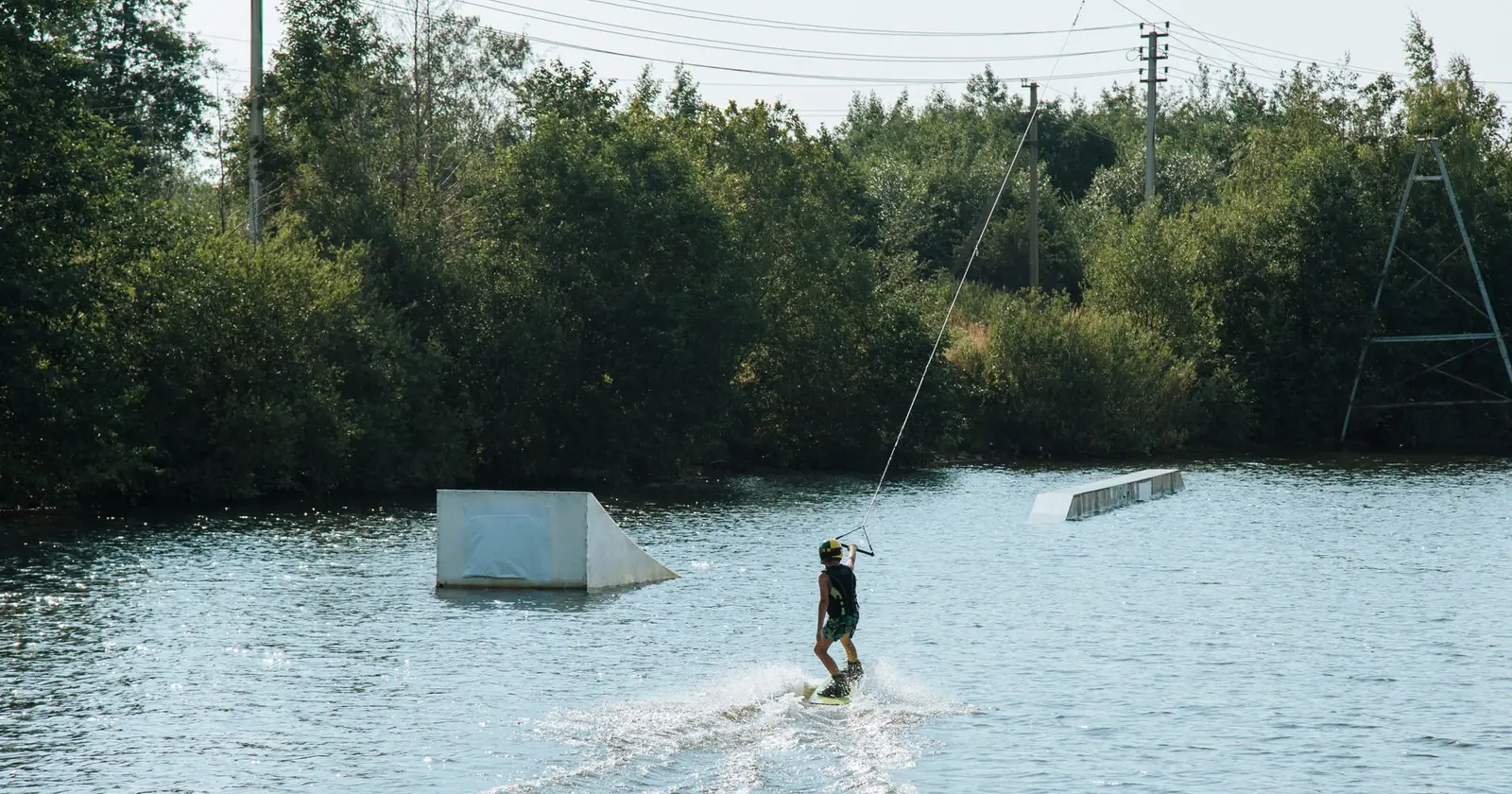
Photo: Ron Lach / Pexels.
Key takeaways
- Full cable park near Sanur and Benoa, easy to reach from Canggu or the south for a half-day ride session
- Beginners get a separate beginner line and an instructor; the main full-size cable runs the five-hectare lake with kickers and rails
- Published rates, read 10 September 2026: IDR 400,000 an hour on the cable, IDR 850,000 for a day pass; Aqualand is IDR 250,000 an hour
- Rideable year-round, but Bali's dry season roughly April to October gives the most reliable weather; wet season brings afternoon storms
- Treat it as a trip, not a base: it is a harbor-side attraction in Denpasar, not somewhere to live and work
What Bali Wake Park actually is
Bali Wake Park is a cable wakeboarding facility built across roughly five hectares of artificial lake carved out of marshland beside the mangroves of south Bali, at Pesanggaran in Denpasar near Benoa Harbour. Instead of a boat, an overhead cable system tows you around a fixed circuit, which is why cable riding is cheaper, greener and far more repeatable than boat sessions.
The main draw is a full-size cable that runs multiple riders at once and is dotted with kickers, sliders and rails for people who want to progress to jumps and tricks. There is also a large pool-and-slide water play area on site, so it doubles as a family day out, not just a rider's venue.
The wakeboarding: grades, cable and progression
This is cable wakeboarding, so the difficulty is about your own board skill, not a river grade. Absolute beginners start on a separate beginner line with an instructor, which gives you a short, low-pressure pull to learn how to get up on the board and hold an edge before you commit to the full lap. The park describes the beginner line but does not publish its tower configuration, so this page no longer states one.
Once you can ride, you move onto the full-size cable, which pulls you continuously around the lake and lets you session the obstacles at your own pace. It suits first-timers through to intermediate riders working on their first kickers; seasoned riders will find enough features to have fun but should treat it as a solid all-rounder rather than a specialist pro park.
Gear such as board, helmet and vest is available to hire on site, so you can arrive with nothing. If you already own a favorite binding setup, bring it, but you do not need to travel heavy for a day here.
When to go and what to expect from the weather
The park runs year-round because Bali is warm throughout, but the sky matters. The dry season, roughly April to October, gives you the most reliable run of sunny, ridable days and calmer afternoons. The wet season, roughly November to March, is still warm and often fine in the morning but brings heavier humidity and sudden afternoon downpours and thunderstorms.
Whatever the month, aim for a morning session. It is cooler, quieter and gets you off the water before any afternoon storm cells build. Published hours have generally been mid-morning to early evening, with slightly later closing at weekends and a full closure on Nyepi, the Balinese Day of Silence; confirm current hours and Nyepi dates before you plan a specific day.
Getting to Bali Wake Park, and how a session works
The park sits near the Bali Mandara toll road and Benoa Marina in Pesanggaran, which puts it within easy reach of Sanur, and a manageable ride-share or scooter trip from Canggu, Seminyak and the southern beaches. From Canggu allow a fair chunk of time in traffic; from Sanur it is short. A car with driver via a ride-hailing app is the least stressful option if you do not want to ride a scooter home tired.
You generally do not need to pre-book. Entry to the grounds is typically free and you pay for the activity you do, choosing an hourly session or a day pass at the desk. If it is your first time, ask for the beginner cable and an instructor rather than going straight to the full circuit.
What a session at Bali Wake Park costs
Cable riding here is cheap by watersports standards but not free, and the park publishes its rates, so there is no need to guess. Read on 10 September 2026, the cable park is IDR 400,000 for one hour and IDR 850,000 for a full day pass, quoted per person. The water-play side, Aqualand, is priced separately and lower: IDR 250,000 an hour, IDR 500,000 for a day pass.
Two things follow from those two numbers. The day pass costs a little over two hours of cable time, so it pays for itself before lunch if you can ride for more than about two hours, and on a first visit you probably cannot, because your forearms give out long before the cable does. And a family splitting up for the day, one on the cable and the rest at Aqualand, is looking at IDR 850,000 against IDR 500,000 a head, not one ticket for everyone.
Corrected on 10 September 2026: this page previously gave “roughly Rp500,000 to Rp650,000 for one to two hours”. That range matches neither published price: the hour is cheaper than its floor and the day pass is well above its ceiling, and it carried no source. Rates do change, so the figures above are dated; the park's own ticket page is the place to check.
Budget also for transport, which on a Canggu day trip can rival the cost of the riding itself, plus food and water on site. None of this is expensive by European standards, but it adds up if you make a habit of it.
Safety at Bali Wake Park
Cable wakeboarding is much more controlled than open water, but it is still a fall sport on hard water. Always wear the helmet and impact vest, listen to the start-dock briefing and let the operator set your cable speed; most beginner injuries come from tensing up, catching a toe edge or trying obstacles too soon.
The sport's world body is specific about both items, and it is worth knowing what the vest is actually for. The IWWF's cable wakeboard rules require “a suitable well fitted helmet in the course”, with disqualification for riding without one, and they say the life vest “must float the Rider” and “must be constructed to provide adequate protection from impact damage to the ribs and internal organs”. That second clause is why a swimming buoyancy aid is not a substitute: on a cable you land on water at speed, and the vest is armour as much as flotation. Those are competition rules rather than a law that binds a day pass, but they are the standard the sport sets for itself, and a rental vest that only floats you is doing half the job.
Respect the heat and sun. This is an exposed, equatorial lake, so you dehydrate and burn faster than you expect; use reef-safe sun cream, drink more than you think you need and take breaks. If storms roll in during wet season, come off the water, as open water and lightning do not mix. Finally, know your own arms: cable pulls are relentless, and grip and shoulder fatigue creep up, so stop while you are still riding well rather than pushing one lap too far.
FAQ: Bali Wake Park
Is Bali Wake Park good for complete beginners?
Yes. There is a separate beginner line and an instructor who takes you through getting up on the board before you attempt the full-size circuit. Riders as young as five are accepted, with supervision rules for small children. It is one of the friendlier places in Bali to try wakeboarding for the first time.
How much does it cost to ride?
The park publishes its rates: IDR 400,000 for an hour on the cable and IDR 850,000 for a full day pass, per person, read on 10 September 2026. The Aqualand water-play side is separate, at IDR 250,000 an hour or IDR 500,000 for the day. Prices change, so check the current rate on the official ticket page before you go. Entry to the grounds is typically free; you pay for what you ride.
When is the best time of year to go?
The dry season, roughly April to October, gives the most reliable weather. The wet season from November to March is still warm but brings humid afternoons and thunderstorms. Any time of year, go in the morning for cooler air, fewer people and less chance of an afternoon storm.
Can I get there easily from Canggu or Seminyak?
Yes, but it is a trip, not a local spot. The park is near Benoa Harbour and Sanur, so it is short from Sanur and a longer, traffic-dependent ride from Canggu, Seminyak or the southern beaches. A ride-hailing car with driver is the least stressful way to arrive and leave when your arms are tired.
Do I need to book in advance or bring my own gear?
Usually not. You can generally turn up and pay for an hourly session or day pass on arrival, and board, vest and helmet are available to hire on site. Bring your own bindings if you have a setup you love, but you do not need to travel heavy for a day of cable riding.
Yannick Schroth
Founder of NOMADREEF and a former digital nomad. This guide is sourced from the references below; conditions, prices and rules change, so verify current details, and follow qualified local guidance and safety briefings. About the author · LinkedIn ↗
Sources
- Bali Wake Park official site: cable park description, systems and activities pages
- What the sport's own rulebook requires. IWWF Cable Wakeboard Council, Competition Guidelines for Cable Wakeboard & Wakeskate, effective 1 March 2025: “Riders must wear a suitable well fitted helmet in the course. If a rider performs their routine without a helmet, they will be disqualified from the competition.” On the vest: “All competitors must wear a Life Vest”, and it “must float the Rider” and “must be constructed to provide adequate protection from impact damage to the ribs and internal organs”. These are competition rules, not a law for a day pass, but they are the standard the sport sets for itself. cablewakeboard.net. Read 10 September 2026.
- The published rates, and the size of the lake. Bali Wake Park's own site: “1 Hour Cable Park IDR 400K” and “DAY PASS CABLE PARK IDR 850K”, with “TICKET PRICE start from IDR 400,000 / pax”; Aqualand at IDR 250K an hour and IDR 500K for a day pass. The same page describes the “five hectare Cable Park lake”. It does not state a tower count for the beginner line, which is why this page no longer gives one. baliwakepark.com. Read 10 September 2026.
- TripAdvisor attraction listing for location, ages and visitor detail
- General Bali climate references for dry-season (April to October) versus wet-season timing
- Operator and local guide listings for opening hours, Nyepi closure and getting-there logistics