How to Wakeboard for Beginners
 by Yannick Schroth
Jul 29, 2026
7 min read
by Yannick Schroth
Jul 29, 2026
7 min read
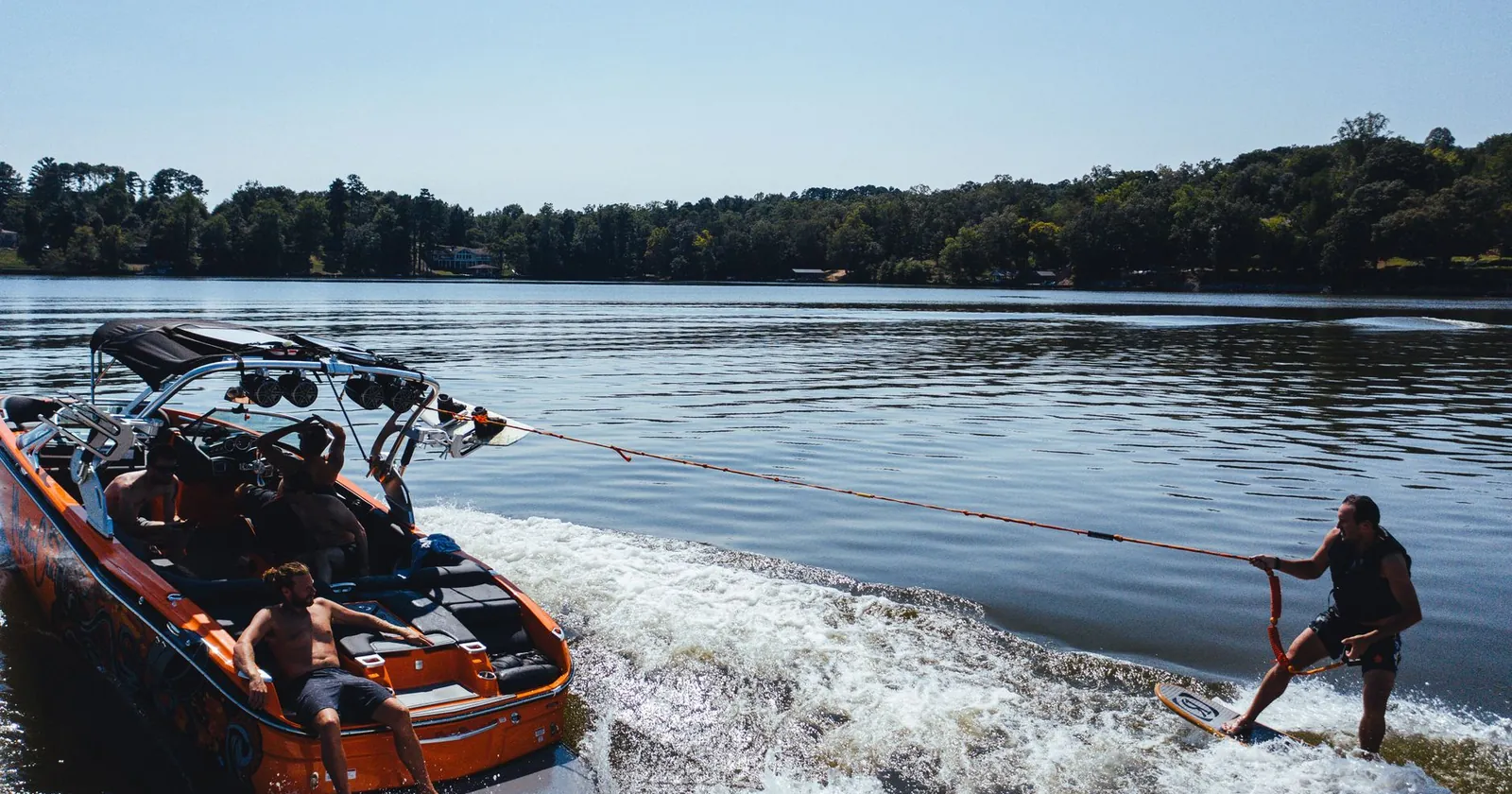
Photo: K via Pexels (free license).
This is general beginner guidance, not a substitute for a lesson or the operator's briefing.
Key takeaways
- Getting up is the whole game: stay tucked and let the pull lift you.
- Cable parks are the cheap, easy way in; boats give the classic wake.
- Board across the pull, arms straight, handle low, knees to chest.
- Rise slowly with bent knees and weight slightly on your front foot.
- Always wear a vest; a helmet at cable parks. Learn to fall safely.
Cable park or boat?
You can wakeboard two ways. A cable park uses an overhead cable to tow riders around a course: it is cheaper, very sociable, and gives you lots of attempts, which is exactly what a beginner needs. A boat gives the classic wake and focused one-on-one coaching, but costs more per session. For most travelers, a cable park with a beginner line and a lesson is the most accessible and affordable start, and they are everywhere in Southeast Asia.
How a beginner progresses in wakeboarding
Step 1: Set your stance and gear up
Fit the bindings with your leading foot forward: left foot forward is "regular", right foot forward is "goofy" (whichever feels natural). Wear a correctly-fitted buoyancy aid or impact vest, and a helmet at cable parks. Let the school size the board and bindings to your weight.
Step 2: The getting-up position
This is where beginners spend their first session. Float with knees tucked to your chest, the board across (perpendicular to) the direction of pull, arms straight either side of your knees, and the handle low. Stay compact, like a coiled spring, and wait.
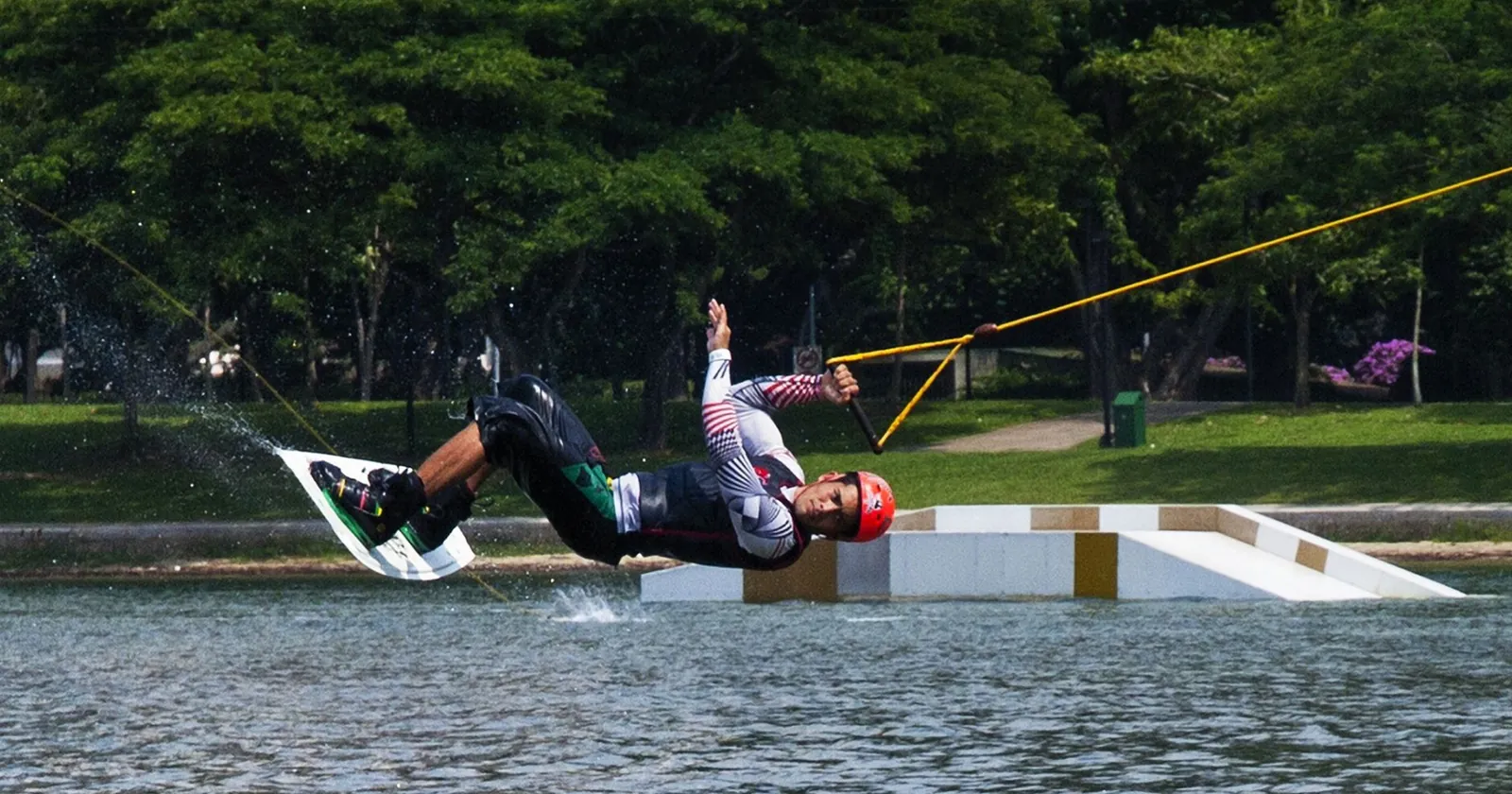
Step 3: Stand up slowly
As the boat or cable pulls, let the board plane on the water before you rise. Come up with knees bent, weight slightly on your front foot, the handle held low near your hip, and look ahead, not down. The classic mistakes are standing up too early and pulling on the rope with your arms. Stay patient and relaxed.
Step 4: Ride straight, then edge
Once you can ride, steer by shifting weight onto your heels or toes to set an edge. To cross the wake, hold a smooth, progressive edge into it rather than hitting it stiffly. Keep your arms relaxed and the handle in.
Step 5: Progress to jumps later
Only once riding and edging feel comfortable and repeatable should you start small wake jumps. There is no rush, and a solid edge is the foundation for everything above the water.
Where to learn wakeboarding: cable or boat
The technique above is the same everywhere; what differs is who is running the cable while you learn it.
What gear you need to start wakeboarding
A wakeboard with bindings sized to you, a buoyancy aid or impact vest, a helmet for cable parks, and a wetsuit in cooler water (boats also need a non-stretch rope and handle). Schools and cable parks provide all of it, so rent before you buy. See our wakeboarding gear guide when you are ready.
Two rules that come from outside the boat
Wakeboarding is taught by the person driving, which means the safety rules you meet are the ones that operator happens to hold. Two of them are written down elsewhere, by people with no stake in your afternoon.
The helmet and what the vest is for. The sport's world body requires, in competition, “a suitable well fitted helmet in the course”, with disqualification for riding without one. On the vest its wording sets out two jobs rather than one: it “must float the Rider” and “must be constructed to provide adequate protection from impact damage to the ribs and internal organs”. That second clause is why a swimming buoyancy aid is not the same object as an impact vest: at speed you land on water that does not behave like water.
And the exhaust. Behind a boat there is a hazard nobody briefs you on. California's boating agency states it flatly: “The transom is where carbon monoxide collects. Stay away from the transom while the vessel is idling or underway.” The symptoms, “nausea, dizziness, confusion, headache and fainting”, are also what a tired rider feels on a hot day, which is exactly why they get missed. The extreme version of sitting there, “teak surfing”, has been against the law in California since 1 January 2005. Wait for your turn away from the platform, and treat a headache on the water as a reason to come in.
FAQ: starting wakeboarding
Is wakeboarding hard to learn?
Getting up out of the water is the hard part and often takes several tries in a first session, but most people manage it with a lesson. Once you can get up and ride straight, riding is intuitive and progression to crossing the wake and small jumps comes with practice. Cable parks with a beginner line and an instructor make the learning curve much gentler and cheaper than boat sessions.
Should I learn wakeboarding at a cable park or behind a boat?
Both work, but cable parks are usually the better and cheaper way to learn. A cable park uses an overhead cable system to tow riders around a course, so you get lots of attempts for a low price in a sociable setting, often with beginner lines and lessons. Boats give a classic wake and focused one-on-one coaching but cost more per session. Many travelers start at a cable park because they are affordable and widespread, especially in Southeast Asia.
How do you get up on a wakeboard?
Float with your knees tucked to your chest and the board across the direction of pull, arms straight either side of your knees and the handle low. Then let the boat or cable slowly pull you up, staying patient and letting the board plane before you rise. The classic beginner mistake is trying to stand up too early or pulling on the rope with your arms; instead, stay compact and let the pull do the work, rising with bent knees and weight slightly forward.
What gear do I need to wakeboard?
A wakeboard with bindings sized to you, a properly-fitted buoyancy aid or impact vest, and at cable parks a helmet, plus a wetsuit in cooler water. Boats also need a non-stretch wakeboard rope and handle. As a beginner, schools and cable parks provide all of this, so you rarely need to buy before you know you enjoy the sport and understand what suits you.
Is wakeboarding safe?
Wakeboarding is generally safe with sensible precautions, but falls at speed and impacts are the main risks, so always wear a correctly-fitted buoyancy aid, a helmet at cable parks, and learn to fall safely (let go of the handle and protect your head). Follow the operator's rules, ride within your ability, warm up, and never ride under the influence of alcohol. This is general information, not a substitute for a lesson and the operator's briefing.
Yannick Schroth
Founder of NOMADREEF and a former digital nomad. This guide explains the standard beginner wakeboarding progression; it is not a substitute for a lesson or the operator's own safety briefing. About the author · LinkedIn ↗
Sources
- What the sport's rulebook requires. IWWF Cable Wakeboard Council, Competition Guidelines for Cable Wakeboard & Wakeskate, effective 1 March 2025: “Riders must wear a suitable well fitted helmet in the course. If a rider performs their routine without a helmet, they will be disqualified from the competition”; the life vest “must float the Rider” and “must be constructed to provide adequate protection from impact damage to the ribs and internal organs”. Competition rules, not a law for a day pass. cablewakeboard.net. Read 12 September 2026.
- Carbon monoxide behind a boat. California Department of Parks and Recreation, Division of Boating and Waterways: “The transom is where carbon monoxide collects. Stay away from the transom while the vessel is idling or underway”; “'Teak surfing' involves holding onto the swim platform or transom of an underway vessel to bodysurf on the wake of the vessel”, and “As of January 1, 2005, 'teak surfing' and other similar recreational activities are against the law in California”; symptoms “may include nausea, dizziness, confusion, headache and fainting”. One state's law, quoted as such. dbw.parks.ca.gov. Read 12 September 2026.
- Wakeboarding beginner instruction conventions (cable-park and boat, getting-up technique, edging).
- Our own wakeboarding gear and wakesurfing vs wakeboarding guides.