Best Warm-Water, Year-Round Watersports Destinations
 by Yannick SchrothAug 3, 20266 min read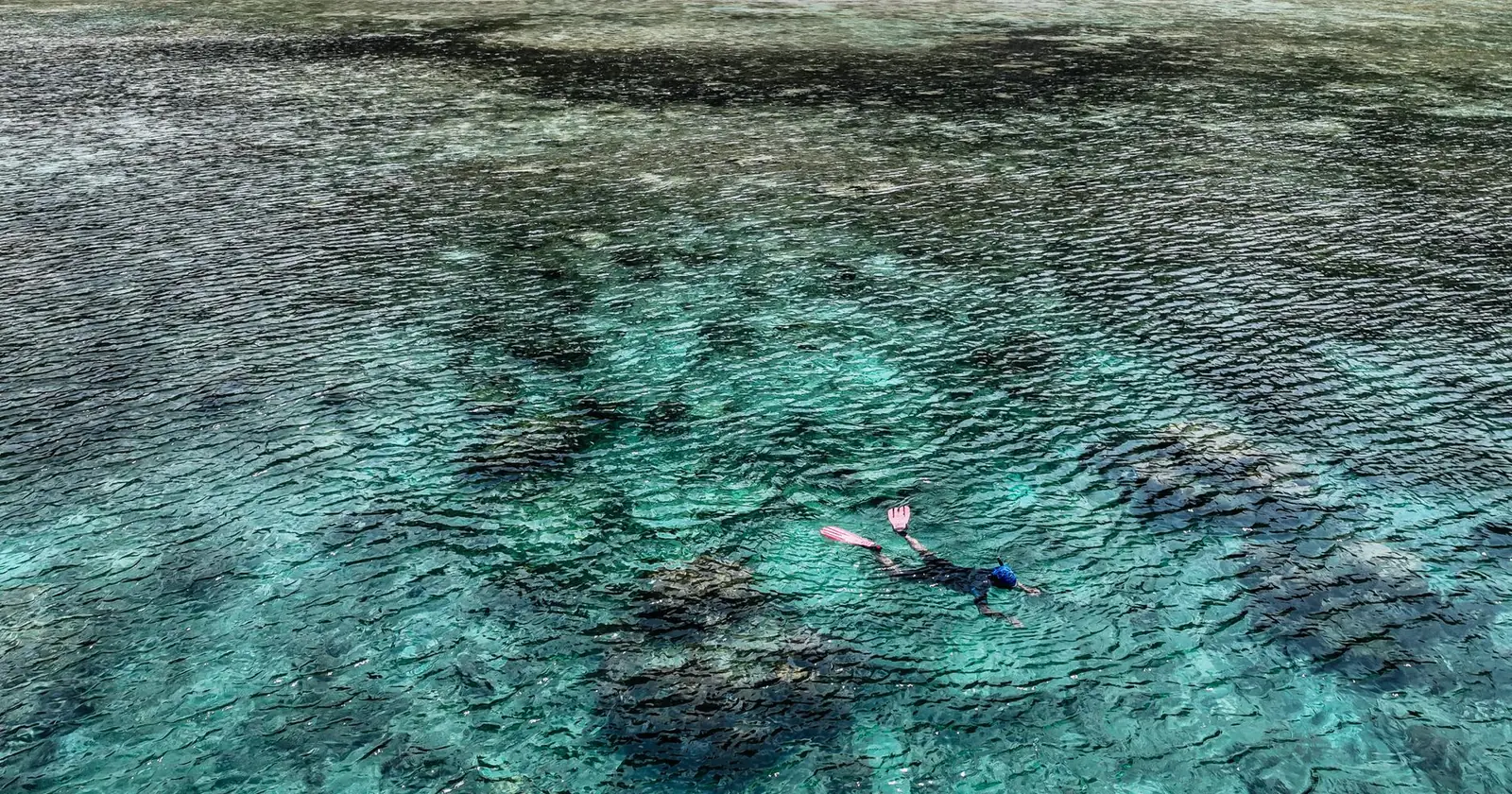
Photo: Abdulaziz hasan / Pexels.
What year-round warm water actually means
The rule here is literal: water warm enough to swim or dive comfortably in every month, not on average. Averages hide the two cool months that ruin a plan. We also weighted rain and wind, because warm water under a three-month monsoon is not the year-round base people imagine when they read the temperature chart.
Moalboal
Warm water and a permanent sardine run and turtles straight off Panagsama Beach.
Year-round, divingRead the guide → 12°00′N 120°12′E · PhilippinesCoron, Palawan
Warm Palawan water over WWII wrecks and karst lagoons.
Warm, wrecksRead the guide → 9°33′N 123°46′E · PhilippinesPanglao, Bohol
Warm Visayan water, Balicasag walls and easy reefs off Alona Beach.
Warm, divingRead the guide → 8°20′S 115°41′E · IndonesiaAmed, Bali
Warm, calm shore diving on Bali's quiet east coast, near enough to year-round.
Year-round, divingRead the guide → 8°21′S 116°03′E · IndonesiaGili Islands
Warm water and turtles off the car-free islands off Lombok.
Warm, divingRead the guide → 8°44′S 115°33′E · IndonesiaNusa Penida
Warm water, mantas and mola mola off Bali's dramatic neighbour.
Warm, divingRead the guide → 12°11′N 68°16′W · Caribbean NetherlandsBonaire
Warm Caribbean water and the world's best shore diving, any month, drive-and-dive.
Year-round, divingRead the guide → 20°25′N 86°55′W · MexicoCozumel
Warm water and Palancar drift diving off the Yucatan, with real fibre ashore.
Year-round, divingRead the guide → 6°16′S 39°32′E · TanzaniaZanzibar (Paje)
Warm Indian-Ocean water, kite season and white sand at Paje.
Warm, kiteRead the guide → 3°54′N 73°21′E · MaldivesMaldives local islands
Bath-warm water, mantas and whale sharks from budget local islands.
Warm, divingRead the guide → 11°12′N 119°25′E · PhilippinesEl Nido
Warm Bacuit Bay water, island-hopping and snorkelling off Palawan.
Warm, islandsRead the guide → 0°14′S 130°31′E · IndonesiaRaja Ampat
The richest reefs on earth in warm water (best as a trip, not a base).
Warm, tripRead the guide →Picking a warm-water base
- If you want cheap warm-water diving you can base at: Moalboal, Panglao or Amed.
- If you want the very best reefs (as a trip): Raja Ampat or the Maldives.
- If you want warm water plus real fibre: Cozumel or Bonaire in the Caribbean.
How these warm-water destinations differ from each other
Every place here is warm all year, so temperature is not the differentiator. What separates them is cost, what the water is actually good for, and whether anything else about the year is consistent.
| Base | What it is best at | Monthly cost |
|---|---|---|
| Moalboal | cheap, world-class diving: the year-round sardine run, turtles and Pescador Island | roughly $700 to $1,100 a month; a long-stay room $250 to $450 |
| Amed, Bali | focused solo nomads and couples who dive most days and do not need office-grade wifi | roughly $1,070 to $1,480 a month, cheaper than Canggu; a villa is $600 to $1,200 |
| Gili Islands | turtle-rich diving and snorkeling, car-free calm, and a social island break | roughly $1,000 to $1,220 a month; a bungalow $300 to $500 |
| Nusa Penida | world-class manta ray and mola mola diving off Bali | roughly $1,000 to $1,800 a month; a premium over mainland Bali |
| Cozumel | world-class Caribbean drift diving with reliable wifi, a rare combo | roughly $1,500 to $2,300 a month; pricier because it is an island |
| El Nido | spectacular island hopping, lagoons and snorkeling in Bacuit Bay | roughly $900 to $1,600 a month; risen with tourism |
Who these warm-water destinations are wrong for
Warm water year-round does not mean good conditions year-round. Rain, wind and crowding are the reasons to look past a place that passes the temperature test.
- Moalboal:
think twice if you need fast, guaranteed wifi or big-city amenities
- Amed, Bali:
think twice if you need reliable high-bandwidth video calls all day or a large coworking community
- Gili Islands:
think twice if you need reliable bandwidth; the wifi is the weak point
- Nusa Penida:
think twice if you are a new diver (strong currents) or need reliable wifi
- Cozumel:
think twice if you want rock-bottom costs or a big coworking scene
- El Nido:
think twice if you need reliable wifi or hardcore wreck scuba (try Coron)
Sea temperatures are rising, and what that means for these destinations
A list of places where you never need a wetsuit is, read another way, a list of places whose water temperature is the point. So it is worth knowing what that temperature has been doing.
The Copernicus Climate Change Service puts the average sea surface temperature of the extrapolar ocean, 60 °S to 60 °N, about 0.9 °C above the late nineteenth century, with around 0.6 °C of that added since 1980 alone, and the most recent five-year average about 0.3 °C above the 1991–2020 reference period. The year-to-year wobble on top of the trend is ENSO: El Niño warms the global average, La Niña cools it.
The consequence shows up on the reef rather than the thermometer. On version 2026-1 of the IUCN Red List, more than 49,500 species are threatened with extinction, 28 per cent of everything assessed: and the figure for reef-building corals is 44 per cent, against 26 per cent for mammals and 11 per cent for birds. Sharks and rays sit at 38.
None of that is an argument for staying home. It is an argument for what warm-water travel is for: go, look properly, and pick operators who run mooring buoys and briefings rather than anchors.
FAQ: Warm-Water Year-Round Watersports Destinations
Where is the water warm all year?
Tropical Southeast Asia (the Philippines and Indonesia), the southern Caribbean (Bonaire, Cozumel), the Maldives and coastal East Africa (Zanzibar) all stay warm year-round, roughly 26 to 30C. You can dive or snorkel in a shorty or rashguard rather than a thick wetsuit. Individual sites still have better and worse seasons for visibility and marine life, which the linked guides cover.
Which warm-water base has the best wifi?
Cozumel and Bonaire are the rare warm-water dive islands with real fibre, so they suit work-first nomads. Most tropical dive bases have workable-but-variable wifi, so bring a local SIM or eSIM as backup.
Sources
- What warm water has done. Copernicus Climate Change Service, climate indicator for sea surface temperature: between 1880–1900 and 2019–2023 the average SST over the extrapolar ocean (60°S–60°N) “has increased by about 0.9°C”; “The increase from 1980 to 2023 has been around 0.6°C”; the latest five-year average is “around 0.3°C above the average for the 1991-2020 reference period”. climate.copernicus.eu. Read 12 September 2026.
- What that costs the reef. IUCN Red List of Threatened Species, version 2026-1: “More than 49,500 species are threatened with extinction”, “28% of all assessed species”, with reef corals at 44% and sharks & rays at 38% against 26% for mammals and 11% for birds. iucnredlist.org. Read 12 September 2026.
- Each entry links to our full guide for that place, and those guides carry the external sources and read dates behind the claims summarised here. They are where the readings are recorded, not the evidence for them: Moalboal, Coron, Palawan, Panglao, Bohol, Amed, Bali, Gili Islands, Nusa Penida, Bonaire, Cozumel, Zanzibar (Paje), Maldives local islands, El Nido, Raja Ampat.