Best Surf Destinations for Digital Nomads (2026)
 by Yannick Schroth
Jul 28, 2026
8 min read
by Yannick Schroth
Jul 28, 2026
8 min read
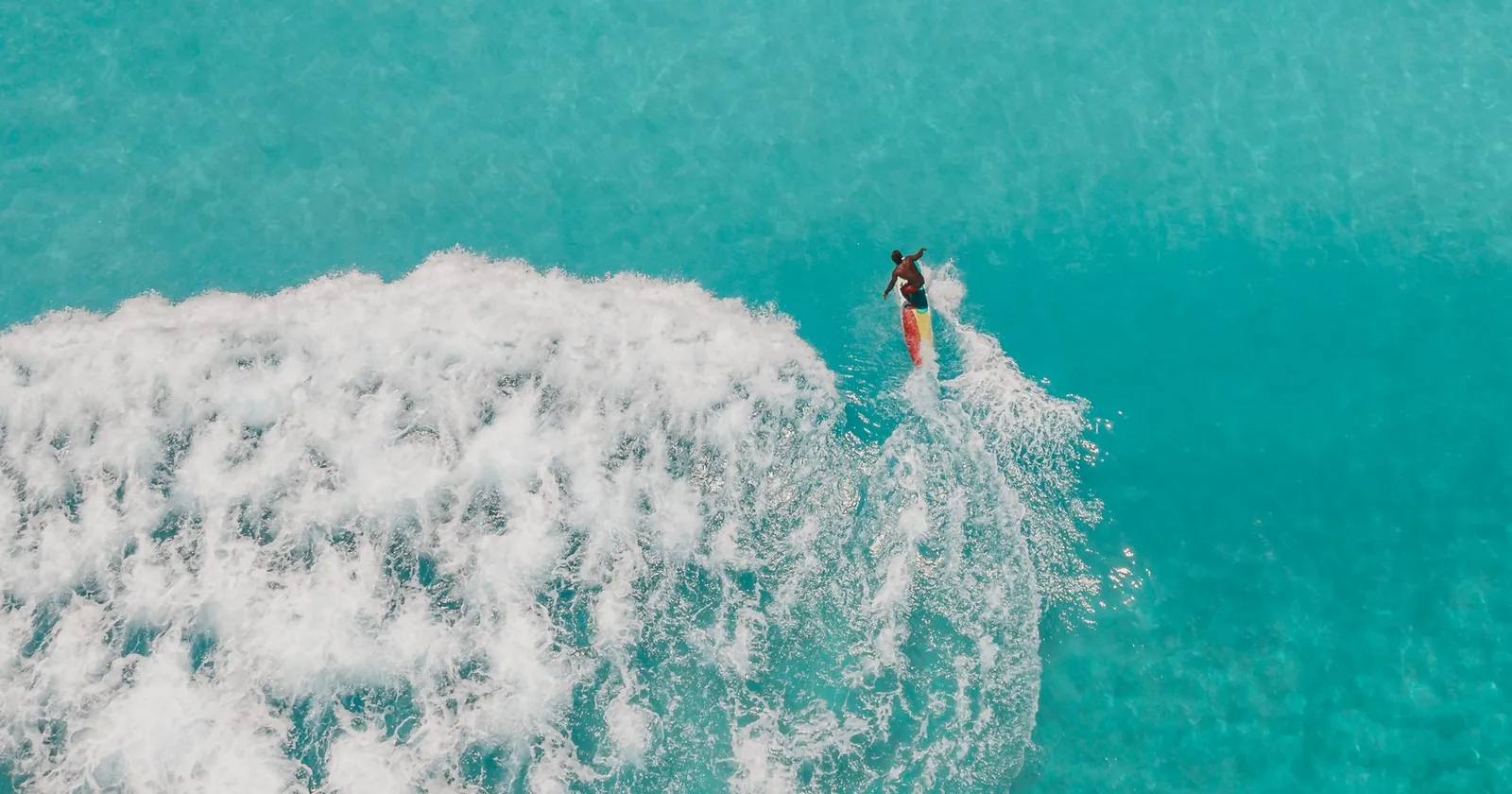
Photo: Jess Loiterton via Pexels (free license).
Costs, wifi and conditions are "as of 2026" and vary by season, verify before you rely on them.
How to read this list
- Beginner-friendly: Canggu, Sri Lanka, and mellow spots near most bases.
- World-class / advanced: Puerto Escondido (Zicatela), Siargao (Cloud 9), Taghazout (Anchor Point).
- Best value: Taghazout, Siargao, Sri Lanka.
- Two sports in one: Cabarete (surf plus kite and windsurf).
What makes a surf destination worth the flight
This is a curated list of the surf bases we have researched and written full guides for, not a claim to have surfed every wave on earth. Each destination below links to its own guide with costs, wifi reality, visa notes and safety. We weight remote-work practicality as heavily as wave quality, a perfect break with no internet is a holiday, not a base. The list grows as we cover more; if a famous surf town is missing, it is on our list to research, not a judgement.
Puerto Escondido
The "Mexican Pipeline" at Zicatela for experts, plus mellower La Punta for progressing surfers, with a strong Pacific-coast nomad scene.
Advanced + learner waves · Pacific Read the guide → 8°39′S 115°08′E · IndonesiaCanggu, Bali
Bali's biggest nomad hub and a superb beginner base: mellow Batu Bolong, the best coworking on the island, endless scene, crowds and all.
Beginner-friendly · best wifi Read the guide → 30°32′N 9°42′W · MoroccoTaghazout
North Africa's surf capital: consistent Atlantic point breaks, cheap living and a growing scene, a short flight from Europe.
Point breaks · best value Read the guide → 9°51′N 126°03′E · PhilippinesSiargao
The surfing capital of the Philippines: world-class Cloud 9, gentler learner waves, and palm-fringed island life with lagoons.
World-class reef · island life Read the guide → 19°45′N 70°25′W · Dom. Rep.Cabarete
Atlantic surf at Encuentro in the mornings and kitesurfing in the bay by afternoon, two sports from one affordable Caribbean base.
Surf + kite · Caribbean Read the guide → 5°58′N 80°25′E · Sri LankaSri Lanka
Better known here for diving, but also a beloved surf destination (mellow south-coast breaks and Arugam Bay), with a new nomad visa.
Surf + dive · nomad visa Read the guide →Picking your surf base
- Total beginner? Canggu or Sri Lanka: mellow waves, schools, easy living, good wifi.
- Progressing? Taghazout and Puerto Escondido have both learner and serious waves in one place.
- Chasing world-class waves? Siargao (Cloud 9) and Puerto Escondido (Zicatela), for experienced surfers only.
- Want variety? Cabarete adds kite and windsurf; island bases add snorkeling and diving.
Surf gear worth packing
Travelling to surf? Our beginner surfboard guide covers soft-tops and sizing, and a travel wetsuit or rashguard matters in cooler water like Taghazout. Cover yourself with the right travel health insurance too.
How these surf bases differ from each other
Surf destinations are usually ranked by wave quality alone, which is useless if the wave is beyond you or the season is wrong. Set side by side, what actually separates these places is who they suit and what a month costs.
| Base | What it is best at | Monthly cost |
|---|---|---|
| Puerto Escondido | surfers and beach-lifestyle nomads, from Zicatela pros to La Punta longboarders | roughly $1,100 to $1,800 a month; rent dearer in Zicatela and La Punta |
| Canggu | beginner surf plus the most developed nomad scene in Bali | roughly $1,200 to $2,200 a month; pricier than the rest of Bali |
| Taghazout | consistent Atlantic point-break surf on a budget, near Europe | roughly $900 to $1,600 a month; among the cheaper surf bases |
| Siargao | island surf life, from world-class Cloud 9 to beginner waves | roughly $900 to $1,700 a month; affordable with a mild island premium |
| Cabarete | kitesurfing, windsurfing and surfing from one Caribbean base | roughly $1,200 to $2,200 a month; moderate for the Caribbean |
| Sri Lanka | budget surf, blue-whale watching and warm-water snorkeling | roughly $900 to $1,800 a month; among the cheapest on our list |
Who these surf bases are wrong for
A surf trip goes wrong in predictable ways: the wave is too heavy, the crowd is territorial, or the swell window closed a month before you booked. Here is where each of these places fails, from its own guide.
- Canggu:
think twice if you want quiet, empty waves or dislike traffic and crowds
- Taghazout:
think twice if you need top-tier wifi or want warm tropical water year-round
- Siargao:
think twice if you need easy access and rock-solid infrastructure
- Cabarete:
think twice if you need polished infrastructure and rock-solid internet and power
- Sri Lanka:
think twice if you need fast guaranteed wifi or year-round flat conditions
1 of the 6 guides here do not state a drawback in their summary.
Who decides what counts as surfing, and who decides what gets protected
Two organisations sit behind a list like this, and neither is a magazine.
The International Surfing Association, founded in 1964, is recognised by the International Olympic Committee as “the World Governing Authority for Surfing”, and its definition of the sport is broader than most surfers'. The ISA “governs and defines Surfing as Shortboard, Longboard & Bodyboarding, StandUp Paddle (SUP) Racing and Surfing, Para-Surfing, Bodysurfing, Wakesurfing, and all other wave riding activities on any type of waves, and on flat water using wave riding equipment”. Its membership runs to the national federations of 120 countries on five continents. It crowned its first world champions in 1964, its first Big Wave champion in 1965, and its first Para Surfing champions in 2015.
The second is the protection question, and it has a working answer. Punta de Lobos in Chile was dedicated as the seventh World Surfing Reserve on 16 November 2017, after a campaign that raised over US$750,000 from more than 900 small donors and two foundations to buy the 4.5-acre headland at the point. A wave can be bought and defended, in other words, and on some of the coasts on this list it already has been.
FAQ: Surf Destinations for Digital Nomads
How do I pick a surf destination for my level?
Match the bottom and the shape of the wave to your ability, not the name of the spot. Sand-bottom beach breaks that crumble suit beginners; reef breaks that throw punish the mistakes beginners make. Then check the season: most of these places have a window when they work and months when they are flat or unrideable, and the linked guide states which.
Do I need my own board?
For a first trip, no. Every base here has rentals and schools, and traveling with a board adds cost, hassle and risk of damage. Bring your own once you know what you ride and are staying long enough to justify it, and see our surfboard travel bag guide before you fly.
Is it safe to surf somewhere new alone?
Not on your first session. Rips, reef and local priority conventions are invisible from the beach, so surf where a lifeguard or a school operates, watch the lineup before paddling out, and ask. The RNLI's advice on rip currents is worth reading before any trip.
Sources
- Who governs the sport, and how widely it is defined. International Surfing Association, About the ISA: “The International Surfing Association (ISA), founded in 1964, is recognized by the International Olympic Committee as the World Governing Authority for Surfing”; it “governs and defines Surfing as Shortboard, Longboard & Bodyboarding, StandUp Paddle (SUP) Racing and Surfing, Para-Surfing, Bodysurfing, Wakesurfing, and all other wave riding activities”; “ISA membership includes the surfing National Federations of 120 countries on five continents.” isasurf.org. Read 12 September 2026.
- A wave that was bought to protect it. Save The Waves Coalition on Punta de Lobos, Chile: “Dedicated November 16th, 2017”, the “7th World Surfing Reserve”; the 2015 “Lobos Por Siempre” campaign with Patagonia raised “over $750,000” from foundations and “over 900 small donors” to acquire the 4.5-acre Mirador Property at the tip of the point. savethewaves.org. Read 12 September 2026.
- Each entry links to our full guide for that place, and those guides carry the external sources and read dates behind the claims summarised here. They are where the readings are recorded, not the evidence for them: Puerto Escondido, Canggu, Taghazout, Siargao, Cabarete, Sri Lanka.