Surf Etiquette & Safety for Beginners
 by Yannick Schroth
Jul 28, 2026
11 min read
by Yannick Schroth
Jul 28, 2026
11 min read

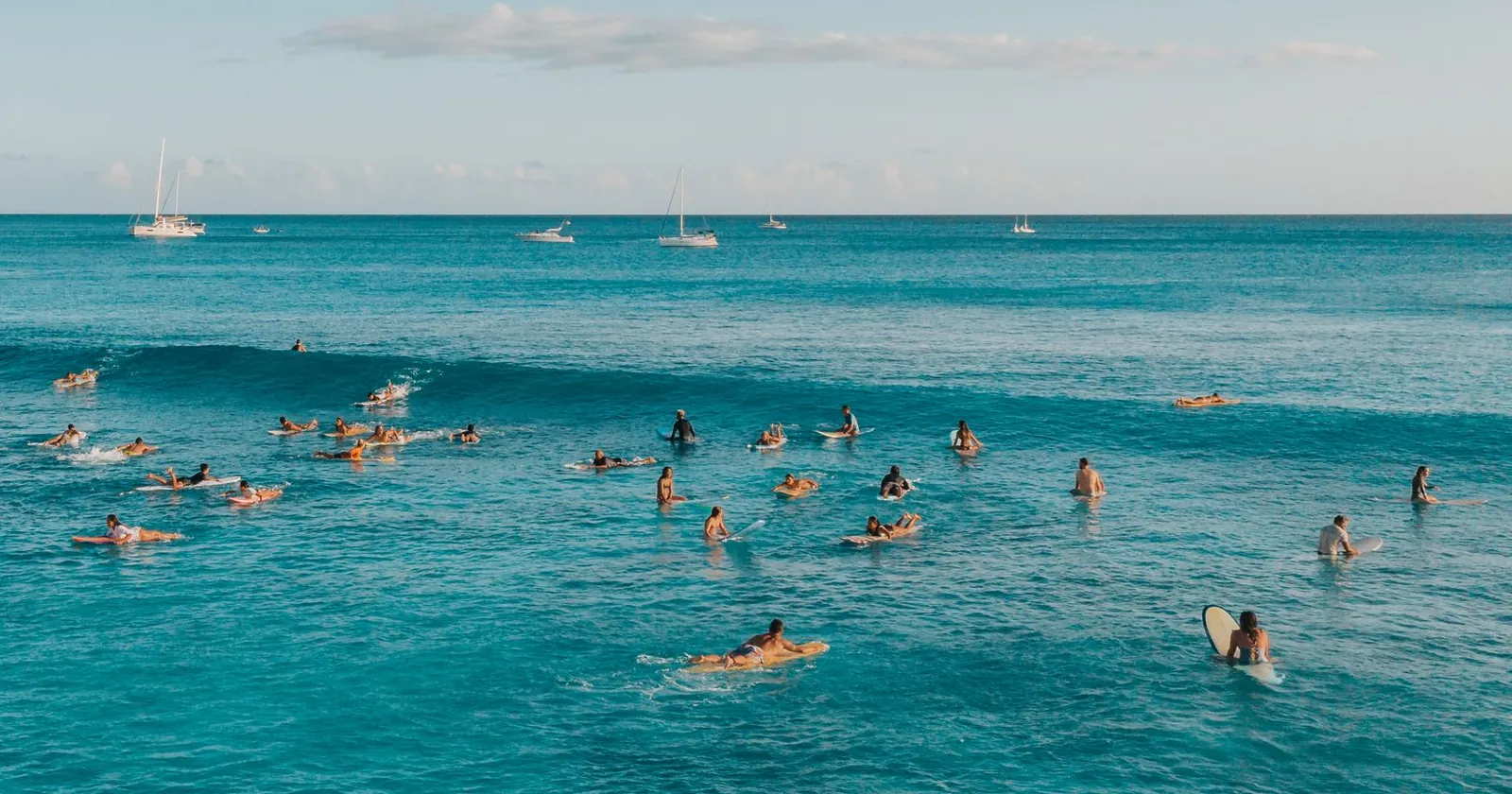
Photo: Stephen Noulton via Pexels (free license).
This is general safety information, not instruction. Surf within your ability and heed local and lifeguard advice.
Key takeaways
- Right of way: the surfer closest to the peak has priority. Don't drop in.
- Paddle out wide, around the break, never through the lineup.
- Never ditch your board; hold it, or it becomes a weapon.
- Rip currents: don't fight them; float, then swim parallel out (RNLI/NOAA).
- Know your limits and start at gentle, lifeguarded beaches.
The one rule that matters most: right of way
Surfing's core rule is right of way. When a wave breaks, the surfer closest to the breaking part (the peak) has priority, and everyone else must give way, not take off on that same wave. Taking a wave someone already has right of way on is "dropping in", and it is the cardinal sin of surfing: it causes collisions, ruins the other person's wave, and is the fastest way to make enemies in the water. Before you go on any wave, look both ways, and if someone has priority, pull back. When in doubt, don't go.
The rest of the etiquette (all of it is safety)
- Don't snake. Repeatedly paddling around someone to position yourself inside them and steal priority is called snaking. Wait your turn.
- Paddle out wide. Paddle out around the edge of the breaking waves, not straight through the lineup where riders are coming at you.
- Never ditch your board. If a wave is coming and you are paddling out, hold onto your board (or duck-dive/turtle-roll); a ditched board on a leash is a weapon that can hit the person behind you.
- Communicate. Call "left" or "right" so others know your direction, and a friendly shout avoids confusion.
- Respect the lineup and locals. There is an informal pecking order; don't paddle straight to the peak on arrival, wait, watch, and earn your place. Respect that you are a guest, especially abroad.
- Apologise. Everyone messes up learning. A genuine "sorry" defuses almost everything.
- Don't be a wave hog. Share; you don't need every wave.
Rip currents: the safety skill that saves lives
The single most important safety knowledge is rip currents, narrow channels of water flowing back out to sea that can carry you out fast. If you are caught in one:
- Don't panic and don't fight it. Swimming directly against a rip exhausts you, which is what causes drownings.
- Float to catch your breath. Per the RNLI's "Float to Live", tilt your head back with your ears in the water, relax, and breathe, gently sculling with hands and feet to stay afloat.
- Then swim parallel to the shore to get out of the flow, per NOAA, before angling back in, and raise a hand and shout for help.
- On a surfboard, stay with your board, it is flotation, and signal for help.
(RNLI, NOAA). Prevention beats rescue: surf at lifeguarded beaches, ask locals about the spot, and learn to spot rips (often a darker, calmer-looking gap in the breaking waves).
The rest of surf safety
- Surf within your ability. Match the spot to your level; heavy or reef breaks (like Zicatela) are not beginner waves.
- Never surf alone as a beginner, and tell someone your plan.
- Check conditions and tides before you go, and get out if it builds beyond your comfort.
- Mind the bottom: shallow reef and rocks cause many injuries; wear booties on reef and fall flat, not head-first.
- Protect your head when you fall, come up with an arm covering your head.
- Sun, hydration and your leash: reef-safe sunscreen, water, and a leash that suits your board.
How to spot a rip current
Learning to read rips keeps you out of them. Look from the beach before you go in for a channel that looks different from the water around it: often a darker, deeper, calmer-looking gap in the lines of breaking waves (because the water is flowing out, not breaking), sometimes with churned, sandy or foamy water streaming seaward, or a rippled surface between calmer patches. Rips frequently sit next to piers, groynes, rocks and headlands. If a stretch looks temptingly calm amid breaking waves, be suspicious, that calm is often the rip. When in doubt, ask a lifeguard or local, and swim or surf between the flags.
FAQ: surf etiquette and safety
What is the number one rule of surf etiquette?
Right of way: the surfer closest to the breaking part of the wave (the peak) has priority, and everyone else must not take off on that same wave. Taking a wave someone already has right of way on is called 'dropping in', and it is the cardinal sin of surfing, dangerous and deeply frowned upon. When in doubt, don't go.
What does 'dropping in' mean and why is it bad?
Dropping in means taking off on a wave when another surfer already has right of way (they are up and riding, or closer to the peak). It is bad because it causes collisions, ruins the other surfer's wave, and is the fastest way to anger a lineup. Always look both ways before you commit, and pull back if someone has priority.
How do you escape a rip current?
Do not fight it or swim directly against it, you will exhaust yourself. Per the RNLI, stay calm and float on your back to catch your breath (Float to Live), then, per NOAA, swim parallel to the shore, out of the flow, before heading in, and raise a hand and shout for help. On a board, stay with your board for flotation. Prevention is best: swim and surf at lifeguarded beaches between the flags.
What are the basic surf etiquette rules?
Respect right of way (don't drop in), don't 'snake' (paddle around someone to steal priority), paddle out wide around the breaking waves rather than through the lineup, never ditch your board (hold it or you endanger others), respect locals and the pecking order, apologise when you mess up, and communicate. Etiquette is really just safety plus courtesy.
Is surfing dangerous for beginners?
Surfing carries real risks: rip currents, your own board, other surfers, shallow reef and rocks, and getting held under. Most incidents are preventable with the right precautions: learn at gentle, lifeguarded beaches, surf within your ability and never alone as a beginner, know rip-current safety, and follow etiquette so you and others avoid collisions. Respect the ocean and it is manageable.
Yannick Schroth
Founder of NOMADREEF and a former digital nomad. This safety guide is researched against RNLI and NOAA water-safety guidance and surf-etiquette convention, and cites its sources; it is not a substitute for lessons, lifeguard advice or local knowledge. About the author · LinkedIn ↗
Sources
- RNLI, "Rip Currents" and "Float to Live" water-safety guidance. rnli.org.
- NOAA, "Rip Current Safety" (break the grip: swim parallel). noaa.gov.
- International Surfing Association (ISA), surf education and etiquette. isasurf.org.