Hurghada vs Marsa Alam: Which Red Sea Base?
 by Yannick SchrothSep 5, 20268 min read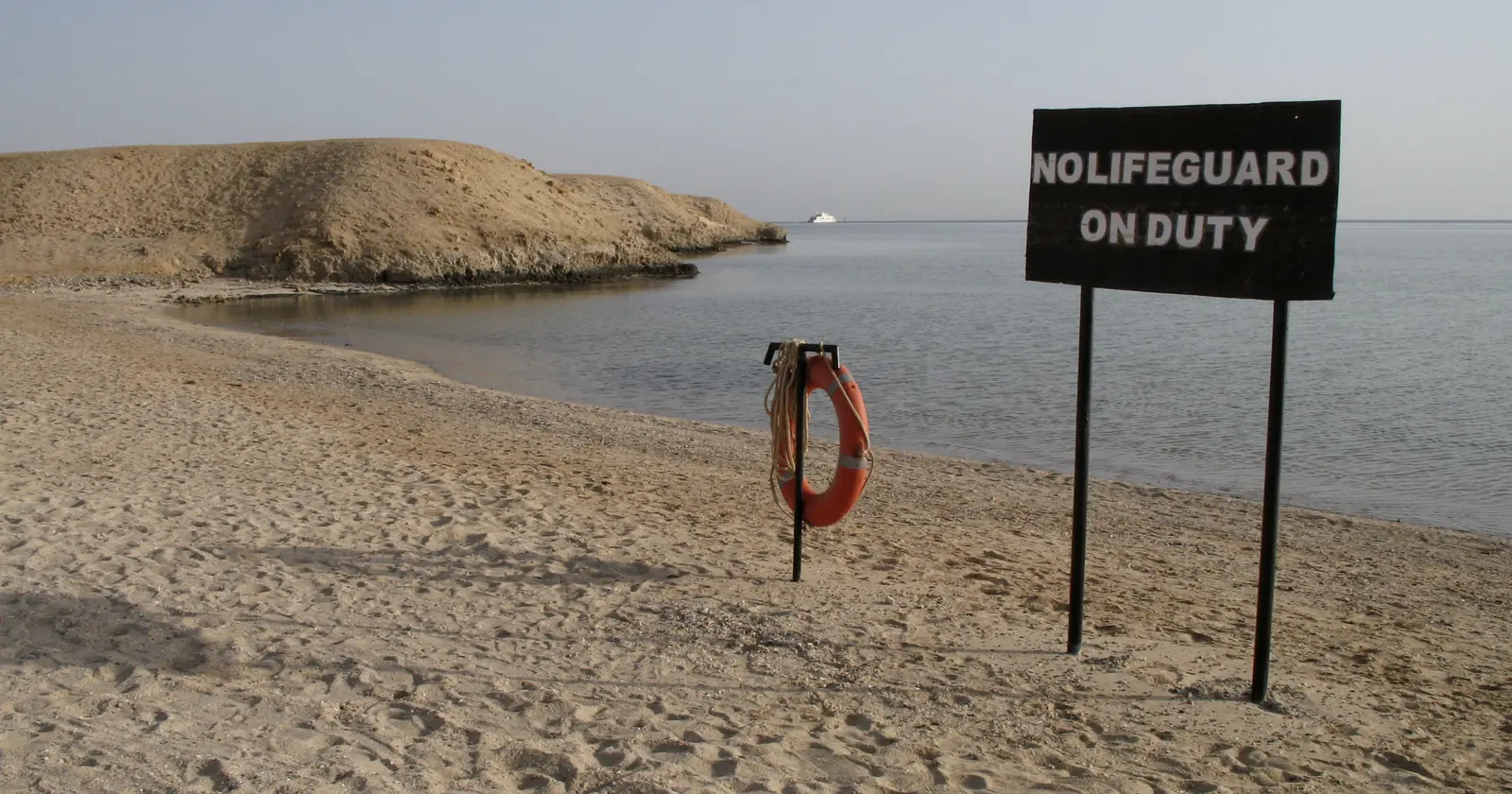
Marsa Alam, the southern of the two coasts, not both. Photo: Marc Ryckaert, Wikimedia Commons, CC BY 3.0.
What Marsa Alam has that Hurghada does not
Most of the southern coast sits inside Wadi el Gemal National Park, declared in 2003. It is one of only two parks in Egypt, with Ras Mohammed, that protects a terrestrial area as well as a marine one: 4,770 km² on land and about 2,000 km² of sea. Underneath that sea are 7,660 hectares of seagrass, and the seagrass is the reason people come.
It feeds dugongs and green turtles, and Abu Dabbab and Marsa Mubarak are among the more reliable places in the world to see a dugong on a day trip rather than an expedition. That reliability has been managed rather than left alone: boats are kept out of Abu Dabbab bay, moorings were removed to stop safari boats overnighting there, and parts of the seagrass are closed to divers and snorkellers.
Further out, Elphinstone is the site the south is known for, a steep offshore reef with open-water conditions. Operators there set their own experience minimums and describe strong surface swell and cross-currents; it is not a site you book on day two of a course.
The chamber question, which comes out backwards
You would expect the remote coast to be the one far from a recompression chamber. It is not.
Hurghada has HyperMed Red Sea, treating diving accidents since 2007 and stating round-the-clock cover. Marsa Alam has Baromedical, whose own site says the facility “is always open, ensuring divers have immediate access to emergency care”, sited between the airport and the town. South of that again there is a chamber at Hamata, about 135 km down the coast, opened in 2010.
So both coasts are covered. What differs is the trip: from a Hurghada day boat you are heading back to a city, and from a southern dive village you are on a road with not much on it. Ask the centre which chamber they use and how the transfer runs, and expect the southern answer to be longer.
Getting there is the surprise
Marsa Alam is remote on a map and well connected in an airline schedule. Its airport lists flights to 33 destinations in 13 countries across 18 airlines, and the pattern is unmistakably German-speaking Europe: Air Cairo alone flies year-round to Vienna, Cologne-Bonn, Düsseldorf, Frankfurt, Hanover, Munich, Stuttgart and Zurich, alongside TUI, Eurowings, Edelweiss, Luxair and Wizz.
Two practical consequences. If you are flying from a German-speaking country, Marsa Alam is often the easier of the two. And a coast served mostly by charter from those markets is a coast where the boat briefing is frequently in German, which is either a convenience or an obstacle depending on who you are.
Living there, not visiting
This is where the comparison stops being close.
Hurghada works as a base. Coworking Hurghada advertises up to 70 Mbps wired and wireless with a nine-hour day pass, redNERD runs a coliving space with a work room, and the city has the ordinary infrastructure of a city. Marsa Alam does not have a published equivalent. The southern coast is dive villages and resorts, most of them running their own connection, and outside them there is very little. That is exactly why the diving is good, and exactly why a three-month stay is harder.
Egypt has no digital nomad visa either way; remote work for a foreign employer happens on a tourist visa. Plan around the visa, not the lease.
What the CDWS register adds for Hurghada and Marsa Alam
Both towns run under the same national audit, which the Sharm and Hurghada comparison sets out in detail: the Chamber of Diving and Water Sports inspects, and a centre that fails has its ministry licence suspended. The licence column below is therefore a list of businesses registered to trade. The first column is larger, because it also carries centres that appear in a training body's own register without a licence number here.
| Town | On our list | Holding a CDWS licence | Green Fins members |
|---|---|---|---|
| Hurghada | 90 | 68 | 0 |
| Marsa Alam | 58 | 39 | 8 |
The last column is the one worth pausing on. Green Fins is voluntary and about environmental practice rather than safety, but it is the only assessment in which somebody turned up in person and scored a business against a published standard. Marsa Alam has about two thirds of Hurghada's list and eight assessed against nil. On a coast whose selling point is seagrass and dugongs, a cluster of operators who invited an environmental assessor is not a coincidence.
What actually separates them
- Marsa Alam's coast is a national park, 2,000 km² of sea and 7,660 hectares of seagrass, with dugongs and access rules to match.
- Both have a chamber. The remote coast has two within 135 km, which is not what you would guess.
- Marsa Alam flies year-round to eight German-speaking cities; it is better connected than it looks, and often in German.
- Hurghada is the only one of the two that works as a base: published coworking, fibre, a city around it.
- Eight assessed centres against none, on a smaller list.
Hurghada or Marsa Alam: which to pick
Marsa Alam for the diving, without much argument: the park, the seagrass, the dugongs, Elphinstone, and the only assessed operators of the two. Come for two or three weeks, stay in a dive village, accept that the internet is whatever the village has. Hurghada if the trip is measured in months rather than weeks, if you need to work while you are there, or if you want a town rather than a resort. It reaches the Abu Nuhas wrecks and the Giftun islands, which is perfectly good diving, and it lets you live a normal week around it.
FAQ
Is Marsa Alam better than Hurghada for diving?
For the diving itself, yes. Most of the Marsa Alam coast is inside Wadi el Gemal National Park, which protects about 2,000 square kilometres of sea and 7,660 hectares of seagrass, and it is one of the more reliable places to see dugongs on a day trip. Marsa Alam also has eight Green Fins assessed centres against none in Hurghada, on a smaller list of 58 against 90.
Is there a decompression chamber in Marsa Alam?
Yes. Baromedical sits between Marsa Alam airport and the town and states that it is always open, and there is a second chamber at Hamata roughly 135 km further south. Hurghada has HyperMed, treating diving accidents since 2007. Ask your centre which one it uses and how the transfer works, because the southern journey is the longer one.
Can you work remotely from Marsa Alam?
It is harder than in Hurghada. Hurghada has published coworking with advertised speeds up to 70 Mbps and a coliving space with a work room; the Marsa Alam coast is dive villages and resorts running their own connections, with no published equivalent. Egypt has no digital nomad visa in either place, so remote work for a foreign employer is done on a tourist visa.
Sources
- Wadi el Gemal National Park: declared 2003, 4,770 km² terrestrial and about 2,000 km² marine, 7,660 hectares of seagrass feeding dugongs and green turtles. Park description, read 5 September 2026. abughosoun.org
- Baromedical, Marsa Alam: “always open”, staffed for diving emergencies. The facility's own site, read 5 September 2026. baromedical-redsea.com
- HyperMed Red Sea, Hurghada: treating diving accidents since 2007, round-the-clock. The facility's own site, read 5 September 2026. hypermed-redsea.net
- Marsa Alam airport routes: 33 destinations in 13 countries, 18 airlines, and Air Cairo's year-round German-speaking network. Route data, read 5 September 2026. flightconnections.com
- Coworking Hurghada: up to 70 Mbps, day and half-day rates. The space's own site, read 5 September 2026. coworkinghurghada.com
- CDWS: founded by Egypt's Ministry of Tourism in 2007, EUF certification partner for EN 14467 / ISO 24803. cdws.travel/about
- Green Fins member register, for the eight assessed centres in Marsa Alam. greenfins.net
- Counted 26 August 2026 from the CDWS register: Hurghada and Marsa Alam, each entry linking to the register record it was read from.