Best Freediving Destinations for Digital Nomads
 by Yannick SchrothAug 3, 20266 min read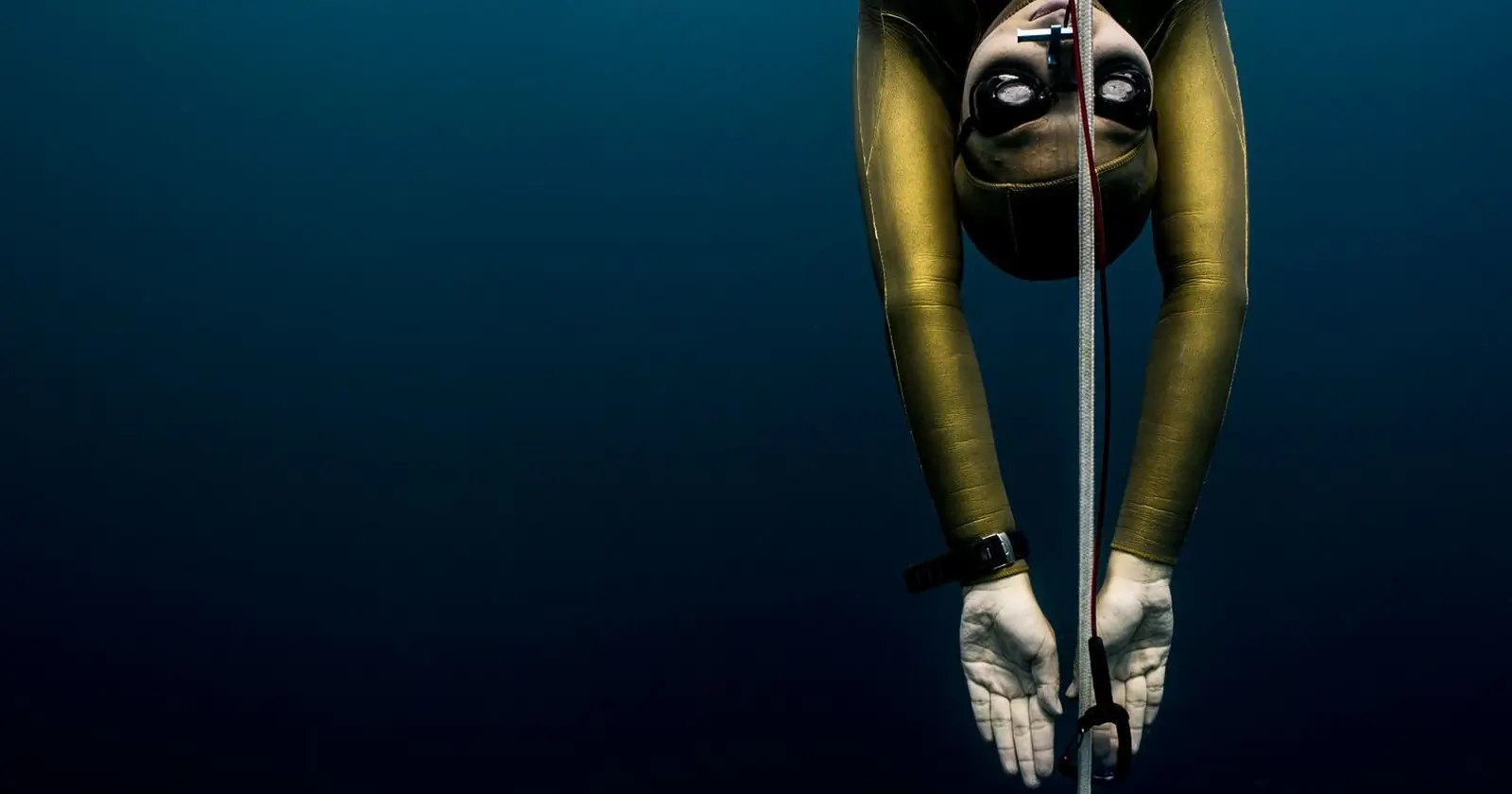
Photo: Elianne Dipp / Pexels.
What a freediver needs from a destination
Freediving needs different things from scuba: deep water close to shore, minimal current, good visibility, and above all an established scene with people to buddy with. That last point does more for your safety than any depth chart, and it is why a few otherwise superb walls are not listed. Somewhere with a school and a lane line beats somewhere prettier with neither.
Dahab, Egypt
The Blue Hole and world-class freediving at the lowest costs on this list, on the Red Sea.
Freedive mecca, budgetRead the guide → 8°20′S 115°41′E · IndonesiaAmed, Bali
Calm, warm shore access and a growing freedive scene on Bali's quiet east coast.
Calm, warm, freedive sceneRead the guide → 36°02′N 14°14′E · MaltaGozo
Dramatic blue holes and walls in clear Mediterranean water, with an EU nomad permit.
Clear water, EURead the guide → 9°33′N 123°46′E · PhilippinesPanglao, Bohol
Warm, clear Visayan water, deep walls off Balicasag and freedive schools.
Warm, deep wallsRead the guide → 8°21′S 116°03′E · IndonesiaGili Islands
Calm, warm, clear water off car-free islands, a gentle place to train.
Calm, clearRead the guide → 8°44′S 115°33′E · IndonesiaNusa Penida
Clear water and big pelagics off Bali's dramatic neighbour, for confident freedivers.
Clear, big pelagicsRead the guide → 9°57′N 123°23′E · PhilippinesMoalboal
A year-round sardine run and a wall drop-off metres off the beach, at low prices.
Sardine run, cheapRead the guide → 10°06′N 99°50′E · ThailandKoh Tao, Thailand
Warm, calm bays, cheap training and a big freedive and dive scene.
Cheap training, warmRead the guide →The question to ask a freedive base, and the number behind it
Every entry below is ranked on depth, visibility, warmth and what it costs to live there. There is a fifth criterion that separates good bases from dangerous ones, and it is about who is watching.
DAN's freediving safety guidance contains the figure that ought to shape how a school runs its line: “99 percent of blackouts happen either at the surface or within 16 feet of it”. Not at depth. At the top, in the seconds after a dive, when the diver looks fine and the safety diver relaxes. The corresponding rule is equally specific: “Freedivers need to have eyes on each other on every dive and be close enough to intervene if needed”, and on deeper dives “buddies may need to meet the diver at one-third their depth”.
So the question for any base on this list is not how deep the line goes. It is: does a dedicated safety diver meet every diver on every ascent, and how far down do they come? A school that answers with a number has thought about it; one that says “we watch from the boat” has not.
For scale on why this is not theoretical: a 2025 review of 317 snorkelling and breath-hold diving deaths in Australia between 2000 and 2021 attributes 34 of them to apnoeic hypoxia, and concludes that these “persist in younger breath-hold divers who should avoid pushing their limits without close monitoring”. The same study is a reminder that the larger share of deaths in that dataset were cardiac, with a median age of 48 and two-thirds of victims overweight or obese: which is a different warning, aimed at a different reader, and belongs on the same page.
Picking a freedive base
- Classic freedive training and depth: Dahab's Blue Hole and Amed in Bali.
- Warm, clear and cheap: Panglao, Moalboal and the Gilis.
- EU base with dramatic dive sites: Gozo in Malta.
How these freediving spots differ from each other
Freediving destinations stand or fall on two things you cannot see in a photograph: how deep the water gets close to shore, and whether there is a scene to buddy with.
| Base | What it is best at | Monthly cost |
|---|---|---|
| Dahab, Egypt | budget nomad divers and freedivers who want warm water year-round and a slow pace | among the cheapest dive bases, roughly $470 to $1,175 a month |
| Amed, Bali | focused solo nomads and couples who dive most days and do not need office-grade wifi | roughly $1,070 to $1,480 a month, cheaper than Canggu; a villa is $600 to $1,200 |
| Gili Islands | turtle-rich diving and snorkeling, car-free calm, and a social island break | roughly $1,000 to $1,220 a month; a bungalow $300 to $500 |
| Nusa Penida | world-class manta ray and mola mola diving off Bali | roughly $1,000 to $1,800 a month; a premium over mainland Bali |
| Moalboal | cheap, world-class diving: the year-round sardine run, turtles and Pescador Island | roughly $700 to $1,100 a month; a long-stay room $250 to $450 |
| Koh Tao | getting certified or a short, dive-intensive stint; nomads who like a social scene | roughly $470 to $625 a month; studio ~$378 |
Who these freediving spots are wrong for
Freediving alone is the one thing every agency tells you not to do, so a place without a community is a place to skip regardless of its depth chart. These are the specific catches.
- Dahab, Egypt:
think twice if you need fast, reliable internet or city amenities
- Amed, Bali:
think twice if you need reliable high-bandwidth video calls all day or a large coworking community
- Gili Islands:
think twice if you need reliable bandwidth; the wifi is the weak point
- Nusa Penida:
think twice if you are a new diver (strong currents) or need reliable wifi
- Moalboal:
think twice if you need fast, guaranteed wifi or big-city amenities
1 of the 6 guides here do not state a drawback in their summary.
FAQ: Freediving Destinations for Digital Nomads
Where is the best place to learn to freedive?
Dahab in Egypt is the classic: the Blue Hole, deep water close to shore, and a dense freediving scene at low cost. Amed in Bali, Panglao in the Philippines and Gozo in Malta are also excellent, warm and clear. Always train with a certified instructor and never freedive alone.
Is freediving safe?
Freediving has real risks, above all shallow-water blackout. Never freedive alone, always use the one-up-one-down system with a trained buddy, never hyperventilate, and get proper instruction. See our freediving-safety guide before you start.
Sources
- Where blackouts happen, and what the buddy is for. Divers Alert Network on freediving safety: “99 percent of blackouts happen either at the surface or within 16 feet of it”; “Freedivers need to have eyes on each other on every dive and be close enough to intervene if needed”; and for deeper or longer dives, “buddies may need to meet the diver at one-third their depth to ensure protection of the airway in case of an underwater blackout”. On recognising one: “Bubbles, specifically in a large release from the mouth, are the universal sign of a blackout”, and the rescue sequence is “1. Recognize. 2. Retrieve. 3. Revive. 4. Recover.” dan.org, shallow-water blackout. Read 12 September 2026.
- What actually kills snorkellers and breath-hold divers. Lippmann JM, “Snorkelling and Breath-Hold Diving Fatalities in Australia — A Review of 317 Deaths”, International Journal of Environmental Research and Public Health, 2025, doi 10.3390/ijerph22010119, using the Australasian Diving Safety Foundation database and the National Coronial Information System for 2000–2021: median age of the 317 victims 48, “two-thirds were overweight or obese”, almost half had health conditions including ischaemic heart disease and left ventricular hypertrophy, “One-third of victims were likely disabled by cardiac arrhythmias and at least 137 deaths were from primary drowning, with 34 following apnoeic hypoxia”; the paper concludes that hypoxic drownings “persist in younger breath-hold divers who should avoid pushing their limits without close monitoring”. Australian data, quoted as such. europepmc.org. Read 12 September 2026.
- Each entry links to our full guide for that place, and those guides carry the external sources and read dates behind the claims summarised here. They are the place the readings are recorded, not the evidence for them; the claims here are the ones those guides already verify: Dahab, Egypt, Amed, Bali, Gozo, Panglao, Bohol, Gili Islands, Nusa Penida, Moalboal, Koh Tao.