Best Watersports Destinations in Europe
 by Yannick SchrothAug 3, 20266 min read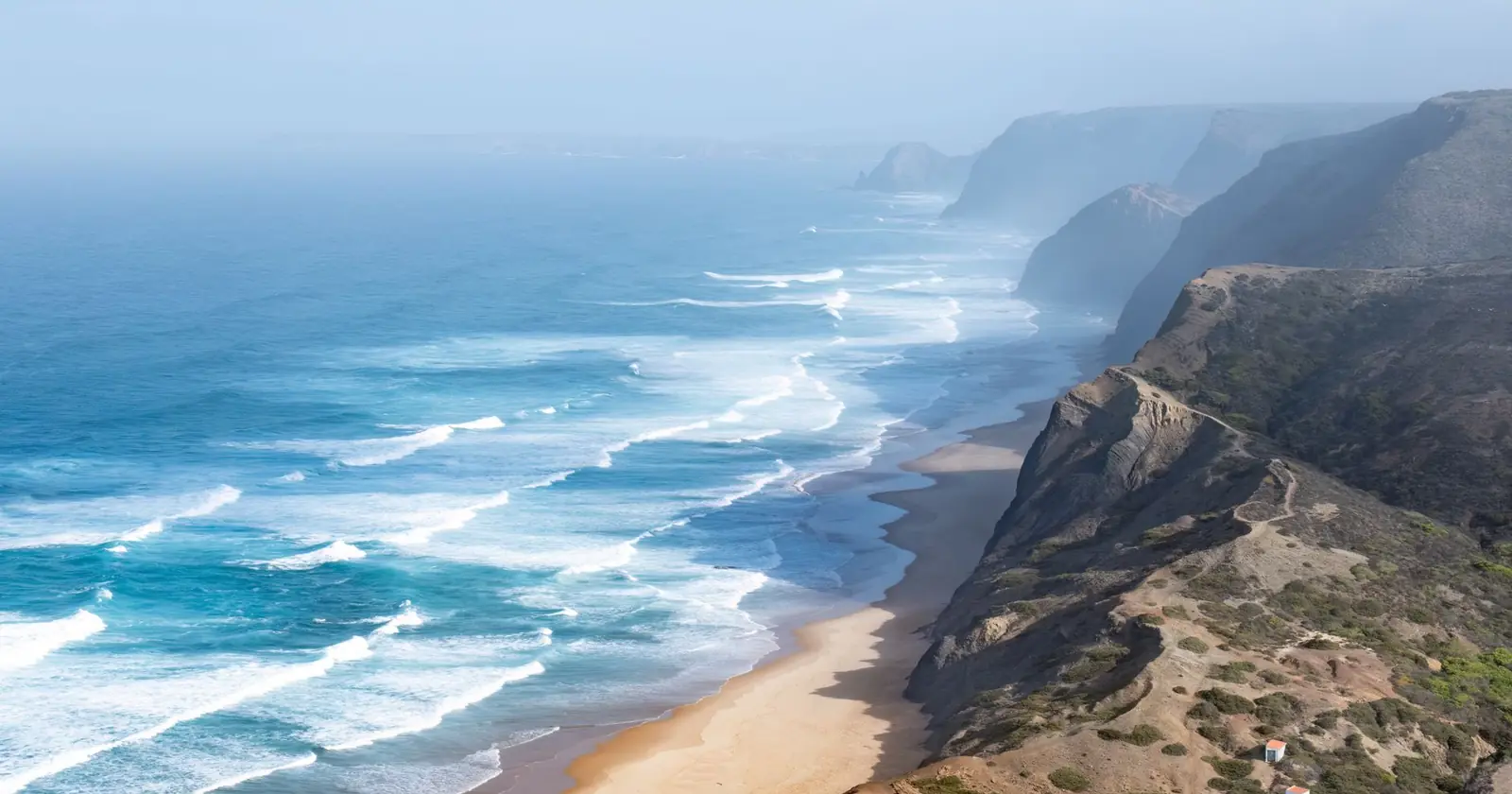
Photo: Jose Vargues / Pexels.
What makes a good European watersports base
Europe's advantage is not the water, it is that fast internet, healthcare and a legal long stay come with it. We selected for that combination, which is why some superb European water is missing: a perfect wave two hours from the nearest usable connection does not make a working month. Season matters more here than anywhere else on the site, since half these places are unusable in winter and the other half are only good then.
Most of the European bases here can be lived in legally on a remote-work permit rather than a rolling 90 days of Schengen. The two that matter most on this list are the Spanish teleworker visa and Portugal's D8, and the current income tests for both come from the government sources.
Ericeira
A Portuguese surf reserve with beach breaks for learners and reefs to progress, on the D8 visa.
Surf, PortugalRead the guide → 37°06′N 8°40′W · PortugalLagos, the Algarve
Sheltered Algarve coves and beaches with easy EU infrastructure.
Surf, PortugalRead the guide → 28°16′N 16°36′W · SpainTenerife
Fast EU fibre, year-round whales and volcanic diving, on Spain's nomad visa.
Diving, SpainRead the guide → 28°24′N 14°00′W · Spain (Canary Islands)Fuerteventura
EU fibre plus the Sotavento wind and north-shore surf.
Surf & wind, SpainRead the guide → 36°00′N 5°36′W · SpainTarifa
Europe's kite capital, where the Atlantic meets the Med and the wind rarely stops.
Kite, SpainRead the guide → 43°19′N 1°59′W · SpainSan Sebastian
A cool-water Basque city with the Zurriola beach break and world-class food.
Surf, SpainRead the guide → 43°30′N 16°26′E · CroatiaSplit and the Dalmatian Coast
A walkable Dalmatian city for sailing and swimming, on Croatia's nomad permit.
Sailing, CroatiaRead the guide → 37°05′N 25°09′E · GreeceParos
Cyclades meltemi wind and kite, on Greece's nomad visa.
Kite, GreeceRead the guide → 45°52′N 10°52′E · ItalyLake Garda
Reliable alpine-lake thermal winds for windsurf, kite and sail, in northern Italy.
Windsurf, ItalyRead the guide → 46°20′N 13°33′E · SloveniaBovec (Soca Valley)
Emerald Soca whitewater, kayak and canyoning in Slovenia's Julian Alps.
Whitewater, SloveniaRead the guide → 45°54′N 6°08′E · FranceAnnecy
SUP and swimming in a turquoise alpine lake, with French fibre.
Swim & SUP, FranceRead the guide → 36°02′N 14°14′E · MaltaGozo
Blue holes and freediving in clear Mediterranean water, on Malta's nomad permit.
Freedive, MaltaRead the guide → 68°14′N 13°37′E · NorwayLofoten
Arctic cold-water surf above the Arctic Circle amid dramatic Norwegian scenery.
Cold surf, NorwayRead the guide → 42°25′N 18°46′E · MontenegroKotor
Fjord-like sailing in the Bay of Kotor, a cheap Adriatic base.
Sailing, MontenegroRead the guide →Picking a European base
- Best surf: Portugal (Ericeira, Lagos, Peniche) and the Basque coast (San Sebastian).
- Best work-first base: the Canary Islands (Tenerife, Fuerteventura, Lanzarote) for EU fibre and year-round mild weather.
- Best adventure and swim: the Julian Alps (Bovec), Lake Annecy and Malta (Gozo). Many have a nomad visa.
What decides a European season: the Schengen 90/180 rule and daylight
The counting rule. For a non-EU traveller the European year is not a map, it is an arithmetic problem. The European Commission's own description: all 29 countries in the Schengen area apply the same rules, and non-EU nationals may visit for “up to 90 days in any 180-day period”. The Commission is explicit about how the window works, “When someone enters a country in the Schengen area, the 180-day period starts. They can enter Schengen area countries as many times as they want, but only stay for a total of 90 days, every 180 days”, and that “Visas for stays exceeding 90 days are subject to national procedures”. That last line is why the nomad visas on this list are national ones. Visa-exempt travellers will also need an ETIAS form, due six months after the Entry/Exit System is fully implemented.
And the light. Europe's seasons are steeper than most people plan for. At Unstad in the Lofoten islands the US Naval Observatory has 11 h 14 min of daylight on 1 October and 9 h 23 min by the 15th: the same table shows no sunset at all in June and July, and no sunrise on 15 December. In the Azores, two thousand kilometres south, 1 July runs 06:25 to 21:08: 14 h 43 min, and the year never collapses. A European trip planned for a Mediterranean summer and a Norwegian autumn is planning two different amounts of day.
FAQ: Watersports Destinations in Europe for Nomads
Where are the best watersports in Europe?
For surf, Portugal (Ericeira, Lagos, Peniche, Nazare) and the Basque coast lead, with the Canary Islands adding year-round warmth. For kite and windsurf, Tarifa, Fuerteventura, Paros and Lake Garda. For sailing, Croatia (Split), Greece and Montenegro (Kotor); for alpine whitewater and swimming, Slovenia (Bovec) and the Alps (Annecy).
Which European watersports bases have a digital nomad visa?
Many do: Spain, Portugal, Croatia, Greece, Italy, Malta and Slovenia all run operational nomad or remote-work visas covering these bases. See our nomad-visa roundup for the full picture and the income thresholds to check.
Sources
- The 90/180 rule, from the Commission. European Commission, Migration and Home Affairs, visa policy (page dated 23 June 2025): “all 29 countries in the Schengen area apply the same visa rules. Non-EU nationals need a visa to enter the Schengen area for a visit of up to 90 days in any 180-day period. When someone enters a country in the Schengen area, the 180-day period starts. They can enter Schengen area countries as many times as they want, but only stay for a total of 90 days, every 180 days”; “Visas for stays exceeding 90 days are subject to national procedures”; visa-exempt travellers “will need to fill out an online ETIAS form” “six months after the full implementation of Entry/Exit system (EES)”. home-affairs.ec.europa.eu. Read 12 September 2026.
- How much day you actually get. US Naval Observatory, Astronomical Applications Department, tables of sunrise and sunset for an entire year, 2027. Unstad, Lofoten (N68 14, E013 37): 1 October rise 07:17, set 18:31; 15 October rise 08:09, set 17:32; no sunset in June and July, no sunrise on 15 December. Ponta Delgada, Azores (N37 44, W025 40): 1 July rise 06:25, set 21:08. aa.usno.navy.mil. Read 12 September 2026.
- Each entry links to our full guide for that place, and those guides carry the external sources and read dates behind the claims summarised here. They are where the readings are recorded, not the evidence for them: Ericeira, Lagos, the Algarve, Tenerife, Fuerteventura, Tarifa, San Sebastian, Split and the Dalmatian Coast, Paros, Lake Garda, Bovec (Soca Valley), Annecy, Gozo, Lofoten, Kotor.