Best Beginner Surf Destinations for Digital Nomads
 by Yannick SchrothAug 3, 20266 min read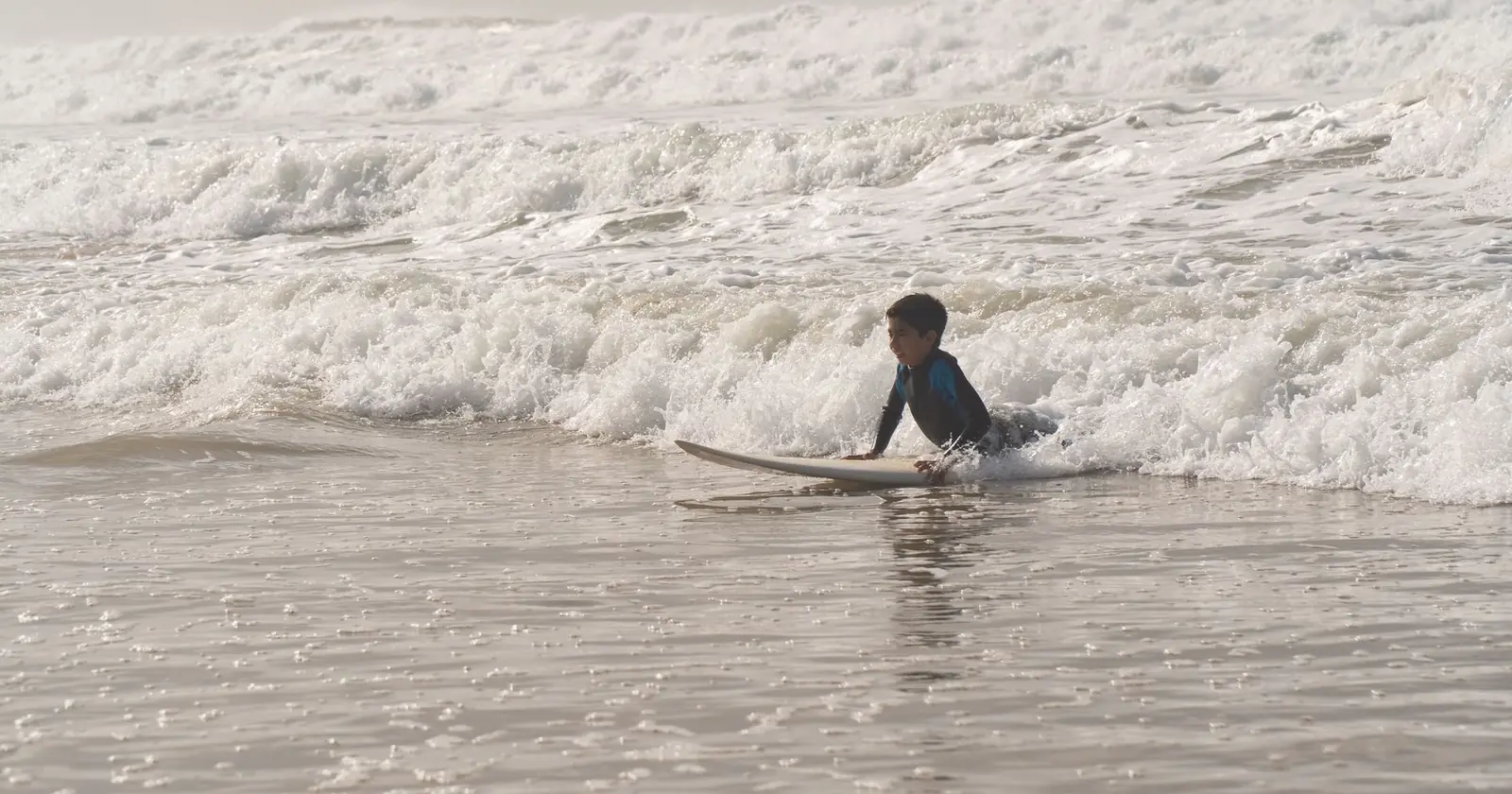
Photo: Kampus Production / Pexels.
What makes a good beginner surf break
A beginner break needs a sand bottom, a wave that crumbles rather than throws, and a channel or a shallow shoulder to get back out without a duck-dive you cannot yet do. We also weigh how crowded the inside is, because the most common beginner injury is another surfer's board. Famous waves are absent on purpose: a spot can be world-class and a bad place to learn, and reef breaks in particular punish the mistakes beginners make most.
Canggu, Bali
Bali's biggest nomad hub and a superb beginner base: mellow Batu Bolong, endless surf schools and coworking.
Beginner, IndonesiaRead the guide → 5°58′N 80°25′E · Sri LankaSri Lanka
Weligama on the south coast is the region's beginner surf capital, with countless schools and cheap living.
Beginner, south coastRead the guide → 9°59′N 85°39′W · Costa RicaNosara
Playa Guiones is a consistent, forgiving beach break with a wellness and yoga scene.
Beginner, Costa RicaRead the guide → 9°38′N 85°10′W · Costa RicaSanta Teresa
Beach breaks plus a strong surf-and-yoga and remote-work culture on the Nicoya peninsula.
Beginner+, Costa RicaRead the guide → 30°32′N 9°42′W · MoroccoTaghazout
Morocco's surf village: gentle points to learn on and a cheap, sociable nomad scene.
Beginner, MoroccoRead the guide → 20°52′N 105°26′W · MexicoSayulita
A friendly Mexican beach town with a soft, learner-friendly break and easy vibe.
Beginner, MexicoRead the guide → 8°53′S 116°17′E · IndonesiaKuta, Lombok
Beginner reefs and beach breaks with mellower crowds, right next door to Bali.
Beginner, IndonesiaRead the guide → 38°58′N 9°25′W · PortugalEriceira
A Portuguese surf reserve with beach breaks for learners and reefs to progress on.
Beginner+, PortugalRead the guide → 4°06′S 81°03′W · PeruMancora
Warm-water, consistent and rarely big north-Peru lefts, easy to find your feet on.
Beginner+, PeruRead the guide → 15°52′N 97°04′W · MexicoPuerto Escondido
Zicatela is for experts, but La Punta is a classic place to progress on the Oaxaca coast.
Progression, MexicoRead the guide →Picking a learner base
- If you want the gentlest landing with the biggest scene: Canggu or Weligama on Sri Lanka's south coast.
- If you want warm water and wellness: Nosara or Santa Teresa in Costa Rica.
- If you want cheap and low-key: Taghazout or Sayulita.
How these beginner surf towns differ from each other
Every place here is beginner-friendly, so the useful comparison is not whether you can learn, it is how fast you progress and what you pay while you do it.
| Base | What it is best at | Monthly cost |
|---|---|---|
| Canggu | beginner surf plus the most developed nomad scene in Bali | roughly $1,200 to $2,200 a month; pricier than the rest of Bali |
| Sri Lanka | budget surf, blue-whale watching and warm-water snorkeling | roughly $900 to $1,800 a month; among the cheapest on our list |
| Taghazout | consistent Atlantic point-break surf on a budget, near Europe | roughly $900 to $1,600 a month; among the cheaper surf bases |
| Puerto Escondido | surfers and beach-lifestyle nomads, from Zicatela pros to La Punta longboarders | roughly $1,100 to $1,800 a month; rent dearer in Zicatela and La Punta |
Who these beginner surf towns are wrong for
Beginner-friendly is not the same as suitable for you. Crowds, cost and how quickly a spot stops teaching you anything are the reasons to rule one out.
- Canggu:
think twice if you want quiet, empty waves or dislike traffic and crowds
- Sri Lanka:
think twice if you need fast guaranteed wifi or year-round flat conditions
- Taghazout:
think twice if you need top-tier wifi or want warm tropical water year-round
1 of the 4 guides here do not state a drawback in their summary.
The two things that actually make a beginner spot safe
Beginner spots get recommended for their waves. What decides how the first week goes is usually the other two things: who is teaching, and who is watching the water.
Who is teaching. Surf instruction has a world governing body, and it certifies people rather than schools. The International Surfing Association, recognised by the IOC as “the World Governing Authority for Surfing” and founded in 1964, lists its own certification tracks as coaching, judging, ILS water safety and adaptive surf instruction, and publishes a certificate directory of who holds them. A school that cannot tell you what its instructors hold is telling you something.
Who is watching. The US National Weather Service puts the case for lifeguarded beaches in one line, citing the United States Lifesaving Association: “The chances of drowning at a beach with lifeguards are 1 in 18 million”. The same page carries the warning that contradicts most beginners' instincts: “Great weather for the beach does not always mean it's safe to swim or even play in the shallows. Rip currents often form on calm, sunny days.” The flat, blue, windless morning is exactly when a beginner beach looks safest and is not.
FAQ: Beginner Surf Destinations for Digital Nomads
Where is the easiest place to learn to surf as a nomad?
Canggu in Bali and Weligama on Sri Lanka's south coast are the two gentlest landings: mellow, sandy beginner waves, endless surf schools, cheap living and a big nomad scene. Nosara in Costa Rica is the pick for warm water and a wellness vibe.
When should I go?
It depends on the spot's season, which the linked guide details. As a rule, Bali and Sri Lanka's south coast surf best in their respective dry seasons, Costa Rica and Morocco have long shoulder windows, and Portugal peaks in autumn. Check the guide before booking.
Sources
- Who certifies surf instruction. International Surfing Association, About the ISA: “The International Surfing Association (ISA), founded in 1964, is recognized by the International Olympic Committee as the World Governing Authority for Surfing”; the ISA runs course tracks listed as Coaching, Judging, ILS Water Safety and Adaptive Surf Instructor, with a public certificate directory. isasurf.org. Read 12 September 2026.
- Why a lifeguarded beach is a different beach. NOAA National Weather Service, How to Avoid Getting Caught in a Rip Current: “Only swim at a beach with lifeguards. The chances of drowning at a beach with lifeguards are 1 in 18 million (U.S. Lifesaving Association)”; “Great weather for the beach does not always mean it’s safe to swim or even play in the shallows. Rip currents often form on calm, sunny days.” weather.gov. Read 12 September 2026.
- Each entry links to our full guide for that place, and those guides carry the external sources and read dates behind the claims summarised here. They are where the readings are recorded, not the evidence for them: Canggu, Sri Lanka, Nosara, Santa Teresa, Taghazout, Sayulita, Kuta, Lombok, Ericeira, Mancora, Puerto Escondido.