How to Start Windsurfing
 by Yannick Schroth
Jul 29, 2026
8 min read
by Yannick Schroth
Jul 29, 2026
8 min read
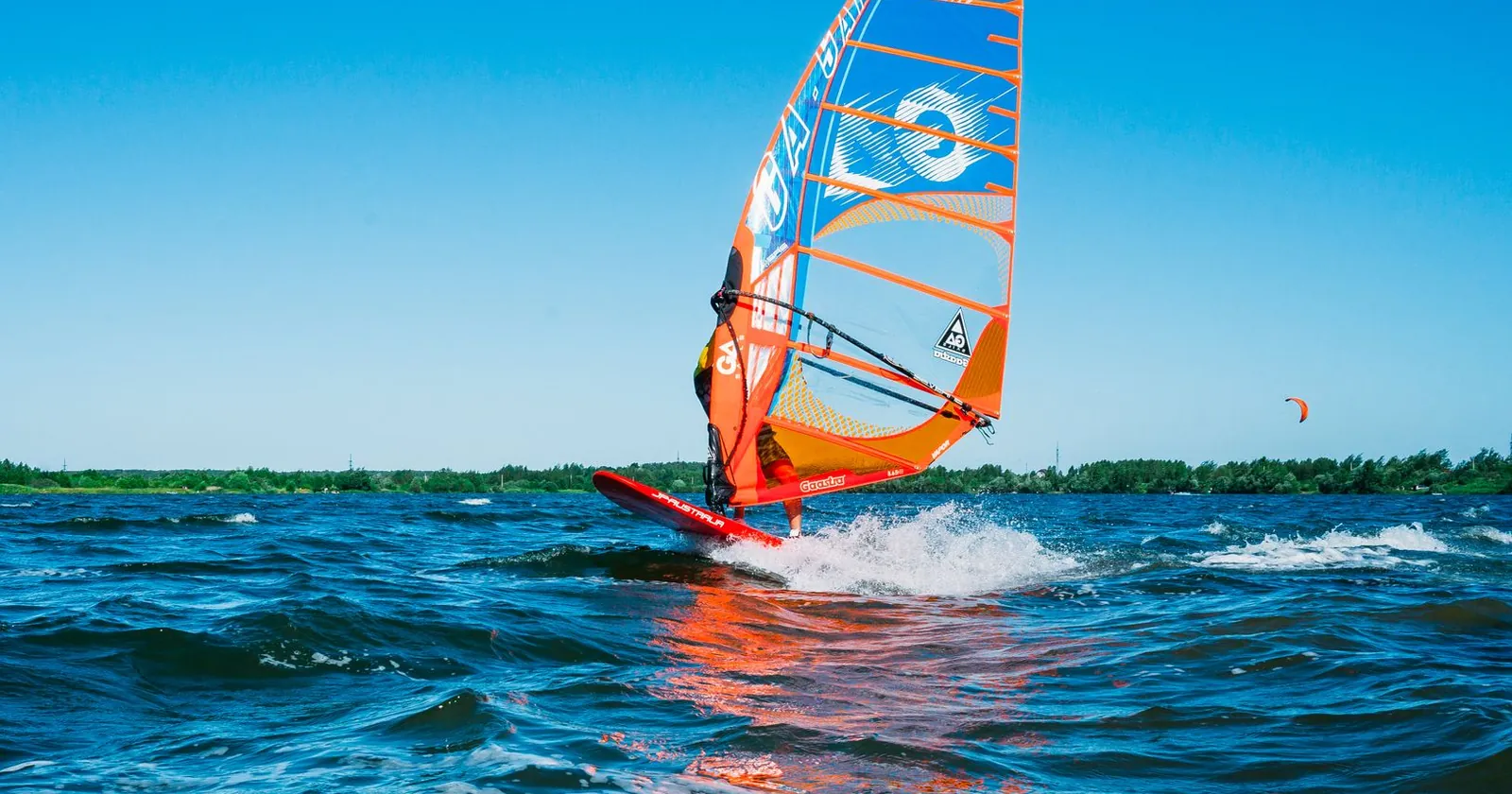
Photo: Nikita Grishin via Pexels (free license).
This is general beginner guidance, not a substitute for lessons or in-water supervision.
Key takeaways
- The basics are quick: sailing back and forth in a lesson or two.
- The formula: big stable board, small sail, light steady wind.
- Steer with the sail, not your feet: tilt back = upwind, forward = downwind.
- Take a lesson; it teaches stance, steering and self-rescue fast.
- Avoid offshore wind; the main danger is drifting out to sea.
Why windsurfing is a great place to start
Windsurfing, standing on a board and holding a sail attached to it by a flexible joint, is the most approachable of the board-and-sail wind sports to begin. Unlike kitesurfing (which demands lessons before you touch the water) or wing foiling (with its foil-balance curve), you can be sailing across a flat lagoon on your first day on the right gear. It is also a brilliant foundation for the other wind sports.
How a beginner progresses in windsurfing
Step 1: Lesson, big board, light wind
Start with a lesson on a large, stable board with a small sail, in light, steady wind and flat water. A wide, high-volume board you can stand on comfortably is the single biggest factor in learning quickly. Trying to learn on small, advanced kit is the classic mistake.
Step 2: Uphaul the sail
From standing on the board, use the uphaul rope to slowly pull the sail out of the water, back straight, knees bent, letting the water drain off it. It is tiring at first and improves fast with technique, not strength.
Step 3: Find the stance
Stand across the board with feet either side of the mast base, hold the mast to keep the sail neutral (the secure position), then take the boom with your back hand and gently sheet in to catch the wind. Keep your weight over the board and look where you want to go.

Step 4: Steer with the sail
The counterintuitive key: you steer with the sail, not your feet. Tilt the rig back toward the tail to turn upwind, and forward toward the nose to turn downwind. Make small adjustments, and practice turning the board around while stationary first.
Step 5: Practise, then progress
Build up sailing back and forth, always trying to stay upwind of where you started, and learn to tack and gybe to turn around. Only move to a smaller board, bigger sail, the harness and footstraps once the basics are solid.
What gear you need to start windsurfing
A big, high-volume, stable board (ideally with a daggerboard for stability and going upwind) and a small, light sail (often around 3 to 5 square meters to learn). Most schools provide exactly this. See our beginner windsurf gear guide, and use school or rental kit before you buy.
The sport publishes its own learning order, and it is not the one people assume
Windsurfing has a syllabus, and it disagrees with the way beginners usually imagine progress. The RYA's windsurfing scheme splits the intermediate stage into two distinct certificates: intermediate non-planing and intermediate planing. The non-planing certificate is the one that carries beach starting and the non-planing gybe; planing, and the carve gybe, come afterwards, and the waterstart is later still, on the advanced certificate.
That order is the useful thing to take away. The beach start is not an advanced trick, it is part of the first intermediate step: and getting planing is not a skill you learn but a state you reach once the earlier ones are solid. People who try to skip to planing are usually missing the non-planing gybe, which the scheme puts first for a reason.
The instructor ladder tells you what to look for in a school. An RYA Start Windsurfing Instructor is a five-day course with the final day moderated by an external trainer, requires the intermediate non-planing certificate, a first-aid certificate and RYA Powerboat Level 2, and the qualification is valid five years and only “provided that a valid first aid certificate is maintained”. An assistant instructor holds a centre-specific certificate, and the RYA is blunt about the limits: “AIs must never be allowed to work without direct supervision”, and their training “does not include first aid or powerboat handling”.
At the other end of the sport, the equipment is controlled rather than chosen. The Olympic iQFOiL class rules are closed class rules, and the class puts it in capital letters: “IF IT DOES NOT SPECIFICALLY SAY THAT YOU MAY – THEN YOU SHALL NOT”.
FAQ: starting windsurfing
Is windsurfing hard to learn?
The very basics of windsurfing, standing up, catching the wind and sailing back and forth on a big board in light wind, can be learned in a lesson or two, which is why it is often called easy to start. Getting good (using a harness, footstraps, planing and handling stronger wind) takes much longer. The key to an easy start is a large, stable board, a small sail and light, steady wind, do not try to learn on advanced kit.
Do I need lessons to start windsurfing?
Lessons are strongly recommended and make a big difference. A good instructor teaches you to uphaul, find the stance, steer with the sail and self-rescue in the right order, on the right beginner gear and in safe conditions. You can technically self-teach the basics on very forgiving kit in calm, shallow water, but lessons are safer and far faster, and teach you how to get back if the wind changes.
How do you steer a windsurfer?
You steer mainly with the sail, not your feet. Tilting the rig back toward the tail turns the board upwind (into the wind); tilting it forward toward the nose turns the board downwind (away from the wind). This feels odd at first but quickly becomes intuitive. To turn all the way around you either tack (nose through the wind) or gybe (tail through the wind), which you practice as you progress.
What board and sail should a beginner use?
A large, high-volume, wide board that is very stable to stand on, ideally with a daggerboard or centreboard for stability and going upwind, plus a small, light sail (often around 3 to 5 square meters depending on your size and the wind). Big and stable board, small manageable sail, and light wind is the beginner formula. Most schools provide exactly this kind of forgiving kit.
Is windsurfing safe?
It is relatively safe if you take sensible precautions, but the main danger is being blown or drifting offshore, so avoid offshore winds (which blow you out to sea), stay on flat, sheltered water within your ability, and learn self-rescue (lying on the board and paddling the rig back). Tell someone your plan, check the forecast, and do not go out alone while learning. Wear appropriate flotation if advised. This is general information, not instruction.
Yannick Schroth
Founder of NOMADREEF and a former digital nomad. This guide explains the standard beginner windsurf progression; it is not a substitute for lessons or in-water supervision, which new wind-sport riders should have. About the author · LinkedIn ↗
Sources
- The published learning order. Royal Yachting Association, windsurfing instructor and scheme requirements: the RYA Windsurfing Scheme carries an “intermediate non-planing certificate including beach starting and non-planing gybe clinics” and, separately, an “Intermediate planing personal sailing certificate and the beach starting, and non-planing carve gybe clinics” plus an “Advanced personal sailing certificate with waterstart and carve gybe clinics”; the Start Windsurfing Instructor is a “Five-day course” whose “final day will be moderated by an external trainer”, requires RYA Powerboat Level 2 and a first-aid certificate, and is valid “Five years from the date of issue, provided that a valid first aid certificate is maintained”; assistant instructors “must never be allowed to work without direct supervision”. rya.org.uk. Read 13 September 2026.
- How tightly the top of the sport is specified. International Windsurfing Association, publication of the International iQFOiL Class Rules, effective 28 May 2020: “iQFOiL hulls, hull appendages, rigs and sails are manufacturing controlled. All equipment shall only be manufactured by approved manufacturers… REMEMBER – THESE RULES ARE CLOSED CLASS RULES WHERE IF IT DOES NOT SPECIFICALLY SAY THAT YOU MAY – THEN YOU SHALL NOT.” internationalwindsurfing.com. Read 13 September 2026.
- Windsurfing beginner progression and safety conventions (instruction and manufacturer guidance).
- Our own beginner windsurf gear, kitesurfing and wing foiling guides.